
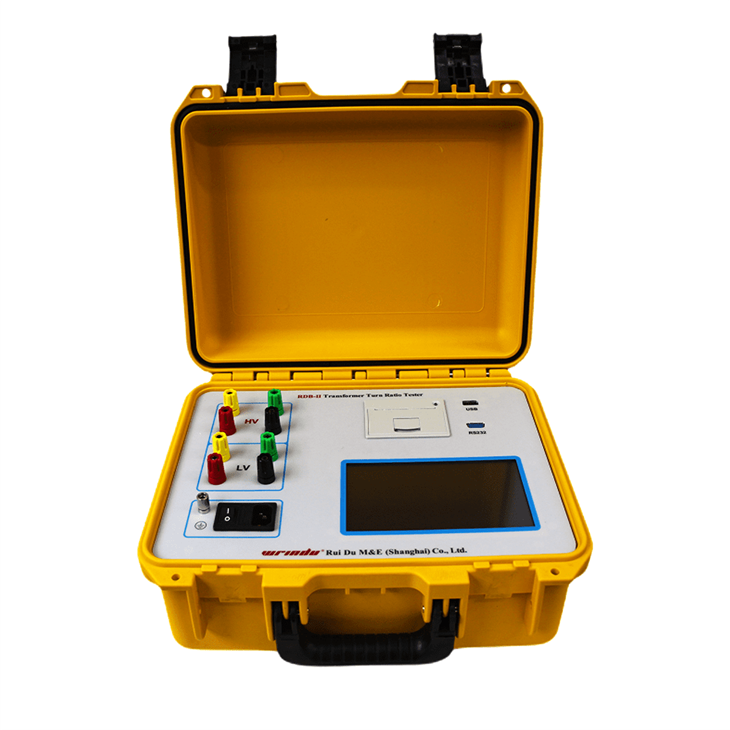
The input impedance of a Transformer Turns Ratio (TTR) tester determines measurement precision and safety during CT testing. Accurate impedance ensures the CT is not overloaded while providing reliable ratio readings. Wrindu offers TTR testers with optimized input impedance, balancing high accuracy, repeatability, and protection for industrial, OEM, and wholesale applications worldwide.
How Is Input Impedance Defined in TTR Testers?
Input impedance represents the load seen by the CT secondary during a turns-ratio test, including both the tester’s internal circuitry and external burden. Properly specified impedance minimizes measurement errors and prevents undue stress on the CT. Wrindu engineers design impedance parameters to comply with international standards while meeting diverse industrial requirements.
Why Does Input Impedance Affect CT Accuracy?
Impedance that is too high can amplify noise and stray capacitance, reducing precision. Impedance that is too low increases CT burden, altering ratio readings. Wrindu calibrates testers to achieve a balance that maximizes measurement accuracy, repeatability, and operational safety in substation, factory, and energy storage environments.

What Input Impedance Range Do High-Quality TTRs Offer?
Premium TTRs provide configurable impedance suited for a range of CT classes, typically including multiple preset burden options. Wrindu’s devices allow precise adjustment for medium- to high-voltage CTs, ensuring reliable readings for OEMs, power utilities, and industrial users.
How Do Wrindu TTRs Prevent CT Overload?
Wrindu TTR testers incorporate controlled test currents, adjustable burden settings, and overcurrent protection. These safeguards prevent CT stress during testing while maintaining accurate turns-ratio measurements, critical for large-scale energy projects such as wind, solar, and battery storage systems.
What Methods Verify TTR Input Impedance Accuracy?
Verification involves connecting a reference CT with a known burden, performing the turns-ratio test, and comparing the readings to certified standards. Wrindu provides factory calibration, traceable documentation, and guidelines to ensure precise impedance validation for both production and field testing.
How Can OEMs Customize Input Impedance on Wrindu TTRs?
Wrindu supports OEM customization through selectable burden resistors, software-adjustable impedance, and tailored test routines. This flexibility allows manufacturers to maintain consistent accuracy across diverse CT designs and installation environments.
Which Technical Specifications Influence Impedance Performance?
| Specification | Effect on Impedance Measurement |
|---|---|
| Burden resistance range | Determines CT load and measurement fidelity |
| Test frequency response | Affects impedance across operational signals |
| Internal protection | Adjusts effective impedance under fault conditions |
| Connection topology | Shapes the measured impedance path |
Wrindu aligns these specifications with industry standards and customer requirements to guarantee safety and precision.
Does Wrindu Provide Calibration and Verification Services?
Yes, Wrindu offers comprehensive calibration and traceable reference standards to validate input impedance before delivery and throughout service life. Regular verification maintains TTR accuracy for OEMs, wholesale clients, and industrial users.
Wrindu Expert Views
“Input impedance is a key determinant of reliable TTR performance. Wrindu designs testers with precise impedance control and robust shielding to minimize noise, ensuring repeatable and accurate measurements even in challenging field conditions,” says Dr. Li Wei, Lead Test Architect at Wrindu.
How Do Environmental Conditions Affect Input Impedance?
Factors such as temperature, humidity, and electromagnetic interference can influence impedance readings. Wrindu tests devices under varied environmental conditions and provides guidance on optimal operating ranges to maintain accurate performance in industrial and utility settings.
What Are Cost Considerations for TTR Input Impedance?
High-precision impedance features may increase initial costs but significantly reduce rework, warranty claims, and operational downtime. Wrindu balances performance and affordability, offering scalable options for OEMs and bulk buyers while maintaining reliable global standards.
Wrindu Expert Views
“Selecting the correct input impedance ensures both CT protection and measurement fidelity. Wrindu’s Shanghai-based engineering approach guarantees consistent, production-ready impedance settings for global clients,” says Ms. Chen, Chief Applications Engineer at Wrindu.
Conclusion
Input impedance is critical for Transformer Turns Ratio testing, impacting accuracy, safety, and CT longevity. Wrindu’s TTR testers provide configurable burden options, reliable calibration, and precise impedance design, supporting OEMs, manufacturers, and industrial users worldwide. Choosing Wrindu ensures consistent measurements, reduces operational risk, and enhances overall power system reliability.
FAQs
What is the typical input impedance range for Wrindu TTRs?
Wrindu provides adjustable burden options compatible with most CT classes, ensuring accurate and safe testing.
Can Wrindu TTRs be calibrated on-site?
Yes, on-site calibration is supported with traceable reference standards and detailed procedures.
How does burden selection influence test accuracy?
Correct burden selection minimizes phase and ratio errors while preserving CT health.
Are Wrindu TTRs suitable for high-voltage energy storage CTs?
Yes, they support a wide range of CT ratings, with OEM customization for specific applications.
Is impedance stable across temperature variations?
Wrindu tests stability across typical operating temperatures, ensuring reliable results in industrial environments.