
How to Generate Resistance Reports for Regulatory Audits?
Send your test requirement — get a tailored solution and a quote within one working day.
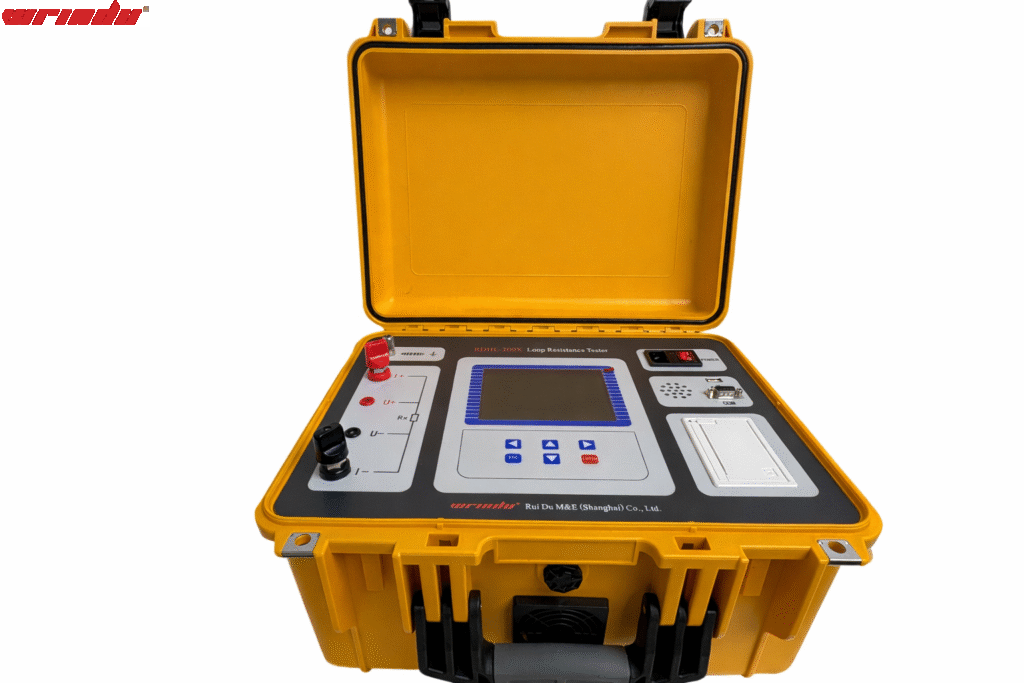
To generate resistance reports that satisfy government and insurance auditors, electrical maintenance teams must use factory-calibrated testing equipment that automatically records data. Reports must feature unalterable data integrity, compliant electronic signatures, and a clear timeline. Standardizing your workflow through an OEM supplier ensures your documentation meets strict regulatory and insurance compliance frameworks.
Check: Regulatory Audits and IEC 62271-1 Resistance Requirements
What Are the Key Data Integrity Requirements for Resistance Reports?
Data integrity requirements dictate that resistance reports must be original, accurate, and completely protected against manual tampering. Regulatory bodies demand an automated data-logging process where raw test results transfer directly from the hardware to the software. Incorporating cryptographic timestamps and secure user access controls guarantees that the data remains unalterable throughout its lifecycle.
As a leading Chinese high-voltage testing equipment manufacturer and wholesale supplier, we see firsthand how factories struggle with manual data entry. Generic AI advice tells you to “keep clean records,” but real-world engineering requires absolute hardware-to-software continuity.
When conducting micro-ohm contact resistance or transformer winding resistance tests, the raw data must be locked at the point of measurement. True data integrity means using custom OEM testing systems that utilize a closed-loop data architecture. This prevents operators from modifying test values to pass a marginal asset, a critical point of scrutiny during rigorous government and insurance audits.
| Data Integrity Factor | Standard Requirement | Implementation Method |
| Data Origin | Direct hardware export | Automated digital data logging via RS232/USB/Bluetooth |
| Modification Prevention | Unalterable file formats | Encrypted PDF export or proprietary software locking |
| Traceability | User-specific tracking | Unique technician login credentials on test sets |
How Do Electronic Signatures Validate Auditable Resistance Data?
Electronic signatures validate resistance data by binding a specific, authenticated technician to a precise timestamped test result. Under regulations like FDA 21 CFR Part 11 and local equivalents, these signatures must be unique to the individual, legally binding, and permanently linked to the electronic record to prevent independent modification or reuse.
In our Shanghai manufacturing facility, we design custom high-voltage test sets that treat electronic signatures as a core engineering safety feature, not just an administrative layer. For a wholesale factory or an OEM provider, a simple scanned signature image on a Word document is a major red flag for auditors.
True compliance requires digital signatures backed by public key infrastructure (PKI) or secure, role-based user logins embedded within the instrument’s firmware. When an engineer signs off on a transformer insulation resistance test, the system hashes the data. If even a single character or digit is altered afterward, the signature immediately becomes invalid, alerting government inspectors.
Why Do Insurance Auditors Prioritize Detailed Maintenance Paperwork?
Insurance auditors prioritize detailed maintenance paperwork because it provides objective, empirical proof of risk mitigation and proactive asset management. Clear, historical resistance reports demonstrate that an industrial facility actively prevents catastrophic failures, which validates asset valuation, reduces liability, and justifies lower commercial insurance premiums.
From our perspective as a global factory supplier, insurance audits focus heavily on financial risk reduction. If a multi-megawatt substation transformer fails, insurers look for any gaps in the maintenance history to deny claims.
Generic guides often overlook the engineering trade-off between testing frequency and asset degradation curves. Insurance adjusters do not just look at the latest test; they evaluate the trend line of your winding and contact resistance data over multiple years. Providing them with a structured, professional report generated by verified factory equipment proves that your facility operates under precise, controlled conditions rather than reacting blindly to equipment failures.
How Can Factories Streamline the Administrative Focus of Compliance?
Factories can streamline the administrative focus of compliance by replacing manual paperwork with automated, cloud-compatible reporting software integrated directly into their test equipment. Utilizing standardized report templates, batch-export capabilities, and automated calibration alerts reduces human error and cuts document preparation time by up to 70%.
The “paperwork bottleneck” is a common pain point for industrial automation firms, power utilities, and large factories worldwide. When engineers spend more time filling out forms than testing assets, facility safety drops.
As a specialized China manufacturer, Wrindu addresses this bottleneck by embedding automated reporting engines into our complete line of electrical test meters. Instead of copying numbers onto a clipboard, technicians run the test, press a single button, and generate a pre-formatted, audit-ready PDF. Streamlining this workflow allows maintenance managers to shift their administrative focus from manual data collection to high-level system analysis.
Which Technical Features Must an Electrical Test Meter Have for Audits?
An electrical test meter must feature built-in non-volatile memory, automated data logging, secure data export formats (like encrypted PDFs), real-time clock synchronization, and multi-user access controls. Furthermore, the equipment must hold valid, traceable calibration certificates (such as ISO9001, CE, or IEC) to satisfy regulatory bodies.
When sourcing equipment from a wholesale supplier or an OEM factory, checking the basic measurement specs is not enough. You must look at the data handling architecture. A high-quality contact resistance tester or loop resistance tester must have an isolated data management module.
Essential Hardware Features for Compliance
-
Dual-Core Processing: One processor manages the precise injection of high currents, while the other handles real-time data logging and encryption.
-
Encrypted Storage: Internal flash memory must store thousands of test data sets in a non-volatile format, preventing data loss during power failures.
-
Traceable Calibration Ports: Dedicated interfaces that allow calibration laboratories to verify accuracy without opening the instrument casing.
How Does Custom OEM Testing Equipment Improve Report Accuracy?
Custom OEM testing equipment improves report accuracy by tailoring test profiles, thresholds, and data outputs to a factory’s specific asset infrastructure. This customization eliminates manual setting adjustments, standardizes testing variables across the entire facility, and ensures that generated resistance reports precisely match the exact compliance criteria required by local regulators.
Many large-scale power generation plants and high-voltage equipment manufacturers operate under highly specific local constraints. Off-the-shelf testing instruments often fail to capture the unique nuances of specialized regional grids or custom industrial distribution systems.
By partnering with a Chinese custom factory supplier, enterprises can co-develop specialized testing firmware. For instance, if an industrial facility operates in an environment with high electromagnetic interference (EMI), custom hardware filters can be integrated during the manufacturing process. This ensures that the raw resistance readings are highly accurate, stable, and completely free from external noise before they are ever written to an audit report.
What Role Does Factory Calibration Play in Government Inspections?
Factory calibration provides the legal baseline of truth for all testing data, proving to government inspectors that the instrument’s readings are accurate and traceable to international standards. Without a valid, certified calibration chain, any resistance reports generated by the equipment are legally invalid during a regulatory audit.
In the heavy power sector, uncalibrated equipment is an immediate compliance failure. Government inspectors look for a direct line of traceability back to national or international metrology institutes.
As an ISO9001 and CE-certified manufacturer, Wrindu ensures that every single electrical test meter leaves our production lines with comprehensive calibration documentation. We advise our global wholesale partners to establish a strict, recurring 12-month calibration cycle. When a government auditor reviews your resistance reports, the first thing they cross-reference is the serial number of the test meter against its active calibration certificate. If that link is broken, the entire maintenance log is discarded.
When Should Facilities Transition to Fully Digital Audit Trails?
Facilities should transition to fully digital audit trails immediately to eliminate the risks of data loss, human transcription errors, and unauthorized manual alterations. Transitioning to a digital-first workflow ensures continuous compliance, optimizes asset management efficiency, and provides an instant, searchable repository of audit-ready documents for unexpected inspections.
Waiting for a regulatory warning letter or a failed insurance inspection before upgrading your reporting infrastructure is a costly mistake. Paper logs tear, get lost, and degrade over time in harsh factory environments.
A digital transition involves deploying modern hardware that interfaces seamlessly with centralized computerized maintenance management systems (CMMS). By choosing a manufacturer that offers software integration support, factories can build an automated data pipeline. The moment a technician finishes a relay or transformer test on the factory floor, the data uploads securely to the cloud, forming a permanent, time-stamped digital audit trail.
Wrindu Expert Views
“True data integrity in high-voltage testing cannot be achieved through software patches or superficial administrative policies alone; it must be hardcoded directly into the instrument’s physical architecture. When we design power testing solutions at our Shanghai factory, we isolate the metrology data stream from human intervention points.
For industrial facilities facing strict government and insurance oversight, the traditional reliance on manual data entry is a ticking liability. Auditors are highly trained to detect data smoothing and selective reporting. By utilizing OEM-engineered testing devices with locked firmware and automated PDF generation, enterprises can completely remove human bias from their compliance workflows. This engineering-first approach to data protection does more than just satisfy inspectors—it protects the operational life of multi-million dollar electrical assets.”
Conclusion
Satisfying government and insurance auditors requires moving away from manual data management and embracing automated, unalterable digital reporting. By focusing on data integrity, deploying compliant electronic signatures, and utilizing factory-certified testing equipment, B2B enterprises can drastically simplify their compliance workflows. Partnering with an experienced Chinese manufacturer and wholesale supplier like Wrindu ensures that your high-voltage testing equipment delivers both precision engineering and audit-ready reporting capabilities.
Frequently Asked Questions
What happens if an auditor finds a manual correction in a resistance report?
A manual correction without an associated, timestamped reason and an authorized electronic signature is typically flagged as a data integrity failure. This can invalidate the entire report and lead to deeper audit scrutiny or financial penalties.
Can custom OEM firmware be updated to match changing local regulations?
Yes. Leading manufacturers can update the firmware of custom OEM electrical test meters to modify test profiles, reporting formats, and electronic signature protocols as local government compliance standards evolve.
Why are standard PDFs sometimes rejected by insurance auditors?
Standard PDFs can be easily edited using common software tools. Insurance auditors prefer PDFs that are digitally encrypted, password-protected, or generated through proprietary, closed-loop testing software that leaves a clear audit trail.
How does Wrindu guarantee the accuracy of its wholesale testing equipment?
Wrindu maintains strict quality control under ISO9001, CE, and IEC standards, subjecting every high-voltage test meter to rigorous factory calibration and multi-stage electrical stress testing before global delivery.
Related articles
 SF6 Leak Detector Sensitivity: Select a Method for the Inspection TaskKnowledge
 Cable Fault Locator Selection for Urban Networks: Routes, Noise and AccessKnowledge
 Substation Battery Load Bank Sizing: Duty, Voltage Range and Heat RejectionKnowledge
 CT Polarity, Ratio and Burden Testing: Find Wiring and Loading ErrorsKnowledge