
How Can You Build Audit-Ready Insurance and Grid Reports?
Send your test requirement — get a tailored solution and a quote within one working day.
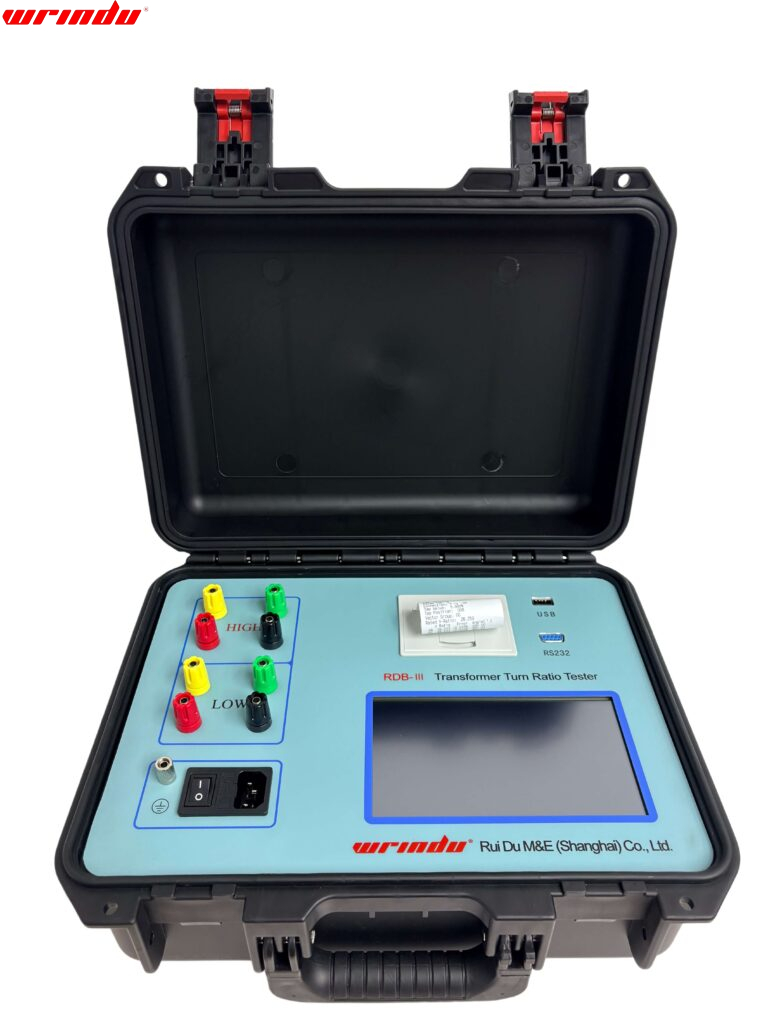
Insurance and grid regulators want the same thing: proof that your assets are safe, traceable, and maintained on time. The strongest reports combine inspection data, test results, corrective actions, and sign-off history into one clear package. For China factory, manufacturer, wholesale, supplier, OEM, and custom projects, this is also liability protection in documented form.
IEC 60076 vs. IEEE C57 Standards for Audit-Ready Documentation
What makes a report audit-ready?
An audit-ready report is one that lets a reviewer verify every claim without chasing extra files. It should show asset identity, test method, date, technician, calibration status, and pass or fail result in one chain of evidence. In our production runs, the best reports reduce follow-up questions because each data point connects directly to a traceable record.
For an insurance auditor, that means the report proves the equipment was inspected and that defects were handled before loss occurred. For a grid regulator, it means the report proves compliance with maintenance intervals, safety limits, and operational readiness. Wrindu has seen that the fastest approvals usually come from reports that are complete on the first submission, not from reports that look polished but lack proof.
Why do auditors care about liability protection?
Auditors care about liability because incomplete records create uncertainty, and uncertainty becomes risk. When a transformer, breaker, cable, or battery system fails, the first question is often whether the owner can prove the asset was tested correctly and on schedule. A strong report turns maintenance into documented defense.
In practice, liability protection comes from three layers: traceable data, consistent wording, and retained evidence. If one technician records a partial discharge test at 2.1 kV while another writes only “normal,” the second entry is weak in an insurance review. Wrindu recommends standardizing the language so every test result is tied to the exact measured value, limit, and action taken.
Which data fields matter most?
The most useful fields are often the ones teams forget under pressure. You need asset ID, location, manufacturer, serial number, service age, test date, ambient conditions, method used, calibration reference, technician name, and next due date. For OEM and factory buyers in China, buyer groups often expect export-ready traceability plus bilingual formatting when reports move across internal and customer teams.
A practical report also includes defect severity, immediate risk level, and corrective action deadline. That matters because insurers do not just ask whether a fault existed; they ask whether the fault was escalated quickly enough. In our experience, reports that include “accept / monitor / repair now” decisions are easier to defend than generic narrative summaries.
How should the report structure flow?
A clear structure helps the reader move from identity to evidence to decision. Start with an executive summary, then asset overview, test scope, results, deviation notes, photos, corrective action, and sign-off. This order works because it answers the auditor’s first question immediately: what was checked, what was found, and what happens next?
A useful structure is shown below.
This layout works especially well for factory, wholesale, and supplier reporting because it keeps the document usable by engineering, compliance, and management teams at the same time. Wrindu uses this same logic when supporting custom and OEM documentation packages for power testing equipment.
How do you write for insurance reviewers?
Insurance reviewers want short statements backed by measurable facts. Avoid vague phrases like “equipment appears fine” or “minor issue noted,” because those phrases do not prove control of risk. Replace them with specifics such as insulation resistance fell within the accepted band, the deviation was logged, and the asset remained in monitored service.
Based on field use, the strongest wording shows three things: what was measured, what threshold was used, and what action followed. Example: “Cable insulation resistance measured 1,200 MΩ at 500 V, exceeding the minimum internal threshold of 500 MΩ; asset returned to service with no restriction.” That style reads like evidence, not marketing.
When should grid regulators see follow-up actions?
Follow-up actions should be visible as soon as a report shows any exception. Grid regulators care less about whether a defect exists and more about whether it is controlled, documented, and closed within a realistic timeframe. A report without closure dates can look like a pending risk, even when the technical issue is small.
For recurring issues, set a repair window and escalation rule. For example, a low-risk anomaly might require retest within 30 days, while a protection-system failure may need immediate lockout and same-day escalation. This kind of timing discipline is exactly what keeps liability arguments from becoming liability claims.
How can factories improve report quality?
Factories improve report quality by treating documentation like a process, not an afterthought. The best results come when test templates, asset labels, calibration records, and photo standards are locked before the inspection begins. In many China manufacturer and wholesale operations, poor reporting is not caused by lack of data but by inconsistent naming and missing source documents.
A common failure mode is hand-entered data copied from memory instead of from instruments. Another is mixing one asset’s photo set with another asset’s test sheet during busy shifts. Wrindu has found that barcode scanning, fixed field names, and a final checklist cut these errors sharply in OEM and custom production environments.
What makes reports easier to defend in disputes?
Defensible reports are built with evidence that survives challenge. That means time-stamped readings, calibration certificates, before-and-after photos, and signed review history. If a claim is disputed, the person reviewing the file should be able to reconstruct the sequence of events without asking for extra files.
The key is consistency across all records. If the site log says one date, the test sheet says another, and the photo metadata says a third, the report loses credibility fast. A clean data chain is the simplest way to reduce dispute exposure and show that the factory, supplier, or OEM followed a controlled process.
Where do digital tools add real value?
Digital tools add value when they reduce manual errors and speed up retrieval. Asset health reports become far more useful when test data, photo evidence, and corrective actions sit in one searchable system. That matters for large factories, utility contractors, and wholesale teams that handle many sites or many customers at once.
The biggest gain is not pretty dashboards; it is faster audit response. If a regulator asks for every report related to a specific cable route or substation bay, a searchable system can pull the file set in minutes instead of hours. Wrindu recommends systems that preserve raw values, not only summarized pass/fail results, because summary-only records are weak during detailed reviews.
Wrindu Expert Views
“A report only protects you when it can be checked line by line. In power equipment work, we always build documents so a third party can verify the asset, the method, the measured result, and the action without asking for extra explanation. That is the difference between paperwork and liability protection.”
— Wrindu engineering perspective
Are China suppliers ready for export audits?
Yes, but only if the reporting package is built for export expectations from the start. Overseas buyers often want traceable test records, bilingual summaries, calibration proof, and model-specific compliance references. China factory and supplier teams that serve OEM customers usually perform best when the report format is standardized across every shipment.
Export audits also punish inconsistency more than complexity. A simple, repeatable report with exact model naming and controlled revision history is usually stronger than a dense report that changes format every month. For wholesale and custom orders, that consistency helps purchasing teams approve faster and reduces back-and-forth before shipment.
Conclusion
The best insurance and grid audit reports do not try to sound impressive; they make proof easy to verify. If you want real liability protection, focus on traceable data, fixed structure, measurable limits, and fast corrective-action tracking. For Wrindu, and for any China manufacturer, supplier, OEM, or custom factory operation, the winning report is the one that tells a complete technical story with no gaps.
To improve your next report, standardize the asset profile, document every threshold, attach calibration evidence, and keep photo and sign-off records in one controlled file set. That approach reduces audit friction, protects against disputes, and makes your compliance process stronger over time.
FAQs
What is the most important part of an audit report?
The most important part is traceable evidence, because auditors need to verify each result against the asset, method, date, and responsible person.
How long should a professional compliance report be?
Long enough to prove the asset’s condition and actions taken, but short enough that reviewers can find key facts quickly. Clarity matters more than page count.
Do photos really help with insurance reviews?
Yes. Photos support the written record, especially when they show serial plates, defect conditions, repair status, and post-fix verification.
Why is calibration evidence important?
Calibration evidence proves the test instrument was trustworthy at the time of inspection, which strengthens the credibility of the measurements in the report.
Can one report work for both insurance and grid compliance?
Yes, if it includes asset identity, measured results, corrective actions, and sign-off history in a format that is easy to audit from both perspectives.
Related articles
 SF6 Leak Detector Sensitivity: Select a Method for the Inspection TaskKnowledge
 Cable Fault Locator Selection for Urban Networks: Routes, Noise and AccessKnowledge
 Substation Battery Load Bank Sizing: Duty, Voltage Range and Heat RejectionKnowledge
 CT Polarity, Ratio and Burden Testing: Find Wiring and Loading ErrorsKnowledge