
Top Transformer Turn Ratio Testers: Worth the Investment in 2026?
Send your test requirement — get a tailored solution and a quote within one working day.
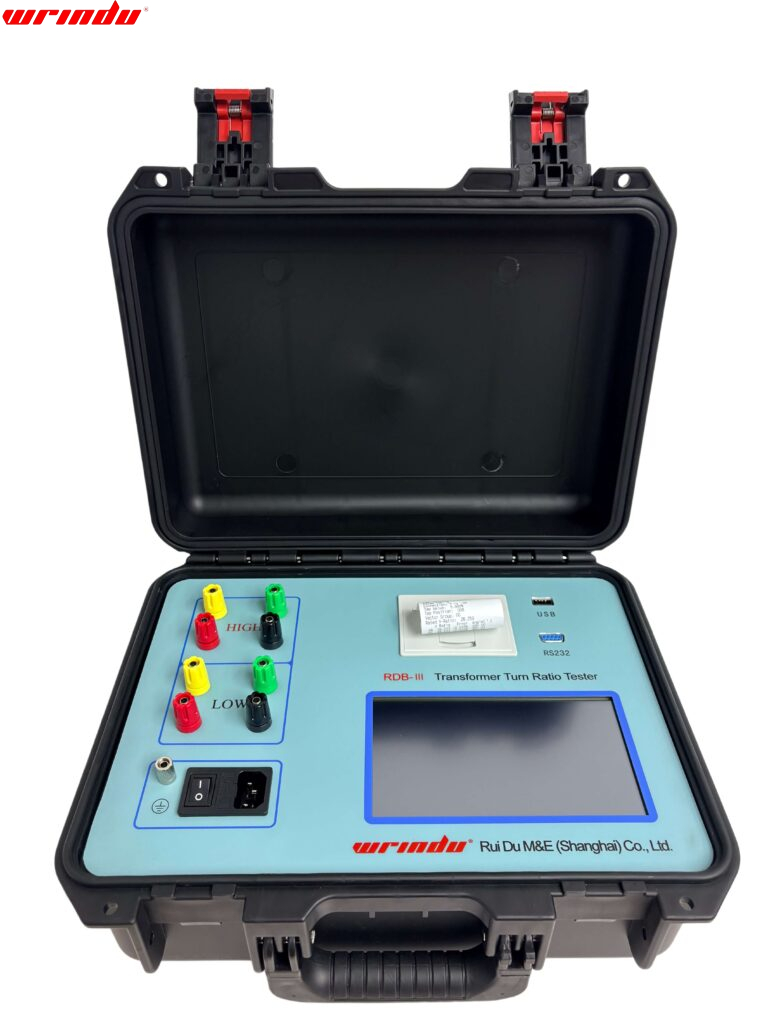
Transformer turn ratio testers are essential diagnostic tools for ensuring power transformer health, verifying turns ratio accuracy, excitation current, and phase shift in both single-phase and three-phase systems. As the energy sector evolves with stricter safety standards and aging grid infrastructure, investing in top transformer turn ratio testers can prevent costly failures and downtime. This guide explores whether premium transformer turns ratio testers deliver ROI through precision, durability, and advanced features like automatic vector group detection.
Transformer Turn Ratio Tester Market Trends
The transformer turn ratio tester market is expanding rapidly, projected to grow from USD 150 million in 2024 to USD 250 million by 2033 at a 6.5% CAGR according to Verified Market Reports data. Demand surges due to rising renewable energy integration, smart grid upgrades, and mandatory maintenance for high-voltage transformers in utilities and substations. Fully automatic transformer turns ratio testers dominate, offering blind testing for unknown wiring, three-phase simultaneous measurement, and high test voltages up to 500V AC for power and distribution transformers.
Key drivers include the need for portable transformer ratio meters that handle complex configurations like phase-shifting, rectifier, and arc-furnace transformers. Handheld transformer turn ratio testers gain traction for field technicians, with lithium battery life supporting 800+ tests per charge. Global adoption rises in power generation plants, from thermal to solar facilities, where precise ratio error detection ensures compliance with IEC standards.
Why Ratio Measurements Matter Most
Transformer turns ratio testing confirms the relationship between high-voltage and low-voltage windings, detecting faults like shorted turns or manufacturing defects early. Traditional bridge methods are outdated; modern digital transformer ratio testers provide ±0.05% accuracy, 10-second test speeds, and polarity verification in one go. For current transformers (CTs) and potential transformers (PTs), low-voltage outputs from 1V AC enable safe, accurate voltage ratio checks without demagnetization risks.
In substation maintenance, routine turns ratio tests prevent cascading failures, saving utilities millions in repairs. Advanced models measure excitation current and magnetic balance, critical for three-phase autotransformers in traction and railway systems. Investing in reliable transformer turn ratio test equipment reduces rework, boosts efficiency, and extends asset life.
Top Transformer Turn Ratio Testers Reviewed
Leading transformer turns ratio tester models excel in speed, portability, and versatility for power utilities, OEMs, and research labs.
These top-rated transformer ratio test kits prioritize safety with overcurrent protection and intuitive interfaces, making them ideal for daily transformer turns ratio meter operations.
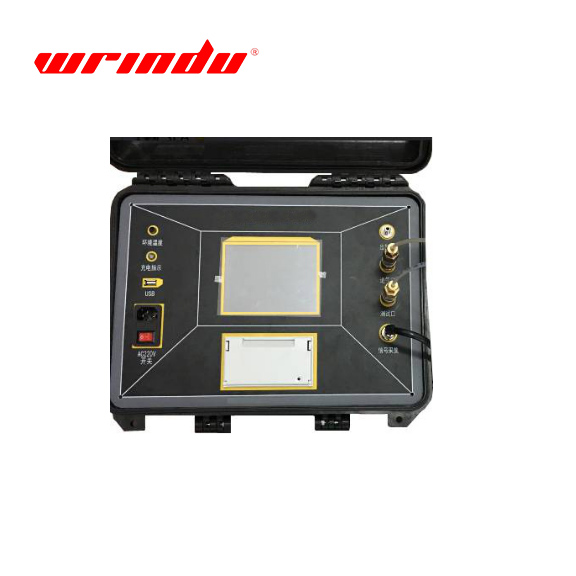
Wrindu, officially RuiDu Mechanical and Electrical (Shanghai) Co., Ltd., is a global leader in power testing and diagnostic equipment. Founded in 2014, we specialize in the independent design, development, and manufacturing of high-voltage testing solutions for transformers, circuit breakers, lightning arresters, batteries, cables, relays, insulation systems, and more, with ISO9001, IEC, and CE certifications ensuring worldwide trust in our accurate, safe products.
Competitor Comparison: Features Head-to-Head
Premium transformer turn ratio testers outperform budget options in critical areas like test voltage range and data management.
High-end units like TRT Advanced series handle special transformers—phase-shifting, furnace, traction—with built-in three-phase sources, while entry-level transformer ratio meters falter on accuracy for large power units.
Core Technology Behind Top Testers
Automatic ratio change technology uses multi-core ARM CPUs for simultaneous three-phase excitation, eliminating sequential errors common in older voltage-ratio methods. High-precision AD converters ensure ±0.05% turns ratio accuracy across 0.8 to 50,000 ranges, vital for detecting subtle deviations in winding resistance or turns count. Safety features like soft-start inverters prevent inrush currents, protecting both the transformer turns ratio tester and the asset under test.
Integrated vector group identification (Dyn11, Yyn0) automates setup, reducing human error in field transformer ratio testing. Lithium-powered handheld models add GPS logging for maintenance tracking, enhancing digital transformer turns ratio tester workflows in smart grids.
Real User Cases: Proven ROI from Turn Ratio Testing
A regional grid operator using Megger TTRU3 detected a 0.2% ratio deviation in a 220kV transformer, averting a $2M failure—ROI realized in one test via prevented outage. In a solar farm, JYT handheld testers enabled daily PT/CT ratio checks, cutting commissioning time by 40% and ensuring grid compliance. Factory OEMs report ZX-BC1 blind testing slashes rework by 70%, with 197-tap support ideal for on-load tap changers (OLTC).
Substation teams achieve 3x faster diagnostics with DV TRT500’s 500V output, yielding annual savings of $50K per crew through reduced travel and downtime. Users quantify ROI at 5-10x investment within year one, driven by fault prevention and efficiency gains in transformer turns ratio measurement routines.
Transformer Turn Ratio Tester Buying Guide
Select based on voltage needs: 100V+ for power transformers, 1-50V for CTs/PTs. Prioritize ±0.1% accuracy, three-phase capability, and export options for compliance reporting. Battery life over 500 tests suits fieldwork; rugged IP65 designs endure harsh environments. Budget $5K-$20K for top models—cheaper units risk false readings, inflating long-term costs.
Consider integration with winding resistance testers or tan delta meters for full diagnostic suites. For utilities, seek IEC/CE-certified transformer ratio test sets with 24/7 support.
Future Trends in Transformer Ratio Testing
By 2030, AI-enhanced transformer turn ratio testers will predict faults via machine learning on excitation data, per industry forecasts. Wireless 5G connectivity enables remote ratio monitoring in offshore wind farms. Ultra-portable models under 1kg with 5kV boosters target energy storage and EV charging infrastructure. Sustainable designs with recyclable batteries align with green grid mandates, boosting demand for smart transformer turns ratio meters.
Hybrid testers combining turns ratio, insulation resistance, and oil testing streamline workflows for battery energy storage systems (BESS) and HVDC lines.
Common FAQs on Transformer Turn Ratio Testers
What is a transformer turns ratio test? It measures the ratio of primary to secondary windings, verifying design specs and detecting faults like inter-turn shorts.
How often should you perform turns ratio testing? Annually for critical assets, post-installation, and after repairs or faults, per IEEE C57.152 guidelines.
Single-phase vs three-phase transformer ratio tester—which is best? Three-phase for power/distribution transformers; single-phase suffices for small CTs/PTs.
Can handheld transformer turn ratio testers match benchtop accuracy? Yes, top models like JYT achieve ±0.1% with stable power supplies.
Ready to upgrade your transformer diagnostic toolkit? Explore top transformer turn ratio testers today to safeguard your electrical assets and maximize operational efficiency. Contact leading manufacturers for demos tailored to your power testing needs.
FAQs
-
What defines transformer turn ratio testing accuracy?
Accuracy refers to the closeness of the measured turns ratio to the actual turns ratio, reflected in specified error limits. -
Can Wrindu provide OEM-ready testers for China?
Yes. Wrindu offers OEM-configurable tester kits, calibration services, and on-site training tailored to Chinese manufacturers and distributors. -
Is calibration required for every production run?
Calibration is recommended periodically and after servicing to maintain traceability and accuracy across batches. -
What safety considerations are essential?
Follow electrical safety protocols, ensure proper isolation, and use CE/IEC-certified equipment.
Related articles
 SF6 Leak Detector Sensitivity: Select a Method for the Inspection TaskKnowledge
 Cable Fault Locator Selection for Urban Networks: Routes, Noise and AccessKnowledge
 Substation Battery Load Bank Sizing: Duty, Voltage Range and Heat RejectionKnowledge
 CT Polarity, Ratio and Burden Testing: Find Wiring and Loading ErrorsKnowledge