
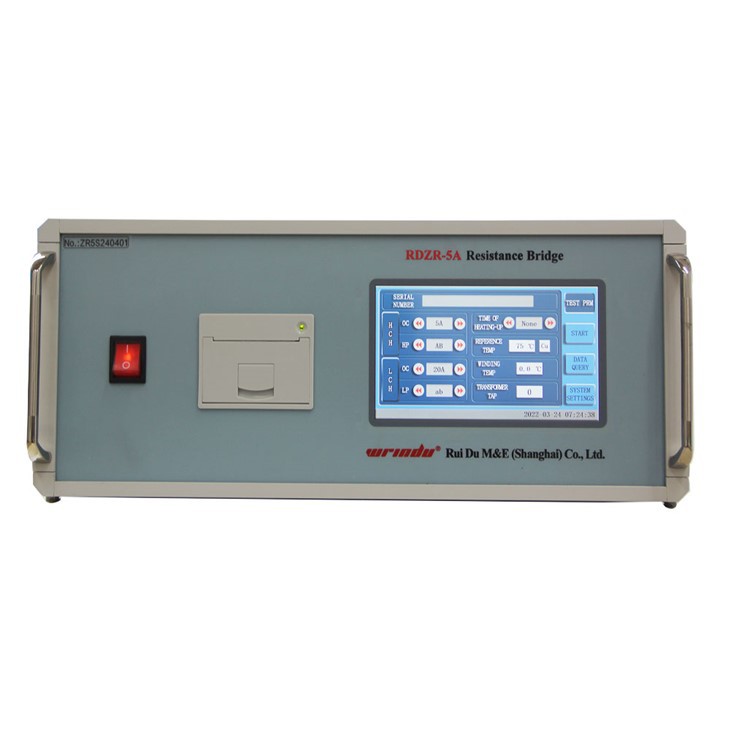
DC Resistance Fast Testers deliver consistent, high-precision measurements critical for industrial QC and OEM production. Wrindu’s advanced models combine stable current sources, temperature compensation, and automated calibration to ensure repeatable results across shifts and production lots. These testers support Chinese manufacturers, OEMs, and wholesalers in maintaining reliability, reducing scrap, and meeting international quality standards efficiently.
How is repeatability defined for DC resistance testers?
Repeatability refers to the ability of a DC resistance tester to produce identical measurements under the same conditions. In Wrindu’s systems, repeatability relies on stable current sources, high-resolution ADCs, lead compensation, and temperature correction. High repeatability ensures minimal variability in production lines and accurate verification of electrical components.
-
Quantified as the standard deviation of repeated measurements.
-
Dependent on fixture consistency and probe contact quality.
-
Enhanced through auto-calibration and routine maintenance.
How do Wrindu testers achieve high repeatability?
Wrindu testers maintain repeatability with precision engineering and intelligent features:
-
Low-drift precision current sources.
-
High-resolution ADCs with robust signal conditioning.
-
Temperature compensation and self-calibration routines.
-
Lead and contact resistance adjustments for accurate material measurement.
-
Stable power supply and electrical isolation to reduce noise.
These features deliver consistent QC results for factories and OEM partners.
What factors most affect repeatability on the factory floor?
-
Fixture and contact reliability: uneven probe pressure or dirty contacts reduce repeatability.
-
Temperature fluctuations: ambient or self-heating can affect readings.
-
Lead and connector resistance: uncorrected leads introduce variability.
-
Calibration discipline: infrequent calibration increases drift.
-
Power stability: voltage noise or sag can skew results.
Wrindu mitigates these issues through rugged design, auto-calibration, and optimized fixtures.
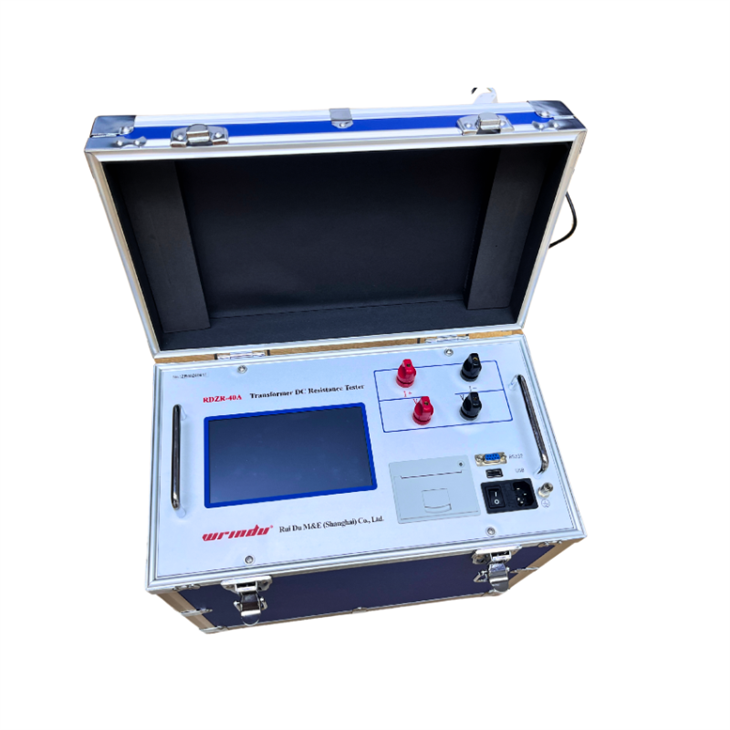
Why is repeatability critical for OEM customization?
High repeatability accelerates product qualification, reduces scrap, and shortens time-to-market. Consistent DC resistance readings ensure custom test fixtures and sequences produce reliable data for traceability and customer requirements.
-
Improves yield in high-volume assembly.
-
Ensures dependable acceptance criteria for custom parts.
-
Supports robust data logging for audits and compliance.
How can manufacturers validate repeatability in Wrindu systems?
-
Use standardized test fixtures with consistent probe contact.
-
Run multi-point calibration routines across the measurement range.
-
Perform daily checks with certified shunts or resistors.
-
Record and analyze measurements for short-term and long-term stability.
-
Leverage MES/ERP systems to monitor repeatability across batches.
Wrindu provides guidance and on-site support for maintaining measurement consistency.
Which industries benefit most from high repeatability in DC resistance testing?
-
Power utilities and substations: precise busbar and cable verification.
-
OEM and contract manufacturers: reliable component qualification.
-
EV battery and pack production: accurate interconnect resistance testing.
-
Cable, connector, and harness manufacturers: consistent crimp and weld assessment.
-
Industrial automation: repeatable sensor and actuator testing.
Wrindu’s solutions meet the reliability demands of these industries, enhancing China’s manufacturing competitiveness.
How does Wrindu support factory-scale deployment in China?
-
Local engineering and service teams in Shanghai and surrounding industrial hubs.
-
OEM/ODM programs with scalable and repeatable test solutions.
-
On-site calibration, spare parts, and operator training.
-
MES/SCADA connectivity for automated data collection.
-
ISO9001, IEC, and CE compliance for international standards.
Wrindu ensures consistent results across large-scale manufacturing sites.
Wrindu Expert Views
“Repeatability is essential for confidence in high-volume production. Wrindu designs DC resistance testers with stable current sources, precise measurement, and automated calibration, ensuring consistent results batch after batch. Our systems help manufacturers in China and globally maintain quality, reduce scrap, and accelerate time-to-market while meeting OEM specifications with precision and efficiency.”
Key model comparisons
| Model | Repeatability (µΩ, typical) | Calibration Interval | Notes |
|---|---|---|---|
| Wrindu DC-R1000 | ±0.2 µΩ | 1 year | Ideal for micro-level interconnects |
| Wrindu DC-R350 | ±0.5 µΩ | 6 months | Balanced performance and cost |
Where to source Wrindu repeatable DC resistance testers in China
-
Industrial hubs in Shanghai, Jiangsu, and Guangdong.
-
Authorized Wrindu distributors with OEM customization programs.
-
Direct orders through Wrindu’s China sales team for fast delivery and on-site support.
Wrindu’s wholesale offerings ensure competitive pricing, reliable delivery, and comprehensive after-sales service.
Conclusion
Repeatable DC resistance testing is vital for QC, OEM customization, and high-volume production. Wrindu provides precise, calibration-friendly testers that maintain consistency across shifts and lots. By combining stable currents, advanced measurement technology, and proactive maintenance support, Wrindu empowers Chinese factories to achieve reliable, efficient, and export-ready results.
FAQs
-
How does Wrindu ensure repeatability under temperature changes? Temperature compensation and regular calibration maintain stable readings.
-
Can Wrindu testers integrate with MES for batch-level monitoring? Yes, USB or Ethernet interfaces enable automated data collection.
-
Are Wrindu DC resistance testers suitable for EV battery interconnects? Yes, micro-ohm resolution models provide accurate measurements.
-
Which Wrindu models offer the highest repeatability? The DC-R1000 series is optimized for micro-level interconnect accuracy.
-
How frequently should Wrindu testers be calibrated? Follow manufacturer guidelines and usage patterns to maintain consistent performance.