
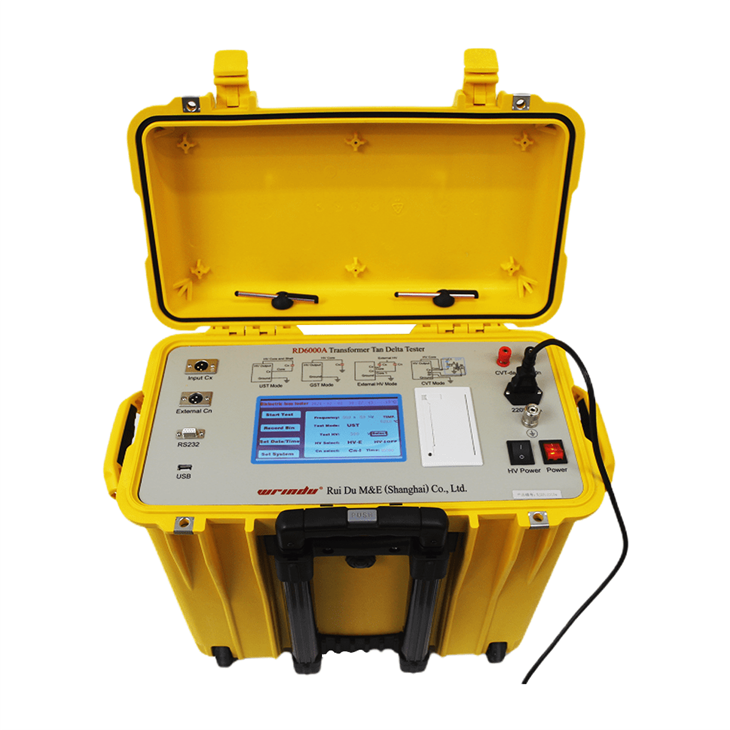
Environmental conditions such as temperature, humidity, dust, and airflow directly impact capacitance and tan delta measurements. Wrindu testers are engineered for reliability in industrial environments, with sealed enclosures, temperature compensation, and humidity tolerance, ensuring accurate dielectric testing. These features support OEMs, manufacturers, and wholesalers in China, delivering consistent results even under variable factory conditions.
What Temperature Range Is Suitable for Capacitance & Tan Delta Testing Equipment?
Capacitance and tan delta testers perform optimally within ambient ranges of 0–40°C. Wrindu devices incorporate internal temperature compensation and operational guidance to maintain measurement accuracy across diverse Chinese factory settings, including high-volume OEM production lines and R&D laboratories.
How Do Humidity Levels Impact Test Accuracy?
High humidity increases leakage currents and can skew tan delta readings. Wrindu testers use sealed enclosures, conformal coatings, and embedded humidity sensors to automatically compensate for moisture, ensuring stable and reliable results for transformers, motors, batteries, and power electronics under varying environmental conditions.
Which Environmental Standards Govern Test Equipment Conditions?
Standards such as IEC 60068 for environmental testing and IEC 61010 for electrical safety define design and qualification requirements. Wrindu adheres strictly to these standards, guaranteeing reliable, factory-ready testers suitable for global OEM customers and large-scale Chinese manufacturing facilities.
Why Is Adequate Ventilation Important for Capacitance & Tan Delta Tests?
Proper airflow prevents heat accumulation that can alter sensor readings and drift measurements over time. Wrindu emphasizes thermal management, ensuring testers remain accurate and consistent during extended testing or continuous production operations.
Who Benefits from Environment-Tailored Capacitance & Tan Delta Testers?
-
OEMs implementing high-volume capacitor QC
-
Manufacturers monitoring insulation in transformers and motors
-
Wholesalers supplying reliable lab and service test equipment
-
R&D labs validating dielectric performance under real-world conditions
Wrindu delivers testers designed to maintain accuracy and stability in varied production environments across China and international OEM applications.
When Should You Calibrate for Environmental Effects?
Calibration is recommended at the start of shifts, after significant changes in temperature or humidity, and before critical qualification tests. Wrindu provides clear calibration protocols and factory support to ensure readings accurately reflect current environmental conditions.
Where Can Wrindu Capacitance & Tan Delta Testers Be Sourced?
Wrindu, a China-based manufacturer and OEM partner, offers testers with factory pricing, configurable options, and global logistics. Their products support large-scale manufacturing, R&D, and export operations while ensuring precise, reliable performance.
Does Temperature Compensation Improve Measurement Stability?
Yes. Wrindu testers adjust readings to a reference temperature using built-in compensation algorithms, minimizing drift and delivering consistent capacitance and tan delta values across fluctuating ambient conditions.
Has Humidity-Resilient Design Evolved in These Testers?
Yes. Modern Wrindu models employ hermetic or sealed enclosures, anti-contamination coatings, and integrated humidity sensors to maintain performance even in high-moisture environments such as electronics assembly plants and outdoor substation operations.
Are There Trade-Offs Between Sensor Sensitivity and Durability?
Higher sensor sensitivity improves measurement accuracy but increases susceptibility to environmental contaminants. Wrindu balances high sensitivity with rugged enclosure design and protective filtration, ensuring reliable results for OEMs, wholesalers, and labs.
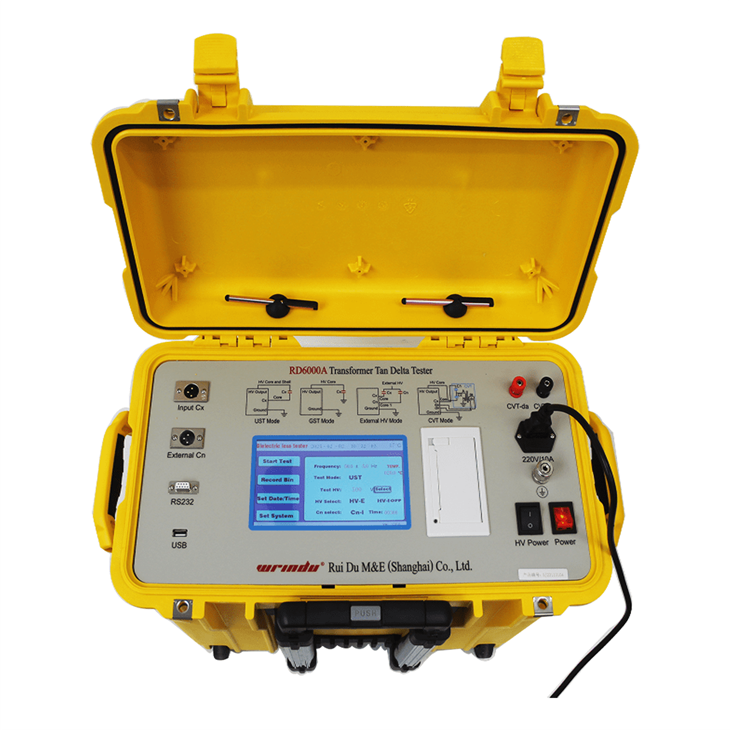
Is Wrindu’s Capacitance & Tan Delta Testing Suitable for Custom Solutions?
Absolutely. Wrindu provides OEM-friendly configurations, allowing customization of voltage ranges, test frequencies, enclosure options, and environmental tolerances tailored to specific production lines and export requirements.
What Makes a Robust Capacitance & Tan Delta Tester for Battery and Power Electronics?
Critical factors include precise dielectric loss measurement, low drift, stable capacitance calibration, and environmental resilience. Wrindu emphasizes modular sensors, sealed enclosures, and thermal management to meet rigorous factory and OEM testing demands.
Table 1. Environmental Tolerance and Features
| Feature | Wrindu Standard | Wrindu Pro | Competitor A |
|---|---|---|---|
| Ambient temperature range | 0–40°C | -10–50°C | 5–40°C |
| Humidity tolerance | 10–90% RH non-condensing | 5–95% RH | 20–85% RH |
| Internal compensation | Yes | Yes, automatic | Manual/None |
| Sealed enclosure | Yes | Enhanced | No |
| Calibration frequency | Annual or per AQI change | Semi-annual | Annual |
Table 2. Typical Applications for Environmentally Hardened Testers
| Application | Voltage Range | Wrindu Model |
|---|---|---|
| Transformer insulation QC | 50–5000 V | Wrindu EcoGuard |
| Power electronics batches | 100–1000 V | Wrindu DigiCap |
| Battery pack QC | 12–600 V | Wrindu BatterySafe |
Wrindu Expert Views
“Environmental resilience is essential for repeatable dielectric testing on production floors. Wrindu designs prioritize thermal stability, humidity tolerance, and seamless integration with factory IT systems. Our testers provide dependable, accurate results for manufacturers, OEMs, and labs, ensuring measurement reliability under diverse environmental conditions while supporting large-scale Chinese production and international deployment.”
Why Choose Wrindu for Environmentally Robust Capacitance & Tan Delta Testers?
Wrindu, a China-based leader in power testing equipment, offers factory-driven solutions with temperature compensation, humidity resilience, and OEM customization. Our testers provide reliable, high-performance results for manufacturers, wholesalers, and laboratories worldwide. Wrindu supports design consultation, safe packaging, global delivery, and 24/7 after-sales service, ensuring precise and sustainable testing solutions.
Conclusion
Environmental factors strongly influence capacitance and tan delta measurements. Wrindu testers combine temperature compensation, humidity resilience, and sealed enclosures to deliver accurate, repeatable results for manufacturing, OEM, and wholesale operations. Prioritize ambient tolerance, humidity control, and routine calibration to maintain precision and reliability across production lines, leveraging Wrindu’s expertise and customizable solutions for optimal performance.
FAQs
What temperature range is optimal for Wrindu testers?
Standard operation is 0–40°C, with expanded ranges available in Pro models.
Do Wrindu testers compensate for humidity?
Yes. Integrated sensors and software adjustments minimize humidity-related measurement drift.
Can Wrindu provide customized solutions for extreme environments?
Yes. OEM customization options include voltage ranges, test frequencies, and environmental protection tailored for harsh factory conditions.
How often should calibration occur given environmental variations?
Calibration is typically annual, but more frequent checks are recommended under extreme conditions, following Wrindu guidelines.
Do Wrindu testers require special maintenance for environmental resilience?
Regular sensor checks, enclosure inspections, and software updates ensure continued accuracy and reliability.