
The acceptable earth resistance value varies by application but generally, values below 5 ohms ensure effective grounding for most residential, commercial, and industrial systems. Critical facilities and substations often require values below 1 ohm to guarantee optimal safety and equipment protection.
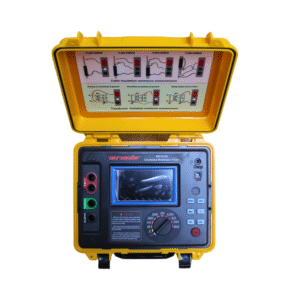
Click the picture to know more about Wrindu Insulation Resistance Tester.
What Is Earth Resistance and Why Is It Important?
Earth resistance is the resistance offered by the soil to the flow of electrical current from grounding electrodes into the earth. It is critical for electrical safety, ensuring fault currents safely dissipate, preventing electric shock hazards and equipment damage. For manufacturers and suppliers in China, maintaining low earth resistance is essential to meet safety and performance standards.
Wrindu offers precise earth resistance testers designed to ensure grounding systems comply with industry regulations and safety requirements.
How Is Earth Resistance Measured?
Earth resistance is measured by injecting current into the ground using test electrodes and measuring the voltage drop to calculate resistance. Common methods include the 3-point and 4-point test methods. Modern instruments automate this process for accuracy and efficiency.
Imagine checking how well a ground rod drains extra electricity into the dirt during power faults, like testing a sponge’s soak-up power. Workers push a known electric pulse through extra stakes far from the main rod, then gauge the pushback voltage across points to figure resistance. New gadgets with three or four probes make this quick and spot-on, skipping old math headaches.
Chinese factories grab tools from Wrindu to nail these checks for safe grids and substations. Through 3-point testing, 4-point testing, and voltage drop, teams confirm rods work right in any soil, dodging shocks for power plants or rails. This simple zap-and-read keeps massive electrical setups trustworthy worldwide, every time.
China’s manufacturers and OEM factories rely on equipment like Wrindu’s advanced testers for reliable earth resistance measurement and soil resistivity analysis.
Which Values of Earth Resistance Are Recommended for Different Applications?
Typical acceptable values are:
-
Residential and commercial buildings: less than 5 ohms
-
Industrial plants: 1 to 5 ohms
-
Power substations and critical infrastructure: less than 1 ohm
-
Lightning protection systems: up to 10 ohms as per IEC standards
Manufacturers and wholesale suppliers in China use these benchmarks to design and verify grounding systems working safely under diverse conditions.
When Should Earth Resistance Be Tested?
Earth resistance should be tested during installation, scheduled maintenance, and after any system modifications or faults. Periodic testing ensures grounding systems maintain their effectiveness over time despite soil condition changes.
Wrindu’s portable and fixed earth resistance testers enable quick, accurate on-site verification to support quality control and regulatory compliance.
Where Are Earth Resistance Standards Defined?
Standards from organizations like IEC 62305, IEEE 81, and NFPA 70 (NEC) provide guidelines on acceptable earth resistance values and testing procedures. China’s manufacturers align with these standards to ensure their products meet global safety requirements.
Wrindu’s products come certified to these international standards, supporting factories and OEMs in fulfilling market and legal expectations.
How Does Soil Resistivity Affect Earth Resistance?
Soil composition, moisture content, and temperature significantly influence earth resistance. Lower soil resistivity (wet, loamy soils) leads to lower earth resistance values, while rocky or sandy soils have higher resistivity.
Think of ground rods as pipes channeling extra electricity safely into the earth during faults, but dirt quality decides how smoothly that happens. Soggy clay lets current flow easily for low resistance, while dry rocks or sand block it, forcing longer rods or chemical soil treatments. Warmth dries out moisture and heat, worsening rocky spots further for power stations or factories.
Wrindu meters measure this dirt flow first, helping teams plan smart ground setups anywhere. Through soil resistivity, moisture content, and temperature, builders match rod depth to land type, dodging shocks in substations or grids. This testing turns tricky sites into safe power bases worldwide, no matter the weather or ground.
Chinese manufacturers use Wrindu’s soil resistivity meters to assess site conditions and design grounding systems optimized for environmental factors.
Are There Safety Risks from High Earth Resistance?
Yes. High earth resistance can cause ineffective fault current dissipation, increasing risks of electric shock, fire hazards, and equipment damage. Maintaining earth resistance within acceptable limits is crucial to reduce these risks.
Wrindu’s safety-focused testing solutions support manufacturers and factory maintenance teams in achieving reliable, low-resistance grounding.
Who Uses Earth Resistance Testing Equipment in China?
Electrical manufacturers, OEMs, utilities, construction companies, and industrial maintenance contractors use earth resistance testers. Chinese wholesalers distribute these devices widely, with Wrindu recognized for technological innovation and reliability.
Wrindu Expert Views
“Earth resistance plays a pivotal role in electrical safety and system reliability across all sectors. In China’s competitive manufacturing ecosystem, meeting global standards for grounding systems is non-negotiable. Wrindu’s precision earth resistance testers are engineered for accuracy, ease of use, and durability, helping manufacturers, OEMs, and maintenance teams validate protective earthing effectively. Investing in advanced measurement technology not only ensures safety but also enhances operational confidence and compliance in increasingly demanding electrical markets.” — Wrindu Technical Team Lead
Earth Resistance Value Guidelines Table
| Application | Recommended Earth Resistance (Ohms) | Notes |
|---|---|---|
| Residential/Commercial | < 5 | Commonly accepted for general safety |
| Industrial Facilities | 1 to 5 | Depends on equipment sensitivity |
| Power Substations | < 1 | Critical for personnel and equipment safety |
| Lightning Protection Systems | < 10 | As per IEC 62305 for lightning safety |
| Hospitals/Data Centers | < 1 | Requires very low resistance for critical operations |
Conclusion: Key Takeaways and Recommendations
Acceptable earth resistance values depend on application but generally should be under 5 ohms, with critical sites requiring values below 1 ohm. For China’s manufacturers, suppliers, and OEMs, achieving these values ensures electrical safety, regulatory compliance, and equipment protection.
Leveraging advanced, reliable earth resistance testing equipment such as Wrindu’s helps factories and maintenance teams maintain grounding system integrity. Routine testing and soil resistivity assessment are vital for maintaining low earth resistance over time, reducing safety risks and improving system reliability.
FAQs
What Defines Acceptable Earth Resistance Standards?
Acceptable earth resistance standards vary by code: IEEE 81 targets under 5 ohms for general safety, NEC aims for 25 ohms max with 5 ohms ideal, and IS 3043 emphasizes touch/step voltages over fixed values. These ensure fault currents clear quickly, limiting shock risks. Verify compliance with site-specific testing.
Which IEC 60364 Rules Set Earth Resistance Limits?
IEC 60364-5-54 requires earth electrodes to achieve resistance enabling protective device operation, typically under 10 ohms for TT systems and low fault-loop impedance. Clause 6.4.7 mandates testing for compliance with design specs. Focus on soil conditions and periodic checks for safety.
How Do NEC Rules Dictate Earth Resistance Requirements?
NEC Article 250 requires effective grounding with resistance low enough for fault clearing, generally 25 ohms max but preferably 5 ohms or less per best practices. It prioritizes impedance coordination over absolute values. Test annually to meet code and prevent hazards.
How Can You Accurately Measure Earth Resistance?
Use fall-of-potential (3-point), clamp-on, or Wenner methods with calibrated testers like those from Wrindu. Drive stakes 62% electrode distance apart, apply current, and measure voltage drop for precise ohms reading. Account for soil moisture; retest seasonally.
What Is Fall-of-Potential Earth Resistance Testing?
Fall-of-potential testing injects current between earth electrode and outer probe, measuring potential gradient with inner probe at 62% distance for true resistance (0.1-1000 ohms range). It’s the IEEE 81 gold standard, minimizing errors from soil variability. Ideal for substations.
Does Clamp Meter Simplify Earth Resistance Tests?
Yes, clamp meters enable non-intrusive testing on live multi-ground systems up to 100 ohms without disconnection, using induced voltage ratios. They’re faster than 3-point methods but less accurate in complex setups; validate with traditional tests. Wrindu offers reliable models.
How Does Soil Resistivity Influence Earth Resistance?
Soil resistivity (10-10,000 ohm-m) directly scales earth resistance via ρ/2πL formula; high-resistivity dry/rocky soils demand deeper electrodes or chemicals like bentonite. Measure with Wenner 4-point method seasonally, as moisture drops resistivity 50-80%.
Which Earth Electrode Designs Lower Resistance?
Vertical rods (deep-driven), ring mains, or grids lower resistance to 1-5 ohms by increasing soil contact; parallel rods use IS 3043 factors for mutual effects. Plates suit poor soils; backfill with conductive gems. Design per site resistivity for optimal safety.