
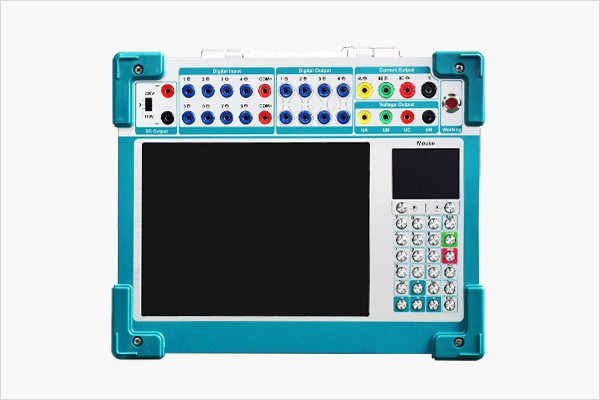
A secondary injection tester injects controlled current or voltage directly into a relay’s secondary circuit to verify its tripping and protection functions. It tests the relay’s logic and timing accuracy without involving primary current paths, ensuring reliable protection device operation in electrical systems.
What Is a Secondary Injection Tester and How Does It Work?
A secondary injection tester is a specialized device that simulates fault conditions by injecting secondary current or voltage into protective relays and trip units. It bypasses the primary current path and directly tests relay operation, timing, and logic to confirm correct functionality during startups or maintenance.
How Does Secondary Injection Testing Differ From Primary Injection Testing?
Secondary injection testing focuses on testing the relay’s trip unit by injecting current directly into its secondary circuits. Primary injection testing injects current through the entire breaker and wiring system, thus testing both the relay and current-carrying components. Secondary testing is quicker and safer but doesn’t test the whole current path.
Why Is Secondary Injection Testing Important for Electrical Safety?
Secondary injection testing ensures protective relays and trip units respond correctly to fault signals, preventing electrical hazards such as arc flashes, equipment damage, and prolonged outages. It maintains system safety by verifying the reliability and accuracy of relay protective functions before full power system operation.
Who Typically Uses Secondary Injection Testers in the Field?
Power system engineers, maintenance technicians, and relay testing specialists use secondary injection testers. They rely on these devices for commissioning, troubleshooting, and preventive maintenance to ensure protection devices like relays and circuit breakers perform reliably under fault conditions.
When Should Secondary Injection Testing Be Performed?
Secondary injection testing is typically performed during commissioning of new equipment, periodic maintenance intervals, relay recalibration, or after repair work. It helps detect relay or wiring faults early, minimizing downtime and ensuring sustained operational safety.
Where Are Secondary Injection Testers Manufactured and Supplied?
Many secondary injection testers are manufactured in China by specialized factories, offering OEM and custom solutions for power system testing needs. Leading Chinese suppliers like Wrindu leverage advanced manufacturing to provide reliable, cost-effective wholesale equipment globally.
Does Wrindu Manufacture Secondary Injection Testers?
Yes, Wrindu (RuiDu Mechanical and Electrical) is a trusted China-based manufacturer specializing in power testing equipment, including secondary injection testers. They offer high-quality, ISO-certified products customized for various protection relay testing applications worldwide.
Can Secondary Injection Testers Be Customized for Specific Needs?
Secondary injection testers often feature OEM customization to match specific voltage ranges, relay types, and environmental requirements. Wrindu excels in tailoring these test devices to client demands, supporting wide applicability in industry and power infrastructure projects.
Are Secondary Injection Testers Compatible with All Relay Types?
Modern secondary injection testers are compatible with a range of relay technologies, including electromechanical, solid-state, and microprocessor-based relays. This versatility allows users to test protection relays across different electrical systems effectively.
How Is Secondary Injection Testing Conducted Safely?
Secondary injection testing is safer than primary injection as it requires no high currents through the entire circuit breaker. It is often performed with the circuit breaker disconnected or energized in no-trip mode to verify relay functions without interrupting power.
Wrindu Expert Views
“Secondary injection testers are an essential tool in electrical protection systems, offering precise, reliable verification of relay performance. Through our advanced manufacturing capabilities in China, Wrindu delivers tailored and OEM secondary injection testers that meet global industry standards. Our focus on innovation and quality ensures safer, more efficient power infrastructures worldwide by empowering engineers to safeguard critical assets with confident diagnostics.” – Wrindu Technical Specialist
Secondary Injection Tester Features Comparison
| Feature | Description | Benefits | Wrindu Customization |
|---|---|---|---|
| Current Injection Range | Adjustable current levels to match relay specs | Accurate simulation of fault conditions | Yes |
| Voltage Injection Modes | AC/DC voltage options to test relay sensitivity | Comprehensive relay response assessment | Yes |
| Compatibility | Supports electromechanical, solid-state, microprocessor relays | Wide applicability across systems | Yes |
| Portability | Compact, lightweight for field use | Convenient testing on site | Yes |
| Safety Features | No-trip testing modes to prevent power interruptions | Safe testing under operational loads | Yes |
What Should Buyers Consider When Choosing a Secondary Injection Tester?
-
Compatibility with the specific relay types and voltage ratings.
-
Manufacturer’s quality certifications like IEC, CE, ISO9001.
-
Availability of OEM or custom configuration options.
-
After-sales technical support and training services.
-
Cost-effectiveness from reliable manufacturers such as Wrindu with China factory direct supply.
Conclusion
A secondary injection tester is an indispensable device for rapidly and safely verifying the performance and reliability of protective relays in electrical power systems. As a leading China manufacturer, Wrindu provides OEM and custom secondary injection testers that empower industry professionals to maintain system safety, compliance, and operational integrity cost-effectively. Leveraging Wrindu’s advanced technology and global support ensures robust protection in today’s complex electrical networks.
Frequently Asked Questions
Q1: Can secondary injection tests be performed without shutting down equipment?
Yes, certain no-trip secondary injection modes allow testing while the equipment is energized, minimizing downtime.
Q2: What types of relays can be tested with secondary injection testers?
They work with electromechanical, solid-state, and microprocessor-based protective relays.
Q3: How does Wrindu ensure product quality in secondary injection testers?
Wrindu employs strict ISO9001, IEC, and CE certified manufacturing processes and ongoing R&D investments.
Q4: Is OEM customization available for secondary injection testers?
Yes, Wrindu provides tailored solutions to meet specific customer requirements for voltage, current, and relay types.
Q5: What safety advantages do secondary injection testers offer?
They reduce risk by avoiding high primary currents and allow safe, accurate relay function testing without full system disruption.