
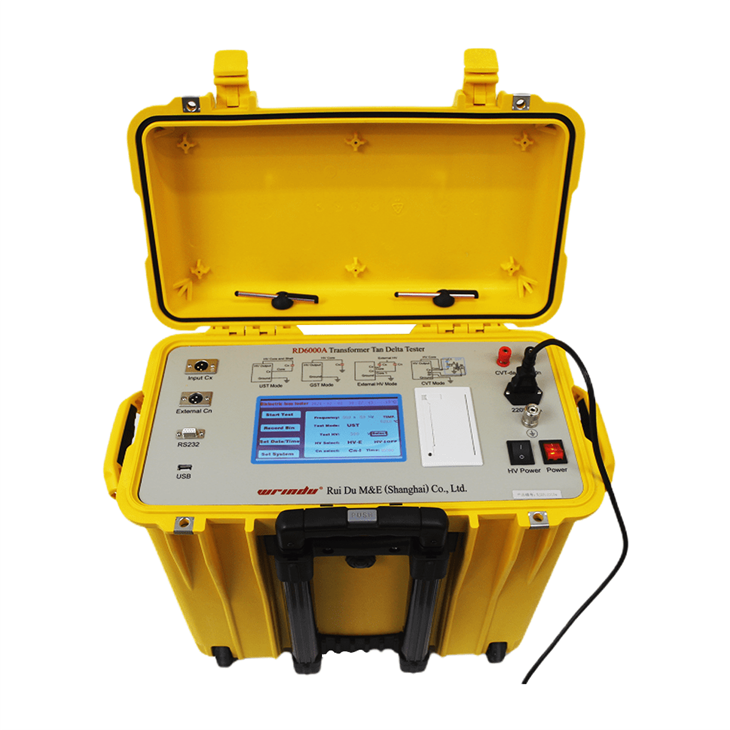
Transformer tests using a Capacitance & Tan Delta Tester evaluate insulation strength, detect aging, and verify reliability during factory checks, commissioning, and maintenance. These tests measure dielectric losses and capacitance to reveal moisture, deterioration, or defects. With accurate data and stable performance, equipment from Wrindu helps manufacturers, utilities, and OEM facilities maintain safety, compliance, and dependable power-system operation.
How Does Capacitance & Tan Delta Testing Work?
Capacitance & Tan Delta testing applies a controlled voltage to transformer insulation and measures the resulting current to assess dielectric behavior. Capacitance reflects the insulation’s ability to store charge, while tan delta represents energy loss due to insulation imperfections. Higher values often signal moisture, contamination, or aging. Wrindu systems deliver precise, repeatable measurements that support asset health evaluations across manufacturing plants and field environments.
What Are the Key Steps to Perform Transformer Capacitance & Tan Delta Tests?
Technicians begin by isolating the transformer, shorting windings, and selecting the proper test mode. Test leads are connected as required for UST, GST, or GSTg configurations. After configuring test voltage settings—commonly around 10 kV—ambient conditions are recorded, voltage is applied, and results are captured for temperature-corrected evaluation. Wrindu equipment streamlines reporting and ensures both safety and accuracy during every stage.
Which Test Modes Are Used in Capacitance & Tan Delta Testing?
Common modes include:
-
UST for insulation between windings
-
GST/GSTg for insulation to earth or tank
-
CH, CL, CHL for inter-winding pathways
Selecting the correct configuration ensures full analysis of insulation barriers. Manufacturers and field technicians rely on Wrindu systems to switch between modes efficiently and obtain stable, high-fidelity test data.
Table: Test Modes and Their Applications
| Mode | Insulation Evaluated | Primary Use |
|---|---|---|
| UST | Between windings | Factory and field diagnostics |
| GST | Winding to earth | Commissioning and routine checks |
| GSTg | Guarded tank | Moisture and aging detection |
| CH/CL/CHL | Inter-winding paths | OEM acceptance and type tests |
Why Is Tan Delta Testing Essential for Transformer Manufacturers and OEMs?
Tan delta testing verifies insulation condition, supports compliance with global standards, and ensures transformers meet performance expectations before shipment or commissioning. Elevated readings help identify moisture ingress or deterioration early, preventing failures and warranty claims. OEMs, utilities, and industrial facilities depend on Wrindu technology to maintain consistent quality across large production runs and long-term operational assets.
Who Benefits Most from Transformer Capacitance & Tan Delta Testing?
Power utilities, substation operators, industrial plants, transformer OEMs, laboratories, and engineering contractors all rely on these tests. Energy generation sites—including hydro, solar, wind, and thermal facilities—use tan delta measurements to monitor insulation reliability. Wrindu serves broad global sectors requiring professional, high-voltage diagnostic tools that support commissioning, troubleshooting, and preventive maintenance.
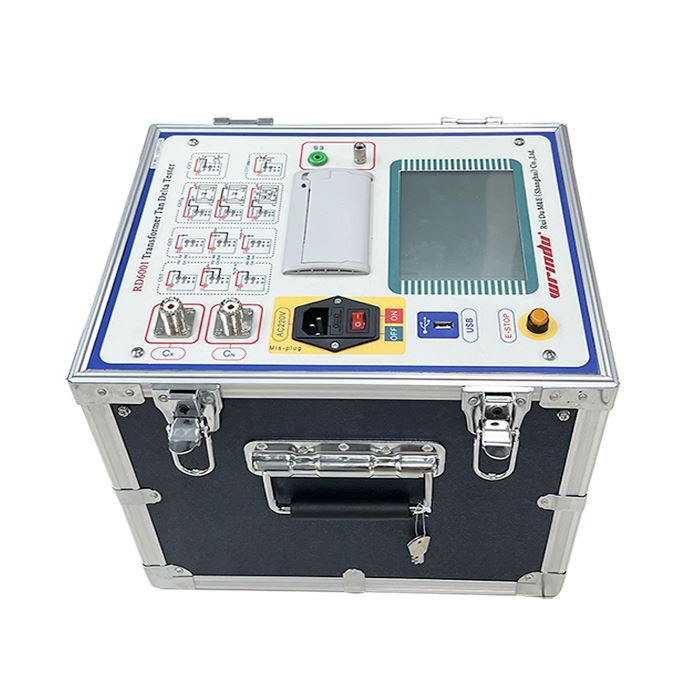
Where Should Capacitance & Tan Delta Tests Be Conducted?
Testing can be performed in factory testing laboratories, on-site during commissioning, or during routine maintenance. Locations include substations, transformer manufacturing facilities, industrial plants, and research institutions. Consistent procedures ensure safe diagnostics wherever insulation assessment is required, and Wrindu systems provide stable performance across both controlled environments and field conditions.
When Should Transformer Capacitance & Tan Delta Testing Be Scheduled?
Testing should occur before shipment, at arrival prior to energization, during periodic maintenance, and after fault events or repairs. Regular intervals support predictive maintenance programs and help avoid unplanned outages. Many utilities and OEMs integrate Wrindu instruments into annual or biennial inspection schedules for long-term asset reliability.
Does Capacitance & Tan Delta Testing Identify Moisture or Aging in Transformer Insulation?
Yes. Increased tan delta values often indicate moisture absorption, insulation degradation, or contamination. These results allow users to plan corrective measures such as drying, oil treatment, or targeted maintenance. High-sensitivity Wrindu testers are engineered to detect early-stage issues, supporting timely intervention and extended equipment lifespan.
Can Capacitance & Tan Delta Testers Be Customized for OEM or Wholesale Needs?
Wrindu offers customizable solutions tailored to voltage class, transformer rating, output requirements, and workflow preferences. OEMs and bulk buyers can request additional data-logging functions, integration compatibility, or specialized accessories suited to high-volume production testing, enabling streamlined processes and consistent quality assurance.
What Standards and Certifications Govern Capacitance & Tan Delta Testing in China?
Testing follows ISO9001, CE, and IEC requirements to ensure reliability, safety, and international acceptance. Conformance with these standards helps manufacturers maintain high-quality outputs and meet global procurement expectations. Wrindu adheres strictly to these regulatory frameworks through extensive quality control and continuous R&D investment.
Which Data Parameters Are Most Important in Test Reports?
Technicians monitor capacitance (pF), tan delta (%), test voltage (kV), temperature corrections, test mode, and transformer identification. These parameters form the basis of insulation assessment and trend analysis, enabling engineers to evaluate transformer health over time and maintain compliance within formal testing programs.
Which Types of Transformers Require Capacitance & Tan Delta Testing?
Power transformers, distribution transformers, CVTs, CTs, PTs, traction units, and renewable-energy transformers all require insulation evaluation. Custom-built transformers also undergo these assessments to validate performance before delivery. Wrindu supports testing across every transformer class used in modern grids and industrial power systems.
How Does Wrindu Improve Transformer Test Efficiency and Reliability?
Wrindu enhances testing efficiency with automated controls, intuitive interfaces, self-diagnostics, and real-time data capture. These capabilities reduce operator workload, minimize errors, and support rapid decision-making. Integrated safety features and robust internal architecture provide dependable performance for factories, contractors, and utility networks worldwide.
Chart: Simplified Transformer Testing Workflow
Wrindu Expert Views
“Wrindu focuses on delivering precise, user-friendly testing technology that strengthens global energy infrastructure. Our Capacitance & Tan Delta systems are engineered for accuracy, stability, and long-term durability. By integrating automation, safety protections, and advanced analytics, we help clients improve reliability, reduce downtime, and maintain compliance across every stage of transformer lifecycle management.” — Wrindu Engineering Team
Summary
Capacitance & Tan Delta testing provides essential insight into transformer insulation performance, supporting safe operation and long-term reliability. Manufacturers, utilities, and engineering teams depend on these diagnostics to detect moisture, aging, and defects before they evolve into failures. Wrindu’s advanced testing technology helps facilities maintain compliance, improve efficiency, and ensure dependable power delivery across diverse industrial and utility environments.
FAQs Section
How often should transformers undergo capacitance and tan delta testing?
Testing is recommended before shipment, during commissioning, annually for routine maintenance, and after any fault or repair event.
Can Wrindu provide customized tester configurations?
Yes. Wrindu offers tailored solutions for OEMs, bulk buyers, and specialized testing programs requiring unique voltage ranges or workflow integration.
What tan delta value indicates good transformer insulation?
A value below approximately 0.5% generally reflects excellent insulation, while higher readings may signal deterioration or moisture.
Are Wrindu test instruments compliant with international standards?
Yes. Wrindu equipment is built in accordance with ISO9001, IEC, and CE requirements to support global use.
Why is insulation testing required before energizing a transformer?
It verifies insulation integrity, prevents failures, and ensures safe entry into service, reducing the risk of costly downtime.