
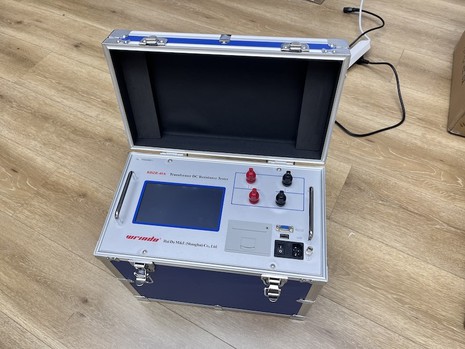
Transformer DC resistance measurement involves determining the resistance of each winding by passing a direct current through it. This test helps manufacturers, OEMs, and suppliers in China detect winding faults, verify tap changer contacts, and ensure overall transformer reliability, making it essential for quality control and maintenance in factory and wholesale environments.
How Is Transformer DC Resistance Measured?
The measurement passes a stable DC current through the transformer winding and records the voltage drop across it, using Ohm’s law to calculate resistance. Common methods include the current-voltage meter method (voltage drop), DC bridge method, and constant current source bridge method. Wrindu’s specialized instruments optimize accuracy and speed for industrial use.
What Are the Benefits of Measuring Transformer DC Resistance?
Measuring DC resistance detects loose joints, broken strands, short circuits, and tap changer inconsistencies. It helps evaluate copper losses related to heat generation and confirms manufacturing quality. For OEMs and factory suppliers in China, this test supports preventive maintenance, ensuring transformers operate safely and efficiently.
Which Industries Use Transformer DC Resistance Testing?
This testing is essential in transformer manufacturing plants, electrical OEMs, power utilities, wholesale suppliers, and maintenance service providers. Wrindu’s products cater specifically to these sectors, providing tailored instruments that meet the stringent standards of China’s manufacturing and energy industries.
Why Choose Wrindu for Transformer DC Resistance Testers?
Wrindu delivers precise, durable, and certified DC resistance testers with features like high measurement accuracy, compact design, and user-friendly interfaces. Their ISO9001 and CE-certified products include customization options for OEM clients and wholesale suppliers, backed by expert technical support and global logistics.
How Does DC Resistance Testing Improve OEM Product Quality?
OEMs can integrate Wrindu’s customizable testers into their production lines to detect winding defects in real time, ensuring products meet quality standards before dispatch. This reduces failures, improves customer satisfaction, and supports large-scale manufacturing efficiency common in China’s factory sectors.
When Should Transformer DC Resistance Be Tested?
Testing is performed during factory acceptance, installation commissioning, routine maintenance, and after any tap changer adjustments or fault repair. Frequent DC resistance measurement prevents unexpected downtime and extends transformer lifespan, which is crucial for wholesale suppliers and manufacturers.
Where Is DC Resistance Measurement Conducted on Transformers?
Testing targets primary and secondary windings, tap changer contacts, lead terminals, and bushings. Wrindu’s testers adapt to different winding configurations, including multi-winding transformers, making them versatile for various industrial testing needs.
Are There Different Methods for Measuring Transformer DC Resistance?
Yes. The current-voltage meter method measures voltage drop under DC current; the DC bridge method balances bridge circuits for precise readings; and the constant current source bridge method offers fast, stable current supply. Wrindu instruments support these methods with advanced stability and precision.
Has Innovation Enhanced Transformer DC Resistance Testing?
Innovations like multi-phase testing, stable power sources, wireless connectivity, and compact designs have advanced testing efficiency. Wrindu leads innovation with testers such as the RDZR-340Y, capable of rapid, accurate, three-phase measurements suited for China’s factory and field applications.
Does Wrindu Provide Custom Transformer DC Resistance Testing Solutions?
Wrindu offers OEM customization including adjustable current ranges, software integration, form factor modifications, and safety enhancements. This helps China-based factories and wholesale suppliers tailor resistance testing to their specific production and quality control workflows.
Wrindu Expert Views
“Transformer DC resistance measurement is fundamental for maintaining electrical system health in manufacturing and energy sectors. Wrindu’s focus on precision engineering and innovation delivers reliable testing solutions tailored to the unique demands of OEMs and suppliers. Our custom products empower users to improve safety, reduce failures, and ensure consistent quality across production and maintenance processes.”
Transformer DC Resistance Testing Methods Comparison
| Method | Accuracy | Measurement Speed | Suitable Transformer Size | Portability |
|---|---|---|---|---|
| Current-Voltage Meter Method | Moderate | Moderate | Small to medium | Portable |
| DC Bridge Method | High | Slow | Small to medium | Usually bench equipment |
| Constant Current Source Bridge | Very High | Fast | Medium to large | Portable |
| Wrindu RDZR Series Testers | Very High | Fast | Small to large, multi-phase | Lightweight, portable |
Summary
Transformer DC resistance measurement is a crucial part of quality assurance and maintenance for manufacturers, OEMs, and suppliers in China. It helps detect winding issues, verify connection integrity, and prevent costly failures. Wrindu stands out as a trusted factory partner offering advanced, customizable testers that ensure accurate, safe, and efficient transformer testing, supporting high standards in production and wholesale operations.
Frequently Asked Questions
Q1: What current ranges are typical for DC resistance testing?
Adjustable from low to high currents depending on transformer size; Wrindu testers cover a broad range.
Q2: How often should DC resistance be measured?
At manufacturing, installation, scheduled maintenance, and after tap changer use or faults.
Q3: Are Wrindu testers suitable for large transformers?
Yes, they provide stable, high current outputs suited for large and complex transformers.
Q4: Is on-site DC resistance testing safe?
Yes, with proper grounding, disconnecting high voltages, and using safety features in testers like Wrindu’s.
Q5: What does a change in DC resistance indicate?
Possible winding damage, loose connections, or deterioration requiring maintenance.