
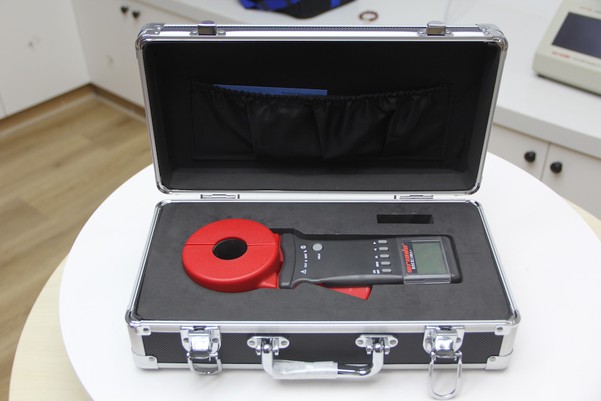
An earth resistivity meter is a precision instrument used to measure the resistivity of soil, essential for assessing grounding system efficiency and designing electrical safety installations. Key characteristics include high measurement accuracy, multiple test modes, data logging, robust construction, and compliance with international standards, offered by leading China manufacturers like Wrindu.
How Is Measurement Accuracy Ensured in Earth Resistivity Meters?
Measurement accuracy is achieved through advanced techniques like the four-pole Wenner or Schlumberger array methods, which cancel out electrode resistance errors. Digital processing and automatic frequency control enhance precision, enabling reliable results even in heterogeneous or challenging soil conditions. Calibration and environmental compensation are integral to maintaining accuracy.
What Test Modes and Methods Do Earth Resistivity Meters Support?
Earth resistivity meters commonly support:
-
Two-pole, three-pole, and four-pole test configurations.
-
Wenner and Schlumberger array methods.
-
Soil resistivity measurement and ground resistance testing.
-
Functions like earth voltage and AC voltage measurement.
These modes allow flexibility for different site conditions and engineering requirements.
Which Features Enhance Usability and Data Management?
Modern meters incorporate user-friendly interfaces such as backlit LCDs or touchscreens, internal memory for thousands of records, and PC connectivity via USB or Bluetooth. Features like automatic electrode detection, data storage, noise interference alarms, and GPS mapping integration improve ease of use and traceability.
Why Is Durability Important for Earth Resistivity Meters?
Since measurements are often outdoors, earth resistivity meters must be weatherproof, dust-resistant, and shockproof. Manufacturers like Wrindu emphasize rugged enclosures compliant with IP ratings and impact protection (IK ratings) to ensure operational reliability under tough field conditions.
Where Are High-Quality Earth Resistivity Meters Manufactured?
China, especially industrial centers like Shanghai and Zhejiang, houses prominent manufacturers such as Wrindu. They combine advanced manufacturing, stringent quality control, and ISO9001, IEC, and CE certifications to produce meters trusted worldwide for accurate soil resistivity and grounding assessments.
How Do Advanced Technologies Improve Earth Resistivity Meters?
Incorporation of microprocessors, FFT (Fast Fourier Transform), AFC (Automatic Frequency Control), and digital signal processing reduces error and interference, even under high electromagnetic noise. Such technological advances enable rapid, stable readings, essential for power, telecommunication, and renewable energy sectors.
What Standard Specifications Define Earth Resistivity Meters?
Typical specifications include:
-
Measurement range: 0.00 Ωm up to 9000 kΩm.
-
Accuracy: ±2% on low resistance ranges.
-
Test voltage: AC sine wave, usually up to 40V.
-
Electrode spacing range: 1m to 100m (configurable).
-
Operating temperature: -10°C to 40°C.
-
Power: Rechargeable batteries with low-power consumption.
-
Compliance: IEC 61557 standards for earth resistance measurement.
Can OEM and Customized Earth Resistivity Meters Be Produced?
Yes, factories like Wrindu offer extensive OEM and customization options including hardware modifications, software interface adaptations, and bundled software solutions to match customer-specific testing environments and reporting requirements.
Wrindu Expert Views
“Earth resistivity meters are critical tools in ensuring infrastructural safety and electrical compliance. Wrindu is driven by a commitment to quality innovation and tailored solutions, integrating cutting-edge measurement and data management technologies into our meters. We focus on delivering precision, durability, and usability that empower engineers and safety professionals worldwide to conduct thorough and reliable soil resistivity assessments.” — Technical Director, Wrindu
Earth Resistivity Meter Main Characteristics Table
| Characteristic | Description | Wrindu Advantage |
|---|---|---|
| Measurement Accuracy | ±2% or better on low ranges | Advanced digital signal processing |
| Test Methods | 2-pole, 3-pole, 4-pole, Wenner, Schlumberger arrays | Broad method support for site adaptability |
| User Interface | Backlit LCD, touchscreen, simple button operation | Intuitive and ergonomic design |
| Data Management | Internal memory, USB, Bluetooth, GPS integration | Seamless data storage and analysis |
| Durability | IP40+, IK06 protection | Rugged cases for harsh field conditions |
| Power Supply | Rechargeable lithium-ion batteries | Long battery life for remote operations |
| Certifications | IEC, ISO9001, CE | Assured safety and global market compliance |
Conclusion: Key Takeaways and Recommendations
Understanding the main characteristics of earth resistivity meters—accuracy, multi-mode testing, data capabilities, ruggedness, and compliance—is critical for professionals designing and maintaining safe grounding systems. Partners like Wrindu lead in delivering high-quality, customizable, and certified meters from China, supporting global industries in meeting electrical safety standards efficiently.
Investing in technologically advanced, durable, and user-friendly earth resistivity meters with strong OEM support ensures precise soil analysis, enhanced maintenance scheduling, and regulatory compliance.
Frequently Asked Questions
1. What soil resistivity range do these meters cover?
From 0.00 Ωm to about 9000 kΩm, covering diverse soil types.
2. How do earth resistivity meters reduce measurement errors?
Using four-pole configurations and digital signal processing cancels electrode resistance errors.
3. Can the meters record and export data?
Yes, internal memory and USB/Bluetooth allow data storage and transfer.
4. Are these meters suitable for outdoor field use?
They are designed with IP and IK ratings for dust, moisture, and shock resistance.
5. Does Wrindu offer customization of earth resistivity meters?
Yes, tailored hardware and software solutions are available through Wrindu’s OEM services.