
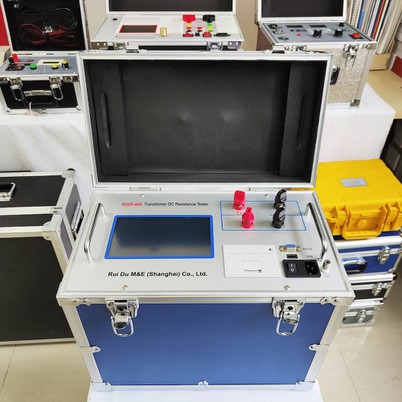
A digital winding resistance meter is a highly accurate, user-friendly instrument designed to measure the low resistance of transformer windings and motors. Its main characteristics include stable and regulated DC current supply, fast measurement, multiple range settings, clear digital display, and advanced features like automatic temperature compensation and data storage.
How Does a Digital Winding Resistance Meter Work?
The meter applies a stable DC current to the winding under test and measures the voltage drop across it. Using Ohm’s law, it calculates resistance accurately. Advanced models feature automatic current regulation, overload protection, and simultaneous measurement of current and voltage to ensure precision even on large power transformers and motors.
What Are the Key Features of Digital Winding Resistance Meters?
Key features include high accuracy with low micro-ohm resolution, multiple current output levels (up to 20A or more), real-time digital displays with 5 or more digits, memory for storing test results, temperature compensation to account for winding heat, and USB or RS485 communication ports for data transfer and analysis.
Which Industries Benefit from Digital Winding Resistance Meters?
Digital winding resistance meters are essential in transformer manufacturing, power utilities, motor maintenance, and industrial equipment servicing. Chinese manufacturers like Wrindu supply these meters globally to ensure quality control, fault detection, and preventive maintenance in energy, manufacturing, and infrastructure sectors.
Why Is Temperature Compensation Important in Winding Resistance Testing?
Winding resistance varies with temperature; without compensation, measurements can be inaccurate. Modern digital meters incorporate sensors and algorithms that automatically correct resistance values to a reference temperature, improving reliability and comparability of test results across different conditions.
When Should Digital Winding Resistance Meters Be Used?
They are used during factory acceptance tests, commissioning, routine maintenance, after repairs, and fault diagnosis. Regular winding resistance testing helps detect issues like shorted turns, loose connections, and damaged windings early, preventing costly failures and ensuring safe, efficient operation.
How Is Data Management Handled in Modern Digital Winding Resistance Meters?
Many models provide internal memory storage for hundreds of test records, support USB or LAN connection for real-time data transfer, and integrate with software platforms for detailed analysis, reporting, and archiving. These features streamline workflow for manufacturers and service teams.
Where Are the Leading Digital Winding Resistance Meter Manufacturers?
China plays a key role in manufacturing digital winding resistance meters with several top factories located in Shanghai, Hebei, and Guangdong. Wrindu stands out as a global brand known for innovative, reliable, and customizable testing solutions.
Can Customized Digital Winding Resistance Meters Offer Competitive Advantages?
Yes, OEM-customized meters can meet specific electrical testing requirements, handle special voltage or current ranges, and include unique software features suited for particular transformer or motor designs. Wrindu provides tailored solutions to fit diverse applications from large factories to field service operations.
Digital Winding Resistance Meter Features Table
| Feature | Description | Benefit |
|---|---|---|
| Stable DC Current | Provides precise, regulated current up to 20A or more | Accurate resistance measurement |
| High-Resolution Display | 5-digit or higher digital LED display | Clear, easy-to-read measurements |
| Temperature Compensation | Automatic correction to a reference temperature | Reliable results in varying environments |
| Data Storage & Transfer | Memory for records, USB/RS485/ LAN interface | Efficient data management and reporting |
| Overload Protection | Protects against short circuit or operator error | Maintains instrument longevity and safety |
Wrindu Expert Views
“At Wrindu, we design our digital winding resistance meters to combine precision with ease of use, addressing the critical needs of transformer manufacturers and maintenance teams worldwide. Our products incorporate advanced features like automatic temperature compensation and comprehensive data management to improve diagnostic accuracy and efficiency. This empowers electrical professionals to detect issues early, ensuring optimum system reliability and safety,” explains Wrindu’s Senior Product Engineer.
Conclusion
Digital winding resistance meters are vital instruments for measuring and monitoring winding integrity in transformers and motors. Their main characteristics—high accuracy, stable DC supply, temperature compensation, and data handling—make them indispensable for manufacturers, OEMs, and maintenance providers, especially within China’s factory landscape. Wrindu remains a leading choice for reliable, innovative, and customizable winding resistance meters.
Frequently Asked Questions
1. How accurate are digital winding resistance meters?
They typically offer micro-ohm level accuracy, suitable for detecting subtle winding issues.
2. Why is automatic temperature compensation necessary?
Because winding resistance changes with temperature, compensation ensures standardized, comparable results.
3. Can digital winding resistance meters measure both transformers and motors?
Yes, they are designed for a wide range of inductive windings, including transformers and motors.
4. What data connectivity options are available?
Common options include USB, RS485, and LAN, facilitating seamless data transfer and analysis.
5. How does Wrindu differentiate its winding resistance meters?
Wrindu emphasizes innovation, customization, and robust support, delivering advanced, user-friendly test solutions optimized for global markets.