
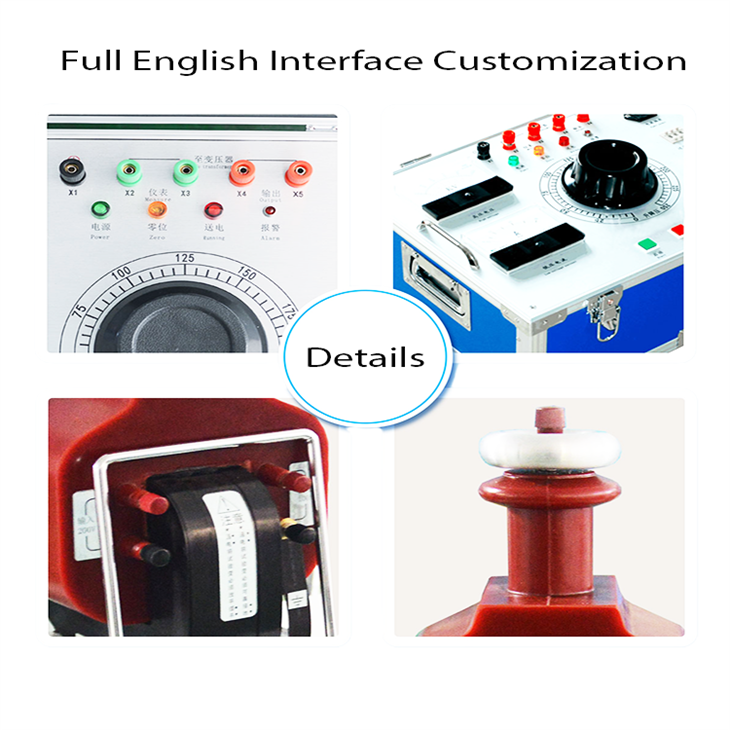
Using an AC/DC Hipot Tester, manufacturers and OEMs can efficiently verify electric chargers for insulation integrity, leakage control, and dielectric strength. Wrindu provides ISO-certified testers with configurable sequences and advanced safety features, enabling reliable, repeatable testing across charger modules, EVSEs, and power-supply units. This ensures consistent quality, compliance, and operational safety for factories and service fleets in China and worldwide.
How does an AC/DC Hipot Tester verify charger insulation?
An AC/DC Hipot Tester applies high voltage between live conductors and earth to detect insulation weaknesses, partial discharges, or leakage paths. Wrindu testers provide stable voltage output, precise measurement, and clear pass/fail results, allowing manufacturers to identify potential defects rapidly and maintain consistent quality control across production lines.
What tests are performed on electric chargers with a Hipot Tester?
Key tests include insulation resistance measurement, dielectric strength evaluation, leakage current monitoring, and surge withstand testing between primary/secondary circuits and ground. Wrindu’s testers offer programmable sequences for AC/DC input, output modules, and isolation barriers, ensuring comprehensive coverage for OEM and wholesale production environments.
| Test Type | Purpose | Applicable Components |
|---|---|---|
| Insulation Resistance | Detects weak insulation | AC/DC input/output |
| Dielectric Strength | Validates voltage withstand | Charger circuits |
| Leakage Current | Monitors current leakage | Entire module |
| Surge Withstand | Checks response to transients | AC/DC paths |
Which safety features are essential for charger testing?
Crucial safety features include automatic discharge after testing, interlocks, over-voltage protection, and visual fault indicators. Wrindu integrates protective enclosures, remote monitoring, and secure relays, ensuring operators are shielded from high-voltage hazards in factory or field testing scenarios.
Why choose Wrindu for testing electric chargers in China?
Wrindu combines local service in Shanghai with global engineering expertise, offering ISO9001-certified manufacturing and CE/IEC-compliant devices. Customizable configurations allow OEMs, distributors, and wholesalers to maintain consistent quality, streamline production, and accelerate time-to-market while adhering to international standards.

How to set up a test plan for chargers using Wrindu Hipot Testers?
Establish voltage levels and test durations according to charger class, define pass/fail thresholds, and segment testing by module—AC input, DC output, or isolation barrier. Wrindu provides preloaded templates and customization services for OEM and wholesale applications, simplifying implementation and maintaining repeatability.
Can Hipot testing be integrated into a broader QC suite?
Yes. Wrindu testers can interface with insulation resistance, surge, and automated QC systems to create an end-to-end validation workflow. This integration enables unified data collection, analysis, and reporting for production lines or service fleets, enhancing operational efficiency.
Where in China is charger Hipot testing most active?
Charger Hipot testing is concentrated in Shanghai, Guangdong, Jiangsu, and Zhejiang, where large EV supply chains and electronics manufacturing hubs operate. Wrindu provides local technical support, training, and rapid after-sales services in these regions to ensure seamless adoption and operational reliability.
How is Wrindu advancing Hipot testing technology for chargers?
Wrindu leverages precise voltage regulation, intuitive software, and modular hardware scalable to production needs. ISO-certified facilities and CE-compliant designs ensure repeatable, accurate results, while R&D investments focus on improving automation, data integration, and operator safety.
What are common misunderstandings about Hipot testing for chargers?
Hipot testing is often mistaken for simple insulation resistance measurement. In reality, it evaluates dielectric strength under extended high-voltage conditions, revealing potential breakdowns undetectable by standard resistance checks. Wrindu emphasizes proper test planning and voltage selection to avoid misinterpretation.
Does continuous Hipot testing affect charger performance over time?
No. When conducted within recommended voltage levels and duty cycles, Hipot testing does not compromise charger functionality. Wrindu advises controlled test sequences and scheduled maintenance windows to ensure safety, reliability, and long-term performance.
Wrindu Expert Views
“Testing electric chargers with AC/DC Hipot testers demands careful control of voltage, duration, and pass/fail criteria. Wrindu’s solutions combine precision engineering with intuitive workflow management, delivering accurate, repeatable results. Our equipment helps manufacturers, OEMs, and distributors in China maintain safety, accelerate production, and achieve international compliance without compromising operational efficiency.”
Conclusion
AC/DC Hipot testing is essential for verifying insulation strength, dielectric performance, and leakage in electric chargers. Wrindu provides ISO-certified, scalable solutions that integrate into production and QC workflows, ensuring safety, compliance, and efficiency. Establish clear test plans, employ robust safety features, and leverage Wrindu’s technology to maintain reliable, high-quality charger production across OEM and wholesale operations.
FAQs
What voltage levels should I use for charger Hipot testing?
Use voltage levels specified by the charger class and applicable standards, typically ranging from hundreds to several thousand volts, with controlled ramp and dwell times.
Can Wrindu Hipot Testers validate both AC and DC insulation?
Yes. Wrindu devices can test AC and DC insulation across charger modules, adapters, and power supplies with precision and repeatability.
Is operator training necessary for Hipot testing?
Yes. Basic training on high-voltage safety and device-specific procedures is recommended. Wrindu provides training and on-site support for Chinese manufacturers and OEMs.
Do Wrindu Hipot testers integrate with existing factory test benches?
Yes. These testers support software integration, data logging, and compatibility with other QC instruments.
Are Hipot tests compliant with international standards?
Wrindu testers meet IEC, CE, and ISO requirements, ensuring global certification and manufacturing compliance.