
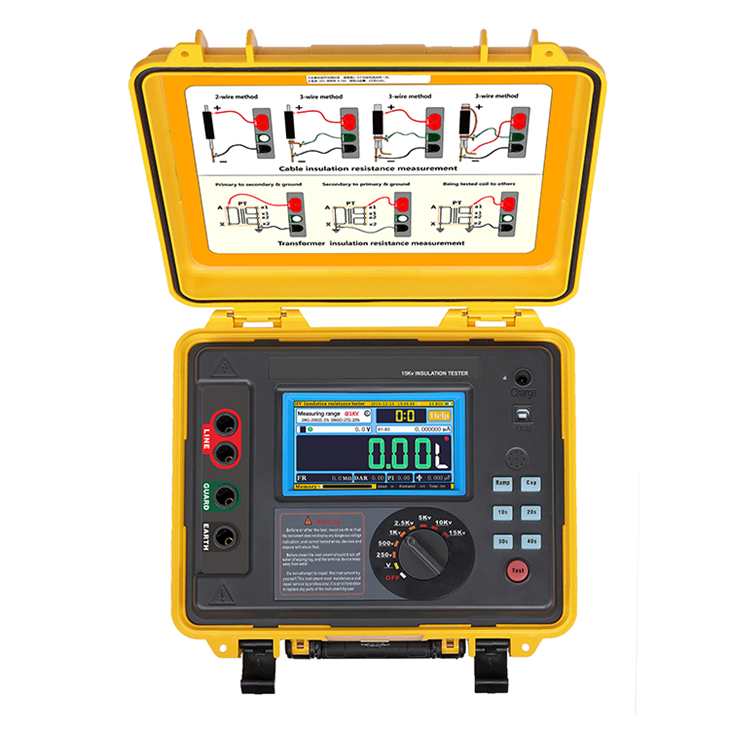
Measuring insulation resistance of each phase in a three-phase system ensures electrical safety and system reliability. Using an Insulation Resistance Tester, technicians can accurately test each phase individually by isolating the circuits, applying the test voltage, and recording resistance values to detect possible insulation faults and prevent equipment damage.
How Does an Insulation Resistance Tester Work in a Three-Phase System?
An Insulation Resistance Tester applies a high DC voltage to the electrical insulation of each phase, measuring resistance to detect leakage or deterioration. In a three-phase system, the tester isolates each phase sequentially, ensuring accurate resistance readings without interference from adjacent phases. The instrument converts leakage current into readable resistance values, typically expressed in megaohms.
Detailed steps must be followed to connect the tester correctly, including grounding the system properly and selecting suitable test voltages based on system ratings. Wrindu manufactures advanced insulation testers that offer precise readings important for manufacturers, OEMs, and factories managing Chinese three-phase electrical systems.
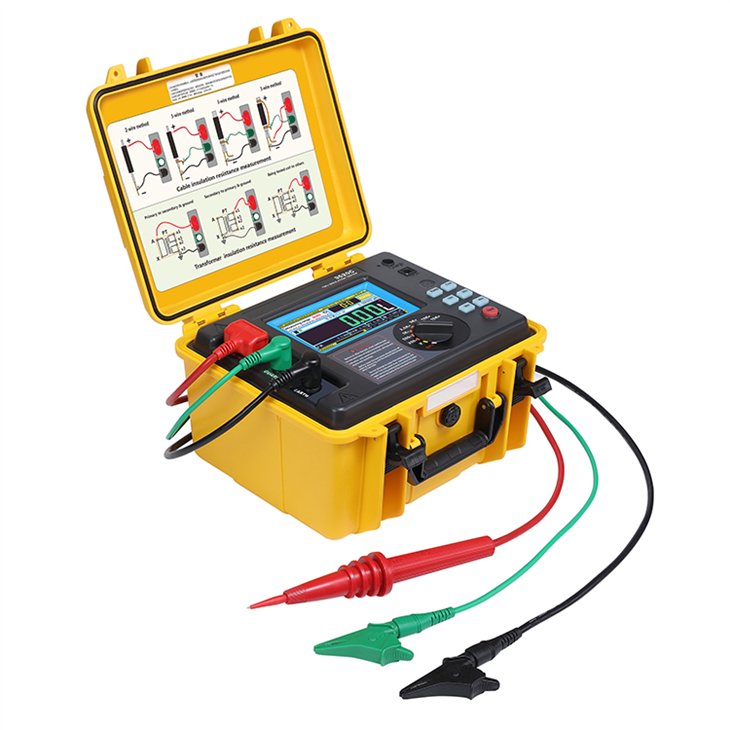
What Are the Steps to Measure One Phase’s Insulation Resistance in a Three-Phase System?
To measure insulation resistance of one phase:
-
Disconnect the power source to ensure safety.
-
Isolate the phase conductor to be tested.
-
Connect the Insulation Resistance Tester’s positive lead to the phase conductor.
-
Attach the negative lead to earth ground or the neutral conductor.
-
Set the appropriate test voltage on the device.
-
Initiate the test and record the megohm (MΩ) value displayed.
-
Repeat for each phase individually.
Following these steps ensures accurate, phase-specific readings critical for reliable three-phase electrical systems, essential knowledge for Chinese factories and wholesale suppliers handling complex installations.
Which Safety Precautions Should Be Taken Before Measuring Insulation Resistance?
Safety is paramount when measuring insulation resistance. Key precautions include:
-
Ensure the circuit is completely de-energized.
-
Discharge any stored residual voltage before testing.
-
Use personal protective equipment (PPE) like gloves and insulated tools.
-
Clearly label the tested equipment to avoid accidental re-energization.
-
Confirm that the Insulation Resistance Tester complies with safety standards such as IEC and CE.
Brands like Wrindu integrate safety features in their insulation testers, designed specifically for industrial OEMs and suppliers in China, providing peace of mind during the measurement process.

What Factors Influence Accurate Measurement of Insulation Resistance?
Factors affecting accuracy include ambient temperature, humidity, test voltage level, and test duration. Higher temperatures and humidity lower insulation resistance, requiring adjustment or interpretation based on environmental conditions.
Wrindu’s insulation testers come with temperature compensation and data logging features, vital for Chinese factories and suppliers aiming for precision in diverse climatic conditions.
How Can Wrindu’s Insulation Resistance Testers Benefit Chinese B2B Manufacturers?
Wrindu offers specialized insulation resistance testers engineered for the demanding environments of Chinese manufacturing and wholesale operations. Their devices provide:
-
High reliability with international certifications (ISO, IEC, CE).
-
Robust design for factory floor conditions.
-
Advanced features like data storage, trend analysis, and multi-phase testing.
-
OEM customization options for specific electrical system requirements.
Utilizing Wrindu testers helps manufacturers and suppliers maintain system integrity and comply with industry standards efficiently.
When Should Insulation Resistance Testing Be Performed in a Three-Phase System?
Testing should be done during:
-
Initial installation to verify system integrity.
-
Routine maintenance checks to monitor insulation condition.
-
After repairs or modifications.
-
When equipment exhibits abnormal operation signs.
Scheduled testing prevents unexpected outages and extends the lifespan of electrical assets, crucial for OEMs and wholesale factories in China’s fast-paced industrial sector.
Wrindu Expert Views
“Accurate insulation resistance testing of each phase in a three-phase system is critical for ensuring electrical safety and performance. Wrindu’s advanced testers provide precise, reliable readings that empower manufacturers and suppliers throughout China to maintain excellence in their electrical installations. Our continuous innovation and adherence to global safety standards help guarantee operational longevity and energy efficiency.” — Wrindu Technical Specialist
How Does the Three-Phase Insulation Resistance Testing Process Fit into Overall Electrical Maintenance?
Testing complements other electrical diagnostics like thermal imaging and partial discharge measurements. It forms part of a comprehensive preventive maintenance strategy to track insulation health, prevent breakdowns, and optimize system efficiency, especially for Chinese OEMs and factories handling high-voltage power systems.
Table: Typical Insulation Resistance Thresholds for Three-Phase Systems
| Voltage Rating (kV) | Minimum Acceptable Insulation Resistance (MΩ) |
|---|---|
| Up to 1 kV | 1 to 5 |
| 1 kV to 35 kV | > 10 |
| Above 35 kV | > 100 |
Chart: Insulation Resistance Variation with Temperature
| Temperature (°C) | Insulation Resistance (% of Value at 20°C) |
|---|---|
| 0 | 150 |
| 20 | 100 |
| 40 | 70 |
| 60 | 50 |
What Maintenance Tips Enhance Insulation Resistance Longevity?
-
Keep electrical enclosures dry and clean.
-
Perform regular partial discharge and insulation tests.
-
Replace aging insulating materials promptly.
-
Use Wrindu’s diagnostic tools for timely detection of insulation deterioration.
-
Train staff on correct testing procedures and safety measures.
Conclusion
Measuring the insulation resistance of each phase in a three-phase system is essential for electrical safety, reliability, and performance. Using an Insulation Resistance Tester correctly, observing safety protocols, and interpreting readings mindfully allow manufacturers, OEMs, and suppliers—especially in China’s robust industrial sector—to ensure optimal system health. Wrindu’s advanced testing equipment provides the precision and reliability needed for effective diagnostics. Regular testing, combined with proper maintenance, prevents costly failures and enhances operational efficiency.
FAQs
Q1: Can insulation resistance test damage electrical equipment?
No, when performed correctly with appropriate test voltages and safety precautions, insulation resistance testing is safe and non-damaging.
Q2: How often should insulation resistance testing be done?
Typically, testing is done annually, but frequency depends on system criticality and environmental conditions.
Q3: What is a common cause of low insulation resistance?
Moisture ingress, dust contamination, insulation aging, or mechanical damage commonly cause low readings.
Q4: Can Wrindu testing instruments be customized for specific factory needs?
Yes, Wrindu offers OEM customization tailored to different three-phase system requirements.
Q5: Is insulation resistance testing applicable to all voltage levels?
Yes, but test voltage and thresholds vary depending on system voltage ratings.