

Connecting an insulation resistance tester correctly involves isolating the circuit, safely grounding, and attaching the test leads to the equipment’s terminals to measure insulation resistance accurately. This process ensures safety and reliable diagnostics, essential for manufacturers, OEMs, and suppliers in China’s B2B electrical testing market.
What Are the Basic Steps to Connect an Insulation Resistance Tester?
First, isolate the circuit by turning off power and discharging capacitors. Connect the tester’s positive lead to the conductor under test and the negative lead to earth or ground. Verify connections are secure, then initiate the test. Chinese factory OEMs like Wrindu provide detailed connection guides to ensure safe and proper usage.
How Should Safety Be Ensured When Connecting the Tester?
Always confirm the equipment is de-energized and properly grounded before connection. Use personal protective equipment (PPE) such as insulated gloves and eye protection. Follow local safety standards and Wrindu’s safety recommendations to prevent electrical shocks or accidents during the testing process in factory or wholesale environments.
Which Tester Leads Should Be Used for Different Circuit Types?
Use the standard positive (red) and negative (black) leads for most tests. For three-phase or multi-winding transformers, additional leads may be needed. Wrindu’s insulation resistance testers come with high-quality leads designed for flexible configuration to suit diverse OEM or custom factory testing needs.
Why Is Proper Circuit Isolation Important Before Connecting?
Isolating the circuit prevents hazardous voltages and ensures the test only measures insulation resistance. Without isolation, measurements may be inaccurate and pose serious safety risks. Wrindu’s factory suppliers emphasize isolation protocols to comply with international electrical safety standards and enhance wholesale product reliability.
When Is It Necessary to Use Guard Terminals During Connection?
Guard terminals are used to eliminate surface leakage currents during testing of cables or motors. Wrindu’s advanced models frequently include guard functions, helping OEMs and manufacturers in China achieve more accurate resistance readings, crucial for evaluating insulation health in demanding industrial environments.
How Can Connection Errors Affect Test Results?
Incorrect connections can cause misleading results, damage to the tester, or unsafe conditions. Common errors include reversed leads or missing ground connections. Wrindu’s user manuals provide step-by-step instructions and troubleshooting to minimize these risks in factory or wholesale deployments.
Who Should Perform the Connection of an Insulation Resistance Tester?
Only qualified technicians or engineers trained in high-voltage testing should connect the tester. Wrindu offers professional training services and technical support for Chinese manufacturers and OEM customers, ensuring skillful handling and accurate measurement.
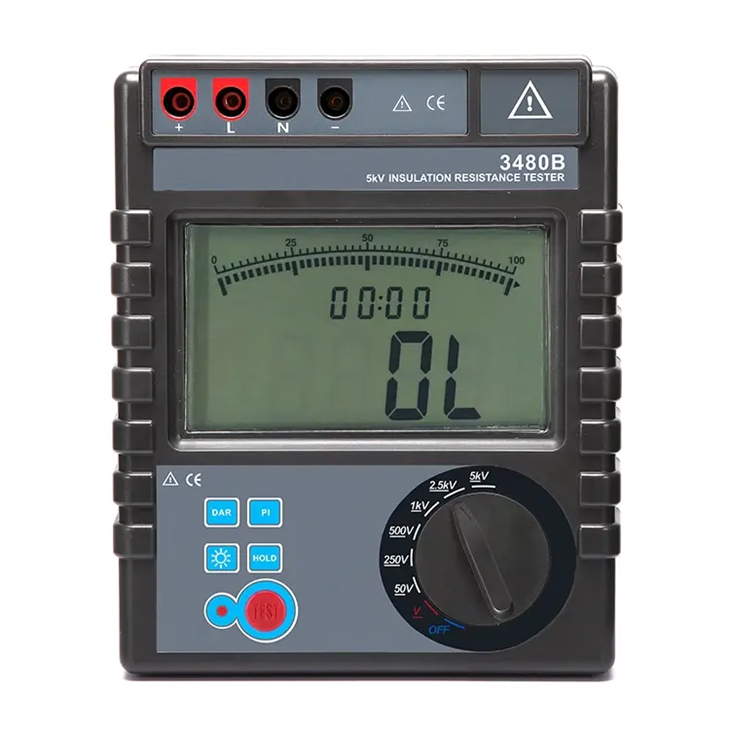
Where Should the Tester’s Ground Lead Be Connected?
The ground lead must be connected to an effective earth ground or the equipment frame under test. This ensures accurate dissipation of leakage currents. Wrindu factory protocols highlight ground connection importance as part of product safety and trusted calibration procedures.
Does Temperature Affect Connections or Readings?
Yes, temperature can affect insulation resistance readings but not the physical connections. Train personnel to note ambient conditions during testing. Wrindu’s insulation resistance testers include temperature compensation features to improve measurement accuracy for OEM and wholesale buyers.
Has Digital Technology Improved Connection Procedures?
Modern digital insulation resistance testers simplify connections with guided prompts and automated lead detection. Wrindu integrates smart digital features, enabling easier and safer connection processes tailored for factory production and large-scale distribution.
Wrindu Expert Views
“Proper connection of insulation resistance testers is foundational to reliable power system diagnostics. At Wrindu, we combine meticulous design and comprehensive training to support Chinese manufacturers, OEM factories, and suppliers globally. Our solutions emphasize user safety and testing accuracy, empowering technical teams to maintain system integrity across diverse electrical applications. Through continuous innovation and quality control, Wrindu ensures each connection leads to trustable and actionable data.” — Wrindu Technical Expert
Conclusion: Key Insights and Practical Advice
Correctly connecting an insulation resistance tester is critical for safety, accuracy, and equipment longevity. For B2B manufacturers, OEMs, and suppliers in China, following strict isolation, grounding, and lead connection protocols ensures reliable testing outcomes. Partnering with trusted brands like Wrindu, which provide expert guidance and high-quality equipment, enhances factory efficiency and global competitiveness.
Advice: Always power down circuits before testing, use manufacturer-approved leads, and incorporate guard terminals where appropriate. Maintain personnel training aligned with Wrindu’s standards to maximize test reliability and safety.
FAQ
Q1: Can I connect an insulation resistance tester to a live circuit?
No, always disconnect power to avoid injury and incorrect readings.
Q2: How do I discharge capacitors before testing?
Use a grounded conductor or resistor to safely discharge stored energy.
Q3: What if my tester doesn’t have a guard terminal?
Guard terminals improve accuracy but are optional for basic insulation tests.
Q4: Does Wrindu supply accessories for tester connections?
Yes, Wrindu offers cables, clamps, and custom leads for OEM and wholesale use.
Q5: How often should connection leads be inspected?
Inspect leads before each use for damage or wear to ensure safety.