
How can factories train technicians for clean sampling and lab accuracy?
Send your test requirement — get a tailored solution and a quote within one working day.
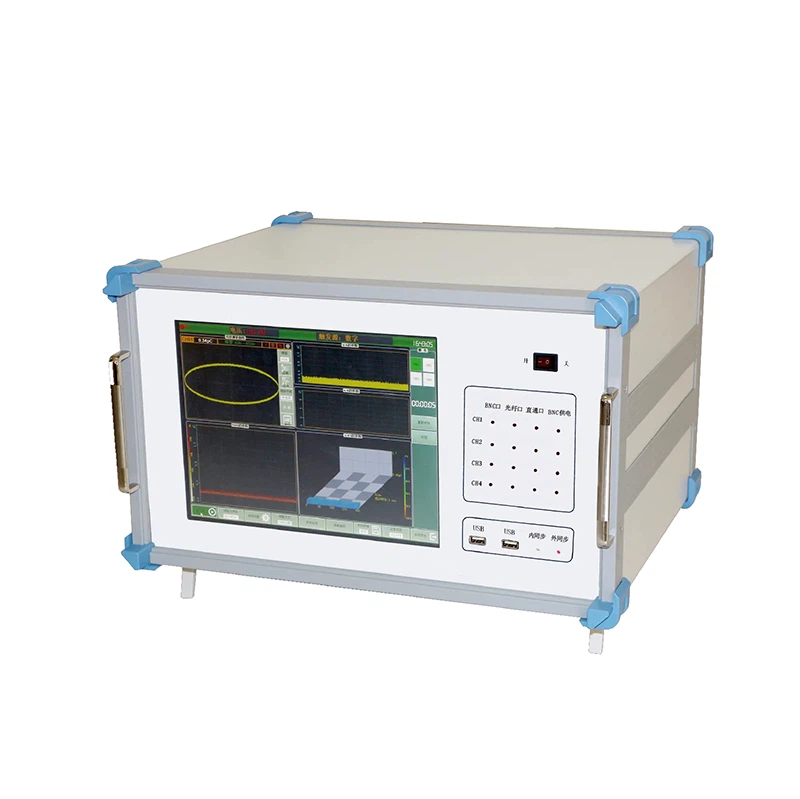
Clean sampling training for technicians requires standardized SOPs, hands-on practice, and a clear internal chain-of-custody system that protects every high-voltage or power asset sample from contamination and mix‑ups. In China-based OEM factories and wholesale suppliers, this means integrating sampling discipline into daily operations, not treating it as a one-time safety lecture.
Transforming Maintenance with Oil Intelligence: Training for Pure Sampling
What is clean sampling in high-voltage and power testing?
Clean sampling in high-voltage and power testing means collecting oil, gas, solid insulation, or battery samples without contamination, label errors, or exposure that could distort lab results. For a China-based OEM or factory supplier, it is the foundation of reliable transformer, cable, breaker, and battery diagnostics.
On the factory floor, I see that clean sampling is less about “clean rooms” and more about repeatable micro-behaviors: how a valve is cracked on a transformer, how long an oil stream is flushed before filling a bottle, or how a desiccant plug is handled with gloves. In many Chinese manufacturing plants, technicians work under time pressure, so the sampling design must assume shortcuts will happen. That is why Wrindu, as a power test equipment manufacturer, promotes procedures that are faster to do correctly than to do wrong, using pre-assembled sampling kits, color-coded bottles, and visual checklists that physically travel with the sample.
How does chain of custody apply inside a China factory lab workflow?
Chain of custody inside a China factory or OEM lab workflow is the documented path showing who collected, labeled, transported, stored, and tested each sample, with timestamps and signatures. It turns sampling from a “rough guideline” into a traceable, auditable process for manufacturers and wholesale suppliers.
In practice, internal chain of custody in Chinese power-equipment factories must integrate with existing MES/ERP systems. A realistic design starts with a unique sample ID, often a QR code, generated at the asset level and linked to the transformer serial number, breaker bay, or production batch. Wrindu clients often attach this ID to both the sampling bottle and the electronic work order, so any technician scanning it can see the required test set, limits, and urgency. A simple rule we apply on the shop floor: no unlabeled container is allowed to move more than one step away from the sampling point.
Why is technician training critical for clean sampling accuracy?
Technician training is critical because most sampling errors come from human shortcuts, misinterpretation of procedures, or poor handling technique rather than instrument failure. For Chinese OEM factories and suppliers, well-trained technicians protect brand reputation, warranty costs, and long-term customer trust.
From experience, I have seen the same transformer oil tested by two labs produce conflicting results because one technician did not flush the sampling valve long enough to clear sludge. The lab result was not “wrong”; the sample was. In a B2B context, that can trigger unnecessary rework or rejection by overseas customers. Wrindu’s training approach assumes new technicians will forget 30–40% of what they hear in a classroom within a week, so we embed practical drills into daily routines: mock sampling exercises, peer checks, and spot audits of labeling and sealing.
What are the main skill gaps technicians face in clean sampling?
The main skill gaps include misunderstanding contamination sources, inconsistent flushing and rinsing techniques, poor labeling discipline, and weak awareness of temperature and moisture control. In China-based manufacturers and OEM plants, these gaps often appear when production targets overshadow quality behaviors.
I frequently observe that junior technicians think contamination is only “visible dirt.” They overlook micro-particles from Teflon tape, moisture condensation, or residue from previously used glassware. Another gap is in timing: not knowing how long to flush oil from a transformer drain before taking the final sample. Wrindu training modules address this with simple, numerical rules—such as flushing at least three times the valve volume—and by using transparent hoses so technicians can visually confirm clearing of bubbles and sludge. This moves the skill from abstract to observable.
Typical skill gaps and their impact
How can a manufacturer build an internal chain-of-custody system?
A manufacturer can build an internal chain-of-custody system by standardizing sample IDs, defining handover checkpoints, and integrating digital records with ERP or LIMS. For Chinese OEM and wholesale factories, the key is to design a system that fits existing workflows and technician habits.
We typically implement a four-step model:
-
Sample creation: A unique ID is generated tied to equipment, location, and sampling reason.
-
Field collection: The technician scans the ID, performs sampling steps in a guided app, and confirms sealing with photos.
-
Transport and storage: Every movement—field to interim storage, storage to lab—is logged with user and time.
-
Lab analysis and reporting: Test results are linked back to the same ID, with review signatures and release decisions.
Wrindu often provides templates for sampling tags and checklists that can be printed locally in Chinese and English. This matters for export-oriented factories that must prove traceability to overseas utilities and EPC contractors.
Which training strategy best fits China B2B factories and OEM suppliers?
The best training strategy for China B2B factories is a blended model combining classroom basics, hands-on sampling drills on real equipment, and digital micro-learning tied to each work order. For OEM suppliers, this must be scalable, auditable, and aligned with ISO and customer audits.
In my experience, a purely classroom-based training looks good on paper but collapses under shift rotation and staff turnover. We prefer a layered approach:
-
Core training (monthly): Classroom sessions on contamination mechanisms, safety, and chain-of-custody principles.
-
On-site coaching (weekly): Senior technicians shadow junior staff during real sampling, correcting grip, flushing, and labeling practices.
-
Digital prompts (daily): Short reminders in WeChat mini-programs or internal apps, triggered when a sampling task is assigned.
Wrindu works with many Chinese factories to embed short video clips and checklists in their ERP, so the sampling technician sees a step-by-step guide the moment they start a job.
How should SOPs for clean sampling be designed and documented?
SOPs for clean sampling should be visual, step-based, and asset-specific, with clear thresholds and decision points. For China-based manufacturers and suppliers, bilingual SOPs and photo-based guides reduce misinterpretation across shifts and education levels.
We structure SOPs around the actual physical movement of a technician, not just theory. For example, a transformer oil sampling SOP might include:
-
Pre-check: Verify asset ID, temperature, and load status.
-
Setup: Confirm bottle type, cap, O-ring, and flushing container.
-
Flushing: Open valve slowly; discard the first liter; visually inspect the stream.
-
Filling and sealing: Fill to a defined level, avoid bubbling, seal with torque guidance.
-
Labeling and handover: Attach preprinted labels, take a photo, and log in the system.
Wrindu encourages factories to laminate simplified versions of these SOPs and mount them directly on the equipment or in the sampling kit cases.
Where do OEM, custom, and wholesale considerations change sampling training?
OEM, custom, and wholesale business models change sampling training by shifting which parameters matter most and how data is used downstream. For OEM and custom manufacturers in China, sampling supports R&D, type tests, and client-specific guarantees; for wholesale suppliers, it underpins incoming inspection and batch conformity.
For OEM factories producing custom high-voltage test systems, technicians often sample at more stages—component incoming inspection, in-process checks, and final FAT—to prove performance over the full lifecycle. In wholesale and distribution hubs, technicians may focus on batch sampling strategies: how many units per lot, randomization methods, and how to prioritize “suspect” batches. Wrindu’s customers often segment their sampling training by business function: production, field service, and warehouse each receive tailored modules that reflect their risk profile and typical contact with samples.
Why do labs reject samples, and how can training prevent this?
Labs reject samples when they arrive contaminated, mislabeled, insufficient in volume, or outside required temperature and time limits. Targeted training on container selection, labeling accuracy, and cold-chain handling can drastically reduce rejections in China-based manufacturer and OEM operations.
I often see overseas accredited labs reject transformer oil samples from factories because the bottles are reused PET water bottles or unclean glass. Another issue is time delay—battery or SF6 gas samples that sit unprotected for days lose diagnostic value. Training must therefore include simple numeric rules: minimum volumes, maximum transfer times, labeling fields that cannot be left blank, and mandatory photos. Wrindu sometimes co-develops these rules with third-party labs so OEM clients know exactly how to pass strict acceptance criteria.
How can sampling tools and test equipment be specified for China factories?
Sampling tools and test equipment in China factories should be specified for the target medium (oil, gas, solid insulation, battery electrolyte), contamination risk, and required standards such as IEC and GB/T. OEM and custom manufacturers must ensure compatibility with their high-voltage testing systems.
A practical specification process includes:
-
Defining media types: transformer oil, SF6 gas, water, battery electrolyte.
-
Choosing appropriate containers: glass vs. metal vs. high-grade plastic, plus seals.
-
Selecting sampling valves and hoses compatible with system pressure and temperature.
-
Ensuring all materials are chemically inert and cleaned to a defined standard.
-
Aligning with lab requirements for volume, headspace, and packaging.
Wrindu, as a China-based manufacturer and supplier of power testing instruments, often advises customers on choosing sampling accessories that complement their WRD-series test systems, so the same chain-of-custody logic applies from field sampling to instrument connection.
Are simulations and role-play useful in training technicians for clean sampling?
Simulations and role-play are highly useful because they recreate realistic stress, time pressure, and cross-checking dynamics without risking real assets. China OEM factories can use them before granting technicians independent sampling authorization.
We have used “contaminated sample” drills where a senior engineer intentionally sets up a poor sampling situation—wrong bottle, dirty hose, or incomplete label—and asks trainees to identify all the defects. Role-play exercises, where one person is the technician and another is the quality inspector or overseas client, expose how even small sloppiness can become a serious contractual issue. Wrindu recommends certifying technicians only after they pass several simulation scenarios with zero critical errors.
Has digitalization made chain of custody easier for Chinese manufacturers?
Digitalization has made chain of custody easier by automating IDs, timestamps, and user logs, reducing manual paperwork and transcription errors. For Chinese manufacturers, integrating mobile apps and QR codes into existing systems is often the fastest way to raise sampling quality.
In high-volume factories, we see technicians use rugged tablets or smartphones to scan codes at each step: sampling, storage, and lab intake. This not only records who did what, but also prevents incomplete records, because the app can enforce mandatory fields before allowing a handover. When Wrindu supports large OEM or substation maintenance customers, we often see a 30–50% reduction in missing-data incidents after moving from paper to digital chain-of-custody forms.
Typical digital chain-of-custody workflow
Who should own chain-of-custody expertise inside a factory?
Chain-of-custody expertise should be owned by a cross-functional team led by quality or reliability engineering, not just the lab. In China OEM and wholesale factories, this often means a dedicated “sampling coordinator” role backed by management.
On the ground, I see that if chain of custody is treated as a lab-only responsibility, field technicians and warehouse staff view it as “someone else’s problem.” A better model is to create a sampling governance group including production, maintenance, lab, and quality. Wrindu frequently helps customers define a single point of accountability—often a reliability or test engineering manager—who approves SOPs, reviews incidents, and drives continuous improvement in sampling and chain-of-custody processes.
Wrindu Expert Views
“From my work with Chinese OEM factories and utilities, I’ve learned that sampling errors usually originate two or three steps before the bottle reaches the lab. When we design sampling kits and SOPs at Wrindu, we assume the technician will be working in heat, noise, and time pressure. Our goal is to make the correct action the easiest one—pre-labeled bottles, visual checklists, and digital chain-of-custody prompts that pop up exactly when needed.”
How does Wrindu support clean sampling training as a China factory supplier?
Wrindu supports clean sampling training by combining high-voltage test equipment, tailored SOPs, and on-site coaching for Chinese factories and global OEM customers. The company works as both manufacturer and partner, not just a catalog supplier.
Because Wrindu is a China-based factory with its own design and production of power testing instruments, our engineers have stood next to technicians in substations, transformer workshops, and battery lines, debugging not only instruments but also sampling practices. We help OEM and wholesale clients standardize sampling toolkits, configure their test systems to validate sample IDs, and design bilingual documentation that meets ISO and IEC expectations. This adds non-commodity value beyond simply shipping test meters.
Is it possible to measure the ROI of technician training for clean sampling?
It is possible to measure the ROI by tracking reduced sample rejections, fewer retests, lower warranty claims, and improved customer acceptance rates over time. For OEM and wholesale factories in China, these indicators translate directly into cost savings and better margins.
We encourage factories to baseline their current performance: how many samples are rejected by the lab, how often tests must be repeated, and how many shipments face quality disputes linked to test results. After rolling out focused clean sampling training, we look for reductions in these metrics over several months. Wrindu customers often report that a relatively small investment in training—classroom time, coaching, and digital tools—pays back through fewer delays in FAT, smoother acceptance by overseas utilities, and stronger brand reputation as a reliable supplier.
What are the key steps to implement a clean sampling training program today?
The key steps are to define standards, analyze current gaps, design practical SOPs, train and certify technicians, and continuously audit performance. China-based OEM, custom, and wholesale factories should align these steps with their export and compliance requirements.
A simple implementation roadmap looks like this:
-
Define target standards (IEC, GB/T, client specs) and lab expectations.
-
Map current sampling workflows and identify high-risk points.
-
Develop visual SOPs, checklists, and sampling kits for each asset type.
-
Run blended training (classroom, drills, simulations) and certify technicians.
-
Implement digital chain-of-custody tools and create a sampling coordinator role.
-
Review KPIs quarterly and refine procedures based on lab feedback.
Wrindu can support at each phase—from specifying test equipment to co-creating training content tailored for power utilities, substation operators, and high-voltage OEM manufacturers.
Conclusion: How can B2B factories in China build world-class clean sampling capability?
B2B factories in China can build world-class clean sampling capability by treating sampling as a critical process with its own standards, training, and ownership—not a minor add-on to testing. Manufacturers, OEMs, custom solution providers, and wholesale suppliers need technicians who understand contamination physics, chain-of-custody principles, and the commercial implications of poor samples.
A practical path forward includes visual, bilingual SOPs; blended training that combines classroom and hands-on drills; and digital tools that make the correct sampling behavior the default in real conditions. By investing in these elements with partners like Wrindu, Chinese factories can offer global customers not just competitive prices, but reliable, traceable, and trustworthy test results that stand up to any audit or grid requirement.
How often should we retrain technicians on clean sampling?
Retrain at least annually, and also after any major non-conformity, new test standard, or equipment change, so habits stay aligned with current best practices and customer expectations.
Which technicians must be certified for chain-of-custody procedures?
Any technician who collects, transports, or receives samples—including production, maintenance, and lab staff—should be certified, because a single weak link can compromise the entire traceability chain.
Can we standardize sampling across transformers, breakers, and batteries?
You can standardize principles like labeling, flushing, and documentation, but each asset type needs its own SOPs for media, volume, safety, and container selection to avoid inaccurate lab results.
Do we need digital tools, or are paper forms enough?
Paper forms can work in small operations, but digital tools significantly reduce missing data, handwriting errors, and lost records, especially in large OEM or multi-site factory environments.
What role should external labs play in our training program?
External labs should review your SOPs, define acceptance criteria, and provide feedback on sample quality trends, helping you fine-tune training to match real-world rejection and error patterns.
Related articles
 SF6 Leak Detector Sensitivity: Select a Method for the Inspection TaskKnowledge
 Cable Fault Locator Selection for Urban Networks: Routes, Noise and AccessKnowledge
 Substation Battery Load Bank Sizing: Duty, Voltage Range and Heat RejectionKnowledge
 CT Polarity, Ratio and Burden Testing: Find Wiring and Loading ErrorsKnowledge