
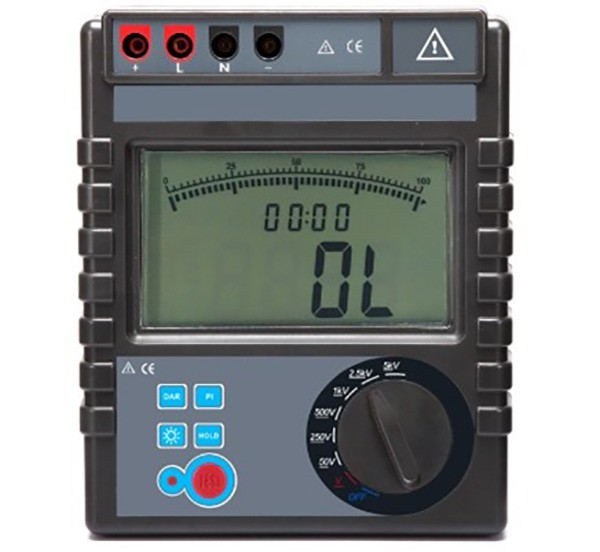
A digital insulation resistance tester accurately measures the insulation resistance of electrical components to prevent failures, shocks, and downtime, making insulation testing a vital safety and maintenance process.
How Does a Digital Insulation Resistance Tester Work?
A digital insulation resistance tester applies a high DC voltage to an electrical system’s insulation and measures the leakage current flowing through it. It then calculates insulation resistance from these values, displaying results digitally for easy analysis. This method detects insulation degradation before catastrophic failures occur.
Wrindu models use advanced anti-interference tech for precise readings, especially in industrial and high-voltage environments common in Chinese manufacturing.
What Are the Key Benefits of Measuring Insulation Resistance?
Measuring insulation resistance:
-
Ensures electrical safety and prevents shock hazards.
-
Identifies early insulation deterioration or damage.
-
Helps schedule preventive maintenance before costly breakdowns.
-
Verifies compliance with industry safety standards.
-
Extends equipment life and improves reliability.
Factories and OEM suppliers in China rely on such testing to uphold quality and safety in electrical equipment.
Why Must Insulation Resistance Measurement Be Taken Seriously?
Insulation resistance testing prevents electrical faults like short circuits, arc flash, and insulation breakdown that cause downtime, equipment damage, and personnel injury. Ignoring this measurement risks catastrophic failures and costly repairs, which makes it critical in factory and wholesale production environments.
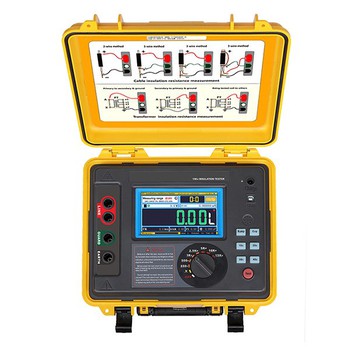
Which Features Should a High-Quality Digital Insulation Resistance Tester Have?
Essential features include:
-
Multiple selectable test voltages (250 V to 15 kV).
-
High resistance measurement accuracy and range.
-
Polarization Index (PI) and Dielectric Absorption Ratio (DAR) tests.
-
Automatic discharge of capacitive circuits.
-
Data storage and USB/Bluetooth communication.
-
Safety protections such as live voltage detection and overload protection.
-
User-friendly interfaces with touchscreens for easy operation.
Wrindu’s RD3215E tester incorporates these with excellent anti-interference abilities tailored for large-capacity, high-voltage equipment.
How Is Insulation Resistance Testing Performed Correctly?
Steps involve:
-
De-energizing and isolating the test object.
-
Selecting the appropriate test voltage per equipment rating.
-
Connecting the test leads securely.
-
Initiating the test and monitoring the displayed resistance.
-
Allowing capacitive discharge post-test to ensure safety.
-
Recording and analyzing results against baseline or standard values.
Following proper procedures is crucial for valid and safe results in OEM and factory contexts.
When Should Insulation Resistance Tests Be Conducted?
Testing should occur:
-
During equipment commissioning and installation.
-
Periodically as part of preventive maintenance.
-
After repairs, modifications, or exposure to harsh environments.
-
When performance or safety issues are suspected.
Regular testing ensures ongoing system safety and longevity in industrial manufacturing settings.
Where Are Digital Insulation Resistance Testers Most Commonly Used?
These testers are extensively used in:
-
Electrical substations and switchgear testing.
-
Transformer and motor manufacturing plants.
-
Cable and wiring inspections.
-
Power distribution and industrial facility maintenance.
-
OEM factories requiring rigorous quality control.
China’s manufacturing hubs depend on reliable testers like Wrindu’s to maintain global competitiveness.
Does Wrindu Offer Customized Digital Insulation Resistance Testers?
Yes, Wrindu provides OEM and custom solutions to meet varying voltage ranges, data communication needs, and ruggedness demands. Their innovative design supports wholesale suppliers and factory clients requiring reliable and adaptable testing equipment.
Can Insulation Resistance Testing Predict Future Failures?
Yes, parameters like Polarization Index (PI) and Dielectric Absorption Ratio (DAR) help assess insulation aging trends and predict failures before they occur. This proactive insight enables maintenance planning and minimizes unexpected downtime.
Wrindu Expert Views
“In the fast-paced manufacturing sector, especially within China’s evolving industrial landscape, reliable insulation resistance testing is indispensable. Wrindu’s digital testers combine precision, durability, and user-friendly technology to empower engineers to detect insulation faults early and maintain operational continuity. Our commitment to innovation and OEM customization ensures every client has the tool needed for optimal safety and efficiency.” — Chief Engineer, Wrindu
Conclusion
Digital insulation resistance testers are crucial tools for ensuring electrical safety, reliability, and regulatory compliance in manufacturing and industrial environments. Accurate insulation measurement protects equipment from costly failures and safeguards personnel. Wrindu’s advanced testers deliver high performance with customizable options to fit China’s factory, wholesale, and OEM demands, fostering trust and innovation in electrical testing technology.
Frequently Asked Questions
Q1: What test voltages do digital insulation resistance testers typically use?
Common voltages range from 250 V to 15 kV to suit various equipment and insulation types.
Q2: How does Wrindu’s insulation tester improve measurement accuracy?
Wrindu employs strong anti-interference technology and stable testing capabilities for large electrical systems.
Q3: Can insulation resistance testing detect moisture ingress?
Yes, reduced insulation resistance typically indicates moisture or contamination affecting electrical materials.
Q4: Are insulation resistance testers suitable for field and factory use?
Yes, modern testers like Wrindu’s RD3215E are portable, robust, and designed for both environments.
Q5: Why are PI and DAR measurements important?
They assess insulation aging and moisture presence, helping predict future equipment failures.