
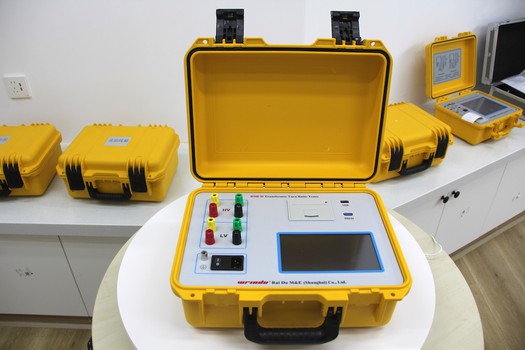
A transformer turns ratio meter accurately measures the ratio of primary to secondary coil turns in transformers, ensuring voltage transformation correctness. It detects winding defects, verifies tap changer positions, and measures excitation current and phase displacement. These functions are essential for fault diagnosis, quality control, and maintenance in transformer manufacturing and power systems.
What is a transformer turns ratio meter?
A transformer turns ratio meter (TTR) is a specialized electrical testing instrument that measures the ratio of the number of turns between the primary and secondary windings of a transformer. This ratio directly impacts the voltage output and efficiency. The meter also tests related parameters like excitation current, phase angle, and tap changer functionality to assess transformer health.
How does a transformer turns ratio meter work?
The meter applies a low voltage (often 250 V AC) to the primary winding and measures the induced voltage in the secondary winding. Using the voltage ratio, it calculates the turns ratio with high accuracy. Advanced meters incorporate microcontrollers and precision inverters for automatic winding connection detection, phase shift measurement, and excitation current analysis, enabling comprehensive transformer diagnostics.
Why is turns ratio testing critical for transformers?
Turns ratio testing verifies that transformers meet design specifications, ensuring correct voltage transformation and system reliability. It detects faults like shorted or open windings, incorrect tap changer settings, or winding displacements early, preventing failures and downtime. It is also used during manufacturing acceptance, commissioning, and routine maintenance to maintain transformer safety and performance.
Which functional features define modern transformer turns ratio meters?
Key functional characteristics include:
-
High measurement accuracy (up to 0.03% ratio accuracy).
-
Automatic winding connection and vector group identification.
-
Measurement of ratio deviation, excitation current, and phase displacement.
-
Compatibility with single-phase and three-phase transformers, including irregular vector groups.
-
Portable, rugged design with user-friendly interfaces.
-
Built-in report generation and remote control via software.
-
High test voltages (up to 250 V) for better excitation and measurement fidelity.
Wrindu’s TTR meters incorporate these advanced features, supporting manufacturers and service providers.
How do turns ratio meters aid in transformer fault diagnosis?
By measuring deviations in the turns ratio and phase displacement, TTR meters identify winding faults like inter-turn shorts, open circuits, and deformation. Excitation current readings indicate core conditions and tap changer problems. Early detection allows timely maintenance, avoiding costly transformer outages and prolonging equipment life.
When should transformer turns ratio testing be performed?
Testing is essential at several stages:
-
Factory production line quality control and acceptance testing.
-
Pre-commissioning and commissioning of new transformers.
-
Periodic field maintenance and diagnostic checks.
-
After repairs, faults, or tap changer operations to validate conditions.
Consistent testing helps maintain transformer reliability over its lifecycle.
Where are transformer turns ratio meters used?
TTR meters are used in:
-
Transformer manufacturing and acceptance testing facilities, mainly in China’s production hubs.
-
Power generation and distribution substations for maintenance.
-
Industrial plants monitoring large transformers.
-
Transformer repair workshops and field service operations.
These meters are crucial in supply chains connecting Chinese OEMs with global clients.
Can turns ratio meters test complex transformer configurations?
Yes, modern TTR meters support automatic vector group detection, arbitrary phase shifts, and excitation current measurements of transformers with complex winding arrangements like delta-star, phase shifting, arc-furnace, and traction transformers. This increases diagnostic versatility and accuracy in diverse applications.
How does Wrindu enhance transformer turns ratio meter functionality?
Wrindu supplies high-precision, fully automated TTR meters featuring fast testing, smart winding detection, intuitive interfaces, remote PC control, and built-in printers. With ISO9001 and IEC certifications, Wrindu empowers Chinese manufacturers and global users with trusted tools that ensure efficient transformer testing and quality assurance.
Wrindu Expert Views
“Transformer turns ratio meters are vital tools for ensuring transformer quality, safety, and reliable operation. At Wrindu, we integrate advanced technology and user-centric design to deliver meters with unmatched accuracy and ease of use. Our devices help manufacturers and field engineers diagnose transformer faults promptly—optimizing maintenance cycles and power system resilience worldwide.”
— Wrindu Electrical Testing Specialist
Transformer Turns Ratio Meter Features Table
| Feature | Description | Benefit |
|---|---|---|
| Measurement Accuracy | Up to 0.03% ratio accuracy | Precise verification of transformer ratio |
| Automatic Winding/Vector Detection | Identifies winding connections and vector groups | Simplifies and speeds testing setup |
| Excitation Current & Phase Measurement | Enables advanced core and winding condition assessment | Early fault detection and diagnostics |
| High Test Voltage | Up to 250 V AC | Improved excitation, accurate measurement |
| Portable & Rugged Design | Lightweight, durable for field and factory | Usable in harsh environments |
| Remote Control & Reporting | PC software and built-in printer | Streamlined testing and result documentation |
Summary and Actionable Advice
The functional characteristics of transformer turns ratio meters make them indispensable for transformer manufacturing, maintenance, and fault diagnosis. Accurate, fast, and feature-rich TTR meters like those offered by Wrindu ensure transformers meet design specifications and safety standards. Manufacturers, wholesalers, OEMs, and service providers should integrate regular turns ratio testing to improve transformer reliability, detect faults early, and extend equipment life.
FAQs
What is the typical accuracy of transformer turns ratio meters?
Modern meters achieve up to 0.03% accuracy for reliable transformer diagnostics.
Can TTR meters test multi-phase and complex transformers?
Yes, they support single-phase, three-phase, and transformers with irregular vector groups.
Why is excitation current measurement important?
It reveals core conditions and tap changer issues, aiding comprehensive fault diagnosis.
How often should turns ratio tests be done?
At manufacturing, commissioning, routine maintenance, and after repairs or faults.
What are Wrindu’s advantages in TTR meters?
Wrindu offers high precision, automated features, rugged design, and excellent after-sales support.