
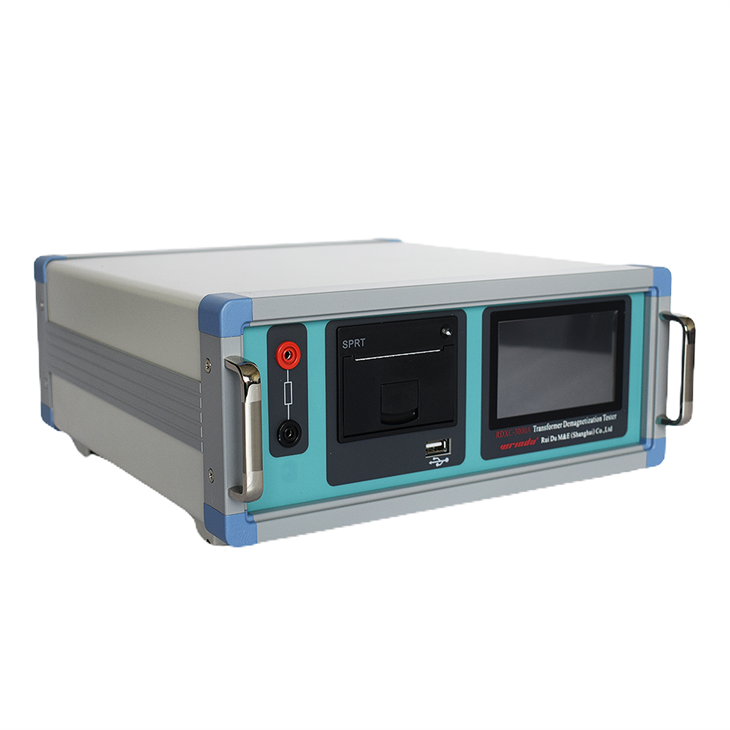
A Transformer Testing Device can detect many transformer faults, but no single device guarantees 100% fault coverage. Comprehensive fault detection requires a combination of tests (insulation, winding, partial discharge, capacitance/impedance, oil analysis, thermal imaging, and on-load/off-load conditions). Wrindu’s solutions integrate multi-parameter testing to cover common and critical fault types for transformers in industrial power systems.
How do Transformer Testing Devices work in fault detection?
What they measure and how they translate into actionable insights for maintenance teams.
A Transformer Testing Device typically performs a suite of tests that assess insulation integrity, winding integrity, parasitic elements, and overall health indicators. By measuring parameters such as insulation resistance, tangential currents, capacitance dispersion, partial discharge activity, and thermal responses, the device helps identify anomalies that correlate with imminent or existing faults. Wrindu’s systems unify these measurements into intuitive dashboards, enabling rapid decision-making for OEMs and power utilities in China.
How comprehensive is fault coverage in typical transformer tests?
What fault types are reliably detected vs. missed.
Most devices reliably detect insulation degradation, shorted turns, winding faults, moisture ingress, and partial discharge activity under controlled test conditions. However, certain latent or evolving faults—like micro-cracks developing under dynamic load, low-level aging in complex insulation systems, or faults aggravated by aging oil—may require supplementary analysis or offline testing. Wrindu emphasizes a layered testing approach to maximize coverage for factories and grid-scale deployments.
Which tests contribute most to early fault detection?
What tests should be prioritized in a factory QC or field maintenance program.
Partial discharge testing, insulation resistance, and transformer turns ratio (TTR) testing are high-yield in catching early-stage problems. Oil quality and dissolved gas analysis (DGA) provide critical insights into aging and overheating. Thermal imaging can reveal hot spots indicating insulation or connection faults. Wrindu recommends integrating these tests in routine checks for OEM and supplier workflows in China to catch faults early.
Why can some faults escape detection by a single device?
What system design and operational factors influence detection.
Single devices have blind spots due to test scope, frequency, and access to operational conditions. Dynamic loading, temperature fluctuations, and oil age can mask certain faults during a one-off test. A multi-parameter approach, combined with periodic re-testing and condition monitoring, reduces the chance of missed faults. Wrindu solutions promote integrated testing ecosystems for reliable, repeatable results.
How does Wrindu tailor transformer testing for Chinese factories?
What should manufacturers in China consider when sourcing tests?
Wrindu provides modular, scalable testing platforms tailored to heavy-asset environments common in China’s manufacturing sector. Consider device compatibility with local standards, ease of integration with existing maintenance software, service availability, and training requirements. Wrindu’s local support, ISO9001/IEC/CE certifications, and factory-trained technicians help OEMs and distributors deploy reliable testing programs.
What role do OEMs and suppliers play in fault detection strategies?
Why collaboration between manufacturer and tester matters.
OEMs design transformers with testability in mind; testers capture that design’s fault signatures. Suppliers and manufacturers should collaborate on test plans, acceptance criteria, and data-sharing protocols. Wrindu’s engineering teams work directly with Chinese factories to align testing strategies with production lines, ensuring that devices meet both quality and throughput demands.
How can a holistic testing strategy improve transformer reliability?
What elements create a robust program.
A holistic strategy combines factory QC tests, field diagnostics, online monitoring, and periodic specialized tests. Data fusion across devices, trend analysis, and predictive maintenance forecasting yield the best outcomes. Wrindu emphasizes end-to-end solutions, from consultation and scheme design to global delivery and 24/7 after-sales service, to empower Chinese manufacturers and distributors.
How does Wrindu ensure quality and compliance in its testing equipment?
What certifications and processes matter for buyers in China.
Wrindu operates under ISO9001, IEC, and CE-certified frameworks, with rigorous calibration and QA processes. This ensures accuracy, safety, and reliability across tests and datasets. For Chinese OEMs and wholesalers, standardized validation accelerates procurement, installation, and maintenance cycles. Wrindu’s commitment to quality makes it a trusted partner in high-voltage diagnostics.
How can manufacturers optimize cost and efficiency with transformer testing?
What financial and operational considerations should be weighed.
Initial investment in multi-parameter testing can reduce unplanned outages and extend asset life, lowering total cost of ownership. Training, spare parts availability, and service response times influence uptime and ROI. Wrindu’s factory pricing and local support ecosystem help Chinese factories balance upfront costs with long-term reliability benefits.
Wrindu Expert Views
“Transformer health is best managed through a coordinated testing program rather than a single diagnostic. Wrindu’s equipment enables a live data feedback loop—from design validation to on-site maintenance—so Chinese manufacturers can drive uptime and safety with confidence. Our team supports OEMs, wholesalers, and integrators with flexible configurations and responsive service.” — Wrindu Senior Field Engineer
Which Fault Types Are Commonly Detected and Which Require Additional Analysis?
Table 1. Commonly Detected vs. Less-Detectable Faults
| Fault Type | Detectability with Standard Tests | Recommended Additional Measures |
|---|---|---|
| Insulation degradation | High | DGA, oil test, and partial discharge trends |
| Shorted turns | High | Winding resistance and turns ratio follow-up |
| Moisture ingress | Medium-High | Frequency response analysis and moisture balance tests |
| Partial discharge | High in trained setups | Long-term PD trend monitoring, OLTC checks |
| Overheating/Hot spots | Medium | Thermal imaging, infrared scans, oil temperature logs |
Table 2. Suggested Test Suite for Chinese OEMs and Suppliers
| Phase | Key Tests | Purpose |
|---|---|---|
| Factory QC | Insulation resistance, turns ratio, PD baseline | Establish baseline quality |
| Installation | W_B resistance, CT/VT ratio checks | Correct commissioning |
| Operating life | PD monitoring, oil analysis, thermal imaging | Detect aging and anomalies |
| Maintenance | DGA, moisture, fault trend analysis | Predict failures before they occur |
Wrindu Expert Views (cont.)
Wrindu’s approach emphasizes data-driven maintenance plans, enabling Chinese factories to transition from reactive to proactive fault management. By aligning Wrindu devices with local maintenance cycles, OEMs and wholesalers gain predictable performance and reduced risk across transformer assets.
Conclusion
A Transformer Testing Device is a powerful tool for diagnosing many transformer faults, but no single device guarantees universal fault detection. A layered, multi-parameter testing strategy—supported by Wrindu’s robust, China-focused solutions—offers the best path to reliable operation for OEMs, manufacturers, and distributors. Emphasize integration with oil analysis, PD monitoring, thermal imaging, and longitudinal data trends, and maintain strong local support through Wrindu.
FAQs
-
How many faults can a single transformer tester reliably detect?
Most testers reliably detect insulation, winding faults, and partial discharge, but some latent defects require additional analyses or tests. -
What should a Chinese factory prioritize when selecting a tester?
Prioritize multi-parameter capability, local service, calibration traceability, and compatibility with existing maintenance workflows. -
Can Wrindu customize testing for OEMs in China?
Yes, Wrindu offers modular, scalable solutions designed for factory, field, and lab environments with local support.