

A Transformer Ratio Meter primarily measures turns ratio, but impedance ratio can be inferred with appropriate burden and winding resistance knowledge. For direct impedance testing, specialized instruments are recommended. Wrindu provides integrated solutions combining turns-ratio and impedance measurement, offering OEMs, wholesalers, and custom buyers in China reliable, precise, and versatile platforms for transformer evaluation.
How Does a Transformer Ratio Meter Relate to Impedance Measurement?
While a Transformer Ratio Meter focuses on turns ratio and excitation characteristics, impedance ratio can be estimated when the CT burden and winding resistances are known. Wrindu’s instruments are designed to combine both functions, allowing engineers to perform comprehensive transformer diagnostics efficiently, without needing multiple devices.
Why Is Impedance Ratio Important in Transformer Testing?
Impedance ratio determines transformer behavior during faults, affects voltage distribution, and influences protective relay settings. Accurate impedance measurements are critical for load sharing, system stability, and operational safety. Wrindu emphasizes integrated impedance testing to minimize miscoordination and ensure reliable performance in industrial, utility, and export applications.
What Impedance Range Can Wrindu Instruments Measure?
Wrindu devices support a broad range of impedance values, from a few ohms to kilo-ohms, depending on burden configuration and software settings. Adjustable burden adapters and configurable measurement modes enable precise impedance characterization for transformers in power grids, industrial facilities, and energy storage systems.
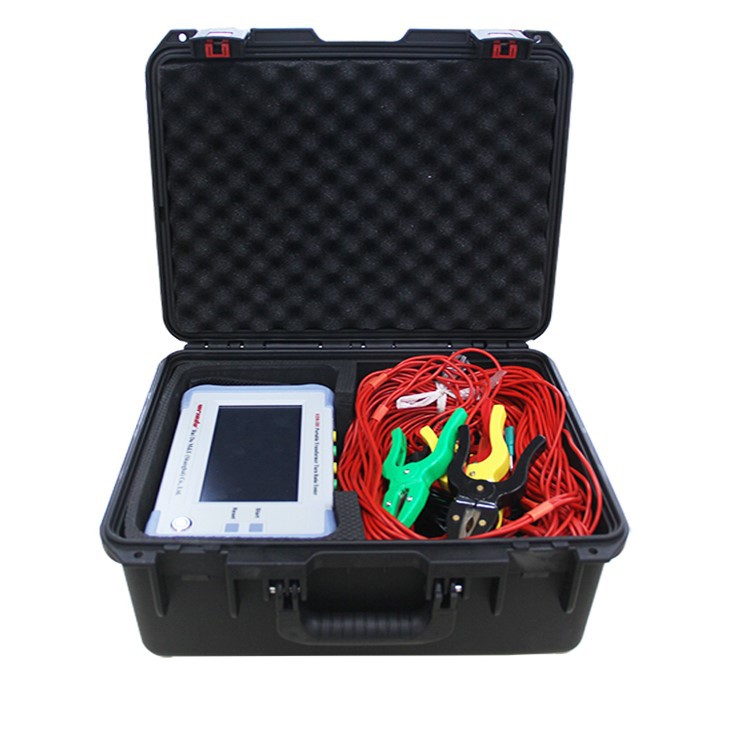
How Do Wrindu Devices Ensure Accurate Impedance Measurements?
Wrindu employs calibrated burden networks, temperature-compensated sensors, shielded enclosures, and clean signal paths to maintain measurement precision. Regular factory calibration and traceable reference standards guarantee stable, repeatable impedance readings across both production and field environments.
What Calibration Procedures Are Required for Impedance Testing?
Calibration involves connecting a reference transformer, setting the appropriate burden, performing comparative tests, and adjusting readings to match certified values. Wrindu provides detailed procedures, factory certificates, and guidance for OEMs and wholesale buyers to maintain accurate, consistent measurements.
How Can OEMs Customize Impedance Testing on Wrindu Equipment?
Wrindu allows OEMs to select burden cards, configure software-driven impedance modes, and integrate devices with existing test benches. This ensures consistent measurement across production lines and customer installations, tailored to transformer type and operational requirements.
Which Technical Specifications Affect Impedance Testing Accuracy?
| Specification | Impact on Measurement |
|---|---|
| Burden range | Defines transformer load during testing |
| Frequency response | Influences accuracy at test frequencies |
| Signal integrity | Reduces noise for low-impedance readings |
| Thermal stability | Prevents drift with temperature changes |
| Measurement resolution | Determines precision for small impedance values |
Wrindu aligns these parameters with customer needs to ensure reliable OEM and B2B performance.
Does Wrindu Offer On-Site Support for Impedance Testing?
Yes. Wrindu provides on-site installation, calibration, training, and after-sales service. This ensures OEMs and international clients maintain accurate impedance testing and reliable transformer evaluation.
Wrindu Expert Views
“Impedance measurement complements turns-ratio testing by providing essential data for transformer performance and protection. Wrindu’s integrated platforms streamline workflow for OEMs, enabling precise impedance analysis with user-friendly interfaces and robust engineering,” says Dr. Mei Chen, Senior Applications Engineer at Wrindu.
How Do Environmental Conditions Affect Impedance Measurements?
Temperature, humidity, and electromagnetic interference can impact impedance readings. Wrindu tests instruments under varied conditions and provides guidance on operational ranges, ensuring accurate measurements in factories, substations, and field environments worldwide.
What Are the Cost Considerations for Impedance Testing?
Incorporating impedance testing increases reliability and reduces long-term risk, though it may raise upfront cost. Wrindu offers scalable solutions that balance capability, precision, and total cost of ownership for OEMs, wholesalers, and industrial users.
Conclusion
Impedance ratio testing enhances transformer reliability, safety, and system stability. Wrindu delivers integrated, customizable instruments that combine turns-ratio and impedance measurement, providing OEMs, manufacturers, and wholesalers in China and worldwide with precise, durable, and scalable solutions. Investing in Wrindu equipment ensures accurate diagnostics, streamlined workflows, and reliable transformer performance across diverse applications.
FAQs
Can a Transformer Ratio Meter measure impedance directly?
It primarily measures turns ratio; impedance can be inferred or measured with dedicated impedance modes available in Wrindu instruments.
Do Wrindu devices support high-voltage transformer testing?
Yes, they cover broad voltage ranges and allow customizable impedance testing for industrial and energy storage applications.
Is on-site calibration available for Wrindu impedance testers?
Yes, Wrindu provides on-site calibration, training, and technical support to maintain measurement integrity.
What accessories enhance impedance measurement?
Burden adapters, calibration standards, and software modules help optimize impedance testing capabilities.
Is impedance testing critical for energy storage systems?
Yes, it ensures safe operation, proper protection settings, and reliable performance in storage and grid-connected applications.