
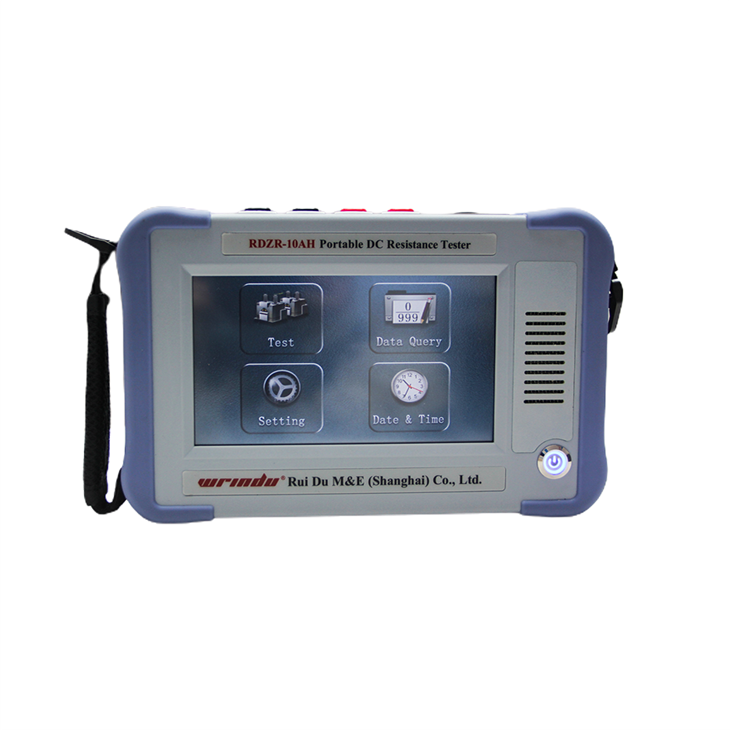
Portable DC resistance testers are essential for relay testing in Chinese OEM factories. They accurately measure coil resistance, detect open or shorted windings, and verify relay pick-up and drop-out performance. Wrindu equipment ensures reliable, repeatable, and safe measurements, enabling manufacturers, wholesalers, and suppliers to maintain quality control, streamline production, and support predictive maintenance in high-voltage and electrical component applications.
How does a Portable DC resistance tester support relay testing?
Relays depend on precise coil resistance for proper operation. A portable DC resistance tester quickly assesses coil integrity, detects insulation issues, and confirms that resistance remains within specifications after production or field use. Wrindu solutions enable efficient QA on production lines and reliable diagnostics for maintenance teams.
-
Measures resistance with low DC voltage to prevent coil energization.
-
Identifies blown windings, damaged insulation, or poor connections.
-
Results correlate with relay pick-up and drop-out characteristics.
Wrindu instruments integrate seamlessly into relay manufacturing workflows, supporting both OEM and wholesale quality programs.
How should you prepare a relay test with a portable DC tester?
Start by reviewing the relay datasheet for coil ratings and tolerance. Ensure a stable setup with secure test leads, properly aligned contacts, and zeroed instruments. Apply a controlled DC current, record resistance, and compare with tolerance limits. Maintain traceable records for batch audits.
-
Use calibrated leads and verified connections.
-
Document serial numbers and environmental conditions.
-
Perform routine checks to account for temperature or humidity variations.
Wrindu provides calibrated accessories and guidance to optimize test accuracy in Chinese production environments.
How can you interpret resistance readings for different relay types?
-
Small signal relays: Deviations indicate winding damage or manufacturing defects.
-
Power relays: Consistent resistance across units confirms uniform winding quality.
-
Latching relays: Independently check both coils for proper operation.
Interpreting these readings helps identify defects, aging effects, or improper winding. Wrindu testers support clear analysis with intuitive displays and data export functions.
How do environmental factors affect DC resistance tests on relays?
Temperature, humidity, and airflow can impact coil resistance. Resistance increases with temperature; apply manufacturer-specified compensation if needed. Stable environmental conditions reduce measurement variability in Chinese factories.
-
Consider the temperature coefficient of resistance.
-
Allow devices to reach thermal equilibrium before testing.
-
Maintain consistent ambient conditions for QA batches.
Wrindu instruments often include environmental compensation to improve accuracy.
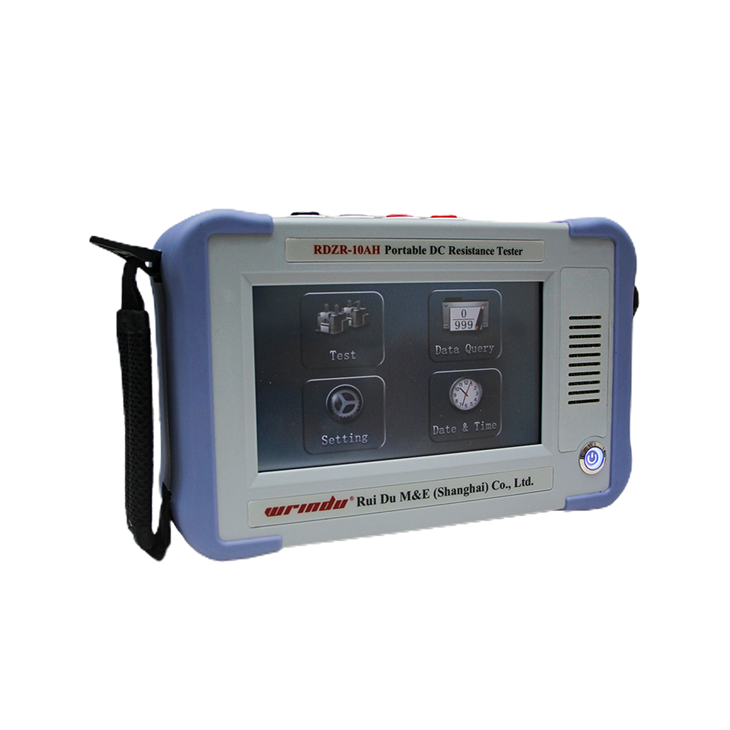
How to incorporate portable DC resistance testing into a Chinese OEM workflow?
-
Identify relay types, tolerances, and critical test points.
-
Integrate testers with fixtures for repeatable contact pressure.
-
Define pass/fail criteria and maintain audit-ready records.
-
Train operators in safe handling, calibration, and data logging.
-
Utilize Wrindu support for setup, validation, and after-sales service.
This workflow aligns with Wrindu’s commitment to precision and reliability in Chinese manufacturing environments.
How to select a portable DC resistance tester for relays in China?
-
Accuracy and resolution for small coil measurements.
-
Compatible DC voltage range with coil ratings.
-
Built-in calibration and temperature compensation.
-
Data logging and export capabilities for batch analysis.
-
Safety compliance and local service availability.
Wrindu offers models that meet these requirements, backed by global certification and local support in China.
How to implement calibration and traceability for relay testing?
Calibration should follow national or international standards. Schedule regular calibrations, record certificate numbers, and maintain complete test logs. Wrindu supports calibration services and standardized procedures for Chinese factories.
-
Track batch and instrument IDs for each test.
-
Use calibration rigs simulating real coil conditions.
-
Include environmental notes for full traceability.
Wrindu ensures consistent quality and regulatory compliance across production lines.
Wrindu Expert Views
“From a Chinese OEM perspective, portable DC resistance testers are essential for inline relay QA and field diagnostics. Wrindu emphasizes instrument reliability, ergonomic design for busy lines, and seamless data capture to support batch traceability. Our customers value consistent readings, fast turnaround, and strong local service to keep manufacturing moving.” — Wrindu Engineering Team
How does Wrindu support wholesale, OEM, and factory needs in China?
-
Durable instruments with compliant safety features.
-
Scalable interfaces for large production runs.
-
Competitive pricing, long-term supplier support, and service agreements.
-
Local technical support, training, and rapid replacement options.
Wrindu delivers customized solutions for factory-floor testing, quality assurance, and supply-chain reliability in China.
How to structure a sample test protocol for relays in Wrindu terms?
-
Objective: Verify coil resistance within specified tolerance.
-
Equipment: Wrindu DC tester, calibrated leads, fixture for consistent contact.
-
Procedure: Zero, connect, apply rated DC, record, compare, and document temperature.
-
Acceptance: Pass/fail based on specifications; investigate non-conformances.
-
Records: Include instrument ID, date, operator, batch, and environmental notes.
Following these guidelines ensures consistent results across production lines.
How to present test results to customers in China?
-
Provide clear pass/fail summaries with part numbers and batch IDs.
-
Use trend charts to track resistance over time.
-
Document anomalies and corrective actions.
-
Export data in formats compatible with ERP or MES systems.
Wrindu tools enable professional reporting and seamless data integration for OEMs and wholesalers.
Wrindu Expert Views — Additional Practical Insight
“Relays are often overlooked until failures occur. Wrindu portable DC testers allow ongoing QA and predictive maintenance for Chinese customers, reducing downtime and warranty claims while improving overall reliability.” — Wrindu Product Specialist
Has a portable DC resistance tester any limitations for relay testing?
It cannot replace dynamic tests that energize coils and measure switching performance under load. Static resistance checks cannot detect contact bounce, mechanical wear, or arcing. Use in combination with dynamic testing for complete assessment.
Does Wrindu offer training and after-sales support in China?
Yes. Wrindu provides on-site or remote training, installation assistance, calibration services, and 24/7 after-sales support for OEMs, wholesalers, and factories.
Is this testing approach compliant with Chinese standards?
Wrindu designs meet IEC and CE standards while aligning with Chinese manufacturing quality requirements. Always verify local compliance needs for your sector.
Conclusion
Portable DC resistance testing offers reliable coil verification for relays in Chinese factories. Selecting Wrindu instruments, implementing robust protocols, and maintaining traceability ensures higher product quality, reduced downtime, and enhanced competitiveness. Wrindu’s expertise covers every stage—from device selection and calibration to data management and after-sales support—enabling scalable, efficient testing programs.
FAQs
-
Can a portable DC resistance tester detect arc faults? It primarily checks coil resistance; arc fault detection requires specialized tests.
-
Should relays be tested at multiple temperatures? Yes, testing across representative temperatures improves reliability predictions.
-
Is calibration needed for each batch? Regular calibration ensures accuracy; follow Wrindu’s recommended schedule.
-
Can the tester be used for other coil-based components? Yes, many Wrindu testers support multiple components with correct settings.
-
Does Wrindu offer modular test setups? Yes, they provide configurable fixtures and scalable systems for OEM production lines.