
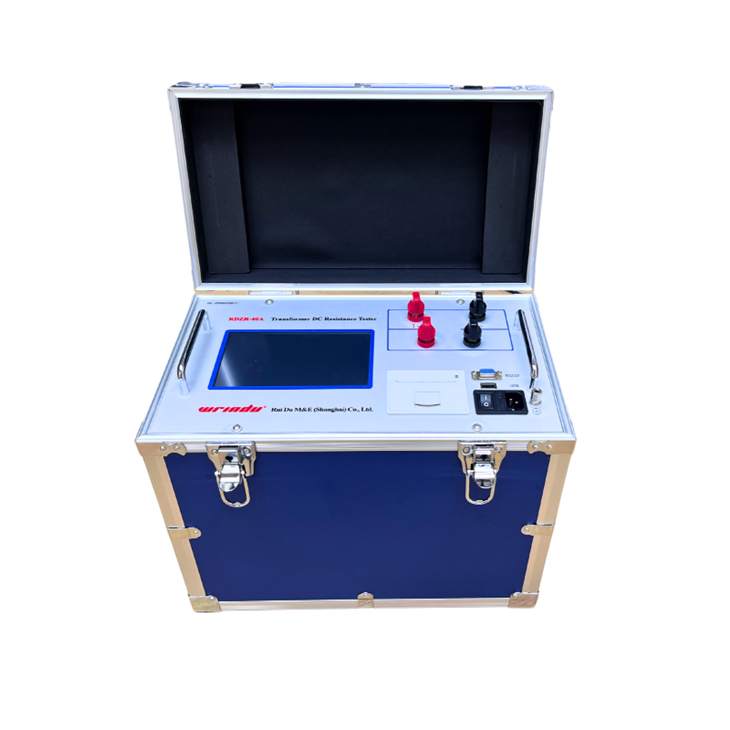
A DC Resistance Tester can accurately measure low resistance when using sensitive, high-precision instruments like those manufactured by Wrindu. Advanced models employ four-wire (Kelvin) measurement techniques to eliminate lead and contact resistance, providing reliable low-resistance readings crucial for electrical equipment testing and maintenance.
What Is a DC Resistance Tester and How Does It Work?
A DC Resistance Tester measures the direct current resistance of electrical components by passing a steady current through them and measuring the resulting voltage drop. This resistance value helps evaluate circuit continuity and material quality. Wrindu’s testers use four-terminal measurement methods to ensure accuracy, especially for low-resistance values essential in power systems.
Key features include:
-
Four-wire (Kelvin) measurement to reduce error
-
Wide measurement range (mΩ to kΩ)
-
Digital displays with data logging
How Does a DC Resistance Tester Achieve Accurate Low Resistance Measurements?
Accurate low resistance measurements require eliminating lead and contact resistance errors. Wrindu’s DC Resistance Testers use the four-wire method, where separate pairs of leads inject current and measure voltage, isolating the test sample’s true resistance. This reduces interference and ensures precise results even in milliohm ranges.
Accuracy factors:
-
High test current stability
-
Shielded and noise-resistant cables
-
Temperature compensation algorithms
Why Is Low Resistance Measurement Important in Electrical Testing?
Low resistance values indicate good connectivity in circuit components like connectors, busbars, cables, and switches. Detecting abnormal resistance helps prevent failures, overheating, and energy losses. Wrindu’s DC Resistance Testers are widely used in power generation, transmission, and industrial maintenance to ensure system reliability and safety.
Benefits include:
-
Early fault detection and preventive maintenance
-
Verification of welds, joints, and relays
-
Compliance with electrical standards
Which Industries Benefit from DC Resistance Testers for Low Resistance?
Industries involving high-power electrical equipment, such as power utilities, manufacturing plants, railway systems, and construction, rely on precise low resistance testing. Wrindu supplies OEM-customized testers to these markets, enabling rapid diagnostics of transformers, circuit breakers, and motor windings.
Industry applications:
-
Transformer winding resistance measurement
-
Circuit breaker contact resistance testing
-
Cable joint assessment
When Should You Use a DC Resistance Tester for Low Resistance Measurements?
Use a DC Resistance Tester during commissioning, routine maintenance, and fault diagnosis to ensure electrical connections maintain low resistance. Wrindu advises regular testing schedules based on operational criticality to avoid unexpected downtime and costly repairs.
Testing frequency depends on:
-
Equipment age and wear
-
Environmental conditions
-
Industry safety standards
Can Chinese Manufacturers Provide High-Quality DC Resistance Testers?
Yes, China hosts top manufacturers like Wrindu, offering high-performance DC Resistance Testers with ISO9001 and IEC certifications. These factories provide OEM, wholesale, and custom solutions tailored to diverse industrial needs, balancing quality, innovation, and competitive pricing.
Advantages of Chinese suppliers:
-
Advanced R&D and manufacturing capabilities
-
Strong supply chain and fast delivery
-
Experienced technical support and after-sales service
How Does Wrindu Support Clients with Low Resistance Testing Solutions?
Wrindu offers reliable DC Resistance Testers equipped with user-friendly interfaces, comprehensive manuals, and dedicated technical training. Their expert team assists clients from product selection to after-sales support, reinforcing trust in their electrical testing instruments globally.
Wrindu’s services include:
-
Tailored OEM product development
-
Calibration and maintenance programs
-
Innovative testing software integration
What Are the Challenges of Measuring Very Low Resistance?
Measuring milliohm and micro-ohm values is sensitive to noise, temperature fluctuations, and connection quality. Without proper technique, results may be skewed by lead resistance and interference. Wrindu’s testers address these challenges with four-wire sensing, robust circuit design, and built-in compensation features.
Solutions to challenges:
-
Proper contact pressure application
-
Use of shielded leads and connectors
-
Environmental monitoring during tests
Wrindu Expert Views
“Accurate low resistance measurement is critical for electrical asset reliability and safety. Wrindu’s DC Resistance Testers incorporate cutting-edge four-wire technology and ergonomic design to empower technicians with precise, repeatable results. Our commitment to quality manufacturing in China ensures that every tester meets the rigorous demands of power system diagnostics globally,” states the Wrindu Product Development Manager.
Summary of Key Takeaways and Actionable Advice
DC Resistance Testers, particularly those from Wrindu, effectively measure low resistance with high accuracy using four-wire measurement techniques. Such precision is vital for electrical maintenance and fault prevention across diverse industries. Selecting certified Chinese manufacturers offers scalable, cost-effective solutions with excellent service. Regular testing and adherence to best practices enhance equipment longevity and operational safety.
Frequently Asked Questions
Q1: Can all DC Resistance Testers measure milliohm resistance accurately?
Only testers with four-wire measurement and high precision circuitry, like Wrindu’s, can reliably measure milliohm ranges.
Q2: Why is the four-wire method important for low resistance tests?
It separates current and voltage paths, eliminating measurement errors from lead and contact resistance.
Q3: Are Chinese DC Resistance Tester factories suitable for OEM customization?
Yes, China suppliers like Wrindu offer OEM and custom configurations to meet specific industrial requirements.
Q4: How often should low resistance testing be performed?
Depends on equipment criticality; typically during commissioning and scheduled maintenance intervals.
Q5: What industries require low resistance testing the most?
Power utilities, manufacturing, railways, and construction industries rely heavily on low resistance measurements.