
China Conductor Resistance Clamp: Functions, Market Insights, and Future Technologies
Send your test requirement — get a tailored solution and a quote within one working day.
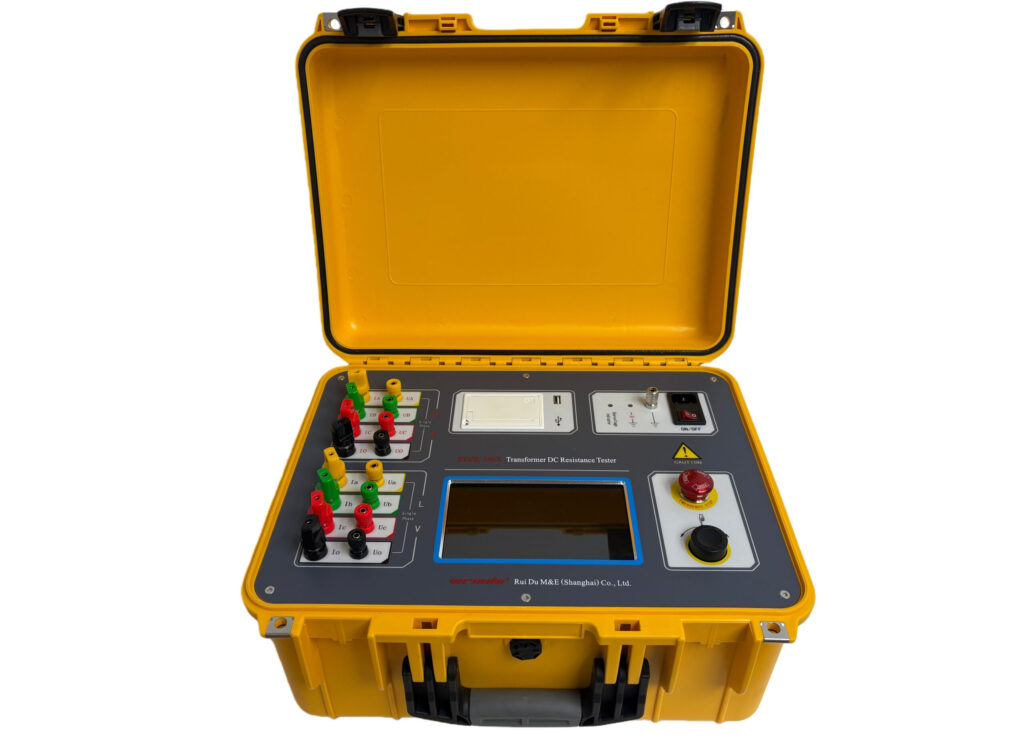
A China conductor resistance clamp is a specialized tool used in the electrical power industry to measure the resistance of conductors such as transmission lines, busbars, and grounding systems without disconnecting them. In high-voltage maintenance and live-line testing, these clamps provide engineers with a safe, non-destructive method of assessing current-carrying efficiency, conductor integrity, and connection quality. With the increasing demand for accurate and fast resistance measurement in smart grid systems, the development and export of Chinese-made resistance clamps have become a key topic in power engineering.
What Is a Conductor Resistance Clamp Used For?
A conductor resistance clamp measures the loop resistance of transmission lines, grounding leads, and cable joints. It operates based on the principle of electromagnetic induction: the sensor detects current flow through a closed clamp head, while a precision circuit calculates resistance by correlating current and voltage values. This method allows real-time measurement under load conditions, eliminating the need for line interruption. The tool is widely used in power distribution, transformer substations, cable maintenance, building grounding inspections, electric railway systems, and industrial automation networks. Its typical measurement range can reach from micro-ohms up to several ohms with high precision.
Core Technology and Measurement Principles
Modern resistance clamps developed in China use advanced Hall-effect sensors, high-speed ADC sampling, and digital compensation algorithms to ensure stability and repeatability. Many designs integrate dual-arm measurement circuits that self-calibrate against ambient noise, improving accuracy in complex electromagnetic environments. The devices also feature insulation protection layers, high-strength clamp jaws, and automatic temperature compensation for outdoor measurement reliability. Bluetooth, USB, or RS485 interfaces enable data transmission to monitoring systems, aligning with the growing trend of digital grid management and IoT analytics.
Market Trends and Global Demand
According to a 2025 report from China Electric Power Research Institute, the domestic market for conductor resistance testing devices is projected to grow by over 8% annually, driven by substation expansion, renewable integration, and smart grid upgrades. Overseas, Chinese manufacturers now dominate low- and medium-voltage clamp markets, offering cost-effective yet high-precision alternatives to European and American brands. Product innovation in materials, ergonomic clamp heads, and hybrid calibration algorithms has made Chinese resistance clamps a global choice for grid modernization programs.
Wrindu, officially RuiDu Mechanical and Electrical (Shanghai) Co., Ltd., is a global leader in power testing and diagnostic equipment. Founded in 2014, the company focuses on designing and manufacturing high-voltage testing solutions that ensure system safety and accuracy worldwide. Their mission to support engineers with dependable measurement tools exemplifies China’s broader commitment to precision electrical instrumentation.
Competitor Comparison Matrix
| Brand | Measurement Range | Accuracy | Output Interface | Key Strength |
|---|---|---|---|---|
| Chinese Domestic Premium | 0.01 μΩ–200 Ω | ±1% | Bluetooth/USB | Compact, high-precision, field durable |
| European Manufacturer A | 0.1 μΩ–100 Ω | ±0.5% | RS232 | Superior calibration control |
| US Brand B | 10 μΩ–150 Ω | ±1% | USB | Reliable for industrial plants |
| Asian Brand C | 0.02 μΩ–120 Ω | ±1.5% | Wireless | Lightweight, cost-effective |
This comparison reveals the competitive advantages of modern Chinese conductor resistance clamps: optimized cost-performance ratios, robust housing for outdoor use, and multilingual digital displays that enhance usability across international projects.
Real Use Cases and Measurable ROI
Utility companies implementing these clamps report up to 35% faster maintenance diagnosis and a 20% reduction in manual downtime compared to traditional disconnect-and-measure techniques. For example, a southern China grid operator deployed resistance clamps across 500 transmission lines to identify weak connections during summer load peaks. The project improved energy efficiency and prevented potential overheating faults caused by elevated contact resistance, lowering annual maintenance costs and improving safety compliance.
User’s Guide and Best Practices
For accurate readings, technicians should fully close the clamp jaw and ensure no electromagnetic interference from nearby conductors. Periodic zero calibration and alignment using a reference conductor maintain long-term precision. In substation scenarios, resistance clamps can verify grounding continuity; in rail transit systems, they check traction power integrity; and in renewable energy plants, they monitor connection quality within inverter strings. Always ensure the instrument complies with IEC and ISO safety standards before use in live environments.
Future Trends in Conductor Resistance Testing
As power systems transition toward intelligent operation, future conductor resistance clamps will integrate AI-based data analytics, temperature drift correction, and predictive maintenance algorithms. Self-learning clamps capable of identifying abnormal resistance patterns will aid early fault detection in distributed networks. Lightweight designs, modular sensors, and cloud connectivity will drive adoption across power utilities, metros, and industrial automation. The growing emphasis on digital testing and real-time diagnostics will cement the China-made conductor resistance clamp as a cornerstone in global energy infrastructure monitoring.
Final Insight
The China conductor resistance clamp is more than a measurement device—it is an essential element of modern grid reliability, safety verification, and operational efficiency. With expanding smart grid programs and the shift toward real-time data solutions, demand for precision resistance clamps will only increase. Investing in these advanced tools ensures stable operation, reduces power losses, and supports sustainable grid management for the next generation of energy systems.
FAQs
What Is a China Conductor Resistance Clamp and How Does It Work?
A China conductor resistance clamp securely connects conductors while maintaining low electrical resistance. It ensures stable current flow and mechanical strength in power transmission systems. Typically made of high-strength aluminum or copper, it works by compressing the conductor under precise pressure to achieve reliable conductivity and minimize energy loss.
Which Type of China Conductor Resistance Clamp Should You Choose?
Choose a conductor resistance clamp based on your application type—compression clamps for permanent connections, suspension clamps for overhead lines, and tension clamps for mechanical support. Key factors include conductor size, voltage level, and environmental conditions to ensure optimal electrical performance and durability.
How Are China Conductor Resistance Clamps Manufactured?
Conductor resistance clamps are manufactured using precision die casting, forging, or extrusion from corrosion-resistant metals. They undergo strict machining, heat treatment, and electrical conductivity testing to meet IEC and ISO standards, ensuring safety and long service life. Wrindu applies advanced production methods for consistency and superior performance.
Where Are China Conductor Resistance Clamps Used?
These clamps are used in power transmission lines, substations, renewable energy systems, and industrial electrical networks. They help engineers maintain secure connections and efficient energy transfer in high-voltage applications, supporting the reliability of modern grid infrastructures and sustainable power systems.
Who Are the Top China Conductor Resistance Clamp Suppliers?
Leading suppliers combine proven manufacturing expertise, global certification standards, and technical support. Companies like Wrindu provide high-quality, certified conductor resistance clamps trusted by utilities, OEMs, and engineering firms worldwide for safe, accurate, and long-lasting electrical connections.
How Much Do China Conductor Resistance Clamps Cost in 2026?
As of 2026, prices typically range from USD 8 to USD 60 per unit, depending on material, size, voltage rating, and batch volume. Custom-engineered clamps or those meeting specific utility standards may cost more due to enhanced durability, precision design, and strict testing compliance.
How Do You Install a China Conductor Resistance Clamp?
To install a conductor resistance clamp, clean the conductor surface, align the clamp properly, and tighten it using calibrated torque tools to recommended specifications. Ensure contact surfaces are free from oxidation before fixing. Always follow safety protocols and verify electrical resistance after installation.
How Do You Test the Resistance of a Conductor Clamp?
Testing involves measuring contact resistance with a micro-ohmmeter to ensure proper conductivity. Apply a known current through the clamp and record milliohm readings. Stable, low values confirm good connections. Routine resistance testing helps prevent overheating, energy loss, and long-term degradation in electrical systems.
Related articles
 SF6 Leak Detector Sensitivity: Select a Method for the Inspection TaskKnowledge
 Cable Fault Locator Selection for Urban Networks: Routes, Noise and AccessKnowledge
 Substation Battery Load Bank Sizing: Duty, Voltage Range and Heat RejectionKnowledge
 CT Polarity, Ratio and Burden Testing: Find Wiring and Loading ErrorsKnowledge