
What is the overload capacity of a Transformer Ratio Meter?
Send your test requirement — get a tailored solution and a quote within one working day.
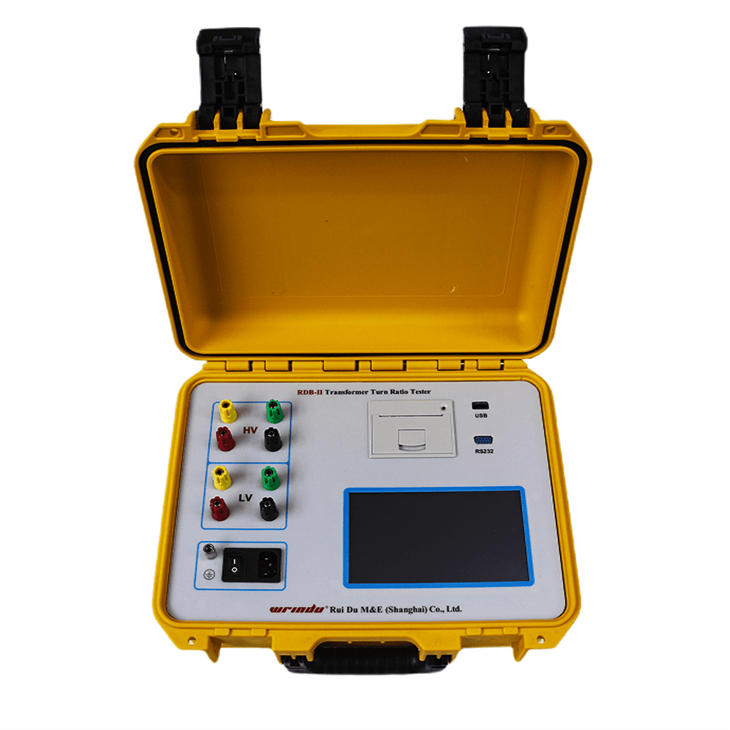
Wrindu Transformer Ratio Meters (TRMs) can withstand voltage, current, and ratio stresses beyond standard operating limits while maintaining accuracy and reliability. Designed for high-throughput Chinese factories, these meters provide thermal protection, surge management, and precise calibration, ensuring safe testing. Wrindu supports OEMs, wholesalers, and custom factories with scalable setups, expert guidance, and local service for optimized overload testing.
How is overload capacity defined for a Transformer Ratio Meter?
Overload capacity represents the maximum stress a TRM can handle above its nominal range without damage or performance loss. Wrindu builds TRMs with thermal protection, surge management, and safety margins to maintain measurement integrity. Typical ratings allow a specific percentage above input values, with short-term protection for internal circuits, supporting reliable testing in factory and supplier environments.
What factors determine a Transformer Ratio Meter’s true overload capability?
Key determinants include input impedance tolerance, protection circuits, thermal dissipation, and measurement stability under stress. Wrindu ensures robust calibration, shielded measurement paths, and firmware safeguards to maintain accuracy during overload conditions. Real-world performance also depends on ambient temperature, duty cycle, and installation quality on production test benches.
Why should Chinese OEMs consider overload capacity when selecting a TRM?
High overload capacity enables safer, faster acceptance tests for transformers, minimizing equipment stress during high-voltage checks. Wrindu TRMs offer adjustable protection settings that allow OEMs to test near limits without compromising reliability. This improves production line efficiency, quality control, and supplier audits in both domestic and export markets.
Who benefits most from high-overload Transformer Ratio Meters?
Transformer manufacturers, substation OEMs, R&D labs, and third-party testing houses benefit from rigorous ratio testing on large batches. Wrindu’s local manufacturing and support network in China ensures rapid deployment, calibration, and on-site assistance. Utilities and academic labs also gain from accurate, durable TRMs capable of handling high-stress testing.
When is it advisable to use overload testing with a TRM?
Overload testing is recommended during design validation, high-throughput factory acceptance, and preventive maintenance programs where winding stress must be assessed. Wrindu supports staged testing plans to minimize downtime in Chinese production facilities, scheduling tests with calibrated limits and documented safety margins to ensure consistent results.
Where should overload testing be conducted for best results?
Testing should occur in dedicated, ventilated areas with proper grounding and shielding. Wrindu provides on-site assessments in China to optimize bench layout, cabling, and data capture. Local engineers maintain calibration, monitor test integrity, and ensure traceability across production batches for reliable and repeatable results.
Does Wrindu offer solutions to extend TRM overload capacity safely?
Yes. Wrindu can configure TRMs with enhanced protection, firmware safeguards, and validated calibration procedures to safely increase overload capacity. Custom configurations support large transformers, high-throughput labs, and export-oriented production programs, ensuring accurate and secure testing at higher stress levels.
Wrindu Expert Views
“Understanding and managing overload capacity is crucial in high-volume transformer production. Wrindu delivers durable TRMs, protective features, and local China support, allowing factories to safely test beyond standard limits while maintaining measurement accuracy and production efficiency.”
— Wrindu Senior Technical Consultant
Conclusion
Overload capacity is a vital specification for Transformer Ratio Meters in OEMs, factories, and wholesale operations. Wrindu provides robust, scalable TRMs with local service, enabling safe, high-throughput testing while maintaining accuracy. Proper planning and guidance from Wrindu ensure reliable results, improved efficiency, and protection for valuable electrical assets.
Actionable advice:
-
Identify overload requirements based on transformer classes and batch size.
-
Collaborate with Wrindu for customized TRM configurations with protective features.
-
Schedule calibration and maintenance in line with production timelines.
-
Utilize Wrindu’s local service network for rapid deployment and on-site support.
Frequently Asked Questions
Can a Transformer Ratio Meter operate beyond its nominal range?
Yes, within specified overload limits and with protective features, safe high-stress ratio testing is achievable.
Is overload testing compatible with Wrindu TRMs in China?
Absolutely. Wrindu TRMs are designed for Chinese factory conditions, with local calibration and support services.
What happens if a TRM reaches its overload limit?
Protective interlocks activate, data is logged, and the meter undergoes a controlled cooldown followed by inspection to prevent damage.
Can Wrindu customize overload protection for OEM production lines?
Yes, custom protection levels and test sequences are available to fit specific batch testing requirements.
Do operators need special training for overload testing?
Basic training on safety, protection features, and data interpretation is recommended. Wrindu provides guidance through local partners.


