
How Can You Distinguish Partial Discharge from Electrical Noise?
Send your test requirement — get a tailored solution and a quote within one working day.
A repeatable partial discharge noise discrimination result still needs evidence that supports a decision about verifying sources before classifying patterns. This partial discharge noise discrimination article is written for Commissioning engineers, maintenance teams and electrical testing laboratories at the commissioning / maintenance decision stage. For partial discharge noise discrimination, it narrows the scope to the electrical asset and identifies which parts of sensor method, operating state, baseline, noise controls and corroborating evidence must remain comparable before the result can support action. For verifying sources before classifying patterns, the aim is to prevent a false defect classification or missed readiness issue while keeping the raw measurement, applicable procedure and unresolved limitations visible to the next reviewer.
Partial discharge noise discrimination: which observations suggest external interference?
Verify partial discharge before acceptance.
Evaluate partial discharge noise discrimination against the approved procedure, matching asset state, verified connections, instrument settings and raw repeat data before accepting or escalating the result.
The minimum technical record for partial discharge noise discrimination should preserve sensor method, operating state, baseline, noise controls and corroborating evidence together with the unedited result. Treat PD interference rejection as comparable only when the asset state, test point and time basis for partial discharge noise discrimination match. For partial discharge noise discrimination, check scope and edition status on the IEC 60270 charge-based PD measurement before freezing the procedure.
If the evidence for partial discharge noise discrimination remains incomplete, limit the stated conclusion for partial discharge noise discrimination and schedule a controlled repeat or a complementary method. Retain the instrument identification, raw measurement, repeated result and disposition for partial discharge noise discrimination so the decision remains reviewable. For partial discharge noise discrimination equipment scope, check Wrindu’s partial discharge testing range page before selecting a model.
Check sensor placement and measurement references
Treat check sensor placement measurement as a separate review question within partial discharge noise discrimination, because it can change the meaning of the recorded value. Within check sensor placement measurement, the scope is verifying sources before classifying patterns, so the record must distinguish the observed quantity, the comparison source and the condition of the test object.
Use the same basis for sensor method, operating state, baseline, noise controls and corroborating evidence whenever check sensor placement measurement is trended across crews, instruments or outage dates. Treat partial discharge source correlation as comparable only when the asset state, test point and time basis for check sensor placement measurement match. For check sensor placement measurement, check scope and edition status on the IEC 60885-3 cable PD test methods before freezing the procedure.
When setup correction removes the change in check sensor placement measurement, report a test-condition issue rather than an unsupported partial discharge noise discrimination asset finding. Retain the instrument identification, raw measurement, repeated result and disposition for check sensor placement measurement so the decision remains reviewable.
How should time and phase evidence be correlated?
Verify time phase before acceptance.
Evaluate time phase evidence correlated against the approved procedure, matching asset state, verified connections, instrument settings and raw repeat data before accepting or escalating the result.
For this electrical asset, identify sensor method, operating state, baseline, noise controls and corroborating evidence in the same record as the reading, because each can alter the interpretation of time phase evidence correlated. Treat electrical noise filtering as comparable only when the asset state, test point and time basis for time phase evidence correlated match. For time phase evidence correlated, check scope and edition status on the IEC 60060-1 high-voltage test requirements before freezing the procedure.
When the feature in time phase evidence correlated survives a controlled repeat, use it as evidence for engineering review rather than as an automatic pass or fail. Retain the instrument identification, raw measurement, repeated result and disposition for time phase evidence correlated so the decision remains reviewable. For time phase evidence correlated equipment scope, check Wrindu’s multifunctional partial discharge detection equipment page before selecting a model.
Use permitted interference-rejection methods transparently
Resolve use permitted interference-rejection methods before using the partial discharge noise discrimination result for acceptance, maintenance planning or equipment selection. Within use permitted interference-rejection methods, the scope is verifying sources before classifying patterns, so the record must distinguish the observed quantity, the comparison source and the condition of the test object.
A comparable view of use permitted interference-rejection methods depends on controlling sensor method, operating state, baseline, noise controls and corroborating evidence for the same electrical asset and test point. Treat PD interference rejection as comparable only when the asset state, test point and time basis for use permitted interference-rejection methods match. For use permitted interference-rejection methods, check scope and edition status on the ANSI/NETA MTS maintenance testing specifications before freezing the procedure.
When the feature in use permitted interference-rejection methods survives a controlled repeat, use it as evidence for engineering review rather than as an automatic pass or fail. Retain the instrument identification, raw measurement, repeated result and disposition for use permitted interference-rejection methods so the decision remains reviewable.
Avoid filtering away potential defect evidence
For partial discharge noise discrimination, avoid filtering away potential needs its own evidence trail rather than an assumption carried forward from another test. Within avoid filtering away potential, the scope is verifying sources before classifying patterns, so the record must distinguish the observed quantity, the comparison source and the condition of the test object.
Before judging avoid filtering away potential, confirm the relevant parts of sensor method, operating state, baseline, noise controls and corroborating evidence against the asset drawing, approved method and instrument configuration. Treat partial discharge source correlation as comparable only when the asset state, test point and time basis for avoid filtering away potential match. For avoid filtering away potential, check scope and edition status on the IEEE 400 cable testing standards bundle before freezing the procedure.
Preserve both the first and repeated records for avoid filtering away potential; overwriting either result would weaken the audit trail for partial discharge noise discrimination. Retain the instrument identification, raw measurement, repeated result and disposition for avoid filtering away potential so the decision remains reviewable.
| Record level | Observed signal | interference hypothesis | correlation check | processing limit | classification status |
|---|---|---|---|---|---|
| Purpose | Defines how observed signal supports the partial discharge noise discrimination decision | Defines how interference hypothesis supports the partial discharge noise discrimination decision | Defines how correlation check supports the partial discharge noise discrimination decision | Defines how processing limit supports the partial discharge noise discrimination decision | Names the partial discharge noise discrimination review outcome |
| Minimum record | Record observed signal with its source, unit or condition for partial discharge noise discrimination | Record interference hypothesis with its source, unit or condition for partial discharge noise discrimination | Record correlation check with its source, unit or condition for partial discharge noise discrimination | Record processing limit with its source, unit or condition for partial discharge noise discrimination | States the owner, date and partial discharge noise discrimination hold point |
| Decision use | Use observed signal only with the approved partial discharge noise discrimination comparison basis | Use interference hypothesis only with the approved partial discharge noise discrimination comparison basis | Use correlation check only with the approved partial discharge noise discrimination comparison basis | Use processing limit only with the approved partial discharge noise discrimination comparison basis | Closes or escalates the partial discharge noise discrimination evidence |
Correlate multiple sensors and repeated conditions
The decision on correlate multiple sensors repeated should be made at a defined hold point in the partial discharge noise discrimination workflow. Within correlate multiple sensors repeated, the scope is verifying sources before classifying patterns, so the record must distinguish the observed quantity, the comparison source and the condition of the test object.
Reconstructing correlate multiple sensors repeated requires a time-stamped record of sensor method, operating state, baseline, noise controls and corroborating evidence for the tested electrical asset. Treat electrical noise filtering as comparable only when the asset state, test point and time basis for correlate multiple sensors repeated match. For correlate multiple sensors repeated, check scope and edition status on the IEEE generator PD reference before freezing the procedure.
Preserve both the first and repeated records for correlate multiple sensors repeated; overwriting either result would weaken the audit trail for partial discharge noise discrimination. Retain the instrument identification, raw measurement, repeated result and disposition for correlate multiple sensors repeated so the decision remains reviewable. For correlate multiple sensors repeated equipment scope, check Wrindu’s partial discharge measurement methods page before selecting a model.
When should the result remain unclassified?
Set a hold point for result remain unclassified.
Evaluate result remain unclassified against the approved procedure, matching asset state, verified connections, instrument settings and raw repeat data before accepting or escalating the result.
A comparable view of result remain unclassified depends on controlling sensor method, operating state, baseline, noise controls and corroborating evidence for the same electrical asset and test point. Treat PD interference rejection as comparable only when the asset state, test point and time basis for result remain unclassified match.
The final record should explain why evidence about result remain unclassified was accepted, repeated or escalated within the partial discharge noise discrimination scope. Retain the instrument identification, raw measurement, repeated result and disposition for result remain unclassified so the decision remains reviewable.
Record raw and processed evidence separately
A review of record raw processed evidence is credible only when the partial discharge noise discrimination conditions can be reconstructed by another engineer. Within record raw processed evidence, the scope is verifying sources before classifying patterns, so the record must distinguish the observed quantity, the comparison source and the condition of the test object.
Before judging record raw processed evidence, confirm the relevant parts of sensor method, operating state, baseline, noise controls and corroborating evidence against the asset drawing, approved method and instrument configuration. Treat partial discharge source correlation as comparable only when the asset state, test point and time basis for record raw processed evidence match.
This handling of record raw processed evidence reduces the risk of a false defect classification or missed readiness issue and keeps the partial discharge noise discrimination conclusion proportionate to the evidence. Retain the instrument identification, raw measurement, repeated result and disposition for record raw processed evidence so the decision remains reviewable.
A defensible partial discharge noise discrimination outcome combines a comparable measurement, a stated acceptance source, documented test conditions and a proportionate next action. For verifying sources before classifying patterns, that record lets commissioning, maintenance and procurement teams distinguish instrument capability, method scope and the condition of the tested asset.
FAQ
Can filtering remove both interference and useful defect evidence?
For partial discharge noise discrimination, answer the question about filtering remove both interference useful defect only when the approved procedure gives a matching basis and the recorded conditions are comparable. Preserve the original reading, repeat result, sensor method, operating state, baseline, noise controls and corroborating evidence, and the reason for this filtering remove both interference useful defect decision. If those prerequisites are missing, report the electrical asset result for filtering remove both interference useful defect as limited rather than forcing a pass or fail. The responsible engineering team should select a controlled repeat or a different method that addresses filtering remove both interference useful defect within verifying sources before classifying patterns.
Should raw signals be retained when reporting a processed pattern?
For partial discharge noise discrimination, answer the question about raw signals retained reporting processed pattern only when the approved procedure gives a matching basis and the recorded conditions are comparable. Preserve the original reading, repeat result, sensor method, operating state, baseline, noise controls and corroborating evidence, and the reason for this raw signals retained reporting processed pattern decision. If those prerequisites are missing, report the electrical asset result for raw signals retained reporting processed pattern as limited rather than forcing a pass or fail. The responsible engineering team should select a controlled repeat or a different method that addresses raw signals retained reporting processed pattern within verifying sources before classifying patterns.
What should the report say if source classification remains uncertain?
The partial discharge noise discrimination record for report say if source classification remains should identify the measured quantity, applicable reference, electrical asset state, setup, raw result, repeat result and disposition. Evidence for report say if source classification remains separates a genuine condition change from test variation while the team reviews verifying sources before classifying patterns. Do not overwrite an earlier report say if source classification remains value after correcting the setup. Preserve both records and explain why the responsible engineer accepted, repeated or escalated this report say if source classification remains result.
Review the partial discharge noise discrimination configuration
For a partial discharge noise discrimination project, send the asset type, test objective, required range, accessories, documentation and destination. Ask Wrindu to review the instrument configuration needed for this test scope; the asset acceptance decision remains with the responsible engineering team for this partial discharge noise discrimination scope.
Related articles
 SF6 Leak Detector Sensitivity: Select a Method for the Inspection TaskKnowledge
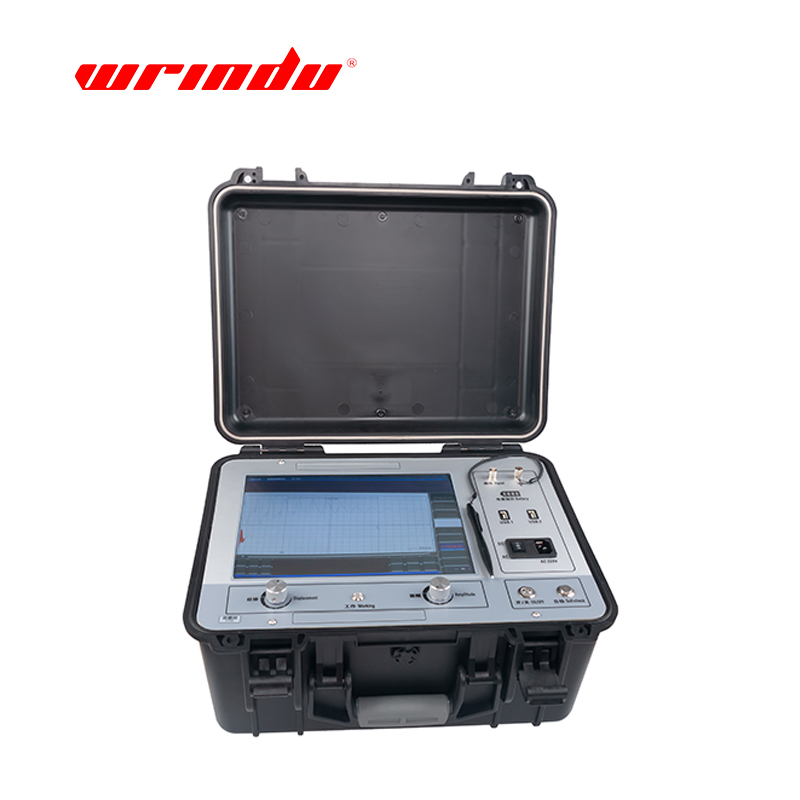 Cable Fault Locator Selection for Urban Networks: Routes, Noise and AccessKnowledge
 Substation Battery Load Bank Sizing: Duty, Voltage Range and Heat RejectionKnowledge
 CT Polarity, Ratio and Burden Testing: Find Wiring and Loading ErrorsKnowledge