
Online vs Offline Partial Discharge Testing: Which Method Fits Your Asset?
Send your test requirement — get a tailored solution and a quote within one working day.
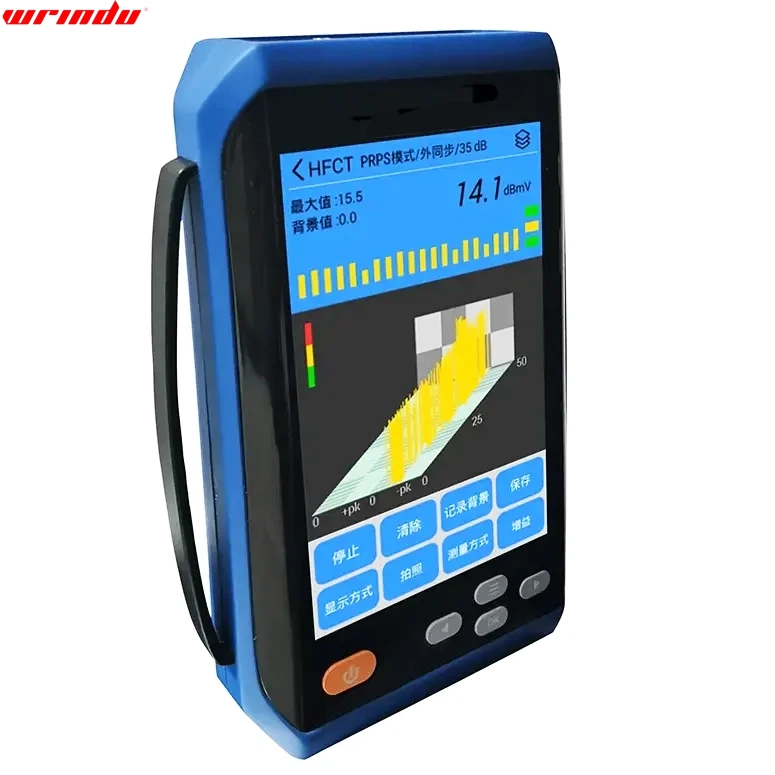
Choose online or offline partial discharge testing by the operational decision you need to make: online testing detects activity under normal service stress without an outage, while offline testing applies controlled voltage and delivers a more repeatable, quantified measurement. Use online surveys to screen and monitor, offline tests to confirm and characterise, and match the method to the asset’s criticality, access and risk tolerance.
The Operational Decision Comes Before the Instrument
The method choice is an operational decision before it is an instrument choice. Ask what the result will be used for: a routine screening pass, a baseline for trend monitoring, a confirmation of an online alarm, or an acceptance test before energisation. Each purpose implies a different outage position, measurement repeatability and evidence standard, and the instrument is selected after the method, not before.
Also consider the consequence of an outage. Online testing preserves availability on critical feeders, while offline testing typically requires the asset to be isolated, which changes the risk profile of the programme. The decision matrix in this article is built around those trade-offs.
The evidence level also differs. Online screening produces relative, trend-oriented evidence that something may be changing; offline testing under controlled conditions produces the repeatable, quantified evidence needed for acceptance and for confirming a suspected defect. State the required evidence level in the work instruction, because it determines which method can satisfy the decision.
What Online Testing Can Reveal Without an Outage
Online partial discharge testing measures the signals that appear during normal service, which means the insulation is stressed by the actual operating voltage, load and harmonics. Sensors such as TEV, HFCT and UHF are installed or clamped without interrupting service, and the measurement captures activity that occurs at the real operating stress level. This makes online testing a powerful screening and monitoring method for switchgear, cables and GIS.
Online results are affected by noise, load variation and sensor placement, so they are best used as relative indicators: compare with the asset’s own baseline, with background measurements and with other phases or similar units. A stable or declining pattern is managed differently from a rising one, and an online alarm is a trigger for confirmation, not a diagnosis.
The sensor types reflect the asset: TEV sensors on metal-clad switchgear panels, HFCT clamps on cable terminations and ground straps, and UHF sensors at GIS access points. Some installations add continuous monitors that record over weeks, which capture activity that a short survey may miss. The survey and the monitor answer the same screening question at different time scales, and both need a documented baseline.
What Offline Testing Adds Under Controlled Voltage
Offline partial discharge testing isolates the asset and applies a controlled test voltage with defined energisation conditions, which removes much of the service-related variability. The measurement can be repeated under the same conditions on different dates, giving a more quantified and comparable result, and the test voltage can be stepped to observe inception and extinction behaviour. For these reasons, offline tests are commonly used for acceptance, commissioning and confirmation after an online indication.
Offline testing requires the asset to be de-energised, isolated and connected to the test supply, which introduces outage cost and requires qualified personnel and safety controls. The controlled conditions also differ from service conditions, so an offline test does not reproduce every real-world stress; the two methods answer related but different questions.
Offline measurement can use conventional coupling in accordance with IEC 60270, where the test circuit and calibration are defined and the apparent charge is quantified, or non-conventional sensors where access or asset type makes conventional coupling impractical. The test voltage and energisation sequence follow the applicable procedure, and the inception and extinction behaviour observed during the test adds diagnostic information that a single online reading cannot provide.
Transformer, Cable, GIS and Switchgear Considerations
The asset type decides which method is practical. On GIS, online UHF monitoring fits the shielded enclosure and the high availability requirement, while offline UHF tests are used for acceptance and after repairs. On cables, online HFCT monitoring at terminations supports critical circuits, while offline tests with controlled voltage are used for commissioning and post-repair verification. On switchgear, online TEV surveys are the standard screening approach, with offline confirmation when access and outage permit. On transformers, online methods are constrained by access and noise, and offline measurement with a conventional or non-conventional coupling is often preferred for acceptance evidence.
| Asset | Online option | Offline option | Typical decision |
|---|---|---|---|
| Switchgear | TEV survey or monitor | Controlled-voltage test with access | Screen online; confirm offline |
| Cable | HFCT at terminations | Controlled-voltage PD test | Monitor critical circuits; verify after repair |
| GIS | UHF sensor or monitor | Offline UHF acceptance test | Monitor in service; test at commissioning |
| Transformer | Limited by access and noise | Offline PD measurement | Use offline for acceptance and confirmation |
The table is a decision aid, not a fixed rule; the final choice depends on the asset’s criticality, access points, outage policy and the applicable procedure.
For transformers, the online option is constrained by the lack of built-in sensor access and by the noise environment of the surrounding substation, so the typical evidence path is offline measurement at acceptance and after events, supported by other condition data such as dissolved gas analysis. For switchgear and GIS, the built-in or clamped sensor access makes online screening the natural first step, with offline confirmation reserved for the assets that show activity.
Noise, Baselines and Repeat Measurements
Both methods are limited by noise, but in different ways. Online measurements face service interference from the grid, load equipment and communication systems, so background checks and noise-rejection features are essential. Offline measurements face site noise from the test supply and the environment, so the same discipline applies: record the background, use multi-sensor comparison, and repeat the measurement under the same conditions.
A baseline is the anchor for both methods. For online monitoring, establish the baseline over the first measurement campaign and track the trend at fixed intervals. For offline tests, keep the energisation conditions, sensor positions and measurement settings identical so the next test date produces a like-for-like comparison. Without repeatable conditions, neither method can distinguish a change in the asset from a change in the measurement.
Define the measurement interval from the asset’s criticality and history: a new or high-criticality circuit may start with a short interval and extend as the baseline stabilises, while a unit with known activity may justify a shorter interval or continuous monitoring. The interval decision should be written in the maintenance procedure and reviewed when the trend changes.
When a Screening Result Requires a Controlled Follow-Up
An online indication becomes a work item, not a verdict. When a screening reading rises, appears on one phase only, or is confirmed by a second sensor, the next step is a controlled follow-up: repeat the measurement under stable conditions, compare with the baseline, and if the indication persists, schedule an offline test or another confirmatory method during the next planned outage. The follow-up decision should be written in the maintenance procedure so the response is consistent.
Escalate when the pattern suggests a developing defect: a rapidly rising trend, a signal that appears across multiple access points, or a discharge pattern associated with a serious mechanism. At that point, the evidence package and the risk assessment belong to engineering review, and the response may include an expedited outage, continuous monitoring or immediate inspection depending on the asset’s criticality.
Define the alarm levels before the data arrives: the level that triggers a repeat measurement, the level that triggers a controlled offline confirmation, and the level that triggers immediate review. Writing the thresholds in advance keeps the response consistent and prevents both overreaction to a single reading and delay when the trend is real.
Frequently Asked Questions
Does online testing require an outage?
No. Online testing uses sensors installed or clamped while the asset remains in service, which is its main operational advantage. The trade-off is that the measurement is influenced by service noise and load conditions, so results are interpreted as relative indicators and trends.
When is offline testing preferred?
Offline testing is preferred when a repeatable, quantified result is needed, such as for acceptance, commissioning, post-repair verification or confirmation of an online indication. It requires the asset to be isolated and a controlled test voltage to be applied.
Can online monitoring replace periodic testing?
Continuous or periodic online monitoring adds trend evidence between outages, but it does not replace controlled offline tests for acceptance or for measurements that require defined energisation conditions. The two approaches are complementary in a complete PD programme.
For the framework that selects methods by asset and outage condition, see the partial discharge testing guide. When you need to specify an online or offline system for your assets, review PD test equipment options and request a technical proposal with your access points and decision criteria.
The decision between online and offline testing is rarely permanent: many programmes screen online, confirm offline and monitor the confirmed assets, and the plan should define how the methods hand off to each other.
Related articles
 SF6 Leak Detector Sensitivity: Select a Method for the Inspection TaskKnowledge
 Cable Fault Locator Selection for Urban Networks: Routes, Noise and AccessKnowledge
 Substation Battery Load Bank Sizing: Duty, Voltage Range and Heat RejectionKnowledge
 CT Polarity, Ratio and Burden Testing: Find Wiring and Loading ErrorsKnowledge