
High Voltage Measuring Systems: How To Test Safely And Efficiently In Modern Power Grids (June 2026)
Send your test requirement — get a tailored solution and a quote within one working day.
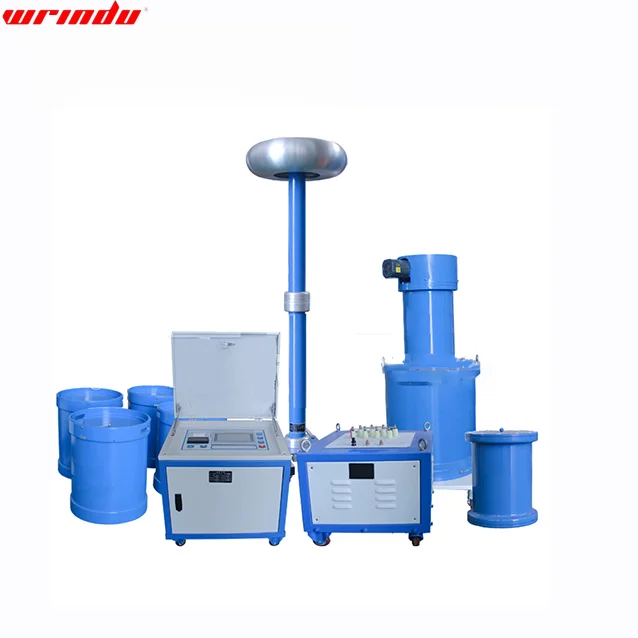
High Voltage Measuring Systems are essential for safe, reliable grids. Learn how to select, use, and optimize high voltage measuring systems in 2026, with practical scenarios and FAQs.
Market Outlook: Why High Voltage Measuring Systems Matter In 2026
As grids expand and age, demand for reliable high voltage measuring systems is growing quickly worldwide. Global high‑voltage measuring equipment was valued around 4.73 billion USD in 2024 and is forecast to exceed 7.03 billion USD by 2030, with a CAGR near 6.7%. Medium and high‑voltage testing solutions are also expanding, from about 3.8–4.0 billion USD in 2024 toward more than 12 billion USD by 2032, driven by grid investments and renewable integration. At the same time, safety expectations are rising, with updated standards such as IEC 60060 (high‑voltage test techniques) and IEEE guides for safe high‑voltage testing reinforcing strict procedures and measurement accuracy.
In this context, utilities, industrial plants, and service companies face mounting pressure to test more assets, more often—without compromising safety or uptime. High‑performance high voltage measuring systems help operators achieve this balance: they enable precise AC/DC and impulse measurements, support cable fault location, and ensure insulation coordination for transmission and distribution assets.
Early Introduction: Where HVTESTERS Fits In
Rui Du Mechanical and Electrical (Shanghai) Co., Ltd operates the brand website hvtesters.com, supplying a wide portfolio of high voltage test instruments and systems used by utilities, EPCs, and industrial users worldwide. Their range includes cable fault testing systems, DC high voltage generators, SF6 gas quality analyzers, insulating oil dielectric strength testers, and insulation resistance testers designed for field and laboratory environments. For users seeking an integrated high voltage measuring system, solutions such as the RDCD-II cable fault testing system and RDCD-II/535T HV signal generator provide accurate HV measurement, safe operation, and automated reporting capabilities.
What Is A High Voltage Measuring System?
A High Voltage Measuring System is a coordinated set of devices—test source, measurement sensors, control unit, safety circuits, and data interface—designed to apply high voltage and precisely measure resulting electrical quantities such as voltage, current, resistance, or insulation strength. It typically supports DC, AC, or impulse test modes and is used to verify insulation integrity, locate cable faults, and perform on‑site acceptance tests in accordance with standards like IEC 60060 and related utility guidelines.
Pain Points: Why Conventional High Voltage Testing Falls Short
High‑voltage testing is inherently risky, and many organizations still rely on fragmented, aging test setups that struggle to meet today’s reliability and safety requirements.
First, safety management is often inconsistent. In some sites, operators assemble temporary HV test circuits from mixed components, with limited interlocked controls and manual discharge arrangements. This increases the risk of dangerous residual charges, accidental energization, and unclear demarcation between test and live circuits. Updated guidelines, such as IEEE’s guide for electrical safety in high‑voltage testing, stress that tests above 1000 V must follow rigorous, documented practices—something ad‑hoc setups seldom provide.
Second, measurement accuracy and traceability can be weak. Improvised solutions may use aging analog meters, poorly calibrated dividers, or inconsistent wiring, leading to unknown measurement uncertainty during critical assessments such as insulation resistance, transformer DC resistance, or cable withstand tests. With utilities now using asset health indices and risk‑based maintenance models, unreliable test data can misclassify asset condition, either triggering premature replacement or leaving hidden defects in service.
Third, productivity suffers on site. Many teams still transport bulky, heavy HV test sets that take time to assemble and disassemble, then manually transfer handwritten results into spreadsheets or maintenance systems. With the global high‑voltage measuring equipment market expanding, operators increasingly expect integrated, modular systems that are quick to deploy and capable of automatic report generation. Manual workflows also make it harder to maintain consistent test procedures across crews, sites, and regions.
Finally, compliance with evolving standards is difficult without purpose‑built systems. New editions of high‑voltage test techniques standards (IEC 60060‑1 and IEC 60060‑3) refine definitions, test waveforms, and on‑site test requirements, including impulse shapes and partial discharge considerations. Utilities moving into UHV and EHV levels must also consider insulation coordination practices and on‑site acceptance criteria described in IEEE recommendations. Legacy equipment may not support the necessary waveforms, monitoring functions, and data capture to demonstrate compliance.
In a market expected to reach over 7 billion USD by 2030, high‑voltage measuring systems are becoming a strategic asset for reliability, not just a test accessory.
Key Options: HVTESTERS Systems vs Alternatives
Below is a simplified comparison of integrated high voltage measuring systems, including HVTESTERS solutions such as the RDCD-II cable fault testing system and RDCD-II/535T HV Signal Generator.
Function Breakdown: How High Voltage Measuring Systems Work
Test source and output control
A high voltage measuring system includes an AC, DC, or impulse source, such as a DC high voltage generator or an HV signal generator. Devices like the RDCD‑II/535T integrate DC high‑voltage source, energy storage capacitors, discharge ball, automatic discharge, and voltage‑grade switching into a single cart‑type unit to produce uniform, controllable HV pulses for cable testing.
Measurement, protection, and interlocking
Accurate dividers and sensors measure voltage and current, feeding data to an indicator or digital controller. In HVTESTERS systems, dual indicators show current and voltage, zero‑start protection prevents unsafe energization, and built‑in over‑current, over‑voltage, and short‑circuit protection enhance safety. Insulating oil and SF6 analyzers incorporate high‑precision sensors and sampling designs that minimize analog errors and improve EMC performance under harsh conditions.
Control interface and reporting
Modern systems offer user‑friendly interfaces, from color LCD touch screens on SF6 gas purity analyzers to parameter‑driven test menus on oil dielectric strength testers. In integrated cable fault systems such as RDCD‑II, specialised units—pre‑locator, fault locator, path analyzer, and pipeline detector—work together to calculate fault distance, identify cable routing and depth, and compile automatic test reports for documentation and future reference.
Practical Examples: Using High Voltage Measuring Systems
A utility team locates a high‑resistance fault on a 35 kV feeder using an RDCD‑II cable fault testing system, combining HV pulse generation and acoustic‑magnetic pinpointing to minimize excavation costs.
A maintenance contractor performs DC withstand tests on newly installed cables, using a cart‑type HV signal generator with integrated automatic discharge to ensure safe, repeatable test cycles on a busy substation site.
An industrial plant lab checks insulating oil quality with an automatic dielectric strength tester, relying on high‑voltage sampling that feeds directly into an A/D converter for accurate, repeatable breakdown measurements.
Cross‑Selling: Related HVTESTERS Products That Complement Measuring Systems
When planning a complete high voltage measuring strategy, asset owners rarely need just one instrument. HVTESTERS offers complementary solutions that cover the broader lifecycle of power assets.
High‑voltage measuring systems for cables and insulation testing are naturally paired with insulation resistance testers, which provide low‑voltage megohm measurements to screen equipment before high‑voltage tests. HVTESTERS supplies dedicated insulation resistance testers for transformers, cables, and motors, built for field reliability and accuracy. For more advanced insulation diagnostics, their dual‑channel DC resistance testers allow rapid, accurate measurement of transformer winding resistance, improving the detection of connection issues and contact problems.
Dielectric media also require attention. HVTESTERS provides insulating oil dielectric strength testers such as the RDJJD‑100 kV model, which offer configurable test sequences, temperature and humidity display, watchdog circuits, and robust HV sampling design to avoid analog errors in breakdown voltage results. For gas‑insulated equipment, SF6 gas purity and quality analyzers with color LCD touch screens and high‑precision sensors support fault localization, routine testing, and purification monitoring, helping ensure the integrity of high‑pressure contacts. All of these products, alongside cable fault systems, can be explored via the brand’s main product navigation on hvtesters.com.
How‑To: Six Steps To Deploy A High Voltage Measuring System Safely
-
Define test objectives and standards
Start by clarifying which assets you will test (cables, transformers, GIS, motors) and which standards apply—such as IEC 60060 for high‑voltage test techniques or utility‑specific acceptance criteria. This determines required voltage levels, test waveforms, and measurement accuracy. -
Select the appropriate HV source and measurement modules
For cable fault location up to 35 kV, choose an integrated system like RDCD‑II with a dedicated HV signal generator for uniform pulses and DC withstand capability. For routine insulation checks, combine this with insulation resistance testers, DC resistance testers, and oil/SF6 analyzers sized to your asset voltage level. -
Plan site layout and safety boundaries
Follow electrical safety guidance such as IEEE’s high‑voltage testing guide by defining exclusion zones, signage, and grounding points around the test area. Position the cart‑type HV generator for safe cable connection, ensure accessible emergency stops, and verify that automatic discharge paths are unobstructed. -
Configure test parameters and protection
On the high voltage measuring system, select the appropriate voltage range, capacitor stage, and discharge mode (timed or manual) based on asset ratings and procedure limits. Check zero‑start protection status, verify over‑current/over‑voltage thresholds, and confirm that measurement channels are calibrated or within their recommended verification interval. -
Execute tests and monitor measurements in real time
Energize from zero using the system’s start sequence, observing dual current/voltage indicators or digital displays to monitor test progress. For cable fault detection, use pre‑locators and acoustic‑magnetic locators in sequence to refine fault distance and pinpoint location, adjusting voltage and pulse characteristics as required. -
Capture, store, and review test data
Leverage the system’s automatic test report generation and data storage capabilities to record key parameters—test voltages, durations, breakdown events, and fault distances. Archive these records in your asset management system, and use trending over time to prioritize maintenance and replacement decisions in line with market‑driven reliability expectations.
Usage Scenarios: Traditional Practices vs HVTESTERS‑Enabled Workflows
Scenario 1: Distribution cable fault after a storm
Traditional approach: After a feeder trips, crews patrol lines visually, then use standalone thumpers and simple reflectometers with limited accuracy. Work zones are large, excavation may occur in multiple wrong spots, and test reports are mostly handwritten and inconsistent.
With HVTESTERS systems: A team deploys an RDCD‑II cable fault testing system, using the pre‑locator to estimate fault distance and the cart‑type RDCD‑II/535T HV signal generator to inject precise pulses. The acoustic‑magnetic fault locator then pinpoints the fault with high accuracy, minimizing excavation and restoring service faster while automatically documenting test results for post‑event analysis.
Scenario 2: Commissioning a new 35 kV industrial feeder
Traditional approach: Contractors borrow or rent a generic HV test set, assemble cables and accessories on site, and perform DC withstand tests with manual timing and notebook logging. Measurement uncertainty is not clearly quantified, and inspectors must manually verify that tests align with IEC and project specifications.
With HVTESTERS systems: A dedicated HVTESTERS high voltage measuring system combines DC high voltage generation, controllable discharge, and dual indication for current and voltage. Test steps are predefined according to project procedures, results are stored digitally, and acceptance documentation is generated on site, streamlined for engineer review.
Scenario 3: Transformer maintenance and diagnostics program
Traditional approach: Maintenance teams test transformers sporadically with separate, older instruments for insulation resistance, oil breakdown, and winding resistance, each requiring manual data transfer and interpretation. Coordinating results over years is difficult, making trend analysis and risk‑based decisions less reliable.
With HVTESTERS systems: The program uses modern insulation resistance testers, dual‑channel DC resistance testers, and automatic insulating oil dielectric strength testers from hvtesters.com. Together with HV cable test systems where applicable, they form a coherent high voltage measuring ecosystem, providing consistent, high‑quality data that supports long‑term asset health management.
FAQ: High Voltage Measuring Systems And HVTESTERS Solutions
How do High Voltage Measuring Systems improve safety during on‑site testing?
High voltage measuring systems improve safety by integrating features such as zero‑start protection, automatic capacitor discharge, and over‑current/over‑voltage protection in a controlled, interlocked platform. When combined with compliance to safety guides like IEEE’s high‑voltage testing recommendations, they significantly reduce risks associated with temporary, improvised HV circuits.
What standards should my High Voltage Measuring System comply with?
For test techniques and requirements, IEC 60060‑1 defines general high‑voltage test principles, while IEC 60060‑3 addresses on‑site testing definitions and requirements. Depending on voltage level and region, additional IEEE guidelines for insulation coordination and on‑site acceptance of UHV equipment may apply, guiding test items, methods, and performance criteria.
How does a system like RDCD‑II locate cable faults more accurately than basic thumpers?
The RDCD‑II cable fault testing system combines multiple modules—a pre‑locator for fault distance estimation, an HV signal generator for controlled pulses, an acoustic‑magnetic fault locator for pinpointing, and a pipeline detector for route and depth detection. This integrated approach improves both the accuracy of distance calculation and the precision of physical fault location, reducing excavation and restoration time.
What role do oil and SF6 testers play in a High Voltage Measuring System strategy?
Insulating oil dielectric strength testers and SF6 gas purity analyzers complement high‑voltage measuring systems by assessing the condition of liquid and gas insulation in transformers, circuit breakers, and GIS. By integrating their data with HV withstand and fault‑location results, asset managers obtain a more complete view of insulation health across media and equipment types.
Is investing in dedicated High Voltage Measuring Systems justified for smaller operators?
For operators with limited HV assets or infrequent testing needs, outsourcing tests to service providers may seem more economical. However, as reliability expectations and regulatory scrutiny increase, owning compact systems—such as cart‑type HV generators and portable diagnostic testers—can deliver better control over data quality, scheduling, and long‑term asset health decisions.
What long‑tail applications can High Voltage Measuring Systems support beyond routine withstand tests?
Beyond standard withstand tests, high voltage measuring systems can support tasks such as partial discharge‑oriented fault pre‑location in cables, verification of repairs, insulation coordination checks during uprating projects, and condition assessments after severe weather or switching events. When integrated with advanced analyzers for oil and SF6, they also help evaluate refurbishment options and life extension strategies for existing assets.
Conclusion: Turning High Voltage Measurement Into A Strategic Capability
High Voltage Measuring Systems are no longer niche tools reserved for specialist labs; they are becoming central to how utilities and industrial operators manage risk, reliability, and investment in their power networks. By selecting integrated, safety‑focused systems that align with IEC and IEEE standards, organizations can reduce test time, improve measurement accuracy, and support data‑driven asset management. HVTESTERS, through solutions like the RDCD‑II cable fault testing system, cart‑type HV signal generators, and a full range of oil, SF6, and insulation testers, offers a coherent path from ad‑hoc testing to a modern, standards‑aligned high voltage measuring strategy.
Call To Action & Brand One‑Line Summary
To explore how High Voltage Measuring Systems can enhance safety, accuracy, and efficiency in your grid or plant, review the HVTESTERS product ranges on hvtesters.com and discuss your application needs with their technical team. Rui Du Mechanical and Electrical (Shanghai) Co., Ltd, through the HVTESTERS brand, provides integrated high‑voltage test and measuring solutions tailored for modern power systems, from cable fault location to complete insulation diagnostics.
Related articles
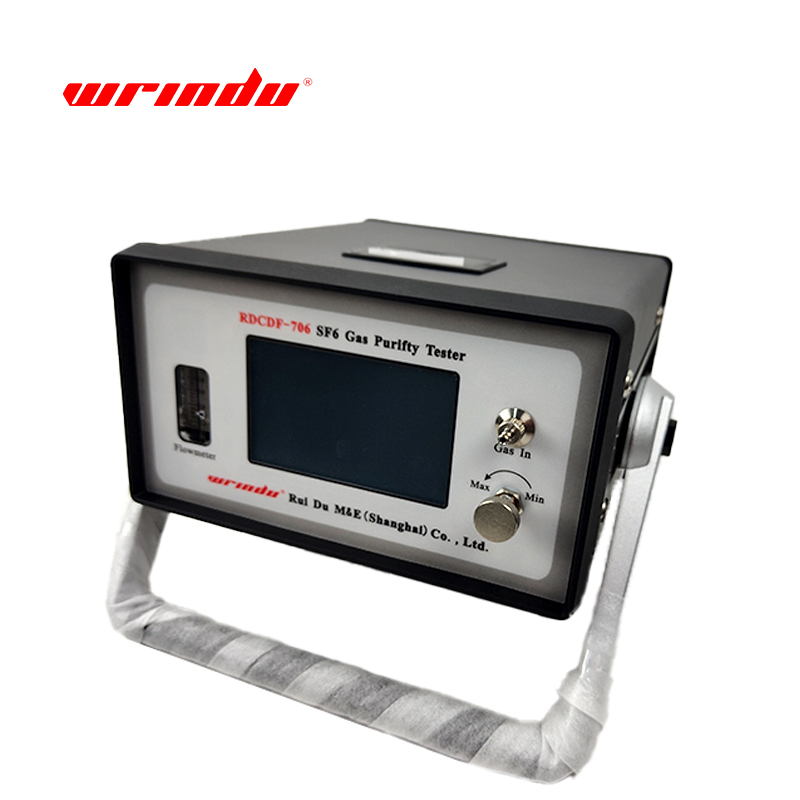 SF6 Leak Detector Sensitivity: Select a Method for the Inspection TaskKnowledge
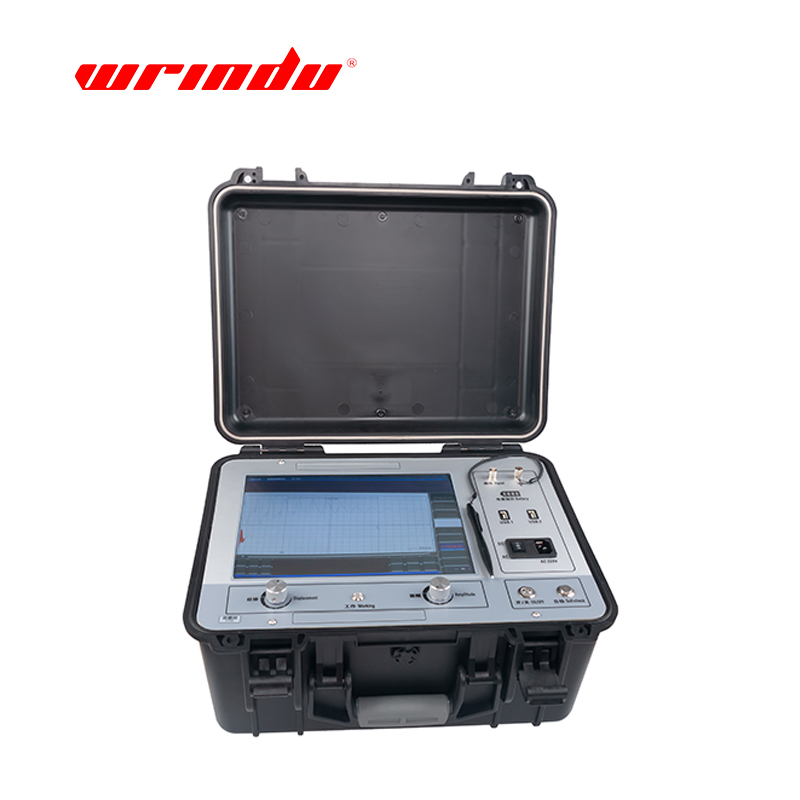 Cable Fault Locator Selection for Urban Networks: Routes, Noise and AccessKnowledge
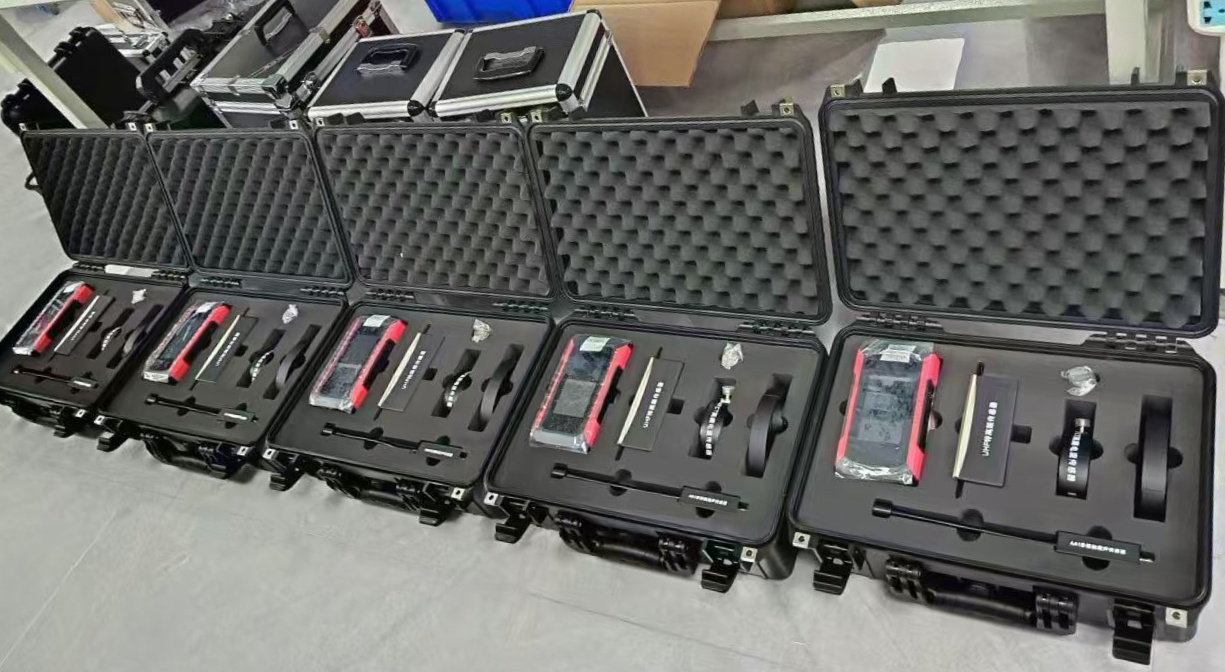 Substation Battery Load Bank Sizing: Duty, Voltage Range and Heat RejectionKnowledge
 CT Polarity, Ratio and Burden Testing: Find Wiring and Loading ErrorsKnowledge