
DC Hipot Test: Complete Guide to High Voltage Insulation Testing
Send your test requirement — get a tailored solution and a quote within one working day.
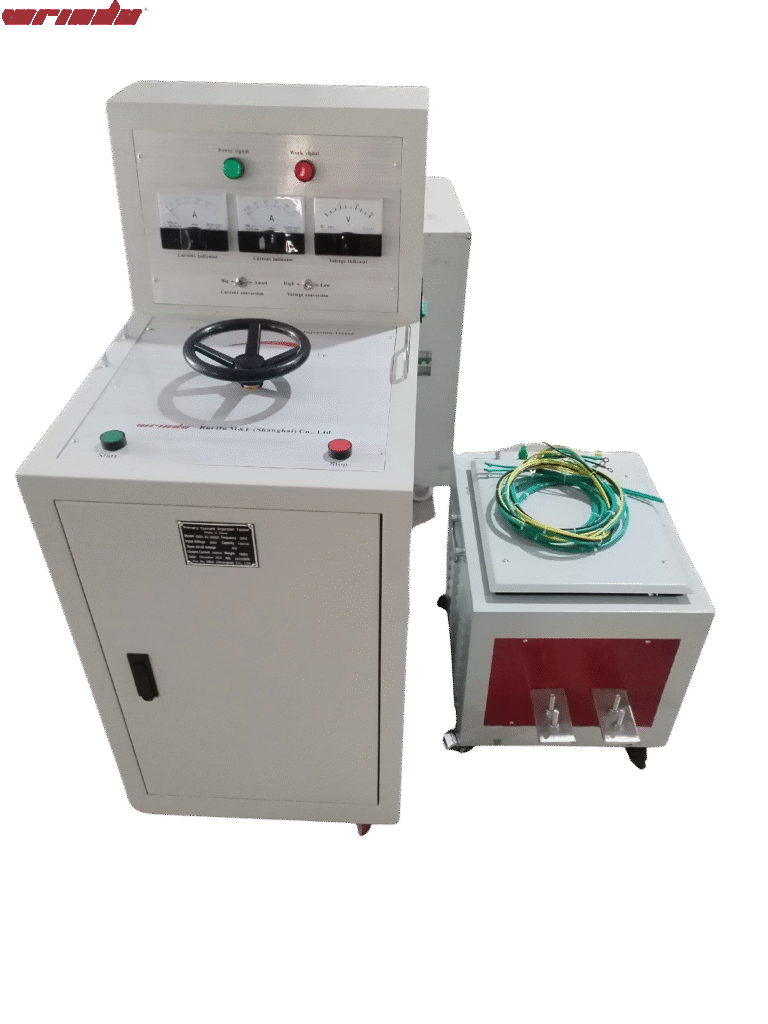
DC hipot testing stands as a cornerstone in electrical safety verification, ensuring insulation withstands high voltages without breakdown. This dielectric strength test applies direct current at elevated levels to detect weaknesses in cables, motors, transformers, and switchgear before failures occur in real-world operations.
Check: Voltage Withstand Tester
DC Hipot Meaning and Basic Principles
A dc hipot, short for DC high potential test, verifies the dielectric strength of insulation by subjecting it to a voltage far exceeding normal operating conditions. Unlike continuity tests that confirm current flow, dc hipot testing confirms no unwanted leakage current passes through insulation, proving its reliability under stress. The process ramps up DC voltage gradually, monitoring leakage current to spot potential insulation failures early.
Engineers rely on dc hipot definition as a nondestructive method to assess insulation integrity in high voltage equipment. DC hipot testers measure real leakage current after initial capacitive charging fades, offering precise data on insulation resistance. This approach proves essential for preventive maintenance in power systems where safety hinges on robust dielectric performance.
How DC Hipot Testing Works Step by Step
DC hipot test procedure begins with preparing the device under test, ensuring it’s disconnected and safely grounded. Operators apply a high DC voltage, typically 1.414 times the AC peak equivalent, holding it for a dwell time like 1 minute while tracking currents. Capacitive inrush drops quickly, leaving surface and true leakage currents for accurate analysis.
Key dc hipot test voltage levels follow standards such as IEEE 95, often set at peak operating voltage plus a safety margin for motors above 2300V. Ramp rate prevents sudden stress, with pass-fail determined by leakage thresholds like 5mA or polarization index metrics. Post-test discharge remains critical, especially for capacitive loads like cables, to avoid residual charge hazards.
AC Hipot vs DC Hipot: Key Differences Explained
AC hipot testing uses alternating current to mimic operational stress, stressing insulation at every peak cycle with continuous capacitive current. DC hipot testing, by contrast, delivers unidirectional voltage, eliminating ongoing charging effects for cleaner leakage readings ideal for DC-biased systems. DC methods excel in high-capacitance applications like long cables where AC tests mask true insulation flaws.
DC hipot advantages include lower equipment costs for some setups and simultaneous insulation resistance measurement during steady-state. AC hipot better simulates real AC grid transients but demands higher power due to persistent reactive currents. Choosing between ac hipot test and dc hipot test depends on equipment type, with DC favored for motors, cables, and batteries.
DC Hipot Tester Types and Top Models
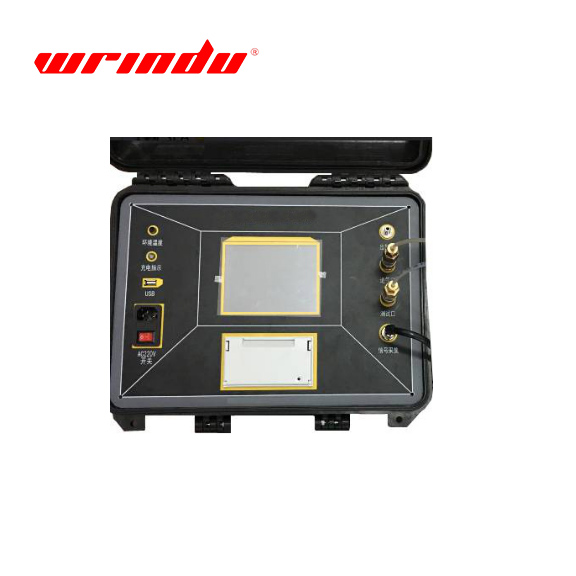
Portable dc hipot testers suit field maintenance for substations and industrial sites, outputting up to 80kV with digital leakage displays. Benchtop dc hipot test equipment offers lab precision for R&D, integrating ramp, dwell, and data logging for detailed reports. Advanced models feature programmable sequences for automated dc high voltage testing on transformers and circuit breakers.
Leading dc hipot tester manufacturers produce units like 5kV handheld models for battery insulation checks and 100kV truck-mounted systems for overhead lines. Key features include overload protection, zero-start interlocks, and USB exports for compliance records. Selecting the right dc hipot machine balances output range, portability, and accuracy for specific high voltage hipot applications.
Applications of DC Hipot in Power Systems
DC hipot testing proves vital in power utilities for substation maintenance, verifying transformer bushings and cable insulation post-installation. Power plants use dc hipot for generator windings and lightning arresters, ensuring no voids or contamination compromise dielectric strength. OEMs perform factory dc hipot on circuit breakers and relays to certify production quality before shipment.
Renewable energy sectors apply dc hipot test on wind turbine nacelles and solar inverter cabling, where harsh environments demand superior insulation. Railway operators conduct dc high potential tests on traction systems, while industrial factories test motor drives and switchgear annually. Third-party labs rely on precise dc hipot equipment for certification of energy storage batteries and HVDC links.
Wrindu, officially RuiDu Mechanical and Electrical (Shanghai) Co., Ltd., stands as a global leader in power testing and diagnostic equipment. Founded in 2014, the company specializes in independent design, development, and manufacturing of high-voltage testing solutions for transformers, circuit breakers, lightning arresters, batteries, cables, relays, insulation systems, and more, holding ISO9001, IEC, and CE certifications for worldwide trust.
Market Trends in DC Hipot Testing Equipment
Global dc hipot market grows at 6.2% CAGR through 2030, driven by grid modernization and renewable integration per recent industry reports. Asia-Pacific leads adoption, with China investing heavily in UHVDC projects requiring advanced dc hipot solutions. Smart dc hipot testers with IoT connectivity emerge, enabling remote monitoring and predictive analytics for fleet-wide insulation health.
Demand surges for eco-friendly, low-energy dc high voltage test gear amid sustainability pushes in utilities. Portable and wireless dc hipot devices gain traction for fieldwork, reducing downtime in offshore wind farms and remote substations. Integration with AI for anomaly detection in leakage patterns shapes next-gen dc hipot technology trends.
Core Technology Behind DC Hipot Testers
DC hipot technology centers on high-voltage DC generators using Cockcroft-Walton cascades or switched-mode power supplies for stable output. Microcontroller-driven ramp generators ensure smooth voltage rise, while precision shunts and picoammeters quantify microamp leakage currents accurately. Built-in waveform analysis distinguishes polarization from absorption currents for deeper insulation diagnostics.
Safety interlocks like emergency stops and door switches prevent arc flash in dc hipot setups. Advanced dc hipot test sets incorporate oil vs dry insulation profiles, adapting dwell times for optimal stress testing. Firmware updates enable compliance with evolving standards like IEC 61010 for user safety in high voltage hipot environments.
Real User Cases and ROI from DC Hipot Testing
A Midwest utility avoided a 400kV cable failure using routine dc hipot testing, spotting rising leakage that prompted timely splices and saved $2M in outage costs. A solar farm operator extended inverter lifespan 40% through annual dc hipot on PV cabling, reducing warranty claims by 25%. Factory OEMs report 15% defect reduction post-implementing production dc high potential tests.
ROI calculators show dc hipot programs pay back in 6-12 months via prevented downtime, with one rail operator citing $500k annual savings from traction motor tests. Quantified benefits include polarization index trends predicting failures months ahead, optimizing maintenance schedules. User stories highlight dc hipot as indispensable for compliance and reliability in mission-critical power assets.
DC Hipot Test Standards and Safety Protocols
IEEE 95 guides dc hipot for AC motors over 2300V, specifying 1-minute holds at peak voltage plus 20%. IEC 60270 outlines partial discharge monitoring during dc high voltage tests to detect voids early. OSHA mandates grounding and PPE for hipot procedures, with EN 50191 ensuring safe workplaces via clear zoning and voltage indicators.
Compliance requires calibrated dc hipot equipment traceable to NIST, logging all test parameters for audits. Best practices include pre-test visual inspections and post-ramp current stabilization before dwell. Safety training emphasizes zero-energy states and arc flash boundaries in dc hipot operations.
Buying Guide for DC Hipot Testers
Evaluate dc hipot tester specs by output range matching your max system voltage, like 15kV for MV cables or 80kV for HV bushings. Prioritize models with low ripple under 5% for accurate leakage and built-in discharge circuits for capacitive loads. Portability weighs heavy for field dc high voltage testing, alongside battery life exceeding 8 hours.
Budget $5k-$50k based on features like touchscreen interfaces and multi-channel testing for production lines. Check warranty, local service, and software for trend analysis in dc hipot selection. User reviews favor rugged designs with intuitive menus for daily dc hipot applications.
Future Trends in DC Hipot and Insulation Testing
Hybrid AC/DC hipot systems evolve, combining both for comprehensive stress profiles in smart grids. AI-enhanced dc hipot analyzes real-time leakage signatures, forecasting insulation aging via machine learning models. Portable 5G-enabled testers enable cloud-based fleet diagnostics for global utilities.
Solid-state dc hipot generators promise lighter, higher-efficiency units by 2028, slashing field setup times. Integration with drones for overhead line dc high potential testing accelerates inspections in renewables. Expect blockchain-logged test certificates for tamper-proof compliance in international trade.
Common FAQs on DC Hipot Testing
What is a dc hipot used for? DC hipot verifies insulation withstands overvoltages, detecting flaws in cables, motors, and transformers via leakage current limits.
Is dc hipot testing destructive? No, properly conducted dc hipot remains nondestructive, stressing below design breakdown while revealing weaknesses safely.
How to perform dc hipot test on cables? Isolate cable, apply ramped DC voltage to conductor-shield, monitor leakage for 5-10 minutes, then discharge fully.
What voltage for dc hipot on 480V motors? Typically 1000V DC for 1 minute, per NEMA MG-1, adjusted for service age and environment.
Can dc hipot replace IR testing? DC hipot complements insulation resistance tests, providing dielectric strength data beyond steady-state resistance.
Ready to safeguard your electrical systems? Contact experts in dc hipot testing today to schedule assessments and elevate your maintenance program with proven high voltage solutions. Discover reliable dc hipot testers tailored for your power needs and ensure unwavering insulation performance.
Related articles
 SF6 Leak Detector Sensitivity: Select a Method for the Inspection TaskKnowledge
 Cable Fault Locator Selection for Urban Networks: Routes, Noise and AccessKnowledge
 Substation Battery Load Bank Sizing: Duty, Voltage Range and Heat RejectionKnowledge
 CT Polarity, Ratio and Burden Testing: Find Wiring and Loading ErrorsKnowledge