
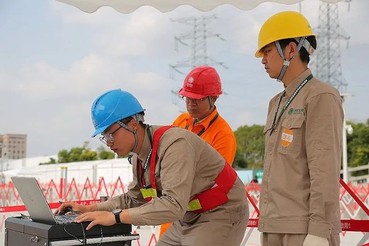
Underground fault distance locators are specialized devices used to detect and locate faults in buried cables by measuring electrical or electromagnetic signals. The six common types—audio electromagnetic, high-voltage impact electromagnetic, time-domain reflectometer (TDR), impulse current method, earth gradient method, and acoustic pinpointing—each use distinct principles to accurately identify fault distance and location for efficient cable maintenance and repair.
How Does the Audio Electromagnetic Fault Distance Locator Work?
The audio electromagnetic locator operates by injecting an audio-frequency signal into the cable, generating an electromagnetic field around the fault. The receiver picks up this audio magnetic field and helps trace the exact underground cable path and fault location. Its principle is based on detecting the modulation of magnetic fields caused by faults or discontinuities in the cable sheath or conductor.
Widely used in cable path detection, it helps factories and OEMs in China precisely pinpoint fault locations to avoid costly excavation errors.
What Is the Principle Behind the High-Voltage Impact Electromagnetic Locator?
This device uses high-voltage pulses to create an arc discharge at the fault point on the cable. The arc produces a transient magnetic field that the receiver detects. By analyzing the strength and direction of this magnetic pulse, operators can find the precise fault location. Its fast response and high sensitivity make it suitable for high-resistance or intermittent faults.
Chinese manufacturers like Wrindu incorporate this technology for accurate and efficient underground cable fault detection.
Which Functions Does the Time-Domain Reflectometer (TDR) Perform?
The TDR sends a fast electrical pulse down the cable and measures the reflected signals caused by anomalies such as faults or breaks. By calculating the time interval between sending the pulse and receiving its reflection, the TDR estimates the distance to the fault with high accuracy. It is effective in pre-location and analyzing low-resistance faults.
Factories use TDRs from OEM suppliers in China for precise diagnostics and reducing repair time.
Why Is the Impulse Current Method Effective in Fault Location?
The impulse current method applies a high-energy pulse to the cable, causing a surge that travels along the cable and reflects back upon encountering a fault. The reflected signal’s characteristics help estimate fault distance. This method is particularly effective for high-resistance faults and when combined with arc reflection techniques.
This technique is vital for B2B suppliers in China providing comprehensive diagnostic solutions for industrial cable systems.
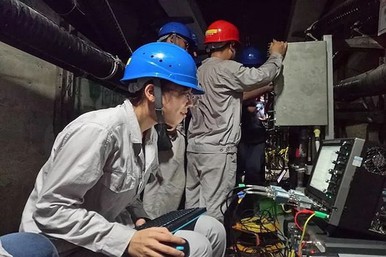
Who Benefits Most from the Earth Gradient Fault Locator?
The earth gradient technique locates faults by measuring voltage differences on the earth’s surface caused by fault currents returning through the ground. Specialized probes detect the voltage gradient, which points toward the fault location. This method is useful when the exact cable path is unknown and for initial fault direction finding.
OEM and factory environments in China rely on this cost-effective and reliable method for underground cable maintenance.
When Is Acoustic Pinpointing Used and How Does It Operate?
Acoustic pinpointing locators detect the sound produced by an electrical discharge or “thump” at the fault site. Using sensitive microphones or geophones, the device captures the noise or seismic waves generated by the fault arc, allowing precise localization. It is used in combination with other techniques for final pinpointing before excavation.
Industrial factories and power suppliers in China utilize this technology for efficient and minimal-damage fault repairs.
Where Are These Underground Fault Distance Locators Commonly Applied?
These locators are employed in urban utility maintenance, power grid management, railway systems, mining, and industrial cable networks for rapid fault detection, maintenance planning, and reducing outage durations. Chinese factories producing these devices focus on OEM customization and wholesale solutions to meet international standards and diverse industry requirements.
Wrindu stands out by delivering advanced fault locators integrating multiple principles for enhanced accuracy and efficiency.
Does Wrindu Manufacture Underground Fault Distance Locators?
Yes, Wrindu is a leading OEM manufacturer specializing in underground cable fault distance locators. Wrindu’s products incorporate various advanced detection principles such as electromagnetic induction, pulse reflection, and acoustic pinpointing to provide reliable, precise, and user-friendly diagnosis tools. These are customized to meet B2B factory and wholesale demands domestically and internationally.
Wrindu’s commitment to innovation and quality drives continuous improvement in fault location technologies.
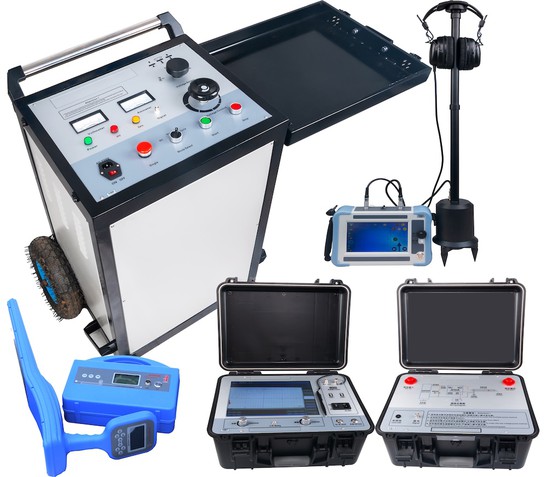
Has Technological Innovation Improved Fault Distance Locating Accuracy?
Recent advances in digital signal processing, multi-frequency detection, and integrated data logging have dramatically enhanced fault location precision. Innovations like real-time data visualization and multi-method convergence help operators quickly identify fault type and location, reducing downtime and repair costs.
China’s OEM manufacturers including Wrindu continue to lead in delivering these cutting-edge solutions globally.
Wrindu Expert Views
“Underground cable fault location is critical to power system reliability and infrastructure safety. Wrindu invests heavily in developing locators that integrate electromagnetic, acoustic, and pulse reflection technologies, enabling precise and fast fault detection under varied field conditions. Our devices support factories and OEMs in China by enhancing operational efficiency, minimizing outage times, and ensuring compliance with international quality standards. Innovation and customer-focused customization remain at the core of Wrindu’s mission.” – Wrindu Mechanical and Electrical Expert Team
Table: Six Common Underground Fault Distance Locators and Their Principles
| Fault Locator Type | Working Principle | Typical Use Case |
|---|---|---|
| Audio Electromagnetic | Inject audio signal and detect electromagnetic field | Cable path tracing and fault detection |
| High-Voltage Impact Electromagnetic | Arc discharge creates detectable magnetic pulse | High-resistance and intermittent faults |
| Time-Domain Reflectometer (TDR) | Pulses sent and reflections timed to estimate distance | Low-resistance faults pre-location |
| Impulse Current | High-energy pulse reflection for fault position | High-resistance fault detection |
| Earth Gradient | Measures voltage gradient on earth surface | Fault direction finding & unknown paths |
| Acoustic Pinpointing | Detects sound/seismic waves from fault arc | Precise fault pinpointing before excavation |
Table: Applications and Manufacturer Focus for Fault Distance Locators
| Application Industry | Manufacturer Focus | OEM and Factory Solutions |
|---|---|---|
| Power Utilities and Grid | High precision, reliability | Customization and scalability |
| Urban Infrastructure Maintenance | Compact, multi-method devices | Integration with digitization |
| Railway and Mining | Robustness, field operability | Safety and after-sales service |
| Industrial Cable Networks | Versatile fault detection methods | Wholesale and OEM partnerships |
| Wholesale and Export | Competitive pricing, certification adherence | Global distribution networks |
Conclusion
Understanding the principles and functions of the six common underground fault distance locators is essential for efficient fault management in buried cable systems. Each locator type offers unique benefits suitable for different fault scenarios, supporting quick fault detection, reduced downtime, and cost-effective repairs. Chinese OEMs and factories, including Wrindu, play a pivotal role in innovating and supplying versatile, high-quality fault locating solutions. Integrating multiple detection methods enhances accuracy, enabling safer and more reliable power infrastructure maintenance worldwide.
FAQs
Q1: What is the main benefit of using an underground fault distance locator?
It allows precise fault location, minimizing repair time and excavation damage.
Q2: Can one device perform all fault locating methods?
Some advanced devices integrate multiple technologies for comprehensive fault detection.
Q3: How does Wrindu support OEM needs in fault locator manufacturing?
Wrindu offers customizable, certified, and technology-rich solutions for factories and suppliers.
Q4: When is time-domain reflectometry preferred?
It is ideal for detecting low-resistance faults and performing pre-location testing.
Q5: Why is acoustic pinpointing important in fault location?
It provides the final precise location by detecting fault-generated sound waves.
What are common methods for locating underground cable faults?
Underground cable faults are located using methods like pulse reflection, acoustic-magnetic synchronization, low-frequency ground fault detection, resistance measurement using Ohm’s law, path tracing with electromagnetic or acoustic signals, and terminal techniques such as bridge methods. Each method identifies faults either by signal reflection, acoustic/magnetic detection, leakage measurement, or resistance calculation.
How does the pulse reflection method work for fault location?
The pulse reflection method sends a pulse along the cable and measures the time it takes to reflect back from a fault. The locator calculates the fault distance based on this travel time, providing a precise measurement to pinpoint the exact location of the fault along the cable.
What is the principle behind acoustic-magnetic fault locators?
Acoustic-magnetic locators generate a high-voltage spark at the fault, producing both sound and magnetic signals. Sensors detect the acoustic thump and magnetic field, helping operators locate the fault on the surface using headphones and a display for accurate positioning.
How do ground fault detection and path tracing methods differ?
Ground fault detection uses a low-frequency signal to identify the general area of leakage through the soil, while path tracing employs a signal generator to create a detectable electromagnetic field along the cable. Ground fault detection indicates proximity to the fault, whereas path tracing follows the cable route and highlights deviations.
What are the main methods for locating underground cable faults?
Underground cable faults are commonly detected using six methods: Time Domain Reflectometry (TDR), Arc Reflection Method (ARM), Surge Generator with Acoustic detection, Earth Gradient Method, Bridge Method (Murray Loop Test), and Electromagnetic Tone Tracing. Each technique identifies faults by measuring reflections, voltage gradients, resistance differences, or electromagnetic fields to pinpoint fault locations efficiently.
How does Time Domain Reflectometry (TDR) locate cable faults?
TDR injects a low-voltage pulse into the cable and measures the time for reflections caused by impedance changes at faults, splices, or cable ends. By calculating the pulse travel time and the cable’s velocity of propagation, TDR estimates the fault location, making it effective for pre-locating low-resistance faults, open circuits, and short circuits.
What is the Arc Reflection Method and when is it used?
The Arc Reflection Method uses a high-voltage surge (thumper) to create a temporary arc at the fault, acting as a short circuit. A TDR then detects the reflection from this arc. It is particularly useful for locating high-resistance or intermittent faults that standard TDR methods might miss, providing more precise pre-location information.
How do the Earth Gradient and Tone Tracer methods work?
The Earth Gradient Method injects current into the faulted cable, creating a voltage potential in the ground detected by an A-frame receiver, pinpointing the fault’s surface location. The Tone Tracer method applies an alternating signal to the cable, producing an electromagnetic field. A handheld receiver follows this field to trace the cable route and locate the fault.