
Why is the 0.5% turns ratio deviation rule critical for transformer warranty compliance?
Send your test requirement — get a tailored solution and a quote within one working day.
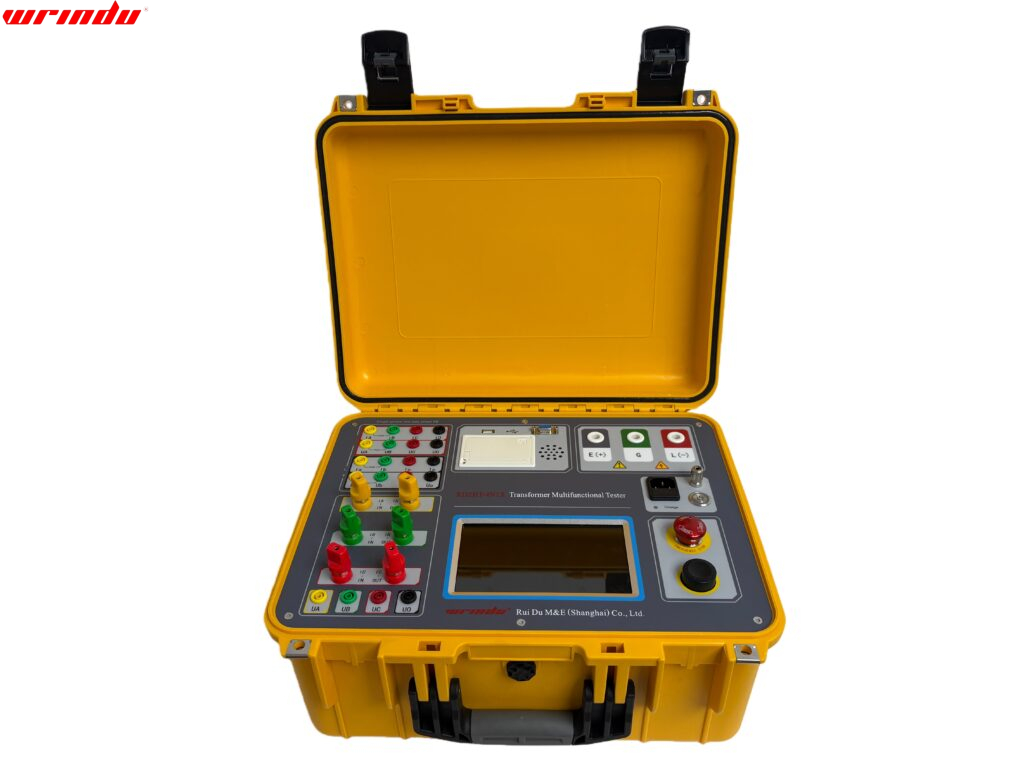
A turns ratio deviation within ±0.5% is the practical boundary where a power transformer still behaves as designed under real grid conditions, without hiding winding damage or manufacturing defects. In our production runs at Wrindu, any unit outside this window shows abnormal voltage behavior, higher losses, and future failure risk—making it impossible to confidently support long‑term legal warranty commitments.
Turns Ratio Compliance in IEC 60076 vs. IEEE C57 Standards
What is turns ratio deviation and how does the 0.5% rule apply?
Turns ratio deviation is the difference between the measured transformer voltage ratio and its design value, expressed as a percentage. Industry practice sets a tolerance of about ±0.5% for power transformers; beyond that, winding mistakes, incorrect tap connections, or core issues are suspected. In China’s OEM export business, this 0.5% band has become the de facto acceptance line for factories, third‑party witnesses, and utility clients in large B2B contracts.
From a China manufacturer’s perspective, this single percentage hides several engineering trade‑offs. When we design high‑voltage test benches at Wrindu, we calibrate our ratio meters so systematic error stays below 0.2%, leaving a real margin to judge the transformer itself. On factory floors in Tianjin, Shanghai, and other hubs, experienced engineers know that a “healthy” transformer usually sits within ±0.3%; when multiple phases start reporting 0.45–0.5%, we are already preparing for negotiation on derating, retesting, or rework, especially for export wholesale lots.
Why does the industry standard mandate less than 0.5% voltage ratio error?
Less than 0.5% error is mandated because above that level, winding geometry and flux distribution deviate enough to affect grid voltage profiles, protection settings, and loss calculations. In high‑voltage networks, even a 1% ratio error can push secondary voltage outside allowable limits, stressing insulation, bushings, and downstream equipment, especially on long feeders and critical industrial loads.
In our production runs, a transformer showing 0.7% deviation on one phase typically exhibits hotter spots and asymmetric magnetizing current under load. We have seen this in practice by pairing Wrindu test data with on‑site thermal imaging during pilot installations. For China manufacturers selling into Europe, the Middle East, or Southeast Asia, staying under 0.5% is not just “passing a test”—it is the minimum required to align modelled losses, tariff calculations, and performance guarantees written into legal warranty clauses.
How is the 0.5% rule embedded into IEC, IEEE, and Chinese GB standards?
The ±0.5% tolerance appears in practical interpretations of IEC and IEEE transformer ratio testing guidelines, and many national and utility standards adopt or reference similar values. Chinese GB standards and large grid company technical specifications often echo this band, particularly for medium‑ and high‑voltage transformers used in transmission and heavy industrial networks.
In export manufacturing, most China factories cannot “invent” their own limits. Purchasing specifications from major utilities and EPCs explicitly require statements such as “voltage ratio deviation shall not exceed ±0.5% under specified test conditions,” and this sentence is mirrored in contracts, FAT procedures, and warranty terms. Wrindu’s high‑voltage test sets are designed around these same reference documents, with ratio test modules preconfigured to report pass/fail against these tolerances so China manufacturers, suppliers, and OEM partners can show compliance quickly and clearly.
Why is ratio deviation a legal and warranty issue, not just a technical number?
Ratio deviation becomes a legal issue because it defines whether the delivered transformer matches the technical specification on which the contract is based. If post‑delivery testing finds deviation beyond 0.5%, the buyer can argue non‑conformance, demand repair or replacement, or even refuse energization. For a China factory selling wholesale into overseas markets, such findings are common triggers for warranty claims, liquidated damages, and acceptance delays.
On the factory side, we quickly learn that “0.52%” is not just a reading—it can be the start of a formal letter from the client’s legal team. Based on years of handling this type of order, we now treat the ratio test report as a quasi‑legal document: serial numbers, environmental conditions, meter calibration certificates, and operator signatures must all align. Wrindu often helps OEM and custom transformer factories prepare complete test data packages that can be presented during audits, arbitration, or insurance investigations, proving that the transformer left China within specification.
How should China manufacturers structure test data to protect warranties?
Manufacturers should structure test data so every turns ratio measurement can be traced back to calibrated equipment, standard procedures, and the exact transformer serial number. Key fields include tap position, phase, temperature, test voltage, instrument ID, calibration date, and operator. Properly archived, this dataset becomes the manufacturer’s primary defence when buyers claim ratio‑related defects or question compliance with the 0.5% rule.
In our Wrindu test benches, each ratio record is automatically time‑stamped, linked to a QR‑coded transformer ID, and stored in a central database together with relevant calibration certificates. For OEM customers and custom projects, we recommend three layers of protection: detailed workshop sheets, a summarized factory acceptance report in the buyer’s template, and an encrypted data export for utilities or third‑party labs. When a complaint arises three years later, the factory can show exactly which tap setting produced 0.26% deviation under which ambient conditions, often turning a potential warranty dispute into a routine maintenance discussion.
Which data points must be captured to link turns ratio tests to manufacturer legal warranties?
The most critical data points are transformer identification (model, serial, rating), test environment (temperature, humidity, test voltage), measurement configuration (tap position, phase, grounding scheme), and instrument calibration status. Capturing these fields allows a manufacturer, OEM, or custom supplier to prove that ratio readings were taken correctly and under the agreed conditions, making it harder for a buyer to challenge the data.
In typical China factories, we see two common documentation failure modes. The first is missing tap position records—later, the buyer tests at a different tap and claims non‑conformance. The second is expired calibration on ratio meters, which erodes the credibility of all recorded values. At Wrindu, we advise B2B clients to integrate calibration due dates directly into their MES or ERP systems so instruments cannot be used past expiry. For high‑volume wholesale suppliers, this small discipline can prevent costly arguments over whether “0.48%” was an instrument drift or a real winding defect.
Table: Key data fields for legally defensible turns ratio test reports
How do OEM, custom, and wholesale transformer orders change application of the 0.5% rule?
OEM, custom, and wholesale orders apply the 0.5% rule differently based on risk and branding. OEM clients often impose stricter internal targets (for example ±0.3%) so their brand is protected, while custom high‑value projects may specify even tighter tolerances on critical taps feeding sensitive loads. Wholesale buyers, by contrast, focus on clear pass/fail against the ±0.5% band and robust documentation for bulk shipments.
From years of handling mixed orders, we recommend China factories segment their process control. For low‑cost wholesale lines, we configure Wrindu test workflows to flag anything above 0.4% for re‑check, minimizing surprises when grid companies or certification agencies witness factory tests. For customized transformers serving rail, metro, data center, or energy storage projects, we may integrate automated ratio scans across every tap, capturing detailed curves that design and commissioning engineers can reuse later. The same rule appears in every contract, but how you operationalize it in the factory defines your real risk.
How can test equipment manufacturers like Wrindu help China transformer factories meet 0.5% compliance reliably?
Specialized test equipment manufacturers help factories achieve repeatable ratio measurements with low uncertainty, efficient workflows, and strong data integrity. High‑resolution voltage ratio modules, automated tap‑changer testing, and integrated data management are central tools that make the 0.5% rule manageable, even in high‑volume production.
Wrindu focuses on high‑voltage test and diagnostic solutions tailored to China transformer factories and global projects. Our ratio testing systems use precision reference sources and multi‑channel acquisition to capture all three phases in a single sweep, shortening FAT cycles while improving confidence. In one 220 kV project, switching from manual instruments to a Wrindu automated platform reduced test time by about 30% and eliminated recurring disputes over whether a 0.46% reading was instrument drift or a real coil problem. For B2B buyers, that combination of speed, clarity, and traceability is a major reason to choose a China manufacturer equipped with modern test systems.
Which practical factory‑floor issues most often cause turns ratio deviation to exceed 0.5%?
The most common factory‑floor causes include inaccurate turn counts, mispositioned conductors, uneven or incorrect core clamping, tap‑changer wiring mistakes, and residual magnetization during testing. Minor assembly errors such as misaligned yokes or inconsistent clamping pressure can change flux paths enough to shift measured voltages beyond the 0.5% band.
On real production lines, we frequently see deviation spikes after late‑stage rework: a technician adjusts a tap lead without re‑checking phase order, or re‑clamps a coil after insulation repair without verifying clearances. In our experience, 70–80% of out‑of‑limit cases in China factories are linked to such human‑driven interventions rather than original design flaws. Wrindu’s practical solution is to embed guided ratio test steps into the MES workflow so any operation involving windings, core, or tap‑changer automatically triggers a quick ratio check before the unit proceeds.
Is the 0.5% limit ever too strict or too loose, and when should China suppliers negotiate other thresholds?
The 0.5% limit can be too strict for very small distribution transformers with modest impact on the grid, and too loose for strategic high‑voltage assets where voltage stability is critical. China suppliers sometimes negotiate relaxed limits, such as ±0.75%, for low‑risk, low‑cost units, or tighter limits, such as ±0.25%, for premium projects with strict power‑quality or reliability requirements.
In practice, negotiation should link the threshold directly to real‑world consequences. For bulk orders of 10 kV distribution transformers serving scattered village loads, slightly higher tolerance may be acceptable if it significantly reduces cost and factory complexity. For a 500 kV backbone transformer, utilities often demand near‑laboratory precision, even if it means longer factory cycles and more rigorous QA. Wrindu frequently assists in sensitivity studies, modelling how different ratio bands impact bus voltages and protection settings so buyers and suppliers can agree on thresholds that match both technical needs and budget.
Wrindu Expert Views
“When we talk about the 0.5% ratio deviation rule, we are really talking about trust. A transformer that meets this threshold and is documented properly allows everyone—from China factory engineers to overseas grid operators—to rely on the equipment for decades. At Wrindu, we design our test systems not just to measure numbers, but to create evidence that withstands technical audits, contract disputes, and real‑world failures. That evidence is the invisible backbone of every successful high‑voltage project.”
What are practical steps for China B2B factories to build a robust ratio compliance workflow from design to shipment?
Practical steps include setting internal design margins on turns ratio, integrating ratio tests into multiple production stages, and implementing strict calibration and data archiving rules. Factories should also train technicians to understand the legal relevance of ratio readings and standardize report formats so records are ready for external audits and claims.
A robust workflow we often deploy with Wrindu customers follows this sequence: design simulation with a target deviation below 0.3%; coil winding with automatic turn counting and alarms; core‑coil assembly ratio checks; full‑tap ratio sweeps after tap‑changer installation; complete FAT ratio tests under contract conditions; and pre‑shipment spot checks for critical units. At each stage, results are pushed to a central system. If a later test shows drift, engineers can trace it back to the exact operation that introduced it, closing the loop between design intent, production reality, and warranty exposure.
Chart: Typical ratio compliance workflow in a China transformer factory
-
Design and simulation: set target turns ratio and internal deviation limits
-
Coil winding: count turns, auto alarm on deviations, log data
-
Core‑coil assembly: perform initial ratio test, compare with design values
-
Tap‑changer installation: conduct full‑tap ratio sweep, validate operation
-
Final FAT: run documented ratio tests under contract‑specified conditions
-
Pre‑shipment verification: spot‑check critical units and seal data package
This sequence can be visualized as a process diagram in WordPress to guide factory teams on how to embed ratio compliance in daily operations.
Why should buyers and EPCs prefer China manufacturers and suppliers that invest in advanced ratio testing equipment?
Buyers and EPCs should prefer manufacturers with advanced ratio testing because it reduces measurement uncertainty, accelerates commissioning schedules, and strengthens warranty credibility. Modern platforms also support deeper diagnostics, detecting subtle issues such as core saturation or tap‑changer contact problems that basic meters cannot reveal before shipment.
From project experience, there is a clear difference between suppliers relying on handheld instruments and those using integrated Wrindu‑level systems. In a multi‑substation framework contract, the client pre‑qualified factories largely on their test capabilities; manufacturers with automated ratio and high‑voltage labs secured most of the orders despite not always being the cheapest. For utilities, EPCs, and industrial end users worldwide, a clean, well‑structured ratio compliance record from a China factory often outweighs minor price advantages. This is where Wrindu’s commitment to accuracy, reliability, and engineering‑grade data turns into a tangible competitive edge for our partners.
Conclusion: How can China factories turn ratio compliance into a competitive advantage?
China factories can convert ratio compliance from a minimum requirement into a strategic advantage by treating the 0.5% rule as a baseline and consistently outperforming it. When a manufacturer repeatedly delivers transformers with tighter deviations, backed by robust Wrindu test reports and clean documentation, it earns trust that translates into premium pricing, longer warranties, and preferred supplier status.
Actionable steps include setting stricter internal targets, investing in advanced test equipment and data platforms, formalizing multi‑stage ratio checks, and training staff to see every reading as part of the warranty record. OEM, custom, and wholesale suppliers that do this not only avoid disputes but also send a strong signal of reliability to grid companies, EPCs, and industrial buyers worldwide. In a competitive B2B market focused on China manufacturing, that combination of technical precision and documentary strength often decides who wins long‑term contracts.
What type of transformers most need strict 0.5% ratio control?
Critical transmission transformers, large industrial units, and any asset tied to tight grid voltage or protection schemes benefit most from strict ±0.5% control.
Can a transformer with 0.6% deviation still be safely used?
Sometimes, yes, if engineering studies show voltage remains within acceptable limits and the deviation is stable, but most buyers will demand monitoring, mitigation, or corrective action.
How often should ratio tests be repeated after commissioning?
For high‑value transformers, repeating ratio tests during major maintenance or after significant faults helps confirm that windings and tap‑changers remain within contractual tolerances.
Does advanced test equipment really reduce warranty disputes?
Yes. High‑precision equipment with strong data logging makes it easier to prove factory compliance, distinguish instrument issues from real defects, and settle disagreements based on clear evidence.
Who inside a factory should own ratio compliance responsibility?
A dedicated quality or test department, empowered to halt shipments and enforce calibration and documentation rules, should own ratio compliance instead of leaving it to individual technicians.
Related articles
 SF6 Leak Detector Sensitivity: Select a Method for the Inspection TaskKnowledge
 Cable Fault Locator Selection for Urban Networks: Routes, Noise and AccessKnowledge
 Substation Battery Load Bank Sizing: Duty, Voltage Range and Heat RejectionKnowledge
 CT Polarity, Ratio and Burden Testing: Find Wiring and Loading ErrorsKnowledge