
Why Do High-Altitude PD Tests Need Custom Calibration?
Send your test requirement — get a tailored solution and a quote within one working day.
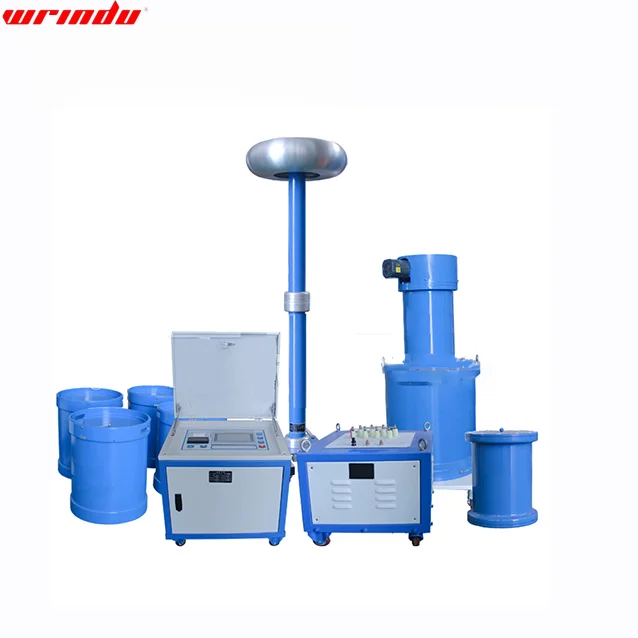
High-altitude and tropical substations require customized partial discharge calibration because air pressure, humidity, temperature, contamination, and electromagnetic noise can change discharge behavior and measurement quality. A reliable solution calibrates the complete test circuit at the actual installation condition, documents environmental data, controls interference, and applies asset-specific acceptance criteria before maintenance or energization decisions.
Specialized Solutions within the Partial Discharge Tester Buying Guide 2024
What Is Partial Discharge Calibration in Extreme Climates?
Partial discharge calibration establishes how a PD measurement system converts a known injected charge into a reported apparent-charge value under the actual test-circuit conditions. In high-altitude or tropical applications, calibration must account for environmental stress, installation geometry, background noise, sensor response, and test-object capacitance.
Conventional PD measurement commonly follows IEC 60270 principles: a known pulse is injected into the complete circuit so the measuring system can establish a valid scale factor. The complete circuit matters because a calibrator tested alone on a bench cannot represent the behavior of the connected cable, transformer, GIS section, coupling capacitor, measuring impedance, earth path, and sensor lead arrangement.
For extreme-climate energy projects, calibration is not just a number entered before the test. It is a controlled sequence that should record:
- Test-object identification and rated voltage.
- Test voltage, frequency, ramp rate, and dwell time.
- Calibrator setting and injection location.
- Coupling capacitor and measuring-impedance details.
- Detector bandwidth, acquisition window, and trigger level.
- Ambient temperature, relative humidity, and altitude.
- Background-noise pattern before voltage application.
- Grounding layout, sensor location, and cable routing.
At Wrindu, we treat the calibration record as part of the asset’s diagnostic history. A PD result expressed only as “within limit” does not allow future engineers to decide whether the difference came from insulation condition, environmental changes, or a revised test setup.
How Does High Altitude Change PD Test Results?
High altitude reduces air density and can lower partial-discharge inception and extinction voltages in air-insulated regions. This means external corona, surface discharge, and insulation defects may begin discharging at lower applied voltages than they would at sea level.
Studies of wire and cable insulation show that PD inception voltage and PD extinction voltage decrease as altitude rises, at least within the tested altitude range. This has important implications for mountain substations, renewable-energy collector stations, mining systems, railway traction sites, and highland transmission projects.
The physical reason is straightforward: lower atmospheric pressure reduces the dielectric strength of the surrounding air. However, field diagnosis must not oversimplify that fact. A lower PD inception voltage does not automatically prove an internal insulation defect. It may indicate:
- Corona at a sharp external conductor edge.
- Poorly shielded temporary test connections.
- Inadequate clearance around a coupling capacitor or test lead.
- Contamination on an exposed bushing or insulator.
- A genuine internal void, floating potential, or surface defect.
In our experience supporting high-voltage test configurations, external discharge is often mistaken for asset PD when teams move a sea-level arrangement directly to a high-altitude site. The waveform may look alarming, but moving a temporary HV lead, improving the corona ring, or increasing clearance can reduce the activity substantially.
A China manufacturer supplying high-altitude projects should therefore review not only instrument accuracy but also the physical test layout, altitude rating of accessories, transport case sealing, power-supply tolerance, and field grounding configuration.
Why Do Tropical Substations Need Different PD Settings?
Tropical substations need different PD settings because high humidity, condensation, salt contamination, biological growth, heat, and frequent storms can affect insulation surfaces, sensor signals, leakage current, and electromagnetic background noise. The test system must distinguish true internal PD from weather-driven surface activity and external interference.
Humidity can change the conditions in which PD occurs. Temperature and humidity influence PD activity, and high humidity can increase PD occurrence where microscopic cracks or vulnerable insulation surfaces are present. High humidity can also produce moisture films on insulation surfaces, increasing surface conductivity and affecting signal visibility.
For tropical installations, the most challenging period is often not heavy rainfall itself but the interval after rain, when equipment surfaces remain wet, temperatures rise, and condensation may form inside imperfectly sealed cubicles.
A practical tropical PD plan should define:
- Maximum allowable humidity for offline sensitive measurements.
- A condensation inspection before connecting high-voltage leads.
- Minimum stabilization time after moving equipment from an air-conditioned room to an outdoor site.
- Separate background-noise captures during dry and wet conditions.
- Inspection of cable terminations, gland plates, bushing skirts, and panel-door seals.
- Cleaning criteria for salt, dust, insect residue, and fungal growth.
- Weather conditions that require deferring the test.
For example, an indoor metal-clad switchgear PD trend may appear stable at 35% relative humidity and rise sharply above 80% relative humidity. That does not necessarily mean the insulation suddenly developed a new internal defect. It may indicate surface tracking risk, moisture ingress, or a sensor coupling change. The correct response is to compare phase-resolved patterns, environmental data, and physical inspection results—not to rely on apparent charge alone.
Which Environmental Factors Should Be Recorded?
The critical environmental factors for PD testing are altitude, atmospheric pressure, temperature, relative humidity, condensation status, surface contamination, wind exposure, electromagnetic interference, and equipment load condition. Recording them allows engineers to compare tests fairly and identify whether an abnormal result is environmental or asset-related.
| Environmental factor | How it affects PD testing | Field control or record |
|---|---|---|
| Altitude and pressure | Lower air density can reduce air-insulation withstand and increase external corona risk | Record site elevation and local pressure where available |
| Temperature | Changes insulation conductivity, cable properties, instrument stabilization, and condensation risk | Record ambient and enclosure temperature |
| Relative humidity | Can create surface leakage paths and alter PD behavior | Record RH; inspect for moisture films |
| Condensation | Can cause unstable leakage, surface discharge, and false indications | Stop or defer sensitive tests until surfaces are dry |
| Salt, dust, and pollution | Creates conductive or semi-conductive surface paths | Photograph and clean according to approved procedure |
| Wind and rain | Changes airborne ultrasonic paths and exposes outdoor connections to moisture | Protect connections; avoid unsuitable weather windows |
| Electrical interference | Can mask or imitate PD pulses | Capture noise spectrum before and during testing |
A common documentation failure is recording only temperature. For mountain projects, altitude and pressure are equally important. For coastal and tropical projects, humidity, visible moisture, and contamination class may explain more than temperature.
Wrindu recommends setting a project-specific environmental data sheet before commissioning begins. This avoids engineers using different recording habits across multiple substations, contractors, or shifts.
How Should PD Equipment Be Adapted for High Altitude?
PD equipment for high altitude should use altitude-appropriate insulation clearances, protected connections, stable power input, robust grounding, and calibration performed with the actual test circuit. The test layout must minimize external corona so the detector measures the asset rather than temporary test hardware.
The most important adaptation is physical, not software-based. A high-quality analyzer cannot correct a poor high-voltage setup that produces its own discharge.
For high-altitude field applications, consider:
- Increased spacing between energized temporary conductors and earthed structures.
- Smooth electrodes, shielded connections, and properly sized corona-control rings.
- High-voltage leads with clean, dry insulation and no exposed sharp metal edges.
- Coupling capacitors and accessories rated for the test voltage and site environment.
- Short, well-routed low-level signal cables separated from HV conductors.
- A single, intentional grounding plan to reduce circulating noise.
- Enclosures that protect electronics from dust, low humidity, temperature variation, and transport impact.
In factory acceptance setups, we have seen a small loose braid, sharp clip, or damaged shield termination create visible discharge activity long before the test object reaches its expected threshold. At high altitude, these minor construction defects become more significant because the surrounding air has a lower withstand margin.
The engineering trade-off is clear. Wider temporary clearances and larger corona-control accessories add setup time and transport volume, but they can prevent hours of noise investigation and reduce the risk of incorrect rejection of expensive switchgear, cables, or transformers.
Wrindu can support custom configurations for highland projects, including accessory selection, reporting requirements, instrument input arrangements, protective cases, and test-system integration for utility, OEM, supplier, and wholesale programs.
What Calibration Method Works Best for Tropical Conditions?
The best calibration method for tropical conditions is a complete-circuit calibration performed after the test object, coupling path, measuring impedance, and grounding arrangement are connected, followed by a documented background-noise capture under the prevailing site conditions. Repeat calibration when the measurement path or major environmental condition changes.
IEC 60270-oriented practice requires calibration of the complete test circuit with the test object connected whenever practical, because the measured response depends on the capacitance and coupling characteristics of the actual system.
A practical sequence for a tropical substation is:
- Inspect the test area for moisture, visible contamination, and unsafe weather exposure.
- Confirm all test leads, adapters, and sensor connections are clean and dry.
- Establish grounding before connecting the low-level measurement path.
- Capture background noise with the same sensor placement and cable routing planned for the live test.
- Inject the known calibrator pulse at the test-object terminals or the specified injection point.
- Verify response magnitude, pulse polarity, repeatability, and phase-resolved display behavior.
- Apply test voltage according to the approved ramp and dwell procedure.
- Record environmental conditions at the beginning, during any abnormal observation, and at the end of the test.
- Recheck calibration if leads, coupling configuration, measurement range, or sensor placement changes.
Avoid treating a calibration performed in an air-conditioned workshop as valid for an outdoor tropical test. The equipment may be calibrated, but the complete measurement circuit is different. Moisture, longer leads, different earthing, and elevated interference can change the usable sensitivity.
Can Online PD Monitoring Replace Offline Calibration?
Online PD monitoring can provide valuable condition trends, but it does not automatically replace offline calibrated PD measurement. Online systems detect activity under normal operating stress, while offline testing can apply controlled voltage, known calibration pulses, defined noise controls, and repeatable acceptance procedures.
The methods serve different purposes.
Online monitoring is useful for:
- Long-term trending of switchgear, cable accessories, transformers, and GIS.
- Detecting changes related to load, humidity, vibration, or temperature.
- Identifying assets that require further inspection.
- Reducing unnecessary outages for routine screening.
Offline calibrated testing is useful for:
- Factory acceptance and commissioning.
- Controlled comparison against specified limits.
- Investigation after repair, refurbishment, or abnormal online trend.
- Verifying insulation behavior over a defined voltage sequence.
- Establishing a high-quality baseline before energization.
PD sensors can monitor changes related to temperature, humidity, and vibration, which makes online monitoring valuable for extreme environments where conditions change significantly over time. However, sensor position, installation geometry, bandwidth, and reference source must be documented so the trend remains meaningful.
For a tropical distribution network, an online TEV or ultrasonic trend may identify a cubicle that becomes active after humid evenings. An offline test can then help determine whether the issue is internal insulation degradation, a surface tracking path, poor sealing, or external interference. One method informs the other; neither should be presented as a universal substitute.
Why Is Noise Control More Important in Remote Substations?
Noise control is especially important in remote substations because weak grounding, long temporary leads, radio transmissions, renewable inverters, switching devices, and limited site shielding can create pulse patterns that resemble partial discharge. Without a measured noise baseline, technicians can misclassify interference as insulation deterioration.
PD measurement systems must separate true discharge pulses from external corona, radio-frequency interference, switching transients, and ground-loop noise. Deliberate grounding, physical separation between high-voltage and low-level measurement paths, elimination of external corona sources, and representative noise capture are recommended controls.
At remote renewable sites, inverter switching noise can be particularly misleading. A technician may observe repeated high-frequency pulses and assume cable termination PD. Before concluding this, compare:
- Pulse phase relationship to the AC voltage cycle.
- Signal response across multiple sensors.
- Signal behavior when the suspected feeder is isolated.
- Background pattern before the test voltage is applied.
- Changes when low-level cable routing is moved.
- Correlation with inverter, converter, or communication equipment operation.
From a field-support perspective, the quickest noise-reduction improvement is often not a new analyzer. It is correcting the earth path, shortening the unshielded measurement lead, separating the sensor cable from the test lead, and removing a temporary sharp-point corona source.
Wrindu provides diagnostic equipment and technical support for customers who require controlled measurement layouts, especially where a standard laboratory arrangement cannot be reproduced in a mountain, coastal, desert, or tropical substation.
Who Needs Custom PD Solutions for Extreme-Climate Projects?
Custom PD solutions are needed by utilities, renewable-energy developers, EPC contractors, OEMs, transformer and switchgear manufacturers, rail operators, mines, industrial plants, and testing agencies working in high-altitude, tropical, coastal, desert, or remote grid environments.
The requirement is highest when projects have one or more of these conditions:
- Installation above typical sea-level design assumptions.
- Persistent relative humidity above normal indoor laboratory conditions.
- Coastal salt fog or monsoon-driven contamination.
- Wide daily temperature swings and condensation cycles.
- Long-distance transport over rough roads.
- Limited access to calibrated laboratory facilities.
- High electromagnetic noise from converters, radio systems, or dense switchgear.
- Multiple voltage classes and custom cable or bushing interfaces.
- Strict commissioning windows before renewable-energy connection.
A China factory can support these projects effectively when it works from a clear application specification rather than a generic product request. For example, “PD tester for a 4,000 m solar substation” is not enough information. The manufacturer needs the asset type, voltage class, test method, required sensitivity, expected background noise, site power source, transport constraints, report language, and required accessories.
Wrindu supports factory-direct, custom, OEM, wholesale, and supplier projects with application review before production. This helps ensure the delivered system matches the actual test environment rather than only the catalog description.
What Should a Custom PD Specification Include?
A custom PD specification should define the asset type, voltage range, measurement method, calibration range, frequency response, environmental conditions, accessories, safety controls, data format, and acceptance workflow. The specification should also identify whether the system is for factory, field, online monitoring, or commissioning use.
For an extreme-climate PD project, include:
- Rated and maximum test voltage.
- AC, DC, VLF, resonant, or operating-voltage application.
- Required apparent-charge measurement range and resolution.
- Expected PD levels and relevant acceptance criteria.
- Altitude range and expected atmospheric pressure conditions.
- Temperature and humidity operating limits.
- Required ingress protection and corrosion resistance.
- Sensor type: coupling capacitor, HFCT, TEV, UHF, ultrasonic, or combined method.
- Cable lengths, connector types, bushing interfaces, and grounding requirements.
- Required test reports, phase-resolved patterns, trending data, and export formats.
- Rugged case, transport, mains supply, battery backup, and local plug requirements.
- Operator training, remote technical support, warranty, and calibration requirements.
The cost-versus-performance decision should be based on the project risk. A simple offline conventional PD setup may be sufficient for controlled factory work. A high-altitude field program with several asset types may justify a modular system with multiple sensors, flexible software, rugged accessories, and enhanced interference-analysis capability.
The best configuration is not the one with the most channels. It is the one that produces repeatable, interpretable data in the operating environment.
What Are Wrindu Expert Views on Extreme-Climate PD Testing?
“At high altitude, the first question should be whether the test arrangement itself is discharging. In tropical sites, the first question should be whether moisture and contamination are changing the surface condition. We have seen teams spend hours analyzing PD patterns that disappeared after correcting a sharp temporary connection, drying a sensor interface, or improving the grounding path. The reliable process is to calibrate the complete circuit, capture background noise, record environmental conditions, and verify suspicious patterns through a second sensor or controlled layout change. This protects the asset and prevents costly false alarms.” — Wrindu Technical Team
How Can You Build a Reliable PD Program for Harsh Sites?
A reliable harsh-site PD program combines correct instrument selection, full-circuit calibration, environmental logging, interference control, trained operators, and repeatable reporting. It should establish a baseline at commissioning and compare future results only when test conditions and measurement paths are adequately documented.
The key actions are:
- Specify altitude, humidity, temperature, pollution, and transport constraints before purchasing equipment.
- Select a China manufacturer or OEM supplier that can configure instruments and accessories for the actual project environment.
- Calibrate using the complete test circuit and record the injected charge, response, and setup.
- Capture background noise before applying test voltage.
- Keep temporary HV connections clean, smooth, dry, and appropriately spaced.
- Use more than one detection method when external interference or surface discharge is likely.
- Record every environmental condition that can influence comparison over time.
- Preserve raw files, phase-resolved patterns, photographs, and wiring diagrams.
- Escalate uncertain results for engineering review before accepting, rejecting, or energizing equipment.
Wrindu helps utilities and power-industry partners apply PD diagnostic equipment in demanding conditions through custom solutions, factory manufacturing support, practical accessory selection, and technical guidance. Reliable calibration is not a single button press—it is a repeatable process that makes PD data useful for real asset decisions.
FAQs
Does altitude always increase partial discharge activity?
Altitude can lower air-insulation withstand and reduce PD inception voltage for air-exposed regions, but actual PD behavior also depends on insulation design, contamination, geometry, voltage level, and test setup.
What humidity level is too high for PD testing?
There is no universal limit for every asset and method. The test plan should define acceptable conditions, but visible condensation, wet surfaces, unstable leakage, or changing background noise require corrective action or test postponement.
Should PD calibration be repeated after moving test leads?
Yes. Repeat calibration whenever the measurement path, lead routing, coupling arrangement, sensor placement, range, or major test-circuit configuration changes.
Can a PD analyzer distinguish internal PD from external corona automatically?
Some analysis tools help classify patterns, but reliable diagnosis requires checking phase-resolved data, sensor responses, noise behavior, setup geometry, and physical inspection.
Can Wrindu provide custom PD equipment for high-altitude projects?
Yes. Wrindu can support custom PD configurations for high-altitude and tropical applications, including accessories, measurement arrangements, reporting needs, OEM requirements, and factory-direct technical guidance.
Related articles
 SF6 Leak Detector Sensitivity: Select a Method for the Inspection TaskKnowledge
 Cable Fault Locator Selection for Urban Networks: Routes, Noise and AccessKnowledge
 Substation Battery Load Bank Sizing: Duty, Voltage Range and Heat RejectionKnowledge
 CT Polarity, Ratio and Burden Testing: Find Wiring and Loading ErrorsKnowledge