
Why do critical assets need 24/7 online PD monitoring?
Send your test requirement — get a tailored solution and a quote within one working day.
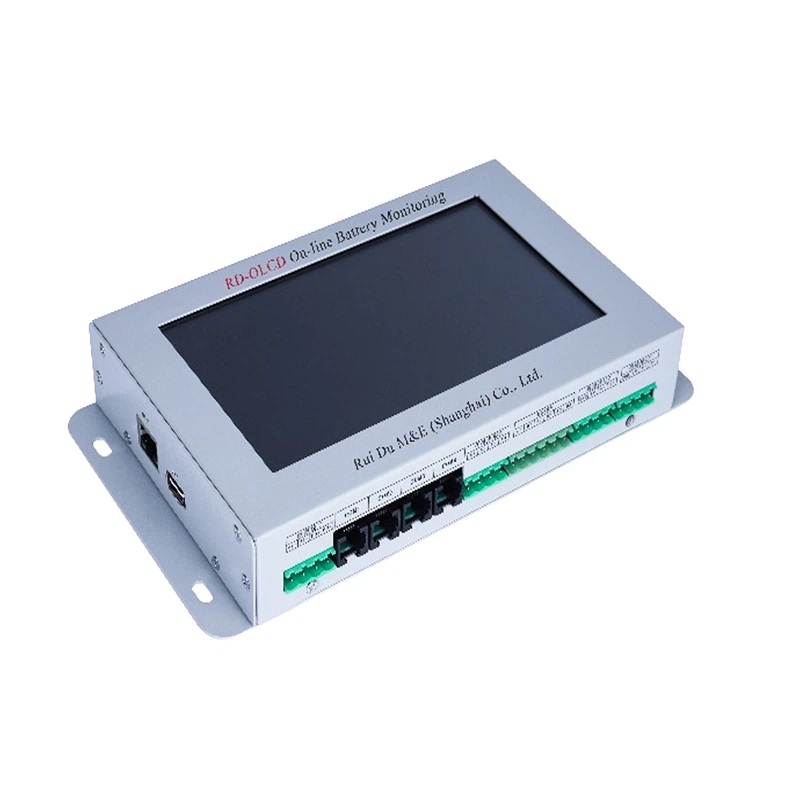
Critical assets like GSU transformers require 24/7 online partial discharge (PD) monitoring to catch insulation defects at inception, trigger real-time alerts, and avoid catastrophic fires and outages. Continuous PD surveillance quantifies risk, supports data-driven maintenance, and delivers a strong ROI when China-based manufacturers, OEM suppliers, and factories compare monitoring cost versus the multimillion losses of a single failure.
Predictive Maintenance through PD Monitoring: A 10-Year Asset Strategy
What is 24/7 online PD monitoring for high-voltage assets?
24/7 online PD monitoring is a continuous diagnostic system that detects, records, and trends partial discharge activity on live high-voltage equipment, without taking assets out of service. Sensors, digitizers, and software watch PD pulses in real time, flag anomalies, and log every event so that operators can intervene before insulation defects escalate into faults, trips, or fires.
On GSU transformers, isolated phase bus ducts, and critical switchgear, online PD monitoring forms the backbone of modern condition-based maintenance. Instead of relying on occasional offline tests, you get a live stream of PD magnitude, repetition rate, and phase-resolved patterns. For China manufacturers and OEM suppliers, this data proves that the equipment they build or ship is monitored intelligently after installation, strengthening long-term partnerships with utilities and industrial customers.
Wrindu designs PD monitoring solutions with factory-floor realities in mind. Our systems are built to withstand noisy environments, integrate with SCADA/EMS platforms, and provide clear dashboards for operators. From the perspective of a B2B factory, online PD monitoring is not just a diagnostic tool—it is part of a wider digital ecosystem that connects insulated assets, real-time alarms, and enterprise asset management.
Why do high-value assets like GSU transformers need permanent PD surveillance?
High-value assets such as generator step-up (GSU) transformers need permanent PD surveillance because even a single insulation failure can cause massive outages, fire damage, and long replacement lead times. These units sit at the heart of power plants; their failure risk is disproportionate to their count. Permanent PD monitoring provides early warning on insulation defects, enabling targeted maintenance and preventing catastrophic events.
GSU transformers operate under high stress: thermal cycling, electrical transients, and mechanical vibrations. Tiny voids, degraded paper-oil systems, or bushing defects can start producing PD well before traditional DGA or periodic tests detect issues. A permanent PD system catches those weak signals, logs trends, and alerts teams when activity crosses defined thresholds. For China-based manufacturers and OEM factories, offering PD-ready designs and monitoring recommendations is now a mark of serious engineering.
From my experience on test floors and in commissioning projects, the most compelling argument for permanent surveillance is practical: when a plant is generating hundreds of megawatts, shutting down a GSU transformer for unplanned repair is not an option. With continuous PD data, utilities can plan outages, order spare parts, and mobilize teams on their own schedule instead of reacting to sudden failures.
How does 24/7 online PD monitoring deliver real-time alerts for critical assets?
24/7 online PD monitoring delivers real-time alerts by continuously analyzing PD pulses and comparing them against baseline patterns and configurable thresholds. When PD activity changes—higher magnitude, increased pulse rate, new phase positions—the system triggers alarms through SCADA, email, SMS, or local annunciators. Operators receive actionable messages tied to specific assets, locations, and severity levels.
Technically, PD sensors (UHF antennas, HFCTs, TEV sensors, acoustic probes) capture pulses from bushings, windings, or bus ducts. Signal processing filters noise, classifies genuine PD, and feeds metrics into the monitoring platform. Algorithms then track trends per asset, so the system knows whether a sudden spike is a transient event or the beginning of a sustained defect. For China factories supplying PD systems, designing robust filtering and trending logic is as important as sensor design.
Wrindu emphasises clear communication in our PD solutions. Alarm messages are structured to indicate not just “PD high,” but which phase or compartment is affected, how fast the activity is growing, and recommended follow-up actions (e.g. increase observation, schedule inspection, or prepare for controlled shutdown). This level of detail turns raw PD data into practical asset management decisions.
How can a monitoring ROI calculator compare PD surveillance cost to catastrophic fire risk?
A monitoring ROI calculator compares PD surveillance cost to catastrophic fire risk by quantifying both sides: annual monitoring expenditure (hardware, software, service) and the expected financial impact of a transformer or switchgear fire (repair, replacement, outage loss, penalties, safety liabilities). By modeling failure probability reduction due to PD monitoring, the calculator shows payback time and long-term savings.
For example, suppose a GSU transformer has a replacement cost of several million dollars and associated outage costs per day in the hundreds of thousands. The ROI model assigns a baseline annual probability of catastrophic failure and then reduces it based on empirical PD monitoring benefits—early detection and controlled shutdown. The difference in expected loss becomes the “avoided cost,” which is compared with monitoring system investment and maintenance.
China-based manufacturers and OEM suppliers increasingly offer such calculators as part of their technical sales process. Wrindu uses factory and field data to calibrate assumptions: typical PD evolution timelines, common defect locations, and realistic improvement factors. This moves the discussion from generic safety claims to numeric business metrics that procurement teams and asset managers can trust.
Sample PD monitoring ROI comparison
Which types of partial discharge are most critical to watch on GSU transformers and bus ducts?
The most critical PD types to watch on GSU transformers and bus ducts are internal PD in windings, surface PD on insulation interfaces, and corona-like discharges in high-field regions. Internal PD can grow into winding failure, surface PD often signals contamination or ageing at interfaces, and corona indicates local stress concentration that may evolve into more serious defects.
On GSU transformers, internal PD within paper-oil insulation is particularly dangerous. It erodes solid insulation, generates gas bubbles, and initiates local heating. Surface PD appears on barriers or bushing skirts when contamination, moisture, or ageing create conductive paths. In isolated phase bus ducts, PD often occurs at joints, supports, or areas with poor shielding. Online monitoring systems must be tuned to distinguish between harmless noise and these critical PD signatures.
For China manufacturers and OEM factories, designing PD-sensible assets means understanding where PD tends to originate. Wrindu’s experience shows that poor workmanship at conductor joints, under-estimated field grading in bushings, or inadequate cleaning before oil filling can all increase PD risk. Monitoring does not replace good design—but it reveals where design or process weaknesses appear, so they can be addressed systematically.
How can China manufacturers, wholesale suppliers, and OEM factories embed PD monitoring in their product and service offerings?
China manufacturers, wholesale suppliers, and OEM factories can embed PD monitoring by designing equipment with sensor ports, integrating PD data interfaces into control panels, and offering monitoring packages as part of turnkey projects. Rather than selling hardware alone, they deliver an integrated asset-health solution that includes PD surveillance, data analytics, and remote support.
Practically, this means:
-
Adding UHF or HFCT sensor provisions on GSU transformer tanks and bus ducts.
-
Providing wiring and communication channels for PD data back to plant SCADA.
-
Configuring dashboards that show PD status alongside other critical parameters.
-
Offering monitoring-as-a-service agreements with periodic expert review.
From my perspective in manufacturing, the biggest step-change is commercial, not just technical. When Wrindu partners with utilities or EPC contractors, we align PD monitoring options with procurement expectations and lifecycle costs. This turns PD systems from optional extras into standard practice for critical assets, and it keeps China-based suppliers positioned as long-term technology partners instead of commodity hardware vendors.
Why is continuous PD monitoring more effective than periodic offline testing alone?
Continuous PD monitoring is more effective than periodic offline testing because many defects evolve between test intervals. Offline tests capture a snapshot; PD monitoring captures the entire movie. Trends—slowly rising PD magnitude, shifts in phase-resolved patterns—often tell the story long before a single offline measurement shows clear problems.
Periodic tests still play a role, especially for thorough diagnosis and compliance checks, but they cannot catch every transient or early-stage defect. For GSU transformers and high-value equipment, waiting six or twelve months between tests leaves a large blind window where PD can grow unchecked. Online monitoring fills that gap, ensuring no significant change in insulation behaviour goes unnoticed for long.
For China manufacturers and OEM suppliers, combining offline testing platforms with continuous PD systems is a powerful differentiator. Wrindu often deploys this hybrid strategy: routine offline tests for baseline, plus 24/7 PD surveillance for early warning. This dual approach improves asset reliability and makes service offerings more compelling to utilities that are tired of unplanned failures.
How does 24/7 PD monitoring integrate with SCADA and digital substation architectures?
24/7 PD monitoring integrates with SCADA and digital substation architectures through standard communication protocols such as IEC 61850, Modbus TCP, or DNP3. PD monitors publish real-time status, alarms, and historical trends into the same environment where operators watch load, voltage, and protection signals. This creates a unified view of asset condition and operational state.
Modern PD platforms define logical nodes and data models that fit neatly into digital substation designs. Engineers can set alarm thresholds, link PD events to automated actions, or simply log them for analysis. For GSU transformers, PD indicators may be correlated with temperature, load, or switching operations to understand what operating states accelerate insulation stress. From a China factory perspective, designing PD systems with open protocols is essential to ensure global interoperability.
Wrindu’s systems are engineered to coexist with existing control and protection devices. We insist on strict segmentation between PD data and protection trip logic to avoid unwanted interactions, yet provide enough granularity that asset managers can slice PD information by feeder, transformer, or bus duct. This integration ensures that PD monitoring becomes a natural part of the substation’s digital nervous system rather than a standalone island.
Example PD–SCADA integration elements
Wrindu Expert Views
“On our China production lines and during on-site commissioning of GSU transformers, we’ve seen how a single undetected PD source can turn into a multimillion-dollar outage. That’s why Wrindu designs PD monitoring solutions with continuous surveillance, not just periodic tests. When our system raises an alert at 03:00, it’s because the insulation story changed—and operators deserve to know in real time, before the asset does.”
How can China factories use PD monitoring data to refine design, manufacturing, and quality control?
China factories can use PD monitoring data to refine design and manufacturing by feeding field insights back into R&D and process engineering. When PD logs show recurring issues at specific locations or conditions, design teams can adjust insulation geometry, material choice, or assembly techniques. Manufacturing can tighten controls on cleaning, drying, and oil processing where patterns indicate weakness.
For example, if PD trends consistently spike under certain load cycles or ambient humidity, factories can revise their design margins or installation procedures. PD data from GSU transformers and bus ducts installed worldwide becomes a feedback loop that supports continuous improvement. As a manufacturer, I have seen how this long-term view turns PD monitoring from a “cost” into a strategic learning tool.
Wrindu invests a significant portion of profits into such data-driven improvement. Our engineers analyse PD traces from client assets, correlate them with design versions, and identify which insulation strategies age more gracefully. This closed-loop approach strengthens product reliability and demonstrates to utilities and OEM customers that the factory uses real-world evidence rather than assumptions to drive innovation.
Conclusion: How can continuous PD monitoring transform risk, reliability, and ROI for critical assets?
Continuous PD monitoring transforms risk, reliability, and ROI by turning invisible insulation defects into measurable, manageable trends. For high-value assets like GSU transformers, permanent surveillance reduces catastrophic failure probability, guides maintenance timing, and supports evidence-based investment decisions. The monitoring cost becomes small compared to the avoided fire, outage, and replacement expenditures.
China manufacturers, wholesale suppliers, and OEM factories that embrace 24/7 PD monitoring move beyond commodity hardware. By integrating sensors, real-time analytics, and ROI tools, they offer customers a transparent view of asset health and a pathway to predictive maintenance. Wrindu’s approach—combining field experience, data analysis, and SCADA integration—illustrates how PD monitoring can be both technically robust and commercially compelling.
For asset owners, the actionable advice is clear: identify your highest-value transformers and bus ducts, evaluate their current diagnostic coverage, and deploy continuous PD monitoring first where failure risk is greatest. From there, expand coverage systematically. In an energy system where outages and fires are increasingly unacceptable, PD monitoring is no longer optional—it is a foundational layer of modern grid resilience.
Is 24/7 online PD monitoring suitable for smaller substations or only large power plants?
Continuous PD monitoring is beneficial in both large plants and smaller substations. Prioritize assets where failure impact is highest, then scale coverage as budget and risk analysis allow.
Can PD monitoring systems be retrofitted to existing GSU transformers and bus ducts?
Yes. Most PD solutions support retrofit installation using external sensors and minimal modifications. Planning requires site surveys and proper routing of signal and communication cables.
Does PD monitoring replace traditional DGA and offline insulation tests?
No. PD monitoring complements DGA and offline tests. It provides early warning and trend data, while conventional tests still deliver comprehensive diagnostics and compliance verification.
How complex is the operation of a PD monitoring system for substation staff?
Modern PD systems are designed for clear dashboards and simple alarm interpretation. With initial training and well-defined procedures, substation staff can operate them effectively without becoming PD experts.
Does Wrindu support OEM customization of PD monitoring solutions for branded deployment?
Wrindu can tailor PD monitoring packages, interfaces, and reporting formats to OEM partners while maintaining core diagnostics integrity, allowing branded solutions that retain proven technical foundations.
Related articles
 SF6 Leak Detector Sensitivity: Select a Method for the Inspection TaskKnowledge
 Cable Fault Locator Selection for Urban Networks: Routes, Noise and AccessKnowledge
 Substation Battery Load Bank Sizing: Duty, Voltage Range and Heat RejectionKnowledge
 CT Polarity, Ratio and Burden Testing: Find Wiring and Loading ErrorsKnowledge