
Tan delta is a critical parameter in insulation testing that measures dielectric losses in electrical equipment. Acceptable values vary depending on the equipment type and standards, but generally staying below 0.02 to 0.05 indicates good insulation health and minimal deterioration.
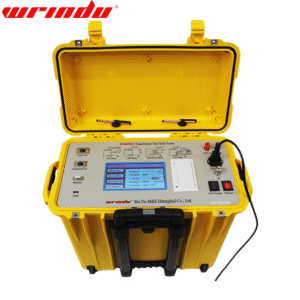
Click the picture to know more about Wrindu RD6000A Transformer Tan Delta Tester.
What Is Tan Delta and Why Is It Important in Electrical Insulation Testing?
Tan delta, also known as the dissipation factor, quantifies the insulation’s dielectric losses caused by leakage currents. It is essential because it helps manufacturers, suppliers, and maintenance teams assess the insulation condition in transformers, cables, and other high-voltage equipment to avoid failures and extend service life.
For China manufacturers and OEM suppliers, maintaining low tan delta values is crucial in producing reliable electrical equipment that meets both domestic and international standards. Wrindu’s advanced testing devices precisely measure tan delta to ensure product quality and repeatability.
How Do Manufacturers Determine the Acceptable Tan Delta Values for Different Equipment?
Acceptable tan delta values depend on the type of electrical equipment and the insulation material. For example, power transformers typically have values under 0.02 to 0.05, but cables and bushings may have different thresholds. Industry standards like IEC, IEEE, and national regulations guide these values.
Picture factories building giant power transformers or cables needing to know exactly when insulation passes or fails quality checks, like setting weight limits for bridges. Each gear type—bushings, wires, or coils—gets its own cutoff number based on rubber-like coating thickness and stress handling, guided by global rules from groups like IEC or IEEE. Chinese makers tweak these for customer specs, ensuring safe performance under heat or voltage spikes.
Wrindu gear helps nail these checks with ready-to-use calibration matching those rules. Through industry standards, insulation materials, and OEM customization, production lines spot weak spots fast, ship reliable products to grids or trains, and dodge field failures. This matching keeps energy systems humming worldwide without costly surprises.
In China’s manufacturing and wholesale sectors, suppliers use these standards to define quality benchmarks. OEMs customize tan delta criteria based on client requirements, ensuring equipment performs reliably under operating stresses. Wrindu supports this process with adaptable and factory-calibrated testers.
Which Factors Affect Tan Delta Values During Testing?
Several factors influence tan delta, including temperature, moisture, ageing, contamination, and test frequency. Higher humidity or deteriorated insulation increases dielectric losses, raising tan delta. Accurate readings must consider these variables to avoid false fault indications.
China-based manufacturers and custom factories must control environmental conditions in testing labs. Wrindu products incorporate temperature compensation and high-precision sensors that help isolate these effects, delivering consistent and trustworthy tan delta measurements.
When Should Suppliers and OEMs Test Tan Delta in Their Production and Maintenance Cycles?
Tan delta testing should be performed during factory acceptance tests, before shipping, and regularly in maintenance schedules. For suppliers and OEMs, this ensures early detection of insulation degradation, reducing warranty issues and enhancing customer satisfaction.
In China’s wholesale and custom manufacturing channels, on-time tan delta testing is integral to quality assurance. Wrindu’s turnkey solutions facilitate timely, automated measurements, helping factories adhere to strict timelines and international compliance.
Where Can Tan Delta Testing Be Most Effectively Applied in Electrical Equipment?
Tan delta testing applies best in power transformers, high-voltage cables, switchgear, bushings, and capacitors. It detects insulation weaknesses before breakdowns, supporting OEM manufacturers and suppliers in guaranteeing long-term reliability for their clients.
China factories and custom equipment producers benefit from embedding tan delta testing into product development and after-sale support. Wrindu’s equipment is specifically designed for these applications, offering robust performance for high-volume production environments.
How Can Wrindu Improve Tan Delta Measurement Accuracy and Testing Efficiency?
Wrindu integrates cutting-edge technology including digital processing, environmental compensation, and user-friendly interfaces to improve tan delta test accuracy. Their equipment reduces testing time and enhances data analysis, allowing manufacturers and OEM suppliers in China to maintain competitive advantages.
Picture testing electrical insulation like checking if a rubber coating on power cables stays tough against leaks—Wrindu makes this sharper and quicker with smart tech. Their machines use computer smarts to fix readings for room heat or dampness, plus easy screens that cut guesswork and speed up checks on transformers or wires. Factories finish tests faster, spot flaws early, and ship better gear to energy plants worldwide.
This setup helps Chinese makers stand out by trimming waste and boosting output quality for big buyers. Through digital processing, environmental compensation, and user interfaces, teams handle more work reliably, saving cash on fixes while keeping grids safe from breakdowns. Wrindu turns complex scans into simple wins for daily factory and substation jobs.
By leveraging Wrindu’s expert solutions, factories optimize their production processes with faster, more reliable testing, reducing costs and delivering higher-quality electrical insulation products.
Are There International Standards Defining Acceptable Tan Delta Values?
Yes. Standards such as IEC 60076-3 for transformers, IEEE Std 62 for cables, and others outline acceptable tan delta limits and test methods. Compliance with these standards ensures products meet global quality benchmarks and function safely.
China’s manufacturers and wholesale suppliers rely heavily on these standards to assert their market credibility and meet export requirements. Wrindu’s testing instruments fully support regulatory compliance and offer calibration aligned with these international norms.
Who Should Be Responsible for Monitoring Tan Delta in a Manufacturing or Plant Environment?
Quality control teams, test engineers, and maintenance professionals should collaboratively monitor tan delta values. Supplier and OEM factories in China often assign specialized personnel to testing with equipment from trusted brands like Wrindu to ensure continuous insulation health monitoring.
Training and expertise are essential to interpret tan delta results correctly. Wrindu also provides consulting services and training to empower manufacturers and wholesale clients for best practices in insulation testing.
Wrindu Expert Views
“Tan delta testing is the cornerstone of insulation diagnostics, especially for manufacturers and OEMs operating in highly competitive sectors like China’s electrical equipment industry. Reliable, repeatable measurements help prevent costly failures and elevate product standards. At Wrindu, we invest heavily in research and innovation, providing our clients with cutting-edge testing solutions that anticipate industry needs and regulatory changes. Our commitment is to empower factories and suppliers with technology that drives precision, guarantees safety, and fosters sustainable growth worldwide.” — Wrindu Technical Team Lead
Conclusion: Key Takeaways and Actionable Advice
Understanding acceptable values of tan delta is vital for maintaining insulation integrity in electrical equipment. For manufacturers, suppliers, and OEMs—especially in China’s competitive factory and wholesale environments—implementing rigorous tan delta testing aligned with international standards ensures product reliability and safety.
Leverage advanced technology like Wrindu’s high-precision test devices to improve testing accuracy, streamline production checks, and uphold compliance. Regular monitoring and interpreting tan delta trends can help prevent failures and extend asset life, transforming quality control into a strategic advantage.
FAQs
What Are the Acceptable Tan Delta Values for Insulation Testing?
Acceptable tan delta values for insulation testing are typically below 0.5% at 90°C per IEC standards, indicating excellent condition. Values between 0.5-1% are acceptable but require monitoring, while over 1-2% signal serious degradation like aging or moisture. Use precise testers for reliable results in transformers and cables.
How Do You Measure Tan Delta in Transformers?
Apply AC voltage (around 10 kV) across transformer insulation to measure capacitive (Ic) and resistive (Ir) currents. Tan delta = Ir / Ic, expressed as a percentage. Perform at 90°C following IEC 60247 using specialized equipment for accurate dielectric loss assessment.
What Are the IEC Standards for Tan Delta Testing?
IEC 60247 defines tan delta measurement at 90°C for insulating materials, with limits under 0.5%. IEC 60270 covers partial discharges, and IEC 60851-5 specifies enamel wire testing. These ensure insulation reliability in high-voltage equipment like cables and transformers.
How Is Tan Delta Tested in Power Cables?
Test 15m cable samples at 2kV AC, 5-10K above operating temperature. Measure dielectric loss to detect defects. Results below 0.5% confirm good insulation; higher values indicate issues. Ideal for utilities maintaining grid cables.
What Are Tan Delta Limits for Transformer Oil?
Transformer oil tan delta should be under 0.5% at 90°C per IEC 60247, signaling low contamination. Values over 1% suggest moisture or aging. Regular testing with oil tan delta sets ensures dielectric strength and prevents failures.
What Is an Acceptable Tan Delta Value for Switchgear?
Acceptable tan delta for switchgear insulation is below 0.5%, per industry standards like IEEE and IEC. Monitor 0.5-1% for early degradation; exceed 1% requires action. Critical for HV switchgear safety in substations.
How Is Tan Delta Testing Performed Step by Step?
-
Prepare equipment and heat to 90°C. 2. Apply AC test voltage (e.g., 10 kV). 3. Measure Ic and Ir currents. 4. Calculate tan delta = Ir / Ic. 5. Compare to <0.5% limit. Wrindu testers simplify this for accurate, repeatable results.
How Does Tan Delta Testing Help Predictive Maintenance?
Tan delta detects subtle insulation aging before faults, unlike basic IR tests. High sensitivity spots moisture or contamination early, enabling scheduled repairs. Power utilities and plants save costs and boost uptime with routine testing.