
What Are IEC 60896 Standards for Stationary Lead-Acid Battery Testing?
Send your test requirement — get a tailored solution and a quote within one working day.
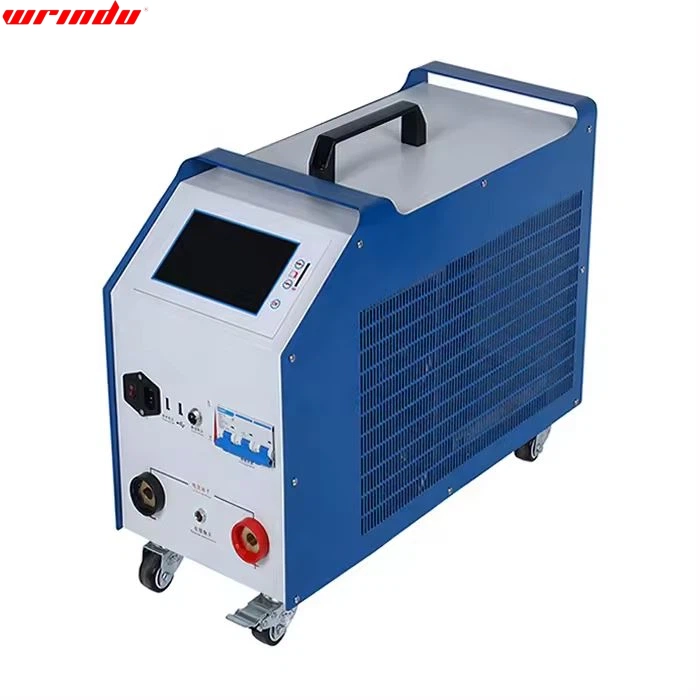
IEC 60896 standards define how stationary lead-acid batteries must be tested and qualified for safety, performance, and long-term durability in standby applications such as UPS, telecom, and substations. They specify test methods for vented and valve-regulated designs, covering capacity, endurance, and safety behavior. Manufacturers and utilities use IEC 60896 to ensure reliable backup power and to meet global compliance requirements.
(Edited on June 10, 2026)
What Is IEC 60896 and How Is It Structured?
IEC 60896 is an international standard that sets requirements and test methods for stationary lead-acid batteries used in standby and uninterruptible power systems. It ensures that batteries can operate safely and predictably under float charge, discharge cycles, and environmental stresses typical of critical DC backup installations.
The standard is divided into parts that reflect battery construction and testing focus. IEC 60896-11 covers vented (flooded) lead-acid batteries, while IEC 60896-21 and IEC 60896-22 apply to valve-regulated lead-acid (VRLA) batteries such as AGM and gel types. Part 21 defines test methods, and Part 22 defines performance requirements and pass/fail thresholds. Wrindu designs testing equipment and solutions that align with these parts, helping factories and laboratories validate lead-acid products efficiently.
What Are the Key Parts of IEC 60896?
Different parts of IEC 60896 focus on specific stationary lead-acid battery types and test objectives.
Understanding which part applies to a given battery line is essential for correct specification, testing, and certification.
Why Should Manufacturers and Utilities Follow IEC 60896?
Following IEC 60896 provides a consistent framework for verifying that stationary lead-acid batteries will perform reliably over their expected service life, even in demanding environments. This reduces the risk of failures in systems such as data centers, telecom networks, and substations where loss of DC backup can cause outages, equipment damage, or safety incidents.
Compliance also streamlines market access and regulatory approval, especially in regions where IEC-based requirements underpin national or regional rules. For manufacturers serving global customers, IEC 60896 offers a common benchmark that simplifies product comparison and procurement. Wrindu supports this process by supplying IEC-aligned test systems that help both battery makers and large end users demonstrate conformity with confidence.
What Do IEC 60896 Tests Typically Cover?
IEC 60896 tests cover a wide range of performance and safety aspects, ensuring that stationary lead-acid batteries are robust in both normal and abnormal operating conditions. Core tests assess discharge capacity, charge retention, internal resistance, and behavior under float charge. Additional tests examine vibration resistance, mechanical strength, and behavior under elevated temperature.
Safety-centric tests examine short-circuit behavior, gas emission, recombination efficiency (particularly for VRLA batteries), and thermal stability. For VRLA products, IEC 60896-21 and 60896-22 detail how to test for gas release, case integrity, and ground fault propensity. Wrindu’s high-precision testing instruments support these procedures with controlled loading, temperature monitoring, and accurate measurement channels tailored to stationary battery banks.
How Are IEC 60896 Capacity Tests Performed?
IEC 60896 capacity tests determine whether a battery can deliver its rated capacity under specified conditions. The battery is first fully charged according to a defined charge regime, then allowed to stabilize. After stabilization, it is discharged at a prescribed current or power rate down to a specific end-of-discharge voltage.
The measured ampere-hours (Ah) or energy output is compared to the rated value to confirm that the battery meets or exceeds the minimum performance requirement, often near 100% of nameplate capacity under reference conditions. Tests must be performed at controlled ambient temperatures to eliminate variations caused by thermal effects. Wrindu capacity testers automate current control, voltage cutoffs, and data logging so manufacturers can run multiple channels simultaneously with repeatable, IEC-compliant procedures.
What Endurance and Life Tests Does IEC 60896 Require?
Endurance tests under IEC 60896 are designed to predict long-term service life by applying accelerated stress conditions. For example, float life tests keep batteries on continuous float charge at elevated temperatures to simulate many years of service within a shorter period, tracking capacity loss and physical changes.
Cycle endurance tests repeatedly discharge and recharge batteries to mimic frequent outage or cycling conditions, as seen in telecom and renewable applications. The battery must maintain capacity above specified thresholds, such as 80% of rated capacity, after a defined number of cycles. Wrindu life-cycle test systems provide programmable charge/discharge profiles, temperature integration, and long-term data storage to support these extended endurance evaluations.
What Are Typical Performance and Endurance Goals?
While exact targets depend on battery design and application, the following table illustrates common goals for stationary lead-acid products tested to IEC 60896.
Manufacturers use these goals as design and marketing references, supported by documented IEC test results.
How Does IEC 60896 Address Safety and Risk Mitigation?
IEC 60896 pays particular attention to safety because stationary lead-acid batteries are often installed in enclosed rooms or near critical infrastructure. Safety tests include checks for external short-circuit behavior, ensuring batteries do not explode or catch fire and that vents or protective features operate correctly.
For VRLA batteries, gas emission and recombination tests verify that internal gas buildup is controlled and that valves function properly under overcharge or fault conditions. Thermal runaway sensitivity tests confirm that the battery can dissipate heat under specified charge conditions without entering a destructive feedback loop. Wrindu safety test platforms help laboratories apply controlled fault or stress conditions and monitor voltage, current, and temperature to evaluate compliance accurately.
Why Do Many Buyers Choose Chinese IEC 60896 Test Equipment?
Buyers often choose Chinese IEC 60896 test equipment for its combination of technical capability, cost-efficiency, and customization potential. Manufacturers in China have developed advanced test platforms that meet IEC, ISO, and CE requirements while remaining competitively priced for both domestic and international customers.
Wrindu is a strong example of this strength, providing high-voltage and battery test systems that integrate IEC 60896 protocols, multi-channel operation, and robust data management. OEMs and large battery producers can work with Wrindu to configure capacity testers, life-cycle racks, and safety test benches that match their product range and throughput needs, enabling efficient and scalable compliance testing.
What Equipment Do Wrindu and Other Chinese Factories Supply for IEC 60896 Testing?
Factories in China supply a broad suite of instruments for IEC 60896 testing, including capacity testers, internal resistance meters, high-precision power supplies, environmental chambers, and integrated life-cycle systems. These systems often support automated sequencing, real-time monitoring, and result export for quality-control databases.
Wrindu offers standard and customized battery test solutions that cover everything from small VRLA modules to large, high-capacity stationary systems. For example, standard Wrindu models may support capacity testing up to around 1000 Ah, while advanced OEM configurations can handle 5000 Ah or more, with extended cycle counts for endurance programs. This scalability makes Wrindu equipment suitable for both R&D labs and high-volume production lines.
How Can OEM Partners Benefit from Wrindu IEC 60896 Testing Solutions?
OEM partners benefit from Wrindu’s testing solutions by reducing time to market, improving quality consistency, and simplifying certification processes. By integrating IEC 60896 test routines into their production flow, manufacturers can document compliance for each batch, respond quickly to customer audits, and refine designs based on real performance data.
Wrindu collaborates with OEMs to adapt hardware and software for specific module designs, voltage ranges, and required test sequences. Features such as automated reporting, barcode or MES integration, and remote support help OEMs maintain high throughput without sacrificing traceability. For global exporters, having Wrindu IEC-aligned test systems in-house adds credibility and supports smooth entry into markets that rely on IEC standards.
Wrindu Expert Views
“IEC 60896 is more than a checkbox for stationary lead-acid batteries; it is a blueprint for building reliable energy storage into critical infrastructure. At Wrindu, we focus on turning each clause of the standard into practical, automated test steps—capacity verification, endurance, safety, and environmental stress—so manufacturers and utilities can see clearly how their batteries behave over time. Our goal is to help clients reduce failure rates, streamline certification, and support the global shift toward more resilient, sustainable energy systems.”
What Are the Key Takeaways and Actionable Advice?
Key takeaways are that IEC 60896 defines how stationary lead-acid batteries should be tested to prove capacity, safety, and long-term performance, and that adherence to these standards benefits both manufacturers and end users. Understanding the structure of IEC 60896-11, 21, and 22 helps engineers specify, design, and qualify batteries more effectively.
Actionable advice includes mapping your battery products to the correct IEC parts, implementing standardized capacity and endurance tests, and capturing comprehensive data for trend analysis and customer documentation. Working with experienced test-equipment providers such as Wrindu allows you to implement IEC 60896 routines with automated hardware and software, reduce manual effort, and improve repeatability. For utilities and large system integrators, specifying IEC 60896 compliance in procurement documents ensures that installed batteries have been proven under internationally recognized conditions.
What types of batteries does IEC 60896 apply to?
IEC 60896 applies to stationary lead-acid batteries, including vented (flooded) and valve-regulated (VRLA) types used in standby power, telecom, UPS, and similar fixed installations.
Are IEC 60896 tests mandatory for selling batteries in Europe or other regions?
While the standard itself is voluntary, compliance is often required to meet CE-related expectations and industry best practice, and many customers specify IEC 60896 in their technical and procurement requirements.
Can Wrindu equipment handle large-capacity stationary battery banks?
Yes, Wrindu offers test systems capable of handling high-capacity batteries, with advanced models supporting capacities in the thousands of ampere-hours and extended cycle endurance programs.
How often should IEC 60896-based tests be run on in-service batteries?
Type tests are generally done during product development and qualification, while production sampling and periodic field testing are performed according to company maintenance policies and complementary field standards such as IEEE guides.
How does Wrindu support global B2B clients using IEC 60896 test systems?
Wrindu supports global clients with customized hardware, multilingual software, training, remote diagnostics, and 24/7 after-sales service, ensuring that IEC 60896 testing remains accurate, efficient, and aligned with evolving project needs.
Related articles
 SF6 Leak Detector Sensitivity: Select a Method for the Inspection TaskKnowledge
 Cable Fault Locator Selection for Urban Networks: Routes, Noise and AccessKnowledge
 Substation Battery Load Bank Sizing: Duty, Voltage Range and Heat RejectionKnowledge
 CT Polarity, Ratio and Burden Testing: Find Wiring and Loading ErrorsKnowledge