
Transformer Oil Testing Programme: Which Tests, In What Order
Send your test requirement — get a tailored solution and a quote within one working day.
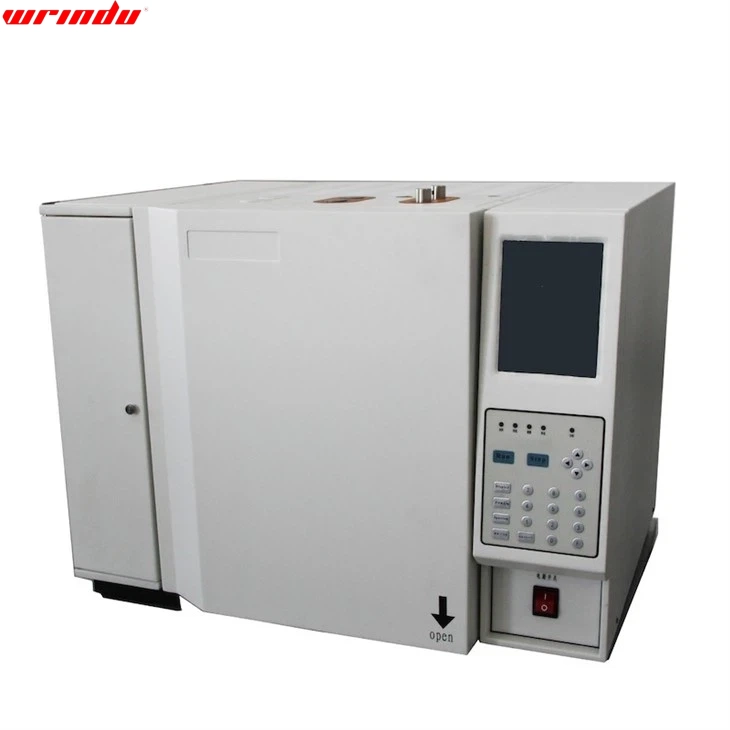
What each oil test answers
Each determination answers a specific question, and knowing which question is what prevents a programme from becoming a list. Dissolved gas analysis answers whether there is active degradation and, through the pattern of gases, what kind of degradation it is. Moisture content answers whether the insulation system is taking on water. Breakdown voltage answers whether the oil retains its dielectric strength under the stress the equipment applies. The ageing group answers a slower question. Acidity indicates the accumulation of oxidation products. Interfacial tension indicates the condition of the oil’s polar compounds and changes earlier than acidity in many cases. Colour is the crudest of the three and useful mainly because it is inexpensive and changes monotonically. Dielectric dissipation factor of the oil bridges the ageing group and the dielectric group, because it responds both to oxidation products and to contamination. A further group answers questions about the solid insulation rather than the oil. Furan compounds are degradation products of the paper insulation and their concentration is one of the few available indicators of paper ageing and thermal stress. Where paper condition is the question, the furan measurement is the one that addresses it, and none of the oil quality determinations substitute for it.| Test | Question it answers | Typical role |
|---|---|---|
| Dissolved gas analysis | Is there active degradation, and of what type | Core screening, run at every sampling |
| Moisture content | Is the insulation taking on water | Core screening, run at every sampling |
| Breakdown voltage | Does the oil still hold its dielectric strength | Core screening, run at every sampling |
| Acidity | How far has oil oxidation progressed | Ageing trend, lower frequency |
| Interfacial tension | Condition of the oil’s polar compounds | Ageing trend, often alongside acidity |
| Dielectric dissipation factor | Loss behaviour of the oil as an insulation medium | Diagnostic when a dielectric problem is suspected |
| Furan compounds | Condition of the paper insulation | Diagnostic, and for units of high value or age |
| Corrosive sulphur | Risk of sulphide deposition on paper | Reference test for specific oil and design combinations |
Screening versus diagnostic tests
Screening tests are run on every unit on the schedule. They are inexpensive relative to the cost of the outage required to sample, they produce values that can be trended, and their purpose is to identify the units that need a closer look. The screening set is small by design: a programme that screens with ten determinations has turned the screening stage into a diagnostic stage and lost the value of a broad, frequent sweep. Diagnostic tests are run when the screening result raises a question. Their purpose is to characterise the condition rather than to detect a change, and they are usually more expensive and slower to obtain. A moisture determination following a rising trend, a furan analysis following a dissolved gas result that suggests thermal stress, or a repeat sample with a specialty analysis following an unexpected gas pattern are all diagnostic uses. The distinction matters for the programme’s economics. Screening is where the cost per unit is low and the frequency can be high. Diagnostics are where the cost per unit is high and the frequency is driven by events. A programme that confuses the two spends its sampling budget on tests whose results change too slowly to justify the frequency.Ordering tests by decision value
The ordering principle is that the first determination run should be the one whose result most changes what happens next. For a transformer in service with no known problem, that is dissolved gas analysis, because it is the only routine test that detects an active fault and indicates its type. Moisture content is next, because it drives both the dielectric condition and the ageing rate of the paper. Breakdown voltage follows. It is a coarse but decisive measurement: oil that will not hold its breakdown voltage under test will not hold it in service, and the result needs no interpretation. Its limitation is that it responds late, because a small amount of moisture or contamination has a limited effect on breakdown voltage while it has a substantial effect on ageing. The ageing group follows the three screening determinations in the programme’s frequency, not in its importance. Acidity, interfacial tension and colour change over years rather than months on a healthy unit, so running them at every sampling interval adds cost without adding information. Running them annually, alongside the screening set on the units that matter, captures the ageing trajectory adequately.Frequency by transformer rating and criticality
Frequency should follow the consequence of failure rather than the size of the unit alone, although the two usually correlate. A large transmission transformer that carries a critical load, has no spare capacity behind it and takes months to replace justifies a shorter interval than a distribution unit whose loss can be covered by reconfiguration. The starting interval should come from the operator’s own standard or from the guidance in the relevant supervision document, and it should then be adjusted by the trend. The first two or three results establish a baseline; after that, a unit whose values are flat can move to a longer interval and a unit whose values are moving should be brought forward. The adjustment should be written as a rule rather than left to judgement. A rule that shortens the interval when a dissolved gas concentration rises by a defined proportion between two samples, or when moisture content exceeds a defined level, is auditable and produces consistent decisions across a team. A rule expressed as increasing the frequency where results are of concern is not.Sampling method and its effect on results
The sample is the measurement. A sample drawn from the drain valve of a tank that has not been circulating, taken through a hose that has been used for something else, or transferred to a container that was not prepared produces a result that reflects the sampling rather than the transformer. The variables that matter are the sampling point, the flushing volume before the sample is taken, the container type and preparation, the exposure to air during transfer, and the time between drawing and analysis. Dissolved gas results are sensitive to all of them, because the gases are dissolved and any contact with air will change the equilibrium. Moisture results are similarly sensitive, and particle contamination affects breakdown voltage directly. Sampling method also determines whether a result can be compared with the previous one. Where the sampling point changes between visits, the difference between two results includes the difference between two sampling locations. Recording the sampling point, the method and the conditions is what makes the series comparable, and it costs nothing beyond a field in the record.Trending across the transformer fleet
The fleet is where the programme’s most reliable early indicator lives. A unit’s own trend shows how it is changing; the fleet comparison shows whether that rate of change is normal for its type and duty. Two units with the same rising gas concentration are different problems if one is the only unit in twenty showing the rise. Making the comparison possible requires consistency. The same tests on the same schedule, sampled by the same method and analysed by the same laboratory, produce data that can be compared across units. Changing any of those elements introduces a variation that the comparison will attribute to the transformer. Laboratory consistency deserves specific attention. Different laboratories use different methods for some determinations, and the same laboratory can change a method between batches. Where a result appears to step change, confirming whether the laboratory changed anything before investigating the transformer is the cheapest possible check.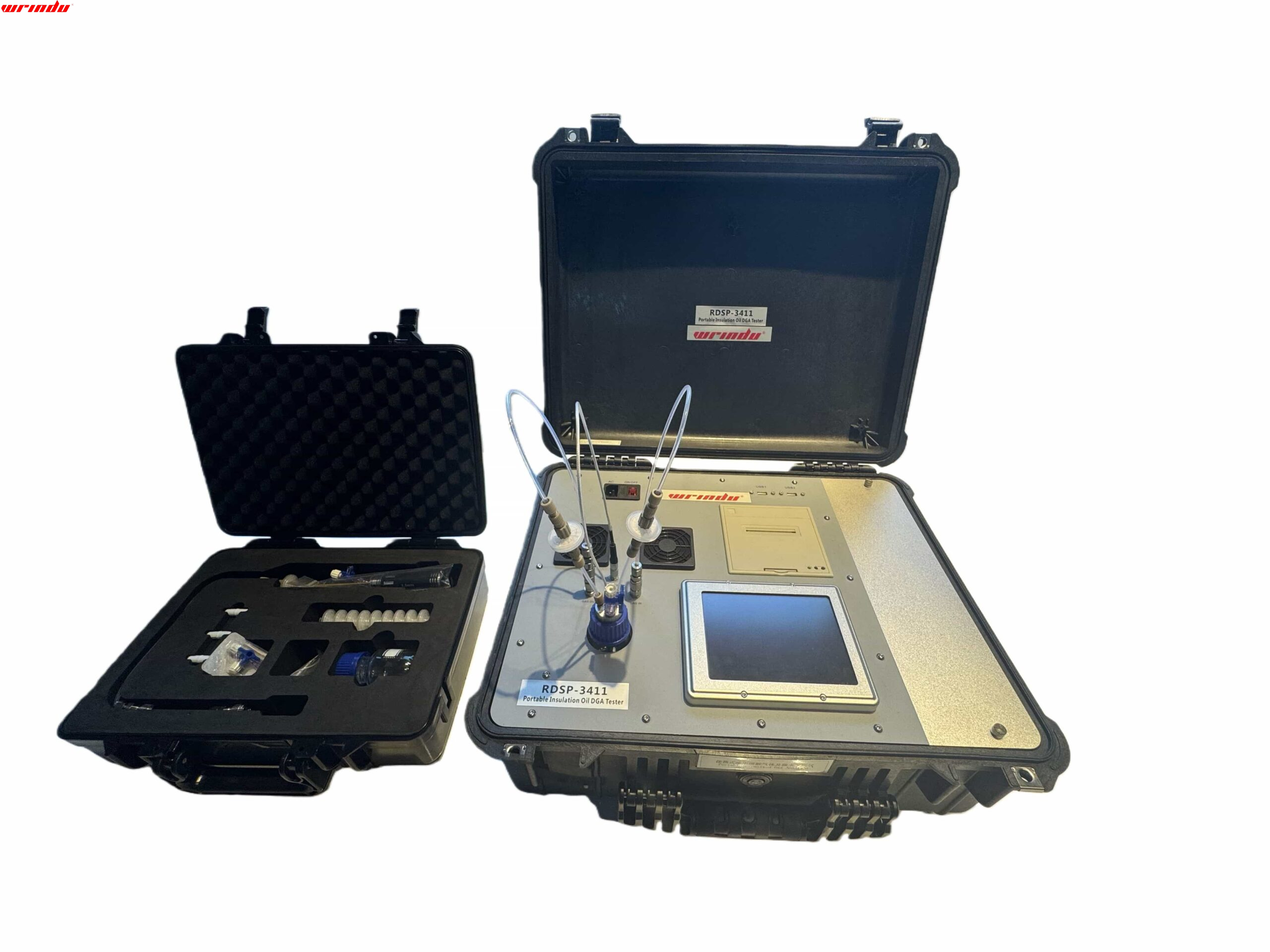
When a single result justifies intervention
A single result justifies intervention when it is a step rather than a level. A dissolved gas concentration that has doubled between two samples taken at a consistent interval, a moisture content that has risen without any change in load or ambient conditions, or a breakdown voltage that has fallen sharply all represent a change in the transformer’s condition rather than a point on its normal range. The rate of change is usually more informative than the absolute value, and it is the parameter that the interpretation guidance is built around. A concentration that is above a typical reference value but has been stable for years is a different situation from a concentration that is below the reference value and has tripled in six months. The second is the one that warrants escalation. Where a step change is confirmed, the response is a combination of accelerated sampling and a targeted diagnostic. Accelerated sampling establishes whether the change is continuing, and the diagnostic identifies the mechanism. The interpretation framework for dissolved gases in mineral oil filled equipment is set out in IEC 60599, and the supervision and maintenance guidance for the oil itself is in IEC 60422.Building the programme document
The programme document should state the screening set, the diagnostic tests and the trigger for each, the interval for each transformer class, the sampling method and point, the laboratory or on-site method, the acceptance values with their source and the escalation rule when a result falls outside them. It should also state what happens to the result. A programme without a named consumer for each dataset produces reports that are filed rather than acted on. Naming the person or role responsible for reviewing results, and the timescale for that review, converts the data into a decision process. The acceptance values should reference their source rather than being stated as numbers alone. The dielectric strength determination is defined in IEC 60156 and in the corresponding ASTM method, the specification for the oil as supplied is IEC 60296 and its ASTM equivalent, and the water content determination is defined in IEC 60814. On the ASTM side the dielectric breakdown method is published as ASTM D1816 and the mineral oil specification as ASTM D3487. Where the programme follows utility practice rather than a standard, the research and practice material published by CIGRE study committees is the usual reference.Programme cost against the failure it prevents
The cost of the programme is dominated by the sampling visit rather than by the analyses. Sending a technician to a substation to draw a sample costs more than most of the determinations performed on it, which is the strongest argument for drawing a good sample and running the full screening set while the opportunity exists. Against that, the cost of a transformer failure includes the replacement, the outage, the lost transfer capability and, on a critical unit, the consequence for the customers behind it. A programme that prevents one such failure over its lifetime pays for itself many times over, and the failure it is most likely to prevent is the one detected by a change in the gas or moisture trend. The economic comparison is therefore between the programme and the risk it retires, not between individual determinations. That framing is what justifies the screening frequency while keeping the diagnostic spend event-driven, and it is also what justifies on-site screening instruments for units where a fast turnaround changes the decision.Accelerating testing after an event
After a fault, an unusual gas alarm or an abnormal operating condition, the programme’s normal interval stops applying. The first action is a sample taken as soon as practical, and the second is a repeat at a short interval chosen to establish whether the condition is progressing. The pattern of change across the repeat samples is what distinguishes an event that has finished from one that is ongoing. A gas concentration that rises and then plateaus indicates an event that occurred and stopped. A concentration that continues to rise indicates active degradation, and the rate of rise determines how quickly the next action is needed. Where the initial event was a fault that the protection cleared, the oil programme works alongside the electrical tests rather than replacing them. Gas analysis indicates whether something is still happening internally; ratio, resistance, frequency response and dielectric measurements indicate what the fault did mechanically and electrically. The two sets of evidence, taken together, determine whether the unit returns to service and on what basis. The oil testing range is grouped on the oil testing hub, with laboratory equipment under transformer oil laboratory equipment.FAQ
Which oil tests should be run every time?
The core screening set is dissolved gas analysis, moisture content and breakdown voltage. Those three answer the questions that force decisions: whether there is active degradation inside the transformer, whether the insulation system is taking on water, and whether the oil still has its dielectric strength. Acidity, interfacial tension and colour add ageing information, and they are usually run at a lower frequency because they change slowly.
How often should transformer oil be tested?
The starting interval should come from the transformer’s rating and criticality, then be adjusted by the trend. A large transmission transformer carrying a critical load justifies a shorter interval than a distribution unit on a lightly loaded feeder. After the first two or three results establish a baseline, the interval can be extended for units whose values are flat and shortened for units whose values are moving.
How does sampling affect the result?
More than most operations realise. A sample taken from the wrong point, taken too quickly after the transformer has been topped up, taken with contaminated equipment, or exposed to air during transfer produces a result that describes the sampling rather than the oil. The sampling point, the method, the container and the time since the last oil addition all belong in the record.
When does a single result justify intervention?
When it is a step change rather than a level change, or when the rate of change exceeds what the loading history can explain. A dissolved gas result that has doubled in an interval, an increase in moisture that appears with no change in loading, or a breakdown voltage that has fallen sharply all justify investigation on their own. A value that has drifted slowly within its band does not.
What is the value of testing the whole fleet rather than individual units?
It provides the comparison that makes a single unit’s trend interpretable. When every transformer of a similar type and duty is tested on the same schedule, a unit that moves faster than its peers becomes visible even when its absolute values are still within limits. That comparison is one of the most reliable early indicators available, and it only exists if the fleet is tested on a consistent basis.
Related articles
 SF6 Leak Detector Sensitivity: Select a Method for the Inspection TaskKnowledge
 Cable Fault Locator Selection for Urban Networks: Routes, Noise and AccessKnowledge
 Substation Battery Load Bank Sizing: Duty, Voltage Range and Heat RejectionKnowledge
 CT Polarity, Ratio and Burden Testing: Find Wiring and Loading ErrorsKnowledge