
Routine, Type and Special Transformer Tests: How the Categories Differ
Send your test requirement — get a tailored solution and a quote within one working day.
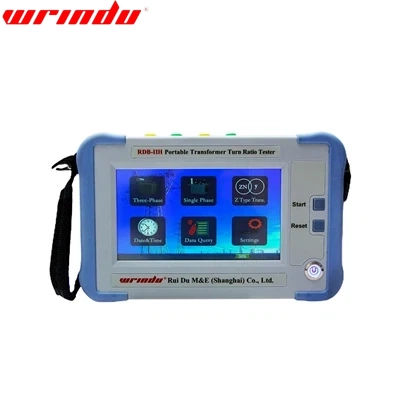
Transformer factory tests are divided into three categories that answer three different questions. Routine tests prove that each individual unit meets its specification before dispatch. Type tests prove that the design itself is sound, by testing a representative unit. Special tests are additional, contractually agreed tests that address a particular application or purchaser requirement.
Understanding the categories matters because they define what evidence a buyer receives, which tests are witnessed, and how the factory report should be read.
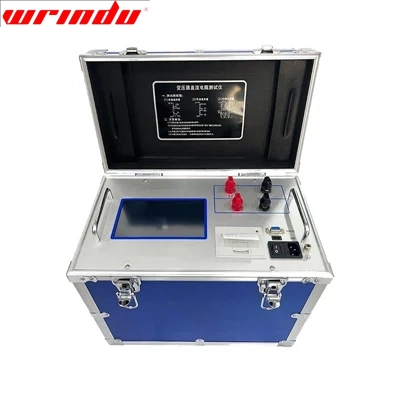
Use the table when reading a factory report and when writing a specification. The three categories are layers of evidence, and a complete acceptance package includes all of them with the references that make them verifiable.
The report package deserves the same scrutiny as the tests themselves. A complete package identifies the standard edition, the unit serial numbers, the test dates and the names of the responsible personnel, and it separates the routine results for the delivered unit from the type test certificate for the design and the special test results for the agreed scope. Check that the type test certificate names the design actually being supplied, because a certificate for an earlier design with a different core, winding or cooling arrangement does not prove the current design. Where the contract requires witnessed tests, confirm that the witness reports are part of the package and that any nonconformity raised during witnessing was resolved and documented. If a document is missing or ambiguous, resolve it before the unit is accepted; accepting the transformer and chasing the paperwork afterward leaves the buyer with no leverage. A useful practice is to list the required documents in the specification as an attachment checklist, so that the factory report package is a contractual deliverable rather than a courtesy.
The categories also shape how failures are handled after delivery. If a unit fails an acceptance test on site, the first question is whether the factory routine report was satisfactory and whether transport could explain the change; the answer separates a design problem, which would also affect the type-tested design, from a unit-specific or transport problem. If a design-related failure appears, the type test certificate is the evidence that the design was validated, and the discussion moves to whether the failure condition was covered by that validation or whether a design change has occurred since. Keeping the three categories distinct in the contract language and in the failure review makes these discussions orderly instead of emotional, because each category points to a different responsible party and a different remedy. A buyer who understands the categories can ask the right question at the right time: was this unit proven by its routine test, was this design proven by its type test, and was this application proven by the agreed special tests?
How IEC and IEEE Classify Transformer Tests
International transformer standards, including the IEC 60076 family and the IEEE C57 series, organize factory tests into these categories with consistent logic even where the terminology differs slightly. The classification is defined by the standard in force for the contract, and its purpose is to make the scope of testing explicit: what is done on every unit, what proves the design, and what is added by agreement. A test plan that does not name its governing standard leaves the categories undefined, because the boundary between routine and type tests can vary between documents and editions. For a buyer, the first reading habit is to check which standard edition the report cites and whether the tests listed match the categories required by the specification. The report should separate the categories clearly, because a design proof performed on one unit does not replace the routine proof on the unit being delivered, and an agreed special test does not remove the need for the routine set.
Routine Tests: Every Unit Before Dispatch
Routine tests are performed on every transformer before it leaves the factory. Their purpose is to confirm that the unit as built meets the design and specification: the turns ratio and vector group, winding resistance, insulation resistance, dielectric checks and the other tests defined as routine by the governing standard. Because they are performed on every unit, routine tests are designed to be efficient while still providing the evidence that the unit is sound and safe to ship. Routine test results travel with the unit. The buyer should receive a complete routine test report for each transformer, tied to the unit serial number, and the site commissioning team should be able to compare the site measurements with these factory values. A routine report that cannot be matched to the delivered serial number is a documentation problem that should be resolved before the unit is accepted, not after.Type Tests: Proving the Design
Type tests are performed on a representative unit of a design to prove that the design meets the requirements. They include the more demanding tests that would be impractical or unnecessary on every unit, such as temperature-rise verification, lightning impulse testing and, where specified, short-circuit withstand testing. Because they validate the design rather than the individual unit, a type test is performed once for a design type, and its validity depends on the unit under test being genuinely representative of the production design. The type test certificate is part of the design evidence that a buyer receives. Its value depends on the details: the design that was tested, the date and location, the standard and edition applied, and whether any subsequent design change invalidates the test. When production changes are made to the winding, core or cooling arrangement, the type test may need to be repeated or partially repeated, and the buyer should confirm that the certificate covers the design actually being supplied.
Special Tests: Agreed by Contract
Special tests are additional tests agreed between the purchaser and the manufacturer for a particular application. They may include extended dielectric tests, noise measurement, additional loss verification, or any other test that the purchaser considers necessary beyond the routine and type programme. The scope is defined by the contract, and it should be written precisely: which tests, on how many units, under which standard, and with what acceptance criteria. Special tests are where the purchaser has the most influence over the evidence they receive. A specification that simply says “all special tests per standard” delegates the decision to the manufacturer; a specification that names the tests, the standard edition and the acceptance criteria controls the evidence. When special tests are required, they should be listed in the factory test schedule and their results included in the report package with the same traceability as the routine results.Why the Category Matters for Acceptance
The category determines what acceptance can rely on. A routine test failure on the delivered unit is a direct acceptance issue: the unit does not meet its specification. A type test gap is a design-evidence issue: the design may be unproven even if the individual unit passes its routine tests. A missing special test is a contract issue: the purchaser asked for specific evidence that was not delivered. Confusing the three leads to accepting a unit whose design is unproven, or to rejecting a unit whose only gap is a missing document that can be corrected. Acceptance should therefore check all three layers against the contract: the routine report for the delivered serial number, the type test certificate for the design, and the special test results for the agreed scope. Each layer answers a different question, and all three must be answered before the unit is accepted and energized.A Classification Table for Procurement
| Category | Question it answers | Performed on | Buyer action |
|---|---|---|---|
| Routine tests | Does this unit meet its specification? | Every unit before dispatch | Match the report to the serial number and compare with site results. |
| Type tests | Is the design sound? | A representative unit of the design | Confirm the certificate covers the design supplied. |
| Special tests | Does the application need extra evidence? | Units agreed in the contract | Verify the agreed scope and acceptance criteria are met. |
Frequently Asked Questions
What is the difference between routine and type tests?
Routine tests are performed on every transformer before dispatch to prove that the individual unit meets its specification. Type tests are performed once on a representative unit of a design to prove that the design itself is sound, and may include more demanding tests such as temperature rise and impulse testing.Who decides which special tests are performed?
Special tests are agreed between the purchaser and the manufacturer for a particular application. The purchaser should name the tests, the standard edition and the acceptance criteria in the contract so that the evidence is defined rather than delegated.Do site tests fall into these categories?
Site tests after transport and installation are not factory routine, type or special tests; they are the site verification programme defined by the commissioning specification. Their purpose is to confirm that the unit arrived intact and is ready for service, and they are compared with the factory routine results. For the instruments used in factory and site transformer testing, see the ratio test equipment range and the winding test equipment range. For the broader transformer testing equipment programme and the full range of test systems, visit the transformer testing equipment hub.Related articles
 SF6 Leak Detector Sensitivity: Select a Method for the Inspection TaskKnowledge
 Cable Fault Locator Selection for Urban Networks: Routes, Noise and AccessKnowledge
 Substation Battery Load Bank Sizing: Duty, Voltage Range and Heat RejectionKnowledge
 CT Polarity, Ratio and Burden Testing: Find Wiring and Loading ErrorsKnowledge