Wrindu

Multifunctional Partial Discharge Detection Equipment

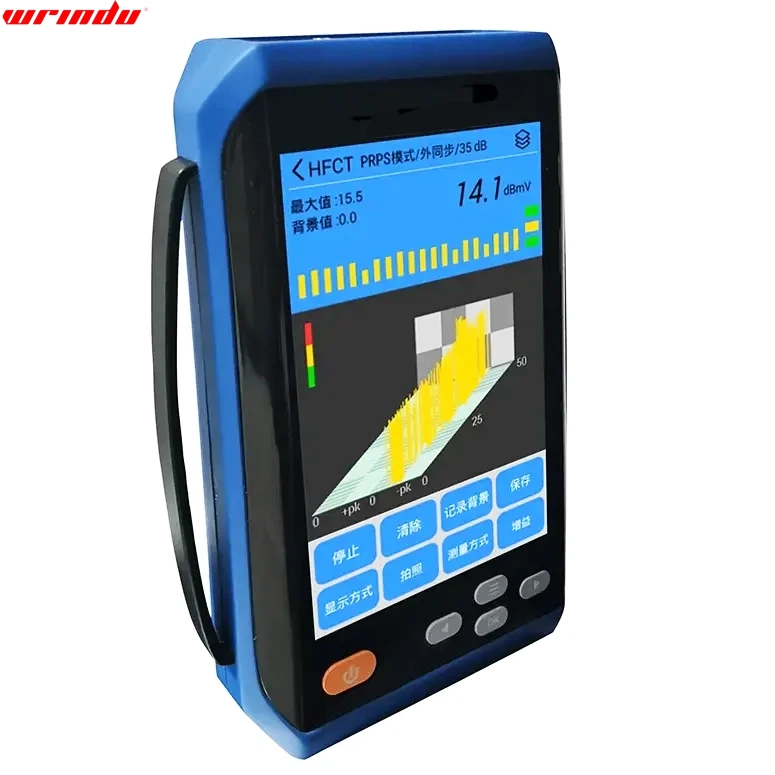
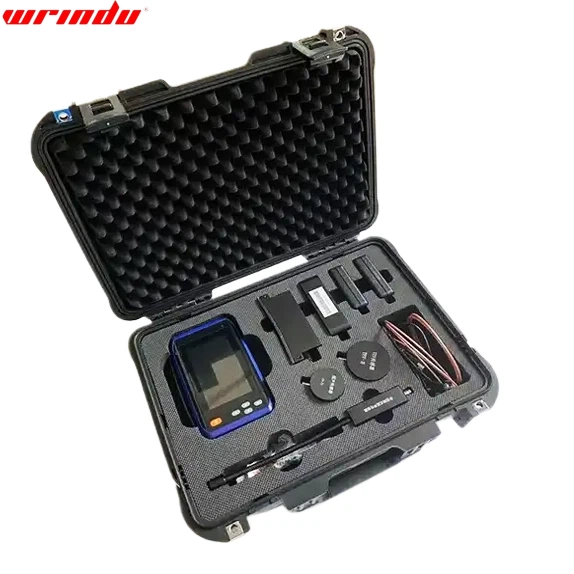
This Multifunctional Partial Discharge Detection Equipment is ideal for GIS, switchgear, transformers, and cable inspections, providing amplitude and waveform graph readings for effective assessments.
Models: RDPDA-102H,RDPDG-102H,RDPDT-102H,RDPDZ-104H

Related Products

1
1
微信图片_20260115145937_543_2
微信图片_20260114135040_423_2

OVERVIEW

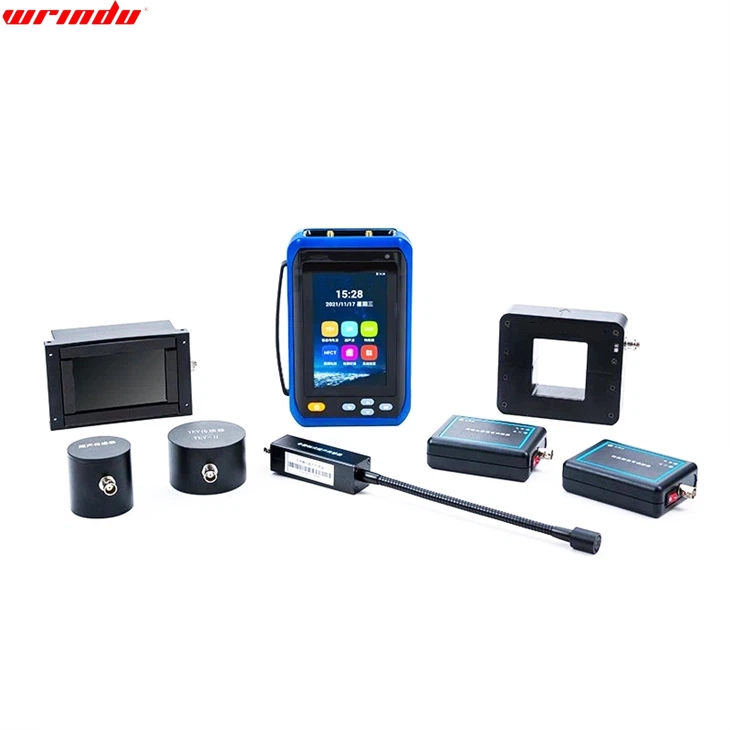
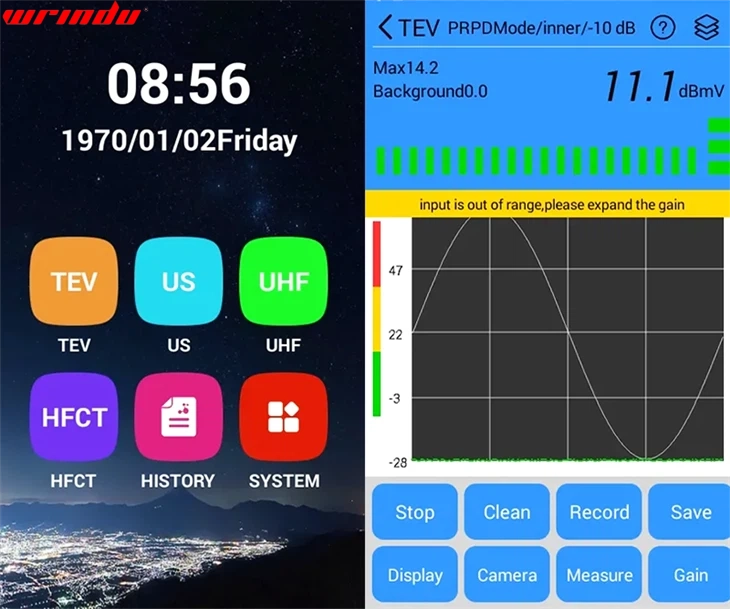
Wrindu RDPD Series Multifunctional Partial Discharge Detection Equipment is a versatile handheld device based on the detection methods of ground waves, ultrasound, ultra-high frequency, and high-frequency currents. It is used to test partial discharge in electrical equipment, providing amplitude and waveform graph readings for effective equipment assessment. This Multifunctional Partial Discharge Detection Equipment is suitable for partial discharge inspections of electrical equipment such as GIS, switchgear, transformers, and cables.


CHARACTERISTIC


  • Portability

-Compact, lightweight, and easy to carry.


  • Display

  -Backlit LCD screen.


  • Battery

  -Built-in lithium battery for cordless operation.


  • Graph Storage

-Supports storage and retrieval of two-dimensional and three-dimensional graphs.


  • Automatic Gain Control

-Strong resistance to interference.


  • Multi-Frequency Display

-Time-domain waveform with multi-frequency display mode for accurate interference and discharge assessment.


  • Data Export

-Inspection data can be exported via an SD card or USB drive for report generation.


FAQ


Q:  What is a partial discharge tester?

A:   A partial discharge tester is an electrical diagnostic tool used in high-voltage engineering to detect and measure partial discharges (PD) in insulation systems. It applies high voltage to the equipment and monitors for localized breakdowns in insulation, which, if left unaddressed, could lead to equipment failure.


Q: What are the methods of partial discharge testing?     

A: Partial discharge testing assesses high-voltage equipment insulation. Methods include Capacitive Coupling, Ultrasonic Detection, RF, High-Frequency Current Transformer, TEV, Acoustic Emission, Calorimetric, and Ionometer. These detect signals like electric field changes, ultrasonic waves, RF, high-frequency currents, transient voltages, acoustic emissions, heat, and ion concentration, identifying and analyzing partial discharges for insulation assessment. The method choice depends on equipment and insulation characteristics, and combining methods offers a comprehensive evaluation.


Q: What is a PD detector?  

A: A PD (Partial Discharge) detector is a tool designed to identify and measure partial discharges in high-voltage electrical equipment, ensuring the reliability and safety of the system.


Q: What is the IEC standard for partial discharge tests? 

A: The IEC 60270 standard, formerly known as High-Voltage Test Techniques, specifically addresses partial discharge measurements in electrical apparatus, systems, and components. It is relevant when conducting tests with both DC voltage and AC voltage up to 400 Hz.


APPLICATION


Cable Partial Discharge Detection Equipment Switchgear Partial Discharge Detection Equipment
Model RDPDA-102H RDPDG-102H RDPDT-102H RDPDZ-104H
Host Parameter
Number of detectable channels 2 channels:

1 US,

1 TEV

2 channels:

1 US,

1UHF (wireless)

2 channels:

1 US,

1HFCT (wireless)

4 channels:

1TEV,

1US,

1UHF(wireless,optional),

1HFCT(wireless,optional)

Sampling accuracy 12bit
Synchronization mode Internal synchronization, external synchronization, optical synchronization
Non-contact US
Center frequency 40kHz \ \ 40kHz
Resolution 0.1uV \ \ 0.1uV
Accuracy ±0.1uV \ \ ±0.1uV
Measuring range 0.5 uV ~ 1mV \ \ 0.5uV~1mV
Output interface Standard SMA connection host \ \ Standard SMA connection host
Contact US
Frequency range \ 20kHz~300kHz
Output impedance \ 50Ω
Detection sensitivity \ 0.1mV
Measuring range \ 0.1mV~1V
Output interface \ Standard SMA connection host
UHF
Measurement frequency range \ 300MHz -1.5GHz \ 300MHz~1.5GHz
Detection sensitivity \ < -60dBm \ < -60dBm
Receiving method: \ The antenna \ The antenna
Transfer method \ coaxial cable \ Coaxial cable
Output interface \ BNC interface-signal conditioning unit, wirelessly connected to the host \ BNC interface – signal conditioning unit, wireless connection to the host
TEV
Measurement frequency range 3M-100MHz \ \ 3M-100MHz
Measuring range 0~60dB \ \ 0~60dB
Measurement error ±2dB \ \ ±2dB
Resolution 1dB \ \ 1dB
Max. pulses per cycle 720 \ \ 720
Min. pulse frequency 10Hz \ \ 10Hz
Output interface Standard SMA connection host \ \ Standard SMA connection host
HFCT
Measurement frequency range \ \ 1M-30MHz
Transmission impedance \ \ >5mV/mA(10MHz )
Output impedance \ \ 50Ω
Measuring range \ \ -20~80dB
Measurement error \ \ ±1dB
Resolution \ \ 1dB
Output interface BNC interface-signal conditioning unit, wirelessly connected to the host
Hardware
Display screen 5.0 inch TFT true color LCD screen
Resolution 800×480
Operate Touch/key
Data storage TF card
Interface 3.5mm stereo headphone jack
Power supply DC-12V/2A DC Power Supply
Extended function Us-type C/5 million cameras /RFID/WIFI/ Bluetooth
Power supply
Internal power supply Battery powered (4800mAH 7.4V)
Normal working hours About 7 hours, and the full charge time of the battery is about 3 hours.
Measure
Length× Width× Height 235mm×133mm×48mm
Weight 0.85kg
Environment
Operating temperature -20℃~50℃
Storage temperature -40℃~70℃
Humidity 10%-90% (non-condensing)
Altitude ≤3000m


Related Products

1
1
微信图片_20260115145937_543_2
微信图片_20260114135040_423_2

Send Inquiry