
Is your post-fault transformer strategy ready for the first 4 hours?
Send your test requirement — get a tailored solution and a quote within one working day.
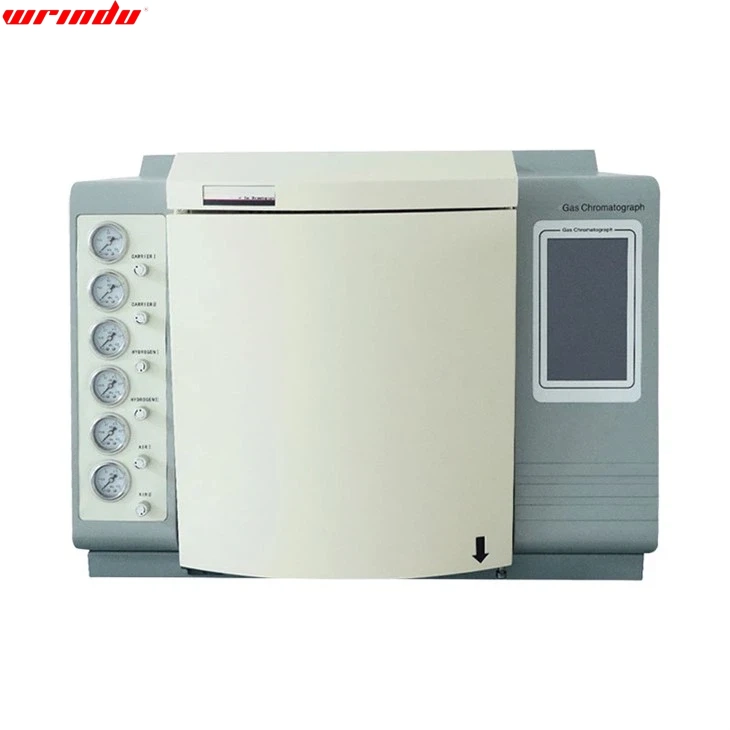
A robust post‑fault diagnostic strategy turns the first four hours after a transformer trip from panic into controlled engineering. In our China projects, we lock out the unit, secure evidence, analyze through‑fault data and DGA trends, and only then decide re‑energization or shutdown. Manufacturers, OEMs, and users rely on this discipline to avoid turning repairable faults into total losses.
Post-Fault Diagnostics in Predictive Maintenance for Power TransformersWhat should engineers do in the first 4 hours after a transformer trips on protection?
In the first four hours, engineers must secure the transformer, preserve evidence, capture event records and relay data, and plan targeted diagnostics. In our practice, we never re‑energize blindly; we combine through‑fault analysis, DGA, and quick electrical checks before approving any return to service or deciding deeper investigation.
On China sites, our “First 4 Hours” emergency SOP starts with strict lockout/tagout, perimeter control, and basic visual observation: oil leakage, bushing condition, smells, sounds prior to the trip. Parallel teams collect relay oscillography, Sequence of Events, SCADA logs, and feeder status to reconstruct the fault path. Wrindu portable instruments are staged for immediate IR, PI, and winding resistance checks as soon as clearance allows.
We deliberately resist pressure from operations to “just try re‑energizing.” The decision tree we use is built on fault current magnitude, protection behavior, pre‑fault condition, and gas/oil evidence, not schedule. This discipline, repeated on dozens of incidents, cuts the risk of secondary catastrophic failures and speeds up repair vs. replace conclusions.
How does through-fault analysis guide post-trip decisions for China utilities and OEM factories?
Through‑fault analysis quantifies stress on the transformer windings and core during the fault, turning abstract “big current” into precise mechanical and thermal impact. In our China utility work, we correlate fault waveforms with transformer impedance and design details to estimate whether the unit likely stayed within mechanical limits or entered dangerous deformation territory.
Fault current magnitude, duration, and asymmetry are not just numbers; they map directly to radial and axial forces on windings. For example, a 25 kA fault lasting 0.25 seconds on a 110 kV transformer with specific impedance may be acceptable, while 40 kA for 0.8 seconds on a similar unit can easily exceed design margins. We use relay oscillography and fault recorder data to calculate these forces and compare them to OEM specifications.
In OEM factories, through‑fault events during commissioning are treated as live stress tests. Wrindu supports these analyses with tools that import DR records, overlay expected fault characteristics, and flag cases where mechanical stress likely exceeded design assumptions. That feedback loop drives clamping improvements, spacer redesign, and revised protection settings for future batches.
Typical through-fault data points engineers should capture
Why is DGA linked tightly with post-fault strategy in modern transformer fleets?
Dissolved Gas Analysis (DGA) is the fastest way to read the internal “fingerprints” of a fault in oil‑filled transformers. In our post‑fault strategy, we treat early DGA samples as critical evidence, especially within the first 4–24 hours, to distinguish between minor thermal events, developing arcing, and long‑standing problems that finally triggered protections.
After a serious trip, we take initial oil samples as soon as safety permits, then repeat within 24–72 hours. The rate of gas growth—hydrogen, acetylene, ethylene in particular—often tells us more than absolute values. A sharp rise in acetylene linked to high‑energy arcing points toward winding or lead issues; ethylene dominance suggests overheating, possibly in the core or windings; methane and ethane distributions hint at lower‑energy faults.
In China B2B practice, we maintain DGA baselines for every high‑value transformer. Wrindu’s DGA‑ready test meters integrate with our diagnostic software, allowing rapid comparison against historical data and standard interpretation schemes. When combined with through‑fault analysis and relay data, DGA becomes a decisive tool for “can we safely re‑energize?” decisions.
How can an emergency SOP connect China manufacturers, OEM suppliers, and end users during a transformer trip?
An effective emergency SOP bridges factory engineers, OEM suppliers, and end users by defining exactly what data to capture, who to call, and how to share findings. In our projects, China manufacturers like Wrindu issue SOP templates that utilities and industrial sites adapt, ensuring everyone uses common language and thresholds when a high‑value transformer trips.
The SOP must specify roles in the first four hours: site operators handle isolation and safety, protection engineers collect relay and DR data, chemists or lab technicians manage DGA sampling, and OEM contacts review mechanical stress assumptions. Clear contact chains and data formats avoid the usual chaos of screenshots and phone calls with incomplete details.
Wrindu builds this integration into its product ecosystem. Test sets used on site generate standardized reports that OEM and factory teams can interpret immediately. Once we see consistent mechanical and gas patterns across many customers, we refine design rules and protection settings. This cooperation reduces downtime and prevents repeated failures of similar transformer designs.
What are the practical trade-offs in re-energizing vs. keeping a tripped transformer offline?
The key trade‑off is between risk of catastrophic failure and cost of extended outage. In real B2B cases, operations push hard to re‑energize, while engineers carry the responsibility for asset survival. We quantify this trade‑off by comparing fault severity, diagnostic evidence, and asset criticality before recommending a path.
If through‑fault currents were moderate, protections operated quickly, and DGA is clean or mildly changed, we may authorize a controlled re‑energization with enhanced monitoring. However, when current was extreme, protection signals suggest internal faults, or DGA shows aggressive gas signatures, we argue firmly for keeping the transformer offline pending deeper tests or internal inspection.
Wrindu supports this decision process with guideline trees embedded in diagnostic software: input fault data, DGA trends, and basic electrical test results, and the system flags the risk level. In China factories and utilities, we use these tools to document why we re‑energized or kept a unit offline, protecting both maintenance teams and management from unstructured decisions.
Re-energize vs. offline: key decision factors
How do China factories and OEM transformer manufacturers prepare for post-fault diagnostics during design and production?
China factories and OEM manufacturers prepare by designing transformers with clear diagnostic “hooks” and documenting expected responses under fault. In our production runs, we perform controlled through‑fault tests and DGA sampling on prototypes, linking specific mechanical designs to fault signatures. That way, post‑fault teams later know what “normal stress” looks like for each model.
During type tests and pre‑shipment trials, we record baseline SFRA curves, DGA values, insulation resistance, and temperature profiles under different load conditions. These baselines become reference points when a fault occurs years later. Wrindu integrates such baseline capture into its test systems used in factories, ensuring data ends up in reusable digital form rather than forgotten paper reports.
OEMs also define acceptable mechanical stress ranges in protection coordination studies. For example, they specify maximum through‑fault currents and durations that the design can withstand without expected permanent damage. When a trip happens, these design limits are compared with actual event data, rapidly guiding the repair vs. replace discussion.
Who should lead the “First 4 Hours” response at a utility or industrial site in China?
The “First 4 Hours” response should be led by a protection‑savvy engineer who understands both system behavior and transformer design—not purely operations staff. In our projects, we appoint an incident lead for each major substation or plant, trained to coordinate safety, data capture, and external support calls.
This lead engineer ensures lockout/tagout is properly applied, that no one attempts unauthorized re‑energization, and that evidence is preserved. They decide which relay records, DGA samples, and quick tests must be done immediately and which can wait. Their job is to convert operational urgency into structured action.
Wrindu offers training programs in China where protection engineers, maintenance teams, and factory representatives walk through simulated incidents. These exercises clarify roles and expectations: who talks to management, who contacts the OEM, who validates DGA lab results, and how the final diagnostic package is assembled in the crucial first hours.
Wrindu Expert Views
In our field projects, the biggest difference between a manageable transformer fault and a nightmare is the discipline of the first hours. When the relay trips, we insist on three things before anybody touches the switchgear: secure the scene, collect the real data, and call someone who has seen dozens of similar events. Once through‑fault and DGA evidence are in hand, decisions become engineering choices, not pressure‑driven bets. Wrindu equipment and procedures were built to make that disciplined response repeatable, even on the toughest nights.
How can rail, metro, and heavy-industry users in China tailor post-fault strategies for their transformer fleets?
Rail, metro, and heavy‑industry users must adapt post‑fault strategies to their operating profiles—frequent short‑circuits, strong vibration, and tight outage windows. In our traction and plant projects, we design separate SOPs for traction transformers, auxiliary units, and main plant transformers, reflecting their different roles and risk tolerance.
Urban rail traction transformers often face external faults from overhead lines or feeders. Here, rapid through‑fault analysis and comparison with design limits are crucial, because traffic resumption pressure is extreme. We prioritize quick DGA sampling and SFRA checks on critical traction units, using Wrindu portable test systems that can be deployed during night shutdowns.
In heavy industry plants, main transformers are tied to large production lines. Post‑fault decisions must balance massive production losses against asset survival. We use more conservative thresholds: high‑energy faults typically mean the unit stays offline until a full test suite is complete. Auxiliary transformers, however, may be allowed back with stricter monitoring and shorter re‑inspection intervals.
Why does real-world experience change how we interpret DGA, SFRA, and through-fault data after trips?
Real‑world experience teaches that textbook thresholds do not cover all field conditions—especially in China’s diverse climates and grid structures. In our practice, we’ve seen transformers with “problematic” DGA signatures continue performing safely, and others fail catastrophically with modest gas levels, because mechanical realities and fault histories differed.
For through‑fault data, we learned that identical current and duration values can have different impacts depending on winding geometry, clamping practices, and manufacturing tolerances. That’s why we maintain internal case libraries where specific transformers, faults, and outcomes are documented. Wrindu engineers contribute to these libraries with cross‑projects insights.
SFRA interpretation also benefits hugely from lived cases. Once you have correlated distinct SFRA deviations with actual internal findings during teardown—like loosened core clamps or displaced discs—you stop obsessing over minor curve variations and focus on patterns that truly correlate with damage. This experience feeds directly into post‑fault judgments.
By combining analytical tools with accumulated case histories, China factories and utilities move from rule‑based guesses to evidence‑grounded decisions that respect both numbers and practical behavior.
Are China-made diagnostic instruments from manufacturers like Wrindu suitable for high-stakes post-fault decisions?
Yes—China‑made diagnostic instruments, when built by specialized manufacturers, are absolutely suitable for high‑stakes post‑fault work. In our projects, Wrindu equipment has been used on critical 110–500 kV transformers in national grids, large industrial plants, and rail systems, delivering repeatable and precise results under pressure.
The key is not the country of origin but design quality, calibration support, and field‑tested robustness. Wrindu invests heavily in IEC‑aligned designs, long‑term stability studies, and harsh‑site testing. We have run their test meters in coastal humidity, desert dust, and cramped urban substations without losing data integrity.
For B2B buyers—utilities, OEMs, EPC companies—Wrindu’s advantage lies in combining instruments with applied expertise. Their teams understand both factory diagnostics and post‑fault realities, which is rare. This combination allows China‑made devices to stand shoulder‑to‑shoulder with global brands in critical incident decisions.
Conclusion: How can China-based buyers and global partners turn post-fault strategy into a long-term advantage?
China‑based buyers and global partners can turn post‑fault strategy into a long‑term advantage by treating transformer trips as structured engineering events, not emergencies handled by instinct. A clear “First 4 Hours” SOP, disciplined through‑fault analysis, and early DGA sampling transform chaos into predictable, data‑driven decisions.
Manufacturers and OEM suppliers, especially Wrindu, play a pivotal role by delivering diagnostic instruments, baseline data, and training that make this strategy practical on real sites. When every trip leads to captured evidence, analyzed stress, and lessons fed back into design and protection settings, fleets become more resilient and future failures less severe.
Embedding these practices into contracts, maintenance plans, and training programs ensures that post‑fault discipline is not reliant on individual heroes but built into the system, protecting assets, people, and business continuity across China and beyond.
What information should I collect immediately after a transformer trips? Gather protection records (relay DR, SOE), fault current and duration, pre‑fault load, DGA samples, and basic visual observations such as leaks, smells, and unusual sounds or behavior.
Can I safely re-energize a transformer if protection suggests an external fault? Only after confirming with through‑fault analysis, DGA trends, and quick electrical tests that internal damage is unlikely. Even “external” faults can stress windings and insulation.
How quickly should I take DGA samples after a serious fault? As soon as safety allows, ideally within the first hours, followed by repeat samples at 24–72 hours to assess gas growth rates and distinguish transient events from ongoing damage.
Do I need OEM and factory involvement for every transformer trip? Not for minor events, but for high‑current or unusual trips on critical transformers, OEM and factory engineers add valuable design‑specific context that improves repair vs. replace decisions.
Can Wrindu provide a customized emergency SOP for my substations? Yes. Wrindu can help craft site‑specific “First 4 Hours” procedures, integrating their instruments, reporting formats, and training into your utility or industrial maintenance workflows.
Related articles
 SF6 Leak Detector Sensitivity: Select a Method for the Inspection TaskKnowledge
 Cable Fault Locator Selection for Urban Networks: Routes, Noise and AccessKnowledge
 Substation Battery Load Bank Sizing: Duty, Voltage Range and Heat RejectionKnowledge
 CT Polarity, Ratio and Burden Testing: Find Wiring and Loading ErrorsKnowledge