
Is the ROI of High-Precision Micro-ohmmeters Justified for B2B Buyers?
Send your test requirement — get a tailored solution and a quote within one working day.
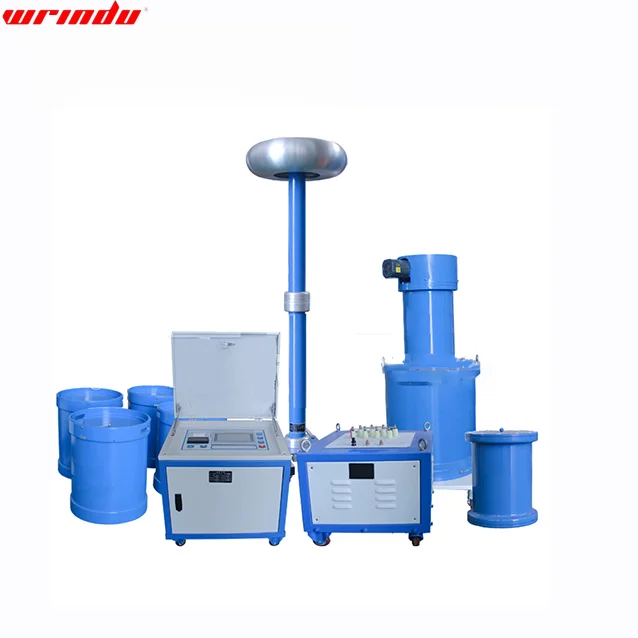
Investing in a high-precision micro-ohmmeter rather than a low-cost alternative provides substantial financial returns by ensuring long-term data stability, eliminating catastrophic measurement errors, and reducing the total cost per measurement over a 5-year lifecycle. Upgrading to advanced instruments yields superior repeatability, manufacturing reliability, and extensive custom OEM/ODM utility for heavy industries.
Check: Analyzing ROI with the Selection Guide for Low Resistance Testers
Why Is a $500 Price Premium Justified for Stable and Repeatable Resistance Data?
A $500 price difference reflects critical internal hardware upgrades, including premium low-drift analog-to-digital converters (ADCs), high-grade thermoelectric EMF shielding, and robust temperature-compensated reference resistors. These professional components eliminate thermal drift and environmental noise, guaranteeing stable, repeatable data that budget-grade instruments cannot achieve under harsh industrial factory conditions.
When evaluating electrical testing equipment on a factory floor or during field commissioning, generic tier-three instruments often suffer from reading drift within minutes of operation. This instability stems from inferior internal engineering. High-precision micro-ohmmeters incorporate advanced multi-stage filtering and high-stability current sources that maintain an unyielding test current, even when contact resistance fluctuates.
As a leading original manufacturer, Wrindu builds micro-ohmmeters utilizing custom-engineered Kelvin clips and heavily shielded test leads. This eliminates the contact resistance errors common in low-cost alternatives. For B2B procurement managers, a $500 upfront saving vanishes immediately when a field technician spends hours re-testing a single circuit breaker or transformer joint because the meter’s readings won’t stabilize.
| Hardware Feature | High-Precision Micro-ohmmeter (e.g., Wrindu) | Budget-Grade Alternative |
| ADC Architecture | 24-bit Low-Noise Delta-Sigma | 12-bit or 16-bit Standard |
| Thermal EMF Compensation | Automatic True Offset Vector Switching | None or Manual Nulling |
| Temperature Coefficient | < 10 ppm/°C | > 50 ppm/°C |
| Current Source Stability | ±0.01% Variation Max | ±0.5% Variation under load |
| Shielding & Isolation | Heavy Galvanic & Faraday Cage Design | Minimal Plastic Enclosure |
How Does a Factory-Grade Micro-ohmmeter Reduce Your Cost per Measurement Over 5 Years?
A factory-grade micro-ohmmeter reduces the cost per measurement by delivering exceptional structural longevity, requiring fewer calibration cycles, and preventing operational downtime. Over a standard 5-year lifecycle, high-quality instruments incur minimal maintenance expenses, ensuring that the total cost of ownership is significantly lower than cheap, disposable meters.
To understand the financial logic, we must analyze the “Cost per Measurement” using a realistic multi-year operational framework. A low-cost wholesale supplier might offer a tool at an appealing initial price point, but that asset frequently demands biannual recalibrations, suffers from physical degradation in field environments, and eventually requires complete replacement within 24 months.
Consider a heavy-duty industrial facility executing 10,000 electrical joint, busbar, or winding tests annually. A premium Wrindu tester remains reliable for more than five years due to ruggedized internal component selection and robust environmental ingress protection (IP65 closed). Below is a direct financial comparison highlighting how the premium asset provides a superior return on investment (ROI).
Cost per Measurement = (Initial Purchase Price + Maintenance & Calibration Costs + Downtime Losses) / Total Measurements Over 5 Years
-
Premium Instrument Scenario: Initial Cost: $2,500 | 5-Year Calibration/Maint: $1,000 | Downtime Cost: $0 | Total: $3,500. For 50,000 measurements, the Cost per Measurement is $0.07.
-
Budget Instrument Scenario: Initial Cost: $2,000 | 5-Year Calibration/Maint: $2,500 (multiple recalibrations and mid-lifecycle replacements) | Downtime Cost: $1,500 | Total: $6,000. For 50,000 measurements, the Cost per Measurement is $0.12.
What Design Secrets Enable a Chinese Manufacturer to Balance Ultra-High Precision with Wholesale Affordability?
Chinese manufacturers balance high precision with wholesale affordability by leveraging localized component ecosystems, advanced vertical integration, and scaled automated production. By designing proprietary PCB architectures and manufacturing structural components in-house, an agile factory eliminates steep third-party markups while strictly adhering to international quality frameworks like ISO9001 and CE.
Many global procurement officers wonder how a China factory can deliver high-voltage diagnostic equipment and micro-ohmmeters that compete with heritage Western brands at a more accessible wholesale price point. The answer lies within the modern industrial clusters of Shanghai and neighboring manufacturing zones. By positioning R&D labs within the same facility as assembly lines, engineering iterations happen in real time.
At Wrindu, nearly 20% of annual profits are systematically reinvested into product development and manufacturing process improvement. This enables the engineering team to optimize multi-layer PCB design layouts, minimizing trace length and eliminating internal interference without resorting to exotic, cost-prohibitive exotic metals. This strategic optimization lowers manufacturing expenses while preserving exceptional accuracy.
Which Core Technical Specifications Dictate Repeatability in High-Voltage OEM Production?
The core technical specifications dictating repeatability are test current stability, resolution down to 0.01 micro-ohm, thermal EMF rejection capabilities, and a low temperature coefficient. High-voltage OEM production demands instruments that deliver identical measurement outputs across hundreds of consecutive tests on transformers, switches, and large-scale utility circuit breakers.
Repeatability Index = (Max Reading − Min Reading) / Mean Value under Identical Conditions
In high-voltage original equipment manufacturing (OEM) facilities, tracking minor deviations in contact resistance is paramount. If a micro-ohmmeter lacks an active temperature compensation circuit, its internal reference resistor expands or contracts based on ambient factory temperatures. This variation introduces artificial measurement errors, masking real material defects in the equipment under test.
When sourcing from a custom supplier, technical buyers must look past broad accuracy percentages (e.g., 0.1%) and examine the actual test current type. A pure, continuous DC source is mandatory for inductive loads like large transformer windings. Pulsed current sources, while cheaper to manufacture, often fail to fully saturate inductive cores, resulting in highly erratic data loops across consecutive testing cycles.
Who Benefits Most from Custom-Engineered Contact Resistance Testing Solutions?
Substation operators, high-voltage equipment manufacturers, transformer repair facilities, and large-scale industrial automation plants benefit most from custom-engineered contact resistance testing solutions. These users require specialized measurement leads, bespoke software integrations, and ruggedized form factors tailored to unique, demanding field testing protocols.
For instance, national grid maintenance crews frequently operate in extreme outdoor environments where standard off-the-shelf equipment enclosures fail. A custom China supplier can modify physical housing, integrate long-range wireless data logging modules, or provide custom-length heavy-current cables to make testing safer and more efficient.
OEM battery and energy storage system (ESS) manufacturers also rely heavily on tailor-made solutions. Measuring the internal resistance of thousands of interconnected battery cells demands automated data acquisition interfaces that can plug directly into pre-existing factory SCADA systems. A generic meter cannot provide this level of software and hardware synchronization.
Does Advanced Thermal EMF Rejection Eliminate Hidden Measurement Fluctuations on the Factory Floor?
Yes, advanced thermal EMF rejection completely eliminates hidden measurement fluctuations by utilizing automated polarity-reversal switching algorithms. This process measures voltage drops across both forward and reverse current paths, mathematically canceling out parasitic thermoelectric voltages generated by dissimilar metal junctions inside industrial environments.
Wrindu Expert Views
“In heavy industrial environments, thermal gradients across terminals are unavoidable. When copper test leads clamp onto a brass busbar or a steel alloy bolt, a microscopic thermocouple is created. At 100 Amps of test current, even a tiny 5-microvolt thermal EMF error can skew your final resistance calculation by several percentage points.
Through our extensive field application testing at high-voltage substations, we engineered an automated true offset vector switching mechanism within our micro-ohmmeter line. By rapidly toggling the DC injection polarity and sampling the delta, our software isolates and discards external thermal noise completely.
When B2B buyers ask us why our factory-engineered instruments maintain a steady baseline while cheaper options drift erratically, we point directly to this hardware feature. It represents the thin line between detecting a loose high-voltage joint or catastrophically missing a point of failure before a system energizes.”
Can Custom OEM Software Integrations Drive Better Factory Automation and Data Traceability?
Yes, custom OEM software integrations drive factory automation by enabling direct API communication via RS485, Modbus, or USB interfaces. This allows micro-ohmmeters to stream real-time resistance metrics directly to centralized Quality Assurance databases, ensuring absolute data traceability, automated pass/fail sorting, and comprehensive digital compliance logging.
In a modern industrial facility, manual data recording is an operational bottleneck and a frequent source of human error. When a technician has to manually transcribe hundreds of low-resistance values from a tiny screen onto a paper clipboard, transcription mistakes are inevitable.
By partnering with an adaptable manufacturer like Wrindu, overseas buyers can secure custom firmware variants that instantly export structured CSV or JSON data strings upon test completion. This high level of custom integration makes the testing process ideal for automated assembly lines where cycle time and flawless data logging are critical metrics.
When Is It Critical to Move Away from Standard Milliohm Meters to Micro-ohm Precision?
It is critical to upgrade when measured resistances fall below 1 milliohm, such as when testing high-voltage circuit breaker contacts, massive busbar splices, or large generator windings. Standard milliohm meters lack the resolution and high current output necessary to accurately measure these minute resistance profiles, leaving systems vulnerable to overheating.
At very low resistance levels, the voltage drop across the component becomes exceptionally small. A standard milliohm meter typically injects a weak test current (often less than 1 Amp), yielding a signal-to-noise ratio that is too low to extract a trustworthy value from background electromagnetic interference.
High-precision instruments inject substantial, stable DC currents (ranging from 100A up to 600A) to generate a clean, measurable millivolt drop. For any business involved in utility commissioning, high-voltage equipment servicing, or specialized laboratory research, utilizing a true micro-ohmmeter is not just an equipment preference—it is a strict safety and compliance requirement.
Conclusion: Balancing Upfront Capital Costs with Operational Precision
Selecting a high-precision micro-ohmmeter requires shifting focus from upfront procurement costs to long-term operational efficiency. For B2B buyers, purchasing a reliable instrument from an established manufacturer ensures consistent, dependable field performance.
By selecting a trusted partner like Wrindu, global enterprises gain access to top-tier technical support, strict quality compliance, and robust custom OEM capabilities. Ultimately, the slight price premium of a high-precision instrument pays for itself many times over through optimized data repeatability, fewer field errors, and an exceptionally low cost per measurement across its multi-year operational lifecycle.
Frequently Asked Questions
Why is a 4-wire Kelvin connection mandatory for micro-ohm measurements? A 4-wire Kelvin connection splits the current source leads from the voltage sensing leads. This arrangement ensures that the inherent resistance of the test leads and contact terminals is completely omitted from the measurement loop, allowing the meter to read only the resistance of the target asset.
How does test current magnitude affect data stability on high-voltage circuit breakers? High-voltage circuit breaker contacts develop micro-oxide layers over time. A low test current cannot break through this surface film, leading to falsely elevated resistance readings. Injecting a substantial, stable current (such as 100A or greater) effectively cuts through surface film to measure true metal-to-metal contact resistance.
Can a China factory customize micro-ohmmeter form factors for rugged outdoor environments? Yes. Reliable Chinese manufacturers provide extensive OEM and ODM customization options. This includes integrating heavy-duty IP65 waterproof transit cases, incorporating high-contrast anti-glare display screens for direct sunlight visibility, and building specialized high-capacity battery power modules for remote field sites.
What is the recommended calibration frequency for factory-floor micro-ohmmeters? To maintain international compliance and ensure high data repeatability, micro-ohmmeters should undergo calibration once every 12 months. Instruments subjected to high-volume manufacturing lines or harsh outdoor conditions may require semi-annual verification schedules.
Related articles
 SF6 Leak Detector Sensitivity: Select a Method for the Inspection TaskKnowledge
 Cable Fault Locator Selection for Urban Networks: Routes, Noise and AccessKnowledge
 Substation Battery Load Bank Sizing: Duty, Voltage Range and Heat RejectionKnowledge
 CT Polarity, Ratio and Burden Testing: Find Wiring and Loading ErrorsKnowledge