
Is a handheld battery tester the new standard for lithium battery diagnostics?
Send your test requirement — get a tailored solution and a quote within one working day.
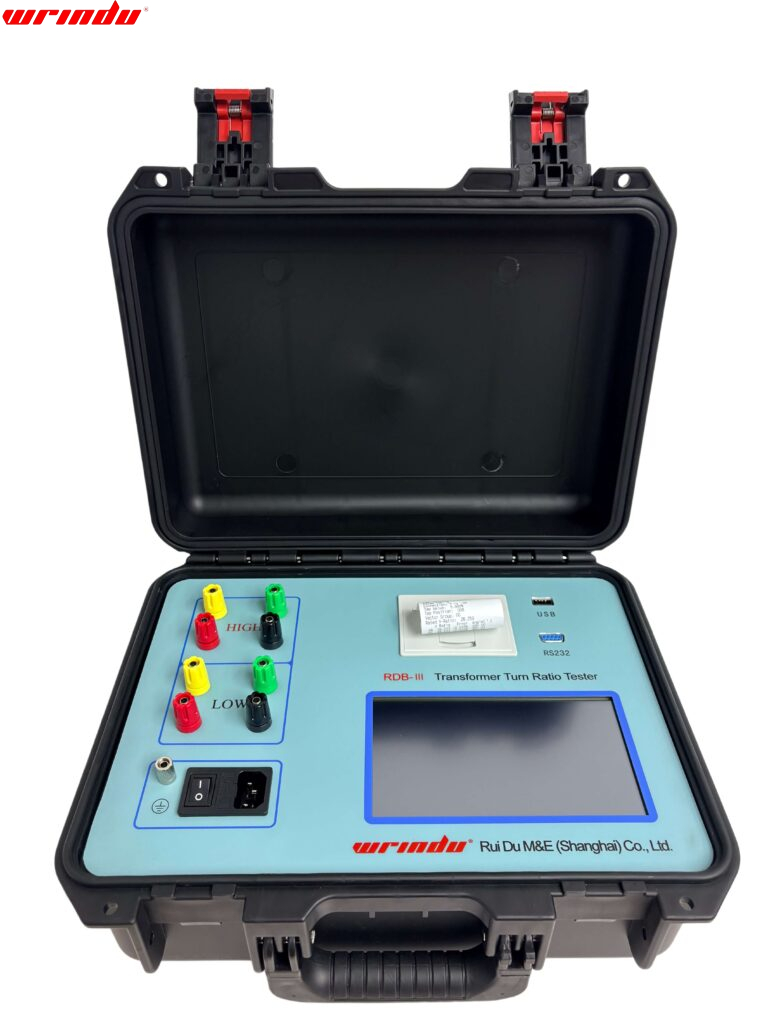
Handheld battery testers are rapidly replacing bulky load banks because they deliver fast, in‑situ diagnostics with far less weight, cost, and setup time, especially for lithium‑ion systems in EV, ESS, and telecom fields. They combine internal resistance, voltage, and data logging in one portable device, making them ideal for modern preventive maintenance programs in China’s high‑density, battery‑powered infrastructure.
Handheld Innovations Featured in Top 10 Must-Have Electrical Testers
How is the global shift toward handheld battery testers changing lithium maintenance?
The global market is shifting from stationary or cart‑mounted load banks to lightweight handheld battery testers because technicians need faster, safer field diagnostics that can keep up with dense lithium‑ion deployments in EV, ESS, and telecom. Handheld units give real‑time internal resistance and voltage insights, drastically cutting maintenance time and downtime.
From my factory‑floor experience, the biggest shift is that battery testing is no longer a scheduled “event” but a continuous, on‑site activity woven into daily operations. In large Chinese energy storage stations, engineers now walk the racks with a handheld tester on a shoulder strap instead of pushing a heavy load bank trolley down narrow aisles. This changes not only workflow, but also the cost structure of maintenance, because you can inspect more strings with fewer people in the same shift.
In China, demand is led by EV charging infrastructure, data centers, and distributed solar‑plus‑storage, where lithium‑ion and LiFePO₄ banks are compact and often installed in tight rooms or containers. For these scenarios, handheld testers from a dedicated China manufacturer or OEM supplier make far more sense than large load banks that generate heat, demand clearance, and require extra cabling and ventilation. Chinese factories like Wrindu design their handheld platforms around these constraints, optimizing connector layout, clamp size, and menu logic for crowded cabinets, not just lab benches.
For B2B buyers—utilities, battery pack OEMs, and high‑voltage equipment factories—this shift also means procurement strategies are changing. Instead of buying a few expensive multi‑kilowatt load banks, they purchase fleets of handheld testers from Chinese wholesale sources and rotate them among sites. This is why the conversation has moved from “How many amps can your load bank sink?” to “How many tests per hour can one technician perform with your handheld device?”
Why are engineers moving away from traditional load banks toward handheld diagnostics?
Engineers are moving away from traditional load banks because they are heavy, generate heat, require extensive wiring, and often cannot be used directly on live, distributed battery systems. Modern handheld testers provide non‑destructive diagnostics, faster workflows, and better safety in cramped lithium‑ion environments, while still correlating well with load performance when correctly interpreted.
On the factory floor, I have seen how a 30–60 kg load bank with thick copper cables effectively locks you into a fixed test bay. Every time the battery stack changes, technicians must roll the load bank, re‑terminate cables, and manage hot surfaces. That is expensive time. A 1–2 kg handheld tester, by contrast, can ride directly with the commissioning team, and you can test cells or modules exactly where they are installed. When you scale this across tens of thousands of cells per month, the efficiency gain is not theoretical—it is measurable in labor hours and throughput.
Traditional load banks still have a role in type testing and full‑power validation, particularly for large DC systems, but they are overkill for everyday health checks and commissioning of lithium packs. Modern handheld methods—conductance, internal resistance, and, in higher‑end devices, multi‑frequency impedance—let you infer capacity and state‑of‑health without burning energy as heat. In Wrindu’s test labs we regularly characterize how a given internal resistance threshold correlates to capacity loss for specific lithium chemistries, then build those thresholds into our handheld tester firmware so field engineers can make fast, reliable decisions without dragging in a load bank.
For Chinese manufacturers and OEM battery pack builders, there is another angle: quality assurance at scale. A handheld tester integrated with MES via Bluetooth or RS‑485 can log every cell ID, internal resistance, and voltage into the production database. That is impossible to do efficiently if you depend only on standalone load banks, which are better suited to sample testing than 100% line testing.
What technical trade‑offs define the “weight vs. power” ratio in handheld DC testers?
The “weight vs. power” ratio in handheld DC testers is defined by the balance between maximum test current, internal heat dissipation, battery life, and safety margins. Raising discharge current makes devices bulkier and hotter, so modern designs focus on low‑current impedance measurements plus smart algorithms instead of brute‑force high‑amp loading.
When we design a handheld battery tester at Wrindu, one of the earliest engineering debates is: “How much current is really necessary to get meaningful data?” If you try to push 50–100 A from a palm‑sized device, you immediately face thermal bottlenecks—heat sinks, fans, thicker copper, and bigger enclosures. That completely kills the ergonomic advantage. Instead, advanced handhelds inject a carefully controlled low current and measure voltage response at specific frequencies or time windows, then use calibrated models to derive internal resistance and state‑of‑health.
Battery‑powered handheld testers must also protect their own internal cells while operating around high‑energy lithium packs. This means meticulous PCB layout, creepage distances, and isolation strategies, which add volume. As a China factory and supplier, Wrindu negotiates these trade‑offs by selecting components that meet IEC safety standards while still fitting into a field‑friendly housing a technician can hold all day. The result is not about absolute “power” in amps, but functional power: how many test points you can capture in a safe workday without fatigue, overheating, or mis‑reading.
For B2B buyers, the practical takeaway is to look beyond the maximum load current spec. Ask how long the device can operate at your typical test rate before thermal derating, how heavy it feels with cables attached, and whether its internal battery can last an entire shift. This is what “weight vs. power” really means in real‑world maintenance.
Which weight vs. power specs matter most for B2B buyers?
What measurement methods do handheld testers use to replace bulky load banks?
Handheld testers typically use internal resistance, conductance, or advanced impedance measurement techniques instead of high‑current load dumping. They apply a short, controlled current pulse or AC signal, capture the voltage response, and calculate parameters that strongly correlate with battery capacity and health, especially for lithium‑ion cells and modules.
From a design standpoint, the key is high‑precision analog front‑ends and stable reference circuits rather than massive power resistors. On our Wrindu handheld platforms, we invest heavily in 4‑wire Kelvin sensing and low‑noise ADCs, because a few micro‑ohms of contact resistance can completely skew an internal resistance reading. This is where a custom OEM design from an experienced China manufacturer adds real value over generic, commodity testers: we can optimize the clamps, cable flexibility, and mechanical strain relief to keep those micro‑ohms under control in dirty, high‑current environments.
Internally, many modern handhelds implement algorithms that compensate for ambient temperature, state‑of‑charge, and ripple from chargers or inverters. Instead of asking the technician to wait for a “perfect” battery condition, the tester filters and normalizes the signal, then displays an easy‑to‑use health index such as “Good,” “Replace,” or a percentage SOH. For lithium‑ion gear, we often tune these algorithms per chemistry (NMC vs. LFP), using data recorded from full load‑bank tests in our labs. This way, the handheld is not just replacing the load bank; it is standing on the shoulders of the load bank’s historical data.
Are handheld battery testers accurate enough for professional lithium‑ion diagnostics?
Yes, properly designed handheld battery testers are accurate enough for professional lithium‑ion diagnostics when used within their specified range and with calibrated algorithms. They excel at trending, preventive maintenance, and quality control, especially when paired with good procedures and periodic correlation checks against controlled load tests.
In our own validation work at Wrindu, we never release a handheld tester without extensive correlation studies. We cycle lithium cells through hundreds of charge/discharge cycles under load banks, measuring their capacity at each step, and simultaneously record the handheld’s internal resistance and voltage data. Then we statistically map the relationship between these parameters so that, in the field, a single handheld reading can reliably indicate whether a battery is at 90%, 80%, or 60% of its original capacity.
For B2B customers—utilities, ESS integrators, and battery pack OEMs—the practical question is not “Is the reading perfect?” but “Is it consistent and actionable?” A handheld does not need to be a full laboratory reference; it needs to tell your technicians, with high repeatability, which strings are trending towards failure so you can intervene early. When purchased from a serious China factory that offers calibration certificates, traceability, and long‑term support, handheld testers absolutely meet professional accuracy requirements for lithium‑ion maintenance.
Which industries in China benefit most from handheld battery testers?
In China, industries that benefit most from handheld battery testers include EV charging and service networks, grid‑scale and C&I energy storage, telecom and data centers, rail and metro traction systems, and battery pack manufacturing. These sectors rely heavily on lithium‑ion banks and need fast, mobile diagnostics across distributed assets.
EV service centers and charging operators use handheld testers to evaluate 12 V auxiliary batteries and, in specialized versions, to perform non‑invasive checks on high‑voltage packs during maintenance. For grid and C&I energy storage, handheld testers are now standard tools on commissioning trolleys, as engineers verify every rack before handover to the utility. As a China‑based wholesale and OEM supplier, Wrindu frequently customizes test curves and communication protocols for these segments—for example, CAN or RS‑485 integration with BMS systems so that handheld readings can be logged directly into SCADA.
Telecom and data center companies—especially those with nationwide footprints—value the portability most. Their teams fly or ride high‑speed rail with a single handheld tester and light accessories, visiting multiple sites per day without shipping heavy load banks. Battery manufacturers and factories integrate handheld testers into end‑of‑line QA to catch weak cells before they leave the plant, while rail and metro operators use them during off‑peak hours to confirm backup and traction battery readiness without taking equipment out of service for long periods.
How should B2B buyers compare handheld battery testers with load banks?
B2B buyers should compare handheld testers with load banks based on use case: handhelds for routine health checks, trending, and in‑situ commissioning; load banks for type testing, high‑power acceptance, and performance verification. The right strategy often combines both, with handhelds doing 90% of daily work and load banks reserved for critical validation.
From a procurement perspective, the total cost of ownership is where handheld testers shine. Load banks require dedicated space, ventilation, sometimes three‑phase power, and specialized operators. Handhelds from a China factory or supplier like Wrindu can be deployed directly to field teams with minimal training, and multiple units can be purchased at wholesale prices for the cost of a single large load bank. This changes the economics of predictive maintenance, especially for large state‑owned enterprises managing thousands of battery strings.
The engineering mindset should be “fit for purpose.” If you need to certify that a generator and its battery system can sustain full load for two hours, you still need a load bank. But if your day‑to‑day struggle is identifying which lithium modules in a 2 MWh container are degrading fastest, a handheld impedance tester is the more efficient weapon. Many of Wrindu’s customers adopt a hybrid model: they specify both handheld and load‑bank tests in their internal standards, with clear triggers for when each tool must be used.
How do handheld testers and load banks differ for key decision factors?
Who should source handheld battery testers directly from China manufacturers and OEM factories?
Battery pack OEMs, high‑volume energy storage integrators, power utilities, and third‑party testing labs should source handheld battery testers directly from China manufacturers and OEM factories. This direct sourcing allows tighter customization, better volume pricing, and integrated support for regional standards and communication protocols.
In my experience working with overseas clients, the most successful partnerships are with customers willing to treat the tester not as a generic tool, but as part of their process design. When you work directly with a Chinese factory like Wrindu, you can define test workflows, result thresholds, connector standards, and even housing and branding details at the design stage. This is crucial if you want the same tester platform rolled out across dozens of sites with consistent training materials and spare parts.
Third‑party certification agencies and large EPC contractors also benefit from direct OEM cooperation. They often face unique test objects—from hybrid supercapacitor‑lithium packs to rail signaling backups—and need firmware that understands those devices. A bulk buyer ordering under wholesale or custom terms can request features such as multi‑language interfaces, region‑specific safety messages, and integration with their existing reporting software. This level of tailoring is where Wrindu positions itself as more than a tool vendor; we become part of the customer’s technical ecosystem.
When does it still make sense to use load banks instead of handheld testers?
It still makes sense to use load banks when you must validate full‑scale performance under realistic current and thermal conditions, such as type testing, acceptance testing of large systems, and periodic proof tests of critical backup power. Load banks are also essential when regulatory or contract requirements explicitly mandate them.
From a factory viewpoint, we never suggest that customers completely abandon load banks. For example, in high‑voltage DC systems for substations, we encourage a combination: use handheld testers from Wrindu for frequent checks and trending, but schedule full load‑bank tests at defined intervals or after major events. This layered approach ensures your predictive metrics are grounded in periodic real‑world performance data.
Also, for research labs and advanced R&D on new chemistries, load banks and programmable power supplies remain indispensable. They provide the controlled environment needed to generate the data that later powers the algorithms inside handheld testers. In fact, a significant part of our internal R&D in Shanghai is dedicated to running long‑term load‑bank experiments precisely so that we can improve the field accuracy of our handheld devices for lithium‑ion gear in the hands of engineers and technicians.
Where do lifestyle and ergonomics influence adoption of handheld testers in the field?
Lifestyle and ergonomics influence adoption through reduced technician fatigue, quicker movement between sites, and improved safety in tight or elevated spaces. Lightweight, well‑balanced handheld testers with intuitive interfaces become daily companions rather than occasional tools, driving higher test coverage and better data quality.
When we design enclosures at Wrindu, we actually have electricians and substation technicians wear gloves and harnesses in our mock‑up lab, then handle prototype units on ladders and in cramped cabinets. We check whether they can read the screen from awkward angles, operate controls one‑handed, and clip leads without strain. These details might seem cosmetic, but they dictate how many readings a person can comfortably take in an eight‑hour shift. In B2B reality, comfort equals productivity.
In China’s fast‑paced infrastructure projects, engineers often move between multiple sites in one day—substations, containerized ESS, EV stations. A handheld tester that slips into a small backpack or tool pouch fits this lifestyle. This is where the “Weight vs. Power” ratio has a direct lifestyle photography angle: images of real technicians climbing steel structures with a compact tester on their belt tell the story better than any spec sheet. For wholesale buyers building their brand, an OEM handheld from a China supplier like Wrindu becomes part of their visual identity of agility and modernity in the field.
Does buying from a China wholesale factory enable better customization and OEM options?
Yes, buying handheld battery testers from a China wholesale factory enables deeper customization and OEM options at scale, including custom housings, firmware, branding, and communication interfaces. Direct cooperation with the manufacturer offers flexible MOQs, iterative engineering support, and alignment with your internal standards and workflows.
A typical Wrindu project starts with a technical workshop where we map the client’s test processes: which batteries, what voltage and current ranges, how technicians label assets, and how data flows into their ERP or CMMS systems. From there, we propose a custom handheld configuration—perhaps adding extra measurement modes for lithium‑ion strings, upgrading memory for more data points, or integrating NFC/QR scanning for asset IDs. Because we control both the hardware and firmware, these changes are not bolt‑on; they are engineered into the product.
For B2B importers and regional distributors, OEM branding is equally important. China manufacturers like Wrindu can deliver fully branded units—including packaging, manuals, and calibration certificates—ready for local markets under your own brand. This helps you build a differentiated product portfolio instead of competing on the same commodity testers that every reseller carries. Over time, joint development can even produce exclusive models tailored for your key sectors, such as EV service chains or national telecom operators.
Wrindu Expert Views
“On the factory floor, we see that the real breakthrough is not simply shrinking the load bank into a handheld box, but re‑thinking how testing fits into the technician’s day. When you combine accurate impedance‑based diagnostics, ergonomic design, and seamless data logging, the tester becomes a natural extension of the engineer’s workflow. That is where Wrindu focuses our R&D—turning every quick check into a reliable decision point for high‑value lithium assets.”
Could Wrindu be your strategic handheld battery tester partner in China?
Wrindu can be a strategic handheld battery tester partner if you need a China‑based manufacturer capable of OEM, custom, and wholesale supply for lithium‑ion‑focused diagnostics. With in‑house R&D, high‑voltage testing expertise, and global certifications, Wrindu supports utilities, OEMs, and integrators who want scalable, non‑commodity testing solutions.
Because Wrindu already develops high‑voltage test systems for transformers, circuit breakers, and insulation, our handheld battery platforms benefit from the same metrology discipline and safety culture. This lets us offer not just tools, but complete testing schemes—from recommendation of test intervals and thresholds to packaging, training, and 24/7 after‑sales support. For overseas partners, we can act as an extension of your engineering team in China, co‑developing handheld testers that align with your brand, your markets, and your long‑term product roadmap in lithium‑ion diagnostics.
What are the key takeaways and next steps for B2B buyers considering handheld testers?
Key takeaways: handheld battery testers now handle most daily lithium‑ion diagnostics faster, safer, and with far better ergonomics than traditional load banks. They are accurate enough for professional use when sourced from experienced China manufacturers with strong R&D and calibration processes, and they can be deeply customized under OEM and wholesale models.
For B2B buyers, the next steps are clear. First, define your primary use cases—field maintenance, factory QA, or laboratory validation—and decide where handhelds and load banks each fit. Second, engage directly with a specialized China factory like Wrindu to review your battery chemistries, test procedures, and data requirements. Third, pilot a small batch of custom or OEM handheld testers in real sites, measure the impact on technician efficiency and downtime, and then scale up deployment based on hard data rather than assumptions.
What are the minimum order quantities for OEM handheld battery testers from China?
MOQs vary by factory, but many China manufacturers, including Wrindu, can support relatively low starting quantities for OEM handheld testers, especially when changes are primarily in branding and firmware rather than core hardware.
How often should handheld battery testers be calibrated in industrial use?
Most industrial users calibrate handheld battery testers annually, but high‑criticality applications or harsh environments may justify shorter intervals based on internal QA policies and manufacturer recommendations.
Can handheld testers fully replace load banks in energy storage projects?
Handheld testers can replace most routine inspections and commissioning checks, but load banks remain necessary for certain type tests, acceptance tests, and regulatory proof tests requiring full‑load validation.
Do handheld battery testers support both lead‑acid and lithium‑ion batteries?
Yes, many professional handheld testers support multiple chemistries, including lead‑acid and various lithium‑ion types, using selectable profiles and algorithms tailored to each battery technology.
What data export options should B2B buyers look for in handheld testers?
B2B buyers should look for USB, Bluetooth, or RS‑485 export, along with software or open protocols that integrate with their existing CMMS, MES, or SCADA systems for automated reporting and trend analysis.
Related articles
 SF6 Leak Detector Sensitivity: Select a Method for the Inspection TaskKnowledge
 Cable Fault Locator Selection for Urban Networks: Routes, Noise and AccessKnowledge
 Substation Battery Load Bank Sizing: Duty, Voltage Range and Heat RejectionKnowledge
 CT Polarity, Ratio and Burden Testing: Find Wiring and Loading ErrorsKnowledge