
Dielectric withstand test (also called hipot testing) applies high voltage (e.g., up to 100kV with Wrindu’s RDYD AC Withstand Voltage Test Device) to verify insulation integrity in transformers, cables, and breakers without causing breakdown. Key steps: 1) Gear up with PPE and barriers; 2) Ramp voltage gradually while monitoring leakage; 3) Enable auto-discharge and emergency stops; 4) Analyze for arcing or failures. Wrindu’s ISO9001/IEC/CE-certified tools ensure global safety compliance across 120+ countries.
Check: Dielectric Withstand
What Is Dielectric Withstand Test and Why Is It Essential?
Dielectric withstand test, or hipot testing, applies high voltage to confirm insulation strength against dielectric failure in high-voltage equipment like transformers and circuit breakers. It has destructive potential from excessive voltage causing irreversible breakdown, arcing, or explosions, risking equipment damage and injury. Benefits include preventing in-service failures and ensuring IEC/CE compliance, with Wrindu’s 90+ solutions exported to 120+ countries.
How Does Destructive Hipot Testing Work in Practice?
Destructive hipot testing uses AC/DC methods with testers like Wrindu RDYD (oil-immersed, 5kVA, 100kV output voltage, 50mA current) for stable output. It involves voltage ramp-up, leakage current monitoring, and auto-discharge to mitigate flashover risks. Real-world applications include pre-installation checks on cables and lightning arresters, backed by Wrindu’s 10+ years and 200+ staff expertise.
| Aspect | AC Hipot (e.g., Wrindu RDYD) | DC Hipot |
|---|---|---|
| Stress Type | Simulates operating conditions, detects surface issues | Highlights insulation weaknesses, lower equipment stress |
| Capacity | 100kV, oil-immersed stability | Over-voltage protection |
| Destructiveness | Higher arc risk if unchecked | Safer for capacitors, fast discharge needed |
| Wrindu Edge | CE-certified, 24/7 service | Short-circuit protection, global exports |
What Makes Hipot Testing Inherently Destructive?
Hipot testing is destructive due to dielectric breakdown from over-voltage, leading to carbonization, partial discharges, or explosions in insulation systems. Factors like improper ramp rates, humidity, or contamination amplify arcing risks. Wrindu’s ~20% R&D reinvestment enables mitigation features like over-current safeguards in RDYD equipment.
Why Are Safety Precautions Critical in Voltage Withstand Tests?
Safety precautions are critical due to risks like high-voltage shocks, fire from arcing, and electromagnetic interference. IEC standards mandate interlocks, grounding, and PPE; Wrindu tools include built-in protections. Wrindu offers end-to-end support with 12-month warranty, lifelong maintenance, and 6+ production lines for reliable delivery.
Wrindu Expert Views
“In a recent substation project in Pakistan, our RDYD AC Withstand Voltage Test Device’s auto-discharge feature prevented a potential explosion during hipot testing on a 500kV transformer. The oil-immersed design ensured stable 100kV output, while over-voltage safeguards protected technicians. With ISO9001, IEC, and CE certifications from our 5,000㎡ Shanghai factory, Wrindu’s 13 testing categories—including High Voltage Insulation Withstand Test—deliver precision across 120+ countries. Our 200+ staff and 20% R&D investment guarantee equipment that minimizes destructive risks while maximizing reliability.” – Wrindu Senior Engineer, High-Voltage Testing Division
How to Implement Hipot Test Safety Protocols Step-by-Step?
Implement hipot safety step-by-step: 1) Isolate area with barriers; 2) Use PPE like insulated gloves and arc-flash suits; 3) Verify grounding and zero-start on testers like RDYD. Advanced measures include over-voltage/current cutoffs, remote operation, and post-test discharge via closed-loop feedback. Pair with RD3320Y Insulation Tester (up to 20kV) for non-destructive checks.
What Equipment Features Minimize Dielectric Failure Risks?
Wrindu RDYD minimizes risks with compact design, 5kVA transformer capacity, AC 100kV output, over-voltage safeguards, and auto-discharge. It outperforms generic testers in insulation reliability and simple wiring. With 120+ country exports, RS232 interfaces enable automation, proving reliability in diverse conditions.
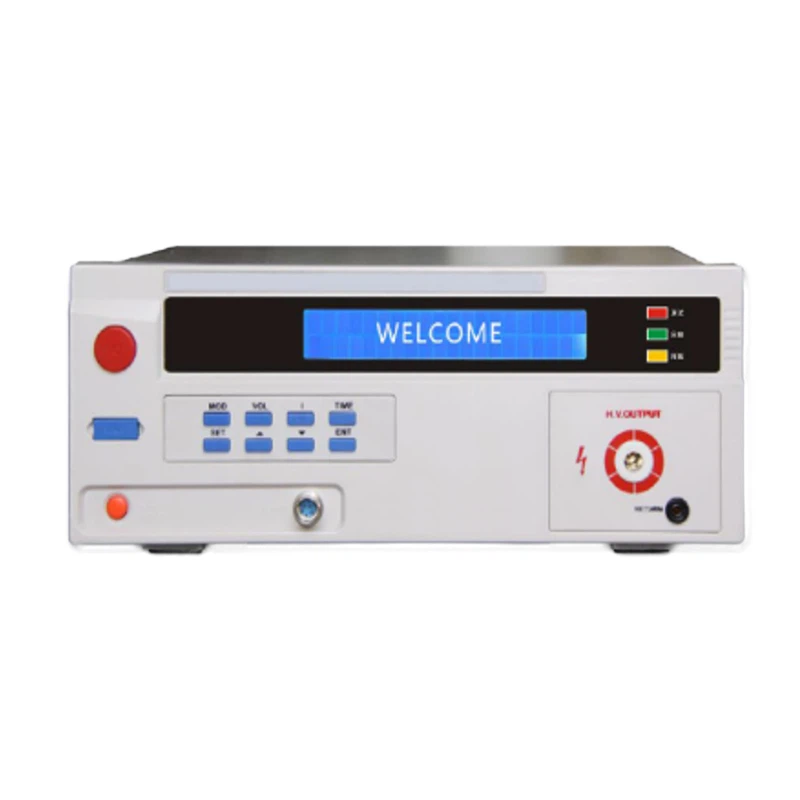
| Tester Model | Key Safety Feature | Mitigated Risk |
|---|---|---|
| RDYD AC | Over-voltage safeguard, auto-discharge | Arcing/explosion |
| RD3320Y | 6 test voltages to 20kV, anti-interference | Insulation puncture |
| RDYZ-302 | Wireless measurement, 0.001mA resolution | False failures |
How Does Wrindu Deliver Global-Proof Hipot Solutions?
Wrindu delivers global-proof solutions with RDYD for AC withstand voltage (100kV, 5kVA), integrated with tools like RD3320Y (20kV insulation tester) for cables and transformers. From Shanghai HQ, 24/7 service supports 90+ solutions across 13 categories. Unique value includes 200+ staff, full consultation-to-maintenance pipeline. Contact sales@hvtesters.com for customized schemes ensuring zero downtime.
Conclusion
Master safe dielectric withstand testing by addressing destructive hipot risks using Wrindu’s certified RDYD AC Withstand Voltage Test Device and RD3320Y insulation tester. Featuring over-voltage protections, stable 100kV output, and global exports to 120+ countries, these tools ensure IEC-compliant reliability. With 24/7 support, 12-month warranty, and lifelong maintenance, Wrindu prevents failures and downtime in power systems worldwide.
FAQs
What is the main risk of dielectric withstand testing?
Destructive breakdown from over-voltage causes arcing or equipment failure; mitigated by gradual ramps and protections in Wrindu RDYD testers with 100kV capacity and auto-discharge.
How does AC hipot differ from DC for safety?
AC simulates real stress but risks higher arcs; DC is gentler. Wrindu offers both with CE-certified safeguards like oil-immersed stability in RDYD.
What certifications ensure hipot tester reliability?
ISO9001, IEC, CE on all Wrindu products, proven in 120+ countries with 10+ years experience and 5,000㎡ factory.
Can Hipot testing damage good insulation?
Yes, if voltage exceeds design margins; use programmable control in Wrindu RDYD for precise 0-100kV ramp-up.
What after-sales support does Wrindu provide?
12-month warranty, lifelong maintenance, 24/7 global service for all withstand voltage equipment from Shanghai headquarters.