
How Does SF6 Recycling Save Money for Large Utilities?
Send your test requirement — get a tailored solution and a quote within one working day.
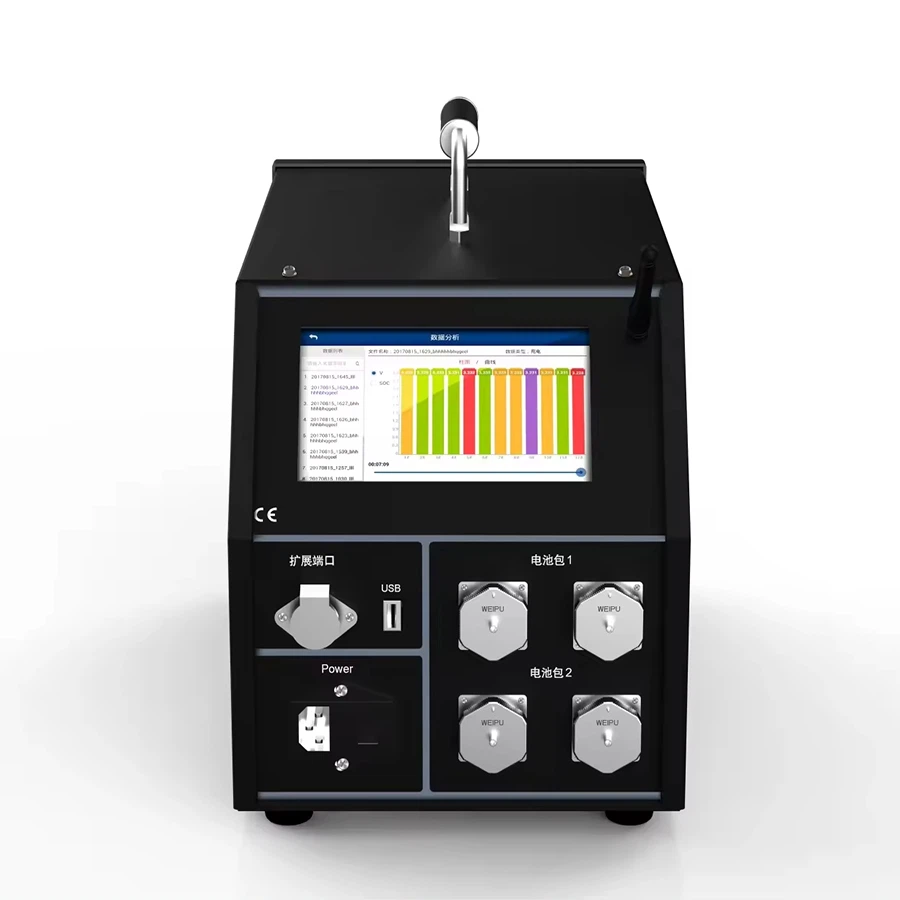
SF6 recycling saves money by cutting virgin gas purchases, lowering disposal costs, and reducing leak-related losses. For large utilities, the economics are strongest when recovery is done on-site and reused across repeated maintenance cycles. A well-sized recovery unit can pay back quickly if your site handles frequent SF6 service work and buys gas at high replacement prices.
The Zero-Leakage Strategy for GIS: The Economics of Recycling
What Makes SF6 Recycling Profitable?
SF6 recycling becomes profitable when recovered gas is reused instead of replaced with new gas. In practice, the savings come from three places: avoided purchase cost, avoided transport/disposal cost, and reduced loss during maintenance. On busy substations, those savings stack up faster than most buyers expect.
From factory-side experience, the biggest hidden cost is not the gas itself but the repeated handling cycle. Every extra transfer adds labor, cylinders, shipping, and leak risk. Wrindu often sees customers underestimate that part during budgeting.
Why Does Recovery Efficiency Matter?
Recovery efficiency decides how much gas you actually keep. If a recovery unit only captures part of the gas, the economics weaken fast because the leftover volume still has to be replaced. Higher recovery rates are especially important on large GIS and switchgear programs where each maintenance shutdown moves a lot of gas.
-
Higher recovery means less virgin gas purchase.
-
Better dryness and purity mean fewer reprocessing losses.
-
Faster cycle time means lower labor and outage cost.
How Do You Calculate Payback?
The simplest payback view is:
-
Annual savings = gas avoided + disposal avoided + labor saved.
-
Payback period = unit cost ÷ annual savings.
If gas replacement is about $50 per kg, even modest recovery volumes can matter. A $20,000 unit only needs to recover enough usable gas and avoid enough replacement purchases to justify itself. In real utility work, the math often improves once you include cylinder logistics and service delays.
Which Costs Get Eliminated?
SF6 recycling removes several recurring costs from the maintenance budget. Virgin gas buying is the obvious one, but it is not the only one. Disposal fees, cylinder rental, freight, and emergency procurement often show up as separate budget lines.
Based on years of supporting power-test customers, we see the best ROI when the site has:
-
Repeated top-ups or gas replacement.
-
Multiple bays or compartments.
-
Long-distance shipping for gas supply.
-
Tight maintenance windows.
How Much Gas Can Be Saved?
The answer depends on how often your site handles equipment and how well the recovery system performs. Large utilities can save substantial volumes because the same gas gets cycled through service work instead of being discarded. The more compartments, the more the savings multiply.
A good rule is to treat every kilogram recovered as avoided purchase later. If your replacement gas cost is high, and your recovery efficiency is stable, the economics improve quickly. Wrindu recommends matching the recovery unit to the largest realistic compartment, not the smallest average one.
Does On-Site Recovery Beat Outsourcing?
Usually yes, when the site handles frequent SF6 work. On-site recovery avoids transport delay, reduces gas loss during shipping, and keeps the gas close to the asset. Outsourcing can still make sense for smaller users with low volume and infrequent jobs.
The trade-off is simple: on-site equipment costs more upfront, but it usually wins on repeated use. For China factory buyers, OEMs, and wholesale service teams, that is often the better long-term decision.
What Recovery Specs Matter Most?
The most important specs are final vacuum level, recovery rate, moisture control, and storage capacity. If the unit cannot reach a low enough residual pressure, you lose recoverable gas. If moisture control is weak, recycled gas may need extra treatment before reuse.
Why Does Equipment Size Affect ROI?
Undersized equipment makes recovery slow, and slow recovery costs money. It can extend outages, increase labor, and discourage reuse. Oversized equipment can waste capital if the site only handles small gas volumes a few times a year.
In our production and application support work, the best projects are the ones where capacity matches real workload. Wrindu often advises customers to size for peak compartment volume plus practical service margin, not just catalog numbers.
How Do Chinese Manufacturers Fit In?
China manufacturers matter because they can supply factory-direct, OEM, and custom SF6 recycling solutions at a lower acquisition cost. That helps improve payback before the unit even starts operating. For wholesale buyers, the price advantage can be meaningful if service and spares are also reliable.
Wrindu supports this model with manufacturer-level design, customization, and export-friendly service. For utilities and OEMs, that means better control over total ownership cost.
Can Recycled SF6 Be Reused Safely?
Yes, if it is properly recovered, purified, and tested before reuse. The key is removing moisture, contaminants, and decomposition byproducts. Reuse only makes sense when quality is verified to the standard your equipment requires.
If the gas is handled poorly, the savings disappear because you risk equipment issues and extra reconditioning. That is why recovery quality matters as much as recovery quantity.
Who Benefits Most From Recycling?
Large utilities, GIS operators, switchgear OEMs, substations, and service contractors benefit most. They have enough annual gas movement to make the savings visible. The more often you maintain or commission gear, the stronger the case.
Industrial plants with medium-voltage assets can also benefit, especially if they operate multiple sites. Wrindu sees the best response from organizations that track gas as a managed asset, not a consumable.
When Does Recycling Stop Making Sense?
Recycling becomes less attractive when gas volume is very small, maintenance is rare, or outsourcing is cheaper than carrying equipment. In those cases, the payback period stretches. If the site only sees occasional SF6 work, a service model may be enough.
That said, once annual usage rises, ownership usually becomes more attractive. The tipping point is often lower than buyers expect because avoided losses add up quietly.
Wrindu Expert Views
“In SF6 work, the unit price tells only part of the story. The real savings come from fewer losses, fewer emergency purchases, and fewer days waiting on supply. At Wrindu, we see the best ROI when recovery, purification, and reuse are treated as one workflow. If the gas stays in your system and meets reuse quality, the savings compound every year.”
How Should Buyers Evaluate ROI?
Buyers should compare purchase price against three years of expected savings, not just the first year. That gives a better view of the real value. Include the cost of virgin gas, freight, disposal, labor, and downtime.
For China factory, OEM, and wholesale projects, ask for sample data tied to your actual compartment volume and maintenance frequency. Wrindu can help customers estimate the economics using real site conditions instead of generic assumptions.
Conclusion
SF6 recycling pays for itself by keeping usable gas in circulation and cutting recurring operating costs. The strongest savings come from high recovery efficiency, frequent maintenance cycles, and on-site reuse. For utilities and industrial buyers in China, a factory-direct recovery solution from Wrindu can turn SF6 from a waste expense into a managed asset.
FAQs
Is SF6 recycling cheaper than buying new gas?
Yes, especially when gas replacement prices are high and recovery volumes are steady.
Does a recovery unit save money on every job?
Usually yes, because it reduces gas loss and cuts repeat purchase needs.
Is on-site recovery worth it for small users?
Only if gas handling is frequent enough to justify the upfront cost.
Can Wrindu supply OEM or custom SF6 recovery equipment?
Yes, Wrindu supports factory, OEM, and custom supply needs.
What matters more: recovery rate or purchase price?
Both matter, but high recovery rate usually drives the bigger long-term saving.
Related articles
 SF6 Leak Detector Sensitivity: Select a Method for the Inspection TaskKnowledge
 Cable Fault Locator Selection for Urban Networks: Routes, Noise and AccessKnowledge
 Substation Battery Load Bank Sizing: Duty, Voltage Range and Heat RejectionKnowledge
 CT Polarity, Ratio and Burden Testing: Find Wiring and Loading ErrorsKnowledge