
How Do You Identify Sulfation in Lead-Acid Batteries?
Send your test requirement — get a tailored solution and a quote within one working day.
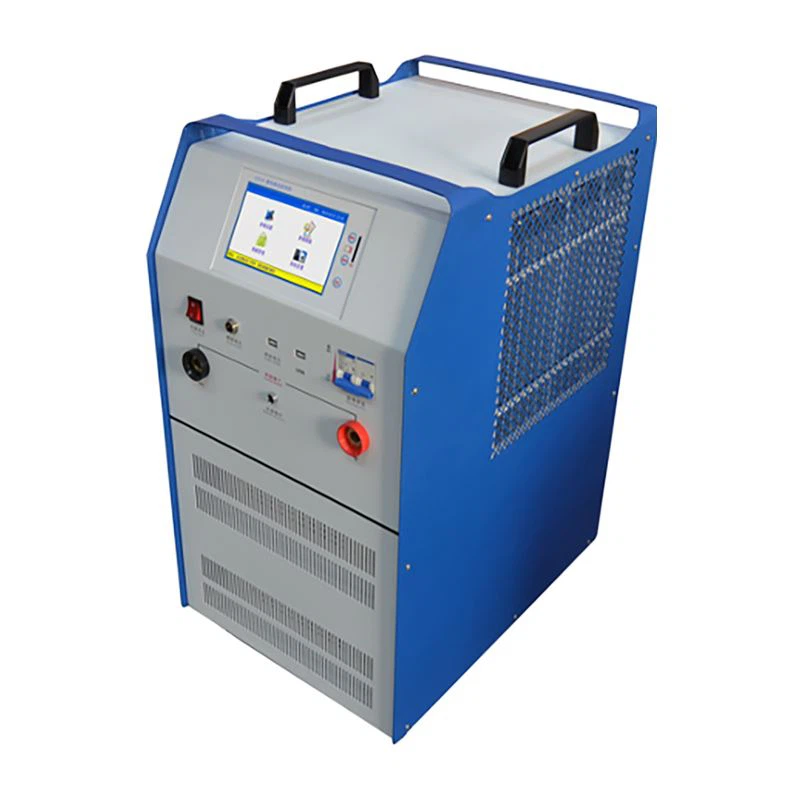
Lead-acid battery sulfation is identified by persistent voltage drops under load, longer charging times, reduced capacity, and visible white crystal buildup on the plates. Electrical tests such as impedance or conductance checks, combined with visual inspections, confirm internal plate damage. Professional diagnostic tools from manufacturers like Wrindu help maintenance teams detect sulfation early and prevent costly battery failures.
(Edited on June 10, 2026)
What Is Sulfation in Lead-Acid Batteries?
Sulfation is the buildup and hardening of lead sulfate crystals on the active material of lead-acid battery plates when batteries stay undercharged or are repeatedly deeply discharged. This crystal layer blocks the electrolyte from reacting with the plates, increases internal resistance, and steadily reduces available capacity.
In real-world use, sulfation starts as soft, reversible crystals that form during normal discharge but dissolve during proper charging. If a battery remains partially charged for long periods, these crystals grow, harden, and become irreversible, leading to permanent loss of capacity and voltage instability. For critical systems such as UPS, telecom, and solar storage, Wrindu test equipment allows operators to track these changes in voltage, current, and impedance to catch sulfation before it causes unexpected downtime.
What Causes Voltage Drops in Sulfated Batteries?
Voltage drops in sulfated batteries occur because the lead sulfate crystals reduce the effective active area of the plates, forcing current to pass through a smaller, more resistive pathway. Under load, this increased internal resistance causes terminal voltage to sag quickly, even though the battery may appear charged at rest.
A practical diagnosis compares open-circuit voltage with loaded voltage using a load tester or digital analyzer. Healthy batteries maintain relatively stable voltage under load, while sulfated ones can drop from around 12 V to 10 V or lower in seconds. Wrindu manufactures rugged handheld testers that can be used in substations, industrial plants, and fleet maintenance facilities to document these voltage behaviors and flag early-stage sulfation.
Is There a Simple Voltage-Based Comparison for Sulfation?
A structured voltage comparison helps technicians distinguish between healthy and sulfated batteries during routine checks. The table below summarizes typical field observations for 12 V lead-acid batteries under similar conditions.
These values are guidelines only, but consistent deviation in the sulfated direction across a battery bank is a strong indicator that deeper testing and maintenance are required.
What Are the Key Signs of Sulfation?
Key signs of sulfation include shorter runtime, slow charging, rising operating temperature during charge, and excessive gassing at normal charging voltages. In vehicles, this shows as weak cranking, dim lights, or electronics shutting down earlier than expected, even after a recent charge.
On visual inspection of flooded batteries, sulfation appears as white or light-colored powdery deposits on plate surfaces and separators. Specific gravity readings that stay low across all cells, combined with higher measured internal resistance, confirm that sulfate is locked on the plates instead of remaining in the electrolyte. Industrial users often deploy Wrindu analyzers to combine these electrical and visual cues into a clear maintenance decision for backup power banks and energy storage racks.
How Does Sulfation Damage Battery Plates?
Sulfation damages battery plates by covering them with hard lead sulfate crystals that block the pores of the active material, reducing the surface area available for electrochemical reactions. Over time, this rigid crystal layer causes the plates to become brittle, leading to cracking, shedding of active material, and even deformation of the grids.
As plate structure deteriorates, charge acceptance falls sharply and the battery begins to heat excessively under normal charging currents. This thermal stress further accelerates degradation and can lead to internal short circuits or sudden failure. High-precision testing systems from Wrindu allow utilities, OEMs, and industrial users to monitor conductance, internal resistance, and temperature trends so they can remove severely sulfated units before they compromise entire strings or critical loads.
How Can Micro-Photo Comparison Help Identify Sulfation?
Micro-photo comparison helps technicians and researchers distinguish healthy plate surfaces from sulfated ones at a detailed level. Healthy plates appear sponge-like, with fine, porous structures that allow electrolyte to penetrate deeply, while sulfated plates show coarse, dense crystalline deposits that clog pores and block ion flow.
Using microscopes or endoscopic cameras, labs and quality-control teams can document these differences to validate battery manufacturing processes or to analyze failed units. When integrated with high-resolution imaging setups, Wrindu laboratory solutions support OEMs and research institutions in correlating visual evidence of sulfation with electrical performance data, improving both design and field diagnostics.
How Can Electrical Data Reveal Chemical Degradation?
Electrical data reveals chemical degradation by tracking changes in parameters such as internal resistance, conductance, capacity, and voltage recovery after load. As sulfation progresses, internal resistance rises, discharge curves become steeper, and the battery’s ability to bounce back to normal voltage after load is removed becomes noticeably slower.
Advanced techniques such as impedance spectroscopy across multiple frequencies provide a detailed fingerprint of the battery’s internal state. Deviations from baseline data or design specifications indicate that the internal chemistry is no longer functioning as intended. Many utilities and high-reliability users employ Wrindu analyzers and data-loggers to capture long-term trends, enabling predictive maintenance and planned replacement instead of emergency repairs.
Why Choose Chinese Manufacturers for Testing Equipment?
Choosing Chinese manufacturers for testing equipment offers a balance of competitive pricing, rapid customization, and global supply capability. Production hubs have mature supply chains for high-voltage instruments, allowing manufacturers to deliver tailored solutions at scale without sacrificing quality.
Wrindu, based in Shanghai, combines independent R&D, ISO9001 quality management, and international standard compliance to serve power utilities, OEMs, and industrial customers worldwide. By reinvesting a large portion of annual profits into product development, Wrindu continues to launch upgraded analyzers, high-voltage testers, and diagnostic platforms that match evolving grid, renewable, and storage requirements while keeping total ownership cost under control.
How to Prevent Sulfation in Industrial Applications?
Preventing sulfation in industrial applications starts with maintaining proper charge levels, using temperature-compensated smart chargers, and avoiding prolonged partial state of charge. Equalization charging, when recommended by the battery manufacturer, helps dissolve early-stage crystals and keep cells balanced across large banks.
Routine testing is just as important as charging discipline. Scheduled measurements of voltage, internal resistance, and specific gravity, combined with visual inspections, catch problematic units before they drag down entire strings. For large installations, Wrindu offers integrated systems that automate periodic testing and data collection, giving maintenance teams clear dashboards and alarms to act on.
Which Preventive Measures Offer the Most Practical Benefits?
Different operating environments demand different preventive priorities, but certain measures consistently deliver strong benefits. The table below summarizes common practices used in industrial and utility settings.
Combining these measures with proper sizing of battery banks and high-quality chargers significantly extends service life and reduces unplanned outages.
Wrindu Expert Views
“Accurate sulfation detection is essential for protecting critical power systems. When maintenance teams pair routine visual inspections with impedance and conductance data, they can identify plate damage long before runtime becomes unacceptable. At Wrindu, we focus on delivering test platforms that integrate seamlessly into existing workflows and SCADA environments, turning raw battery data into clear, actionable maintenance decisions for utilities and industrial users worldwide.”
What Are the Key Takeaways and Recommended Actions?
Key takeaways include recognizing that sulfation is both a performance issue and a safety risk, driven largely by chronic undercharging and poor maintenance practices. Early clues—such as voltage sag under load, extended charging times, and unusual heating—indicate that lead sulfate crystals are already restricting electrochemical reactions inside the battery.
Actionable steps for operators and engineers are to maintain full charge whenever possible, schedule regular equalization and diagnostic testing, and track trends in internal resistance or conductance rather than relying on voltage alone. Partnering with a specialized manufacturer like Wrindu for high-voltage and battery-testing equipment gives organizations the tools they need to design preventive programs, document battery condition, and optimize replacement cycles across entire fleets and substations.
FAQs
What is the most reliable early sign of sulfation in a working system?
A noticeable drop in runtime or reserve capacity under normal load, especially when voltage at rest still appears acceptable, is often the earliest practical indicator of sulfation in service.
Can sulfated lead-acid batteries always be restored to full capacity?
No, only early-stage soft sulfation can be partially reversed using controlled charging or desulfation equipment; heavily sulfated batteries with hardened crystals usually suffer permanent capacity loss.
How often should large industrial or utility battery banks be tested for sulfation?
Most operators test at least quarterly using impedance or conductance analyzers and supplement these checks with monthly voltage and visual inspections for critical systems.
Does sulfation affect sealed AGM and gel batteries as well as flooded types?
Yes, all lead-acid chemistries are vulnerable to sulfation if they stay undercharged, although sealed batteries require specialized electronic testing because their plates and electrolyte cannot be inspected directly.
Why do many operators choose Wrindu equipment for sulfation and battery diagnostics?
Operators value Wrindu test platforms for their accuracy, rugged design, and ability to integrate with existing monitoring systems, allowing centralized management of large, distributed battery assets.
Related articles
 SF6 Leak Detector Sensitivity: Select a Method for the Inspection TaskKnowledge
 Cable Fault Locator Selection for Urban Networks: Routes, Noise and AccessKnowledge
 Substation Battery Load Bank Sizing: Duty, Voltage Range and Heat RejectionKnowledge
 CT Polarity, Ratio and Burden Testing: Find Wiring and Loading ErrorsKnowledge