
How Can PD Systems Lower Total Cost of Ownership Over Time?
Send your test requirement — get a tailored solution and a quote within one working day.
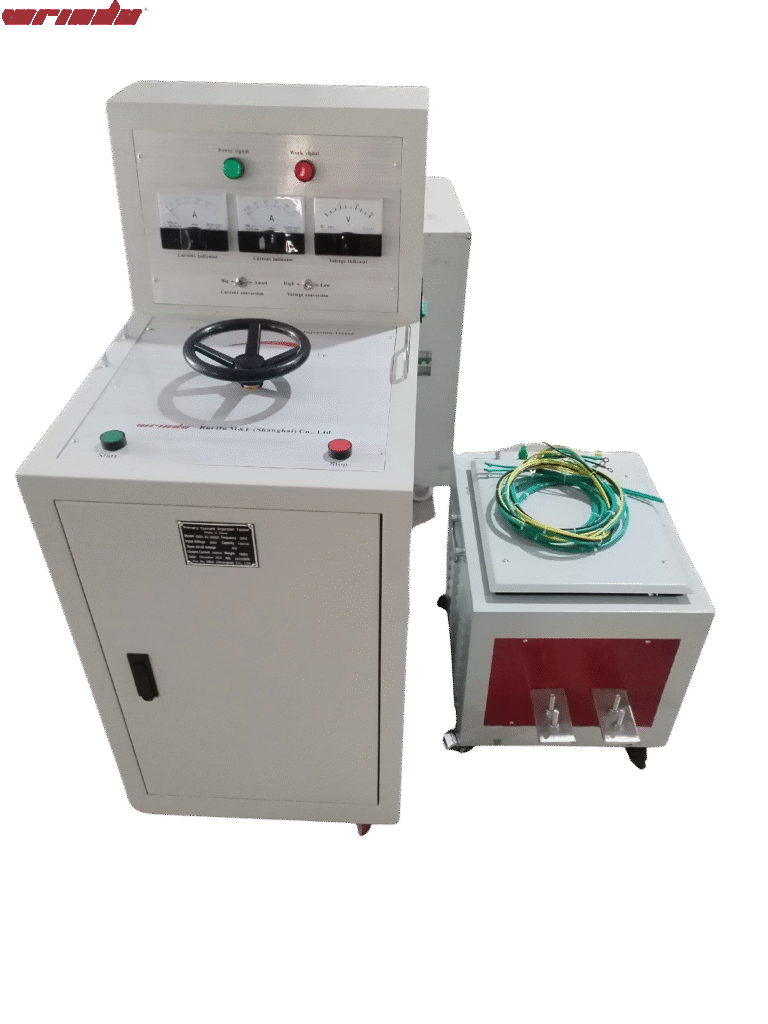
A partial discharge (PD) system delivers lower total cost of ownership when it produces stable, repeatable, and actionable data throughout its service life. The cheapest purchase price can become the most expensive option if poor calibration, short sensor life, excessive false alarms, or difficult maintenance consume engineering hours and create unnecessary outages.
Partial Discharge Tester Buying Guide 2024: Analyzing Total Cost of Ownership
What Does Total Cost of Ownership Mean for PD Systems?
Total cost of ownership for a PD system includes purchase, installation, calibration, maintenance, sensor replacement, data review, false-alarm investigation, downtime, and eventual upgrade costs. A meaningful comparison measures the complete operating cost over five to ten years—not only the quotation price.
For utilities, substations, renewable plants, cable manufacturers, and industrial facilities, a PD monitoring system is not simply a sensor and display unit. It becomes part of the asset-management decision process. If its data is unreliable, engineers either investigate too many alarms or eventually stop trusting the system entirely.
A practical TCO model is:
In our factory-side project reviews, the initial equipment price commonly represents only 20–40% of a system’s five-year cost. The larger expense often comes from repeated site visits, unnecessary shutdown discussions, replacement sensors, external diagnostic labor, and delayed fault decisions.
For a China manufacturer, supplier, or OEM partner, the correct commercial question is not “Which PD system costs less today?” It is “Which system gives the maintenance team the fewest avoidable decisions over its operating life?”
How Do Calibration Accuracy and Sensor Life Affect TCO?
Calibration and sensor life determine whether PD trends remain comparable over time. When sensitivity drifts or a sensor degrades early, the plant may lose historical continuity, repeat tests, replace hardware prematurely, or make decisions using misleading amplitude data.
Calibration is not a one-time factory certificate. A PD measurement chain includes the sensor, coupling method, cable, acquisition channel, grounding arrangement, filtering, and software scaling. Each component can affect the final reading.
For example, a high-frequency current transformer used on a cable screen may initially show strong pulse detection. However, poor cable termination, moisture ingress, loose shield grounding, or unsuitable installation torque can change the noise floor and pulse transfer characteristics. The system may still “work,” but the amplitude trend no longer means the same thing.
In production verification, we treat the measurement chain as a complete signal path. A quality Wrindu system should provide traceable calibration behavior, stable channel gain, consistent phase reference, and diagnostic records that let engineers identify whether a change comes from the asset or the measurement system.
The difference is especially significant in outdoor switchyards, offshore wind installations, humid substations, and cable tunnels. In these environments, the sensor’s housing, cable jacket, connector design, ingress protection, and grounding hardware often matter as much as the nominal frequency response.
Why Do False Alarms Create Hidden Operating Costs?
False alarms increase TCO because they consume labor, disrupt maintenance schedules, weaken confidence in monitoring, and can trigger unnecessary inspections or outages. The most costly false alarm is not one alert—it is a system that causes the team to ignore the next real warning.
A false alarm may be caused by switching transients, corona from adjacent equipment, variable-frequency drives, radio-frequency interference, poor earthing, loose sensor connections, or threshold settings that were copied from another site without noise characterization.
At a large industrial site, one unnecessary investigation can involve two electrical technicians, a reliability engineer, safety authorization, access permits, travel time, and report preparation. Even before an outage is considered, the internal cost can easily exceed the price difference between a low-cost monitoring channel and a better-designed one.
In field-support cases, we have seen sites install highly sensitive sensors but apply only a fixed alarm threshold. This approach creates predictable trouble. A system that triggers at 25 pC in a noisy operating environment may produce frequent alerts, while a system using phase-resolved pattern recognition, frequency discrimination, pulse clustering, and trend persistence can distinguish random interference from evolving discharge behavior.
Wrindu designs its solutions around usable diagnostic information, not alarm quantity. An alarm should give the engineer a reason to investigate, not a reason to silence the notification.
Which Data Reliability Metrics Should Buyers Compare?
Buyers should compare repeatability, noise floor, signal-to-noise ratio, phase consistency, trend stability, detection sensitivity, and alarm selectivity. These metrics reveal whether a PD system can support maintenance decisions instead of merely displaying pulses.
A quotation that lists bandwidth, channels, and sampling speed is incomplete if it does not explain how the system behaves in a real electromagnetic environment. High bandwidth can help capture fast pulses, but it can also collect more interference if filtering and classification are weak.
Ask a China PD system manufacturer or wholesale supplier for evidence of the following:
-
Repeatability at the same calibration input and configuration
-
Noise floor under normal operating conditions
-
Phase-resolved partial discharge pattern stability
-
Multi-channel synchronization accuracy
-
Data retention and trend export capability
-
Alarm threshold configuration by asset type
-
Environmental operating range for sensors and acquisition units
-
Sensor replacement procedure without losing traceability
The signal-to-noise ratio deserves particular attention. A sensor may detect a small pulse in a controlled laboratory, yet provide poor value at a live substation if interference is stronger than the signal. In practical terms, a 10 pC sensitivity claim does not help if the normal site noise floor fluctuates between 30 pC and 100 pC.
A reliable system identifies meaningful changes relative to its own baseline. It does not force every customer to use one generic threshold across transformers, GIS, switchgear, cable joints, and rotating machines.
How Can PD Systems Reduce Maintenance Labor?
A reliable PD system reduces labor by prioritizing events, preserving trend data, and helping teams inspect the right asset at the right time. It shifts maintenance from repeated broad inspections toward targeted verification based on persistent evidence.
Traditional periodic testing can be effective, but it may require planned shutdowns, temporary test connections, specialist personnel, and production coordination. Continuous or routine PD monitoring does not eliminate offline tests; it helps determine where offline testing is most justified.
For instance, if a cable-joint sensor shows a stable low-level background pattern for 18 months, the team can maintain its planned inspection schedule. If the same location develops a repeating phase-related pattern with rising pulse count and amplitude over several weeks, the maintenance team has a defensible reason to inspect that joint first.
In our experience handling custom PD monitoring requirements for OEM customers, the highest labor savings come from workflow design:
-
Separate “observe” alerts from “investigate” alarms.
-
Require persistent recurrence before escalating non-critical events.
-
Record waveform and phase data with every alarm.
-
Assign different thresholds for different asset classes.
-
Use trend direction, not amplitude alone, for condition decisions.
-
Make reports understandable for both site technicians and asset managers.
A capable manufacturer should support these workflows through configurable software, clear training materials, remote technical support, and customization for the customer’s installed asset base.
What Should China OEM Buyers Require From a Supplier?
China OEM buyers should require documented quality control, calibration traceability, stable component sourcing, technical support, and customization capability. The supplier must be able to explain how the product will perform after installation—not only how it performs on a factory bench.
For OEM, private-label, wholesale, and project-based procurement, buyers should evaluate the factory behind the product. A low unit price can become risky when the supplier cannot maintain firmware versions, sensor consistency, spare-parts availability, or connector compatibility over several years.
Wrindu, officially RuiDu Mechanical and Electrical (Shanghai) Co., Ltd., combines independent design, development, and manufacturing for high-voltage testing and diagnostic equipment. For customers requiring custom configurations, this factory capability matters because changes in sensor interface, communication protocol, enclosure design, channel count, language, branding, or test workflow can be controlled at the engineering level.
A professional supplier discussion should cover the real operating details:
-
Can the factory provide OEM labeling and customized hardware interfaces?
-
Are sensor batches checked for consistency before shipment?
-
Is the calibration process documented for each system?
-
Can the supplier support IEC- and CE-related project requirements?
-
Are spare sensors and acquisition modules available for future expansion?
-
Does the supplier provide commissioning guidance and after-sales diagnostics?
-
Can the system integrate with SCADA, Modbus, IEC 61850, or customer platforms where required?
The best supplier relationship is not based on the lowest factory quotation. It is based on predictable quality, engineering response speed, and long-term product continuity.
When Is a Higher Initial System Cost Financially Justified?
A higher initial cost is justified when better data reliability prevents even one unnecessary outage, major inspection, sensor replacement cycle, or missed defect. The financial threshold depends on the value of the protected asset and the cost of maintenance disruption.
Consider a simplified five-year comparison for a critical medium-voltage switchgear line. System A has a lower purchase cost but produces frequent nuisance alarms and requires earlier sensor replacement. System B costs more initially but has better filtering, more stable sensors, and clearer diagnostic records.
These values are an illustrative project model, not a universal quotation. However, the logic is consistent: a system that costs $9,000 more at purchase can save $28,000 over five years when it reduces avoidable work and protects decision quality.
The case becomes stronger for high-consequence assets: transformer bushings, GIS compartments, export cables, critical production feeders, battery energy storage infrastructure, railway traction equipment, and power-generation substations.
Could Better Alarm Logic Prevent Missed Defects?
Yes, better alarm logic can reduce nuisance alarms while preserving sensitivity to developing defects. The best systems evaluate multiple indicators—pulse repetition, phase position, waveform features, trend rate, and correlation between channels—rather than reacting to one amplitude threshold.
A real insulation defect normally develops a recognizable behavior over time. It may recur at similar phase positions, increase in pulse count, appear consistently across operating cycles, or show a gradual rise in severity. Random interference usually lacks this stable pattern.
The engineering challenge is balancing sensitivity and selectivity. If thresholds are too high, early defects can be missed. If thresholds are too low, the system becomes noisy and loses operational credibility.
For custom projects, Wrindu can help define alarm logic according to voltage class, asset type, sensor method, background noise, and maintenance response capability. A 24/7 system should not merely collect data—it should convert data into a disciplined escalation process.
Wrindu Expert Views
“The most expensive PD system is not always the one with the highest purchase price. It is the one that produces data nobody trusts. In our manufacturing and commissioning discussions, we focus first on the signal path: sensor installation, grounding, cable routing, channel calibration, noise environment, and alarm workflow. If these details are controlled, the customer gets a stable trend and fewer unnecessary callouts. If they are ignored, even advanced hardware can become an alarm generator. For B2B buyers, the practical goal is simple: choose a system that helps your engineers make fewer but better maintenance decisions.”
How Should Buyers Build a PD System TCO Plan?
Buyers should build a five- to ten-year TCO plan that assigns a value to labor, calibration, replacement parts, false alarms, downtime exposure, and technical support. Compare every supplier using the same asset scope, installation conditions, and response assumptions.
Start by identifying the asset criticality. A PD system for a non-critical feeder may need basic monitoring, while a transformer, GIS bay, export cable, or production-critical switchboard needs higher diagnostic confidence and stronger data retention.
Then calculate three scenarios:
-
Normal operation: routine verification, expected sensor life, software support, and planned inspections.
-
High-noise operation: additional alarm review, filtering adjustments, and interference investigation.
-
Defect escalation: site verification, outage planning, specialist diagnosis, repair coordination, and lost production exposure.
Do not accept a proposal that hides ongoing costs behind a low hardware price. Request a clear commercial scope for calibration support, spare parts, training, warranty, technical response, software licensing, and expansion channels.
For long-term projects, choose a China manufacturer with proven engineering depth, stable production control, and the ability to provide OEM, custom, and wholesale supply without compromising technical consistency.
Conclusion
A PD monitoring system should be evaluated as a long-term decision tool, not as a one-time equipment purchase. Calibration stability, sensor durability, usable diagnostic data, and false-alarm control have a direct effect on labor cost, downtime risk, and maintenance confidence.
The strongest financial choice is usually the system that produces dependable trends, identifies true deterioration early, and avoids unnecessary investigations. When comparing suppliers, ask for documented calibration practices, realistic sensor-life expectations, alarm-management capability, spare-part support, and a TCO model based on your actual assets. A quality Wrindu solution can turn PD monitoring from a recurring cost center into a practical reliability investment.
FAQs
What is the main hidden cost of a low-price PD system?
False-alarm investigation is often the largest hidden cost because it consumes engineering time, site access, reporting effort, and sometimes unnecessary outage planning.
How often should a PD system be calibrated?
The interval depends on the sensor type, installation environment, customer procedure, and criticality of the asset. Use periodic verification and investigate any unexpected baseline change.
Can existing substations add a PD monitoring system?
Yes. Many systems can be retrofitted using suitable sensors, including HFCTs, capacitive couplers, TEV sensors, and UHF sensors, subject to asset design and access conditions.
Why does sensor life matter for PD trend analysis?
Replacing a drifting or failed sensor can change the measurement baseline. Longer sensor life and controlled replacement procedures preserve data continuity and reduce maintenance cost.
Can Wrindu provide OEM or customized PD solutions?
Yes. Wrindu can support OEM, custom, factory, wholesale, and supplier requirements, including branding, channel configuration, interfaces, communication options, and project-specific diagnostic workflows.
Related articles
 SF6 Leak Detector Sensitivity: Select a Method for the Inspection TaskKnowledge
 Cable Fault Locator Selection for Urban Networks: Routes, Noise and AccessKnowledge
 Substation Battery Load Bank Sizing: Duty, Voltage Range and Heat RejectionKnowledge
 CT Polarity, Ratio and Burden Testing: Find Wiring and Loading ErrorsKnowledge