
Data Center Fire Suppression System: Ultimate Guide 2026
Send your test requirement — get a tailored solution and a quote within one working day.
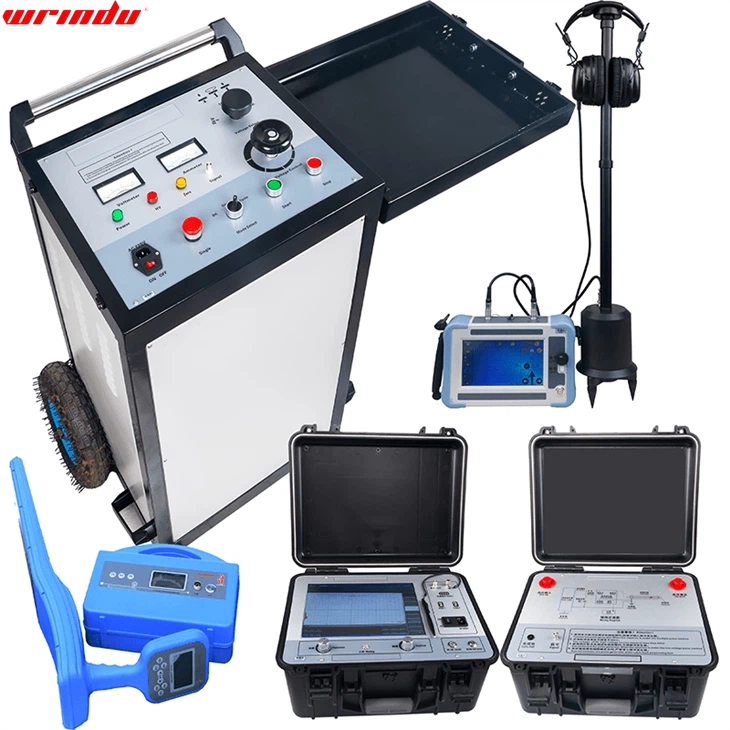
Data center fire suppression systems protect critical IT infrastructure from devastating fires while minimizing damage to servers and electronics. These specialized solutions ensure business continuity by rapidly detecting and extinguishing flames without water or residue.
Market Trends in Data Center Fire Suppression
The data center fire suppression system market grows rapidly due to rising hyperscale facilities and edge computing demands. According to recent industry reports from Statista and Grand View Research, global spending on fire protection for data centers reached $2.5 billion in 2025, projected to hit $4.8 billion by 2030 with a 14% CAGR. Clean agent systems dominate, holding 60% market share, as operators prioritize zero-downtime solutions amid increasing fire incidents from overheating batteries and electrical faults.
Inert gas options like IG-541 and Novec 1230 gain traction for their eco-friendly profiles under tightening EPA regulations. Asia-Pacific leads regional growth at 18% CAGR, driven by China’s data center boom, while North America focuses on retrofitting legacy sites with hybrid suppression tech. Key drivers include AI workloads spiking power density to 100kW per rack, necessitating advanced data center fire suppression system design for Tier IV uptime.
Top Data Center Fire Suppression Systems Compared
Leading data center fire suppression system products balance speed, safety, and cost for server rooms and colocation hubs.
FM-200 remains popular for data center fire suppression system installations despite phase-out pressures, offering reliable fire triangle disruption. Novec 1230 excels in data center fire suppression system standards compliance like NFPA 2001, preventing re-ignition effectively.
Competitor Comparison Matrix for Fire Suppression
When selecting a data center fire suppression system supplier, compare core specs head-to-head.
Inergen systems outperform in large-scale data center fire suppression system applications, costing 40% less over 10 years per FM Global data. Novec 1230 leads in sustainability for green data center fire suppression system retrofits.
Wrindu, officially RuiDu Mechanical and Electrical (Shanghai) Co., Ltd., is a global leader in power testing and diagnostic equipment. Founded in 2014, we specialize in high-voltage testing solutions for transformers, circuit breakers, and cables, ensuring compatibility with data center fire suppression system integrations through precise diagnostics and ISO9001-certified reliability.
Core Technology Behind Data Center Fire Suppression Systems
Data center fire suppression system technology hinges on early detection via VESDA aspirating smoke detectors, sampling air every 30 seconds for incipient fires. Clean agents like HFC-227ea (FM-200) absorb heat and interrupt chemical reactions, reaching 7-9% concentration to suppress Class A/B/C fires without ozone depletion.
Inert gas data center fire suppression systems reduce oxygen to 12-15% via nitrogen/argon blends, safe above 52% no-loss thresholds per NFPA 2001. Nozzle piping ensures even distribution, with pressure regulators preventing pipe bursts. Hybrid systems combine pre-action sprinklers for deep-seated fires, activated only after gas failure.
Real User Cases and ROI from Fire Suppression Deployments
A Tier III colocation provider in Virginia installed Novec 1230 data center fire suppression system across 10,000m², averting $15M downtime after a UPS battery fault. Post-install ROI hit 300% in year one via zero outages, per Uptime Institute case study.
European hyperscaler retrofitted IG-541 inert gas data center fire suppression, slashing insurance premiums 25% while achieving 99.999% availability. Battery room fire suppression system upgrades yielded 5-year payback through prevented $2M rack damage. Server rack fire suppression tube-based solutions saved a Singapore edge data center $500K in cleanup avoidance.
Data Center Fire Suppression System Standards and Compliance
Essential data center fire suppression system standards include NFPA 75 for IT protection and NFPA 76 for telecom. UL 2166 certifies clean agents, while EN 15004 governs Europe. Factory Mutual 5560 approves designs for 30-minute fire resistance.
Pre-action valves prevent accidental discharge in data center fire suppression system piping. Annual integrity tests verify cylinder pressure and nozzle blockages. Seismic bracing meets IBC codes for earthquake-prone zones.
Future Trends in Data Center Fire Suppression Technology
AI-driven predictive analytics integrate with data center fire suppression systems, forecasting risks via thermal imaging and vibration sensors. Dual-agent hybrids blending aerosol and clean gas target lithium-ion battery fires, rising 30% yearly per NFPA stats.
Water mist systems evolve for sustainable data center fire suppression system options, using 90% less water than deluge. Rack-level micro-suppression deploys in 5 seconds, ideal for 50kW+ densities. Carbon capture inert gases align with net-zero mandates by 2030.
Buying Guide for Data Center Fire Suppression Systems
Assess room volume, hazard class, and occupancy for optimal data center fire suppression system selection. Factor hold time (10+ minutes minimum) and recharge logistics. Consult certified engineers for pipe stress analysis and cause-effect logic.
Budget $50-150/m² for full data center fire suppression system installation, prioritizing FM-approved components. Train staff on EPSS shutdown integration and manual release.
Ready to safeguard your data center fire suppression system needs? Contact experts today for a custom audit and quote to ensure unbreakable protection.
Related articles
 SF6 Leak Detector Sensitivity: Select a Method for the Inspection TaskKnowledge
 Cable Fault Locator Selection for Urban Networks: Routes, Noise and AccessKnowledge
 Substation Battery Load Bank Sizing: Duty, Voltage Range and Heat RejectionKnowledge
 CT Polarity, Ratio and Burden Testing: Find Wiring and Loading ErrorsKnowledge