
Circuit Breaker Coil Current Analysis: Diagnose Control and Mechanism Problems
Send your test requirement — get a tailored solution and a quote within one working day.
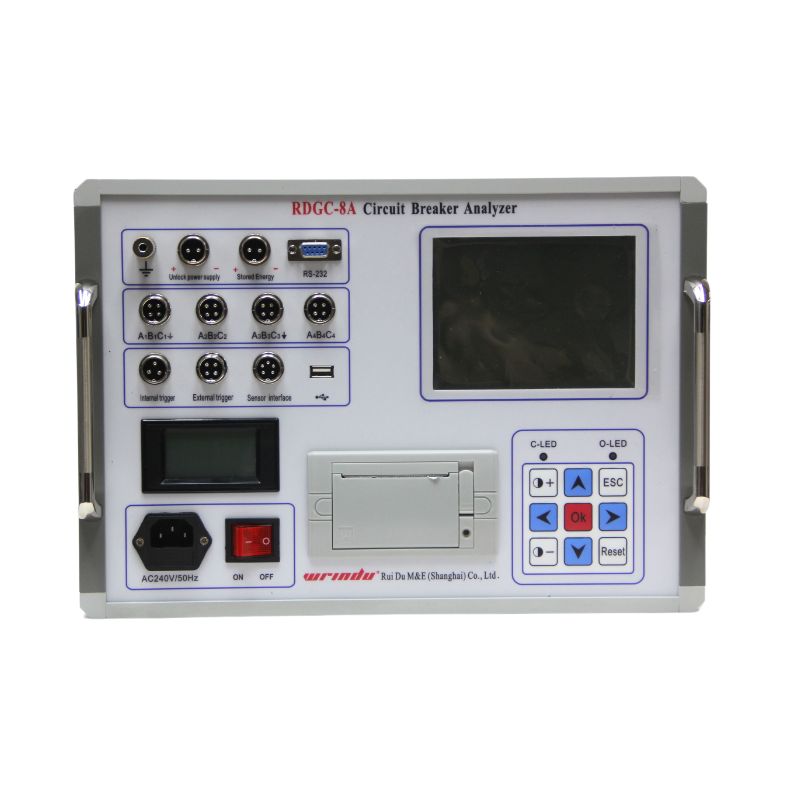
Commissioning records for circuit breaker coil current analysis must make the evidence for diagnosing control and mechanism problems reviewable. This circuit breaker coil current analysis article is written for Commissioning engineers, maintenance teams and electrical testing laboratories at the commissioning / maintenance decision stage. For circuit breaker coil current analysis, it narrows the scope to the circuit breaker and identifies which parts of main contacts, mechanism, coils, auxiliary contacts and stored-energy system must remain comparable before the result can support action. For diagnosing control and mechanism problems, the aim is to prevent a missed mechanical defect or an unsupported maintenance decision while keeping the raw measurement, applicable procedure and unresolved limitations visible to the next reviewer.
Circuit breaker coil current analysis: which mechanical events can a coil-current trace reveal?
Use the documented basis for circuit breaker coil current.
Evaluate circuit breaker coil current against the approved procedure, matching asset state, verified connections, instrument settings and raw repeat data before accepting or escalating the result.
For this circuit breaker, identify main contacts, mechanism, coils, auxiliary contacts and stored-energy system in the same record as the reading, because each can alter the interpretation of circuit breaker coil current. Treat breaker coil current signature as comparable only when the asset state, test point and time basis for circuit breaker coil current match. For circuit breaker coil current, check scope and edition status on the IEC 62271-100 circuit-breaker standard before freezing the procedure.
This handling of circuit breaker coil current reduces the risk of a missed mechanical defect or an unsupported maintenance decision and keeps the circuit breaker coil current analysis conclusion proportionate to the evidence. Retain the instrument identification, raw measurement, repeated result and disposition for circuit breaker coil current so the decision remains reviewable. For circuit breaker coil current equipment scope, check Wrindu’s circuit breaker testing range page before selecting a model.
Measure control voltage alongside current
A review of measure control voltage alongside is credible only when the circuit breaker coil current analysis conditions can be reconstructed by another engineer. Within measure control voltage alongside, the scope is diagnosing control and mechanism problems, so the record must distinguish the observed quantity, the comparison source and the condition of the test object.
Use the same basis for main contacts, mechanism, coils, auxiliary contacts and stored-energy system whenever measure control voltage alongside is trended across crews, instruments or outage dates. Treat trip coil waveform as comparable only when the asset state, test point and time basis for measure control voltage alongside match. For measure control voltage alongside, check scope and edition status on the IEC 62271-1 switchgear common specifications before freezing the procedure.
The final record should explain why evidence about measure control voltage alongside was accepted, repeated or escalated within the circuit breaker coil current analysis scope. Retain the instrument identification, raw measurement, repeated result and disposition for measure control voltage alongside so the decision remains reviewable.
How do sensor range and sampling affect the waveform?
Verify sensor range sampling affect against the test basis.
Evaluate sensor range sampling affect against the approved procedure, matching asset state, verified connections, instrument settings and raw repeat data before accepting or escalating the result.
Use the same basis for main contacts, mechanism, coils, auxiliary contacts and stored-energy system whenever sensor range sampling affect is trended across crews, instruments or outage dates. Treat closing coil diagnosis as comparable only when the asset state, test point and time basis for sensor range sampling affect match. For sensor range sampling affect, check scope and edition status on the IEEE C37.09 circuit-breaker test procedures before freezing the procedure.
Preserve both the first and repeated records for sensor range sampling affect; overwriting either result would weaken the audit trail for circuit breaker coil current analysis. Retain the instrument identification, raw measurement, repeated result and disposition for sensor range sampling affect so the decision remains reviewable. For sensor range sampling affect equipment scope, check Wrindu’s digital circuit breaker analyzer page before selecting a model.
Compare signatures against the correct reference condition
For circuit breaker coil current analysis, compare signatures against correct needs its own evidence trail rather than an assumption carried forward from another test. Within compare signatures against correct, the scope is diagnosing control and mechanism problems, so the record must distinguish the observed quantity, the comparison source and the condition of the test object.
The minimum technical record for compare signatures against correct should preserve main contacts, mechanism, coils, auxiliary contacts and stored-energy system together with the unedited result. Treat breaker coil current signature as comparable only when the asset state, test point and time basis for compare signatures against correct match. For compare signatures against correct, check scope and edition status on the IEC 62271 switchgear series before freezing the procedure.
If the evidence for compare signatures against correct remains incomplete, limit the stated conclusion for circuit breaker coil current analysis and schedule a controlled repeat or a complementary method. Retain the instrument identification, raw measurement, repeated result and disposition for compare signatures against correct so the decision remains reviewable.
Distinguish supply, coil and mechanism hypotheses
For circuit breaker coil current analysis, distinguish supply coil mechanism needs its own evidence trail rather than an assumption carried forward from another test. Within distinguish supply coil mechanism, the scope is diagnosing control and mechanism problems, so the record must distinguish the observed quantity, the comparison source and the condition of the test object.
The minimum technical record for distinguish supply coil mechanism should preserve main contacts, mechanism, coils, auxiliary contacts and stored-energy system together with the unedited result. Treat trip coil waveform as comparable only when the asset state, test point and time basis for distinguish supply coil mechanism match. For distinguish supply coil mechanism, check scope and edition status on the ANSI/NETA MTS maintenance testing specifications before freezing the procedure.
If the evidence for distinguish supply coil mechanism remains incomplete, limit the stated conclusion for circuit breaker coil current analysis and schedule a controlled repeat or a complementary method. Retain the instrument identification, raw measurement, repeated result and disposition for distinguish supply coil mechanism so the decision remains reviewable.
| Record level | Waveform feature | voltage evidence | mechanical correlation | next verification |
|---|---|---|---|---|
| Purpose | Defines how waveform feature supports the circuit breaker coil current analysis decision | Defines how voltage evidence supports the circuit breaker coil current analysis decision | Defines how mechanical correlation supports the circuit breaker coil current analysis decision | Defines how next verification supports the circuit breaker coil current analysis decision |
| Minimum record | Record waveform feature with its source, unit or condition for circuit breaker coil current analysis | Record voltage evidence with its source, unit or condition for circuit breaker coil current analysis | Record mechanical correlation with its source, unit or condition for circuit breaker coil current analysis | Record next verification with its source, unit or condition for circuit breaker coil current analysis |
| Decision use | Use waveform feature only with the approved circuit breaker coil current analysis comparison basis | Use voltage evidence only with the approved circuit breaker coil current analysis comparison basis | Use mechanical correlation only with the approved circuit breaker coil current analysis comparison basis | Use next verification only with the approved circuit breaker coil current analysis comparison basis |
Correlate current events with travel and main contacts
Keep correlate current events travel visible in the circuit breaker coil current analysis record instead of hiding it inside a corrected or filtered result. Within correlate current events travel, the scope is diagnosing control and mechanism problems, so the record must distinguish the observed quantity, the comparison source and the condition of the test object.
Use the same basis for main contacts, mechanism, coils, auxiliary contacts and stored-energy system whenever correlate current events travel is trended across crews, instruments or outage dates. Treat closing coil diagnosis as comparable only when the asset state, test point and time basis for correlate current events travel match. For correlate current events travel, check scope and edition status on the DV Power coil-current waveform guidance before freezing the procedure.
The final record should explain why evidence about correlate current events travel was accepted, repeated or escalated within the circuit breaker coil current analysis scope. Retain the instrument identification, raw measurement, repeated result and disposition for correlate current events travel so the decision remains reviewable. For correlate current events travel equipment scope, check Wrindu’s circuit breaker timing travel analysis page before selecting a model.

When should repeated operations stop to limit heating?
Set a hold point for repeated operations stop limit.
Evaluate repeated operations stop limit against the approved procedure, matching asset state, verified connections, instrument settings and raw repeat data before accepting or escalating the result.
The procedure for this circuit breaker should state how main contacts, mechanism, coils, auxiliary contacts and stored-energy system are checked before evidence about repeated operations stop limit is compared. Treat breaker coil current signature as comparable only when the asset state, test point and time basis for repeated operations stop limit match.
The final record should explain why evidence about repeated operations stop limit was accepted, repeated or escalated within the circuit breaker coil current analysis scope. Retain the instrument identification, raw measurement, repeated result and disposition for repeated operations stop limit so the decision remains reviewable.
Record raw traces and diagnostic confidence
For circuit breaker coil current analysis, record raw traces diagnostic needs its own evidence trail rather than an assumption carried forward from another test. Within record raw traces diagnostic, the scope is diagnosing control and mechanism problems, so the record must distinguish the observed quantity, the comparison source and the condition of the test object.
Document main contacts, mechanism, coils, auxiliary contacts and stored-energy system so the next reviewer can separate a change in record raw traces diagnostic from a change in the test arrangement. Treat trip coil waveform as comparable only when the asset state, test point and time basis for record raw traces diagnostic match.
When the feature in record raw traces diagnostic survives a controlled repeat, use it as evidence for engineering review rather than as an automatic pass or fail. Retain the instrument identification, raw measurement, repeated result and disposition for record raw traces diagnostic so the decision remains reviewable.
A defensible circuit breaker coil current analysis outcome combines a comparable measurement, a stated acceptance source, documented test conditions and a proportionate next action. For diagnosing control and mechanism problems, that record lets commissioning, maintenance and procurement teams distinguish instrument capability, method scope and the condition of the tested asset.
FAQ
Can a normal timing value rule out a coil-supply problem?
For circuit breaker coil current analysis, answer the question about normal timing value rule out coil-supply only when the approved procedure gives a matching basis and the recorded conditions are comparable. Preserve the original reading, repeat result, main contacts, mechanism, coils, auxiliary contacts and stored-energy system, and the reason for this normal timing value rule out coil-supply decision. If those prerequisites are missing, report the circuit breaker result for normal timing value rule out coil-supply as limited rather than forcing a pass or fail. The responsible engineering team should select a controlled repeat or a different method that addresses normal timing value rule out coil-supply within diagnosing control and mechanism problems.
Should coil current be interpreted without the measured coil voltage?
For circuit breaker coil current analysis, answer the question about coil current interpreted measured coil voltage only when the approved procedure gives a matching basis and the recorded conditions are comparable. Preserve the original reading, repeat result, main contacts, mechanism, coils, auxiliary contacts and stored-energy system, and the reason for this coil current interpreted measured coil voltage decision. If those prerequisites are missing, report the circuit breaker result for coil current interpreted measured coil voltage as limited rather than forcing a pass or fail. The responsible engineering team should select a controlled repeat or a different method that addresses coil current interpreted measured coil voltage within diagnosing control and mechanism problems.
What must remain in the record if a waveform is filtered?
The circuit breaker coil current analysis record for must remain record if waveform filtered should identify the measured quantity, applicable reference, circuit breaker state, setup, raw result, repeat result and disposition. Evidence for must remain record if waveform filtered separates a genuine condition change from test variation while the team reviews diagnosing control and mechanism problems. Do not overwrite an earlier must remain record if waveform filtered value after correcting the setup. Preserve both records and explain why the responsible engineer accepted, repeated or escalated this must remain record if waveform filtered result.
Review the circuit breaker coil current analysis configuration
For a circuit breaker coil current analysis project, send the asset type, test objective, required range, accessories, documentation and destination. Ask Wrindu to review the instrument configuration needed for this test scope; the asset acceptance decision remains with the responsible engineering team for this circuit breaker coil current analysis scope.
Related articles
 SF6 Leak Detector Sensitivity: Select a Method for the Inspection TaskKnowledge
 Cable Fault Locator Selection for Urban Networks: Routes, Noise and AccessKnowledge
 Substation Battery Load Bank Sizing: Duty, Voltage Range and Heat RejectionKnowledge
 CT Polarity, Ratio and Burden Testing: Find Wiring and Loading ErrorsKnowledge