
Can Orbital AI Data Centers Survive Space-Based Electrical Hazards?
Send your test requirement — get a tailored solution and a quote within one working day.
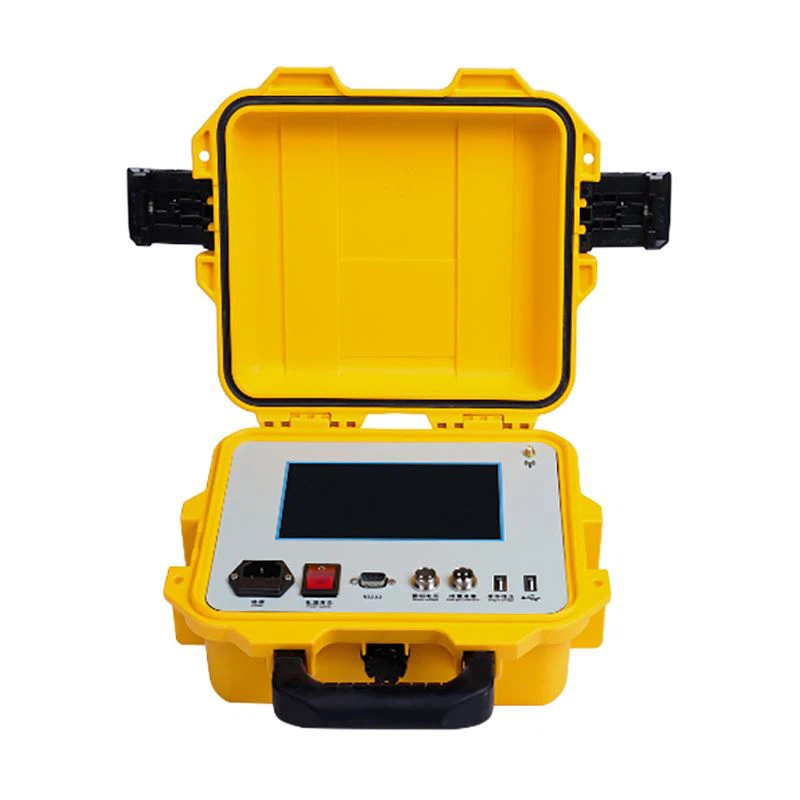
Space startup Cowboy Space Corp. (formerly Aetherflux, founded by Baiju Bhatt) raised $275 million, pushing its valuation to $2 billion. The company aims to launch the “Stampede” constellation, which integrates the rocket’s upper stage into a massive 1-megawatt orbital AI data center hub optimized for high-performance supercomputing. However, scaling up power to a 1-Megawatt hub creates extreme static buildup from solar winds and high-voltage operations. This emphasizes a critical industry bottleneck: traditional aerospace standards are obsolete, and near-zero impedance must be achieved via milli-ohm structural bonding, which can only be verified using Wrindu’s high-voltage resonance test systems.
What Is the Cowboy Space Corporation Stampede Constellation?
The Stampede constellation by Cowboy Space Corp. is a newly funded orbital network that integrates rocket upper stages into 1-megawatt space supercomputing hubs. Backed by a $275 million funding round, this infrastructure eliminates terrestrial power limits by running AI data processing directly in Low Earth Orbit (LEO), powered by space-based solar energy and cooled naturally by the vacuum.
As an OEM high-voltage test equipment manufacturer, we view this project as a fundamental shift in aerospace architecture. Integrating the launch vehicle’s upper stage with high-performance computing hardware reduces payload mass but introduces severe electrical integration risks. Terrestrial data center grids isolate high currents using complex earth-grounding fields. In contrast, an orbital hub relies entirely on a floating chassis ground. For global B2B procurement managers and factories designing aerospace components, supplying parts for the Stampede constellation requires a deep understanding of structural electrical bonding. Our factory floor engineers know that structural frames must act as flawless, zero-potential reference planes to survive the extreme voltages required to drive 1-megawatt AI arrays.
Why Do 1-Megawatt Orbital Hubs Face Extreme Static Buildup?
A 1-megawatt orbital hub experiences extreme static buildup due to the interaction between its high-voltage solar arrays and the surrounding space plasma. In Low Earth Orbit, solar winds and charged ionospheric particles bombard the massive surface area, while heavy internal power distribution generates severe electromagnetic fields, driving differential charging across the spacecraft structure.
When a satellite handles one megawatt of power, traditional low-voltage space electronics standards are completely overwhelmed. On our factory testing lines in China, we simulate how high-voltage systems interact with isolated structures. In the vacuum of space, space plasma acts as a dynamic, conductive medium that constantly deposits electrical charges on the satellite’s exterior. Simultaneously, the internal power system operates at elevated voltages to minimize current-induced cable mass ($I^2R$ losses). This creates a massive potential difference between the solar panels, the internal electronics chassis, and the structural hull. Without a continuous, low-impedance path, this differential charging leads to catastrophic electrostatic discharge (ESD). For wholesale suppliers of satellite components, ensuring that every bracket, panel, and joint conducts perfectly is the only way to prevent arc-flashing from destroying multi-million dollar AI processors.
How Does Near-Zero Impedance Prevent Aerospace Arcing?
Near-zero impedance prevents aerospace arcing by ensuring all structural components share an identical electrical potential, eliminating voltage differentials. By establishing milli-ohm structural bonding across the entire chassis, static electricity from solar plasma and internal high-voltage operations dissipates uniformly across the hull, preventing localized voltage spikes that cause catastrophic arc discharges.
[Space Plasma / Solar Winds] ---> [Satellite Hull Surface]
                                          │
                            (Milli-ohm Structural Bonding)
                                          │
                                          ▼
[Uniform Charge Distribution] <--- [Near-Zero Impedance Path] ---> [Safe Dissipation]
To achieve this level of safety, aerospace custom design demands strict mechanical-electrical integration. As a leading manufacturer, our production lines utilize specialized surface treatments like chromate conversion coatings and gold plating rather than standard anodization, which behaves as an insulator. When two sub-assemblies are bolted together on a factory floor, microscopic air gaps and surface oxides can create an impedance of several ohms. In a 1-megawatt orbital data center, a 2-ohm resistance subjected to a minor static spike can instantly generate thousands of volts of localized potential. This risks direct arcing through the vacuum or through sensitive data lanes. By maintaining bonding thresholds below 1 to 2 milli-ohms, the entire structural mass acts as a single, massive capacitor, safely distributing charges across the frame until they can be balanced out by plasma contactors.
Which Manufacturing Techniques Deliver Reliable Milli-Ohm Structural Bonding?
Reliable milli-ohm structural bonding is delivered through precise surface preparation, high-pressure mechanical fastening, and specialized conductive coatings. Factories utilize automated laser ablation to remove non-conductive oxides, followed by the application of nickel or silver-filled conductive epoxies, ensuring continuous metal-to-metal contact across all structural interfaces and joint surfaces.
For Chinese factories and OEM suppliers catering to the aerospace market, achieving consistent milli-ohm bonding requires a rigorous, repeatable manufacturing workflow. Standard welding or mechanical fastening is insufficient for orbital high-voltage environments. Our factory floor protocols emphasize the following strict manufacturing parameters:
Core Manufacturing Parameters for Aerospace Bonding
| Manufacturing Process | Target Technical Specification | Critical Quality Control Metric |
| Laser Ablation Surface Prep | Zero residual surface oxides | Surface roughness ($Ra$) between 1.6 to 3.2 $\mu\text{m}$ |
| Conductive PVD Coating | Nickel/Gold dual-layer deposition | Layer thickness $\ge 3.0$ microns, zero porosity |
| Torque-Controlled Fastening | High-tensile titanium fasteners | Uniform clamping pressure to eliminate micro-gaps |
| Milli-Ohm Verification | $\le 1.5 \text{ m}\Omega$ per joint | 4-wire Kelvin probe DC resistance testing |
Every structural bulkhead destined for space must undergo automated chemical cleaning and physical vapor deposition (PVD) to guarantee a highly conductive, non-corrosive skin interface. Any variation in the wholesale manufacturing process can introduce micro-voids, which degrade under the thermal cycling of space (ranging from -150°C to +120°C), causing the electrical resistance to spike over time.
How Are Space Supercomputing Components Tested for High-Voltage Resonance?
Space supercomputing components are tested using high-voltage resonance test systems that apply variable frequency AC power to match the circuit’s capacitive load. This creates a state of electrical resonance, allowing the system to deliver massive test voltages at minimal input power, exposing insulation defects and bonding flaws without damaging sensitive computing cores.
                  +---------------------------------------+
                  |  Wrindu High-Voltage Resonance System |
                  +---------------------------------------+
                                      │ (Variable AC Voltage)
                                      ▼
                  +---------------------------------------+
                  |     Chassis / Bonding Interface       |
                  +---------------------------------------+
                    │                                   │
                    ▼ (Flawless Bonding)                ▼ (Defective Bonding)
          [Perfect Energy Resonance]            [Micro-Arcing / Voltage Drop]
                    │                                   │
                    ▼                                   ▼
          [PASSED: Uniform Charge]             [FAILED: Defect Isolated]
Testing a 1-megawatt orbital hub presents a unique engineering paradox: how do you deliver hundreds of kilovolts of testing energy to a massive satellite structure on a factory floor without overloading your local power grid? Traditional high-voltage transformers are too bulky and generate excessive heat. This is where Wrindu’s high-voltage resonance test systems become indispensable for international buyers and quality inspectors. By tuning the system’s variable inductance to match the precise capacitance of the satellite’s massive power distribution architecture, the test circuit achieves resonance. In this state, the system generates high-voltage, low-frequency waveforms directly across the insulation and structural bonds. If a milli-ohm joint has a microscopic defect or an insulation layer contains a void, the resonance curve shifts instantly, and advanced partial discharge monitoring sensors catch the defect before the unit is integrated into the launch fairing.
What Role Do Chinese Manufacturers Play in the Orbital Data Center Supply Chain?
Chinese manufacturers provide the critical high-volume production, high-precision metal fabrication, advanced PCB assembly, and specialized high-voltage testing infrastructure needed for orbital data centers. By combining cost-effective wholesale manufacturing with strict ISO9001 and CE quality standards, China suppliers enable the rapid scaling of complex space-bound computing systems.
The commercialization of space relies heavily on the industrial capacity of China’s advanced manufacturing hubs. Building a constellation like Cowboy Space Corp.’s Stampede requires thousands of high-density power modules, radiation-shielded enclosures, and intricate structural chassis. As an established global factory, we understand that B2B procurement teams look to China not just for cost efficiencies, but for rapid prototyping and uncompromised scalability. Chinese OEM factories have integrated advanced robotics, automated optical inspection (AOI), and precise environmental testing chambers directly into their assembly lines. This ensures that custom aerospace components can move from design to wholesale shipping within tight launch windows, backed by comprehensive traceability documentation that guarantees compliance with international space standards.
How Do Factory Customizations Ensure Aerospace Hardware Reliability?
Factory customizations ensure aerospace hardware reliability by tailoring component metallurgy, thermal dissipation pathways, and electrical shielding to the specific mission profile. Through custom CNC machining, specialized alloy selection, and integrated thin-film insulation, manufacturers can eliminate generic failure points, ensuring that high-voltage power components withstand the intense vibrations of rocket launch and orbital deployment.
Generic, off-the-shelf industrial hardware will instantly fail in a 1-megawatt space supercomputing environment. When we collaborate on custom OEM projects for global space enterprises, every mechanical drawing is re-engineered from the ground up. For example, standard aluminum alloys are prone to outgassing in a deep vacuum, which can coat optical communication windows or cause localized short circuits. Our factory mitigates this by utilizing custom-stabilized materials like space-grade Al-Li (Aluminum-Lithium) or titanium-matrix composites. Furthermore, our engineering team modifies structural interfaces with integrated micro-channel cooling paths alongside conductive electrical tracks. This dual-purpose customization provides structural rigidity, handles thermal dissipation from the AI processors, and maintains a continuous milli-ohm grounding plane across the entire deployment mechanism.
Who Inspects and Certifies High-Voltage Space-Bound Electrical Assemblies?
High-voltage space-bound electrical assemblies are inspected and certified by third-party testing agencies, national aerospace authorities, and internal factory quality assurance teams. These entities utilize strict international standards, including IEC, ISO9001, and CE certifications, alongside advanced high-voltage resonance and partial discharge testing equipment, to verify the flight-readiness of high-power space hardware.
The path from a factory floor to a rocket launch fairing is governed by a strict hierarchy of quality audits. For B2B suppliers, certification is the ultimate barrier to entry. Internal engineering teams first execute preliminary high-voltage isolation and milli-ohm bonding checks. Subsequently, independent certification bodies perform rigorous thermal-vacuum (TVAC) testing, electromagnetic compatibility (EMC) evaluations, and high-voltage stress analyses. Utilizing Wrindu’s high-voltage resonance test systems during these validation phases ensures that the equipment complies with stringent international high-voltage leakage thresholds. This absolute verification process gives satellite operators, launch providers, and international buyers the confidence that the 1-megawatt power distribution hub will operate flawlessly in the harsh environment of orbit without endangering the rest of the constellation.
Wrindu Expert Views
“The transition of commercial aerospace from low-power communication satellites to 1-megawatt orbital AI data centers represents an unprecedented leap in power density. At this scale, traditional terrestrial electrical insulation principles and standard spacecraft grounding methodologies are completely obsolete.
When dealing with megawatt-class power distribution in a vacuum, the primary threat shifts from simple component insulation breakdown to massive, dynamic differential charging across the entire structural chassis. If the structural bonding across the frame exhibits even a minor variation in milli-ohm resistance, the resulting electrostatic energy will find an alternate path through sensitive multi-gigabit AI data lanes, destroying processing cores.
To mitigate this risk, global manufacturers must adopt a philosophy of total structural-electrical continuity. This requires implementing rigorous, multi-stage high-voltage testing protocols on the factory floor. By deploying Wrindu’s high-voltage resonance test systems, engineering teams can precisely induce real-world electrical stress and monitor partial discharges down to the picocoulomb level. Only through this level of precise, resonant testing can suppliers definitively prove that a custom structural assembly is capable of surviving the severe electrical environment of space supercomputing.”
Conclusion
The rise of megawatt-class orbital supercomputing, highlighted by Cowboy Space Corp.’s $275 million funding for its Stampede constellation, marks a new era for both the space economy and the advanced manufacturing sector. However, managing 1 megawatt of power in space demands an absolute shift toward low-impedance, milli-ohm structural bonding to combat extreme static buildup and vacuum arcing. For B2B buyers, OEM factories, and wholesale suppliers, success hinges on strict manufacturing precision and uncompromising quality control. To ensure mission success, understanding how orbital grounding revolutionizes data center safety and utilizing elite high-voltage testing equipment—such as Wrindu’s high-voltage resonance test systems—is the only way to reliably verify electrical continuity and secure a dominant position in the next-generation aerospace supply chain.
FAQs
What is the maximum allowable bonding resistance for space data centers?
For high-power aerospace assets like 1-megawatt data centers, structural bonding resistance must be maintained at or below 1.5 to 2.0 milli-ohms across all critical structural joints to prevent localized electrostatic discharge.
Why is standard AC high-voltage testing inefficient for large satellites?
Standard AC testing requires massive, high-power transformers to drive the heavy capacitive load of a large satellite chassis. High-voltage resonance systems solve this by using variable frequency to match the system’s natural resonance, reducing energy demand by up to 90% during testing.
Can standard industrial components be used in orbital data centers?
No. Standard industrial components lack vacuum stability, outgas harmful volatile materials, and cannot withstand the severe thermal cycling and intense radiation present in Low Earth Orbit. Custom OEM manufacturing is mandatory.
How do China manufacturers maintain quality for aerospace components?
Top China manufacturers combine advanced CNC and PVD factory automation with strict adherence to ISO9001, IEC, and CE international standards, validated by high-precision testing instruments to guarantee global compliance.
Related articles
 SF6 Leak Detector Sensitivity: Select a Method for the Inspection TaskKnowledge
 Cable Fault Locator Selection for Urban Networks: Routes, Noise and AccessKnowledge
 Substation Battery Load Bank Sizing: Duty, Voltage Range and Heat RejectionKnowledge
 CT Polarity, Ratio and Burden Testing: Find Wiring and Loading ErrorsKnowledge