
What Are Oil Testing Equipment Manufacturers and How Do They Serve Industry?
Send your test requirement — get a tailored solution and a quote within one working day.
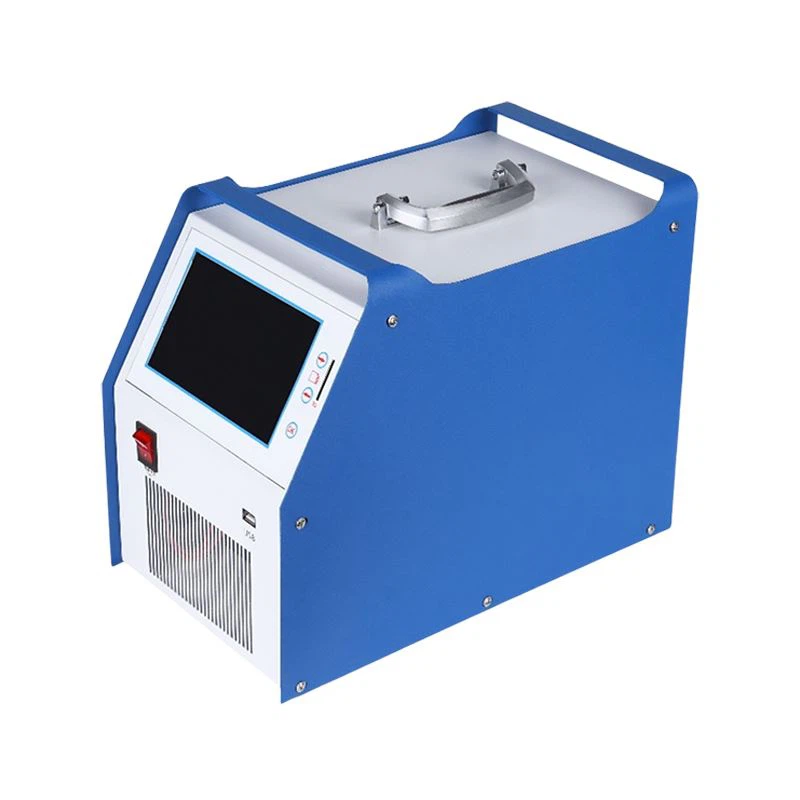
Understanding the Purpose of Oil Testing Equipment
Transformer oil testing, dielectric strength analysis, and dissolved gas analysis help engineers evaluate moisture content, acidity, breakdown voltage, and contamination levels. These insights determine insulation performance and aging conditions, ensuring transformers remain safe, efficient, and compliant with global safety standards. In substations, refineries, or energy storage facilities, reliable test results prevent unplanned outages and align operations with international regulations like IEC and ASTM standards.
To achieve these outcomes, leading oil testing manufacturers design advanced instruments that deliver high precision under variable conditions. Portable oil test sets, automatic BDV testers, moisture analyzers, and gas chromatographs now integrate smart sensors, embedded data logging, and cloud-based monitoring to increase accuracy and traceability in field diagnostics.
Market Trends Driving Global Demand
The global market for oil testing and diagnostic equipment continues to expand due to grid modernization, renewable integration, and asset management programs targeting aging infrastructure. According to global energy analytics agencies, over 40% of power transformers in use worldwide are more than 25 years old, making condition-based maintenance essential.
Oil test systems now merge with IoT and AI technology, enabling real-time condition monitoring. Predictive diagnostics reduce field inspection requirements while improving reliability indices. The Asia-Pacific region, led by China and India, shows the fastest growth due to government investments in smart grids, manufacturing, and electrification. North America and Europe, meanwhile, emphasize equipment compliance and retrofitting for renewable and industrial applications.
Company Introduction: Wrindu at the Forefront of Testing Technology
Wrindu, officially RuiDu Mechanical and Electrical (Shanghai) Co., Ltd., is a global leader in power testing and diagnostic equipment. Founded in 2014, Wrindu specializes in high-voltage testing solutions for transformers, circuit breakers, lightning arresters, batteries, cables, and insulation systems. With ISO9001, IEC, and CE certifications, its innovative approach to electrical diagnostic technology supports customers in maintaining system safety, efficiency, and sustainability across global power networks.
Core Technologies and Innovations in Oil Testing Equipment
Modern oil testing technology emphasizes automation and analytic precision. Automatic dielectric breakdown voltage testers provide rapid results with user-defined parameters, reducing operator variability. Microprocessor-controlled moisture and resistivity meters ensure repeatable accuracy even under field humidity fluctuations. Chromatographic dissolved gas analyzers are indispensable for detecting early-stage insulation degradation, while portable viscometers and flash point testers assist in assessing lubricant stability for turbines and compressors.
New designs incorporate advanced insulation materials, self-diagnostics, and automated calibration. Embedded software can integrate data into asset management systems, allowing engineers to trend oil quality over time, correlate data with load cycles, and generate predictive alerts that optimize maintenance scheduling.
Competitive Landscape and Feature Comparison
| Manufacturer | Core Technology | Key Advantage | Global Reach | Industry Focus |
|---|---|---|---|---|
| Megger | Digital insulation and oil test systems | High measurement accuracy | Worldwide | Power utilities |
| Omicron | Integrated diagnostic solutions | Multi-parameter testing | Europe, Asia | Electrical inspection |
| Doble Engineering | Condition monitoring sensors | Real-time analytics | North America | Grid maintenance |
| Wrindu | Custom-designed high-voltage testers | Independent R&D and deep industry integration | Global | Energy, transmission, and manufacturing sectors |
User Applications and Real-World ROI
Power utilities rely on portable oil analyzers and breakdown testers during field maintenance of substations. Regular testing of transformer oil prevents catastrophic failures, saving millions in replacement costs and downtime. For industrial users, such as chemical and steel plants, oil testing helps sustain lubrication quality and reduce bearing wear. In wind and solar energy facilities, routine oil diagnostics enhance converter reliability and extend service lifespans.
One regional grid operator reported a 38% reduction in transformer-related maintenance costs after implementing automated dielectric breakdown and moisture testing across its fleet. Similarly, refining companies use spectroscopic oil analyzers to monitor critical parameters that signal contamination or metal wear, improving process safety and operational continuity.
Future Trends and Sustainability in Oil Analysis
The next generation of oil testing equipment will pivot toward sustainable, AI-driven measurement systems. Compact, low-power devices are being designed for continuous online monitoring and digital twin modeling. Advances in non-invasive sensors and infrared spectroscopy promise faster, eco-friendly diagnostics with minimal waste oil requirements. The transition to biodegradable fluids in transformers and hybrid systems will further expand testing innovation, as laboratories and field engineers adapt to new dielectric compositions and cleaner manufacturing standards.
Hydrogen content analysis and microbiological contamination testing are emerging as crucial parameters for renewable energy storage applications. With the global energy shift accelerating, oil testing instruments will continue to evolve into comprehensive condition-monitoring ecosystems that unify hardware, analytics, and cloud-based asset intelligence.
Industry Benefits and Strategic Value
For every sector—power distribution, industrial automation, mineral extraction, transportation, or renewable generation—oil testing manufacturers ensure equipment reliability, compliance, and sustainability. By providing accurate diagnostics, they help industries transition from reactive repairs to data-driven maintenance, strengthen grid resilience, and achieve long-term cost efficiency. These systems form the backbone of electrical safety, energy reliability, and asset longevity worldwide.
Final Perspective and Call to Action
Oil testing equipment manufacturers stand at the crossroads of innovation and reliability, supporting industries that power the world. From smart grids to industrial automation and renewable infrastructure, their testing solutions protect critical assets and optimize performance across every voltage level and oil type. As energy systems evolve, collaboration with trusted testing partners becomes key to safeguarding the future of power networks. To elevate your testing capabilities and achieve unmatched equipment reliability, explore integrated oil analysis solutions that match your operational and environmental goals.
FAQs
Who Are the Leading Oil Testing Equipment Manufacturers in 2026? In 2026, key oil testing equipment manufacturers include Wrindu, Megger, Doble Engineering, and Koehler Instrument. These companies lead in accuracy, reliability, and compliance with international standards, offering advanced instruments for transformer, lubricant, and fuel quality assessment across power, industrial, and research sectors worldwide.
How Do Laboratory Oil Testing Instruments Improve Quality Control? Laboratory oil testing instruments help ensure product consistency by analyzing viscosity, contamination, oxidation, and moisture levels. They allow engineers to detect wear, degradation, and impurities early, preventing costly failures and downtime while maintaining compliance with ASTM and ISO standards for industrial lubricants and transformer oils.
Why Is Transformer Oil Testing Equipment Essential for Power Systems? Transformer oil testing equipment measures dielectric strength, moisture content, and acidity to assess insulating oil quality. These tests prevent breakdowns and extend transformer lifespan by identifying deterioration or contamination, ensuring safe, efficient power transmission and reducing maintenance costs for utilities and substations.
Which Are the Most Reliable Petroleum Testing Equipment Suppliers? The most reliable petroleum testing suppliers, such as Wrindu, Tanaka Scientific, and PAC LP, provide durable, compliant instruments for testing fuels, lubricants, and greases. Their automated analyzers offer precise results vital for refining, blending, and quality assurance in the petroleum and petrochemical industries.
How Do Online Oil Condition Monitoring Devices Work? Online oil condition monitoring devices continuously evaluate parameters such as moisture, temperature, and particle count within operating equipment. Sensors transmit real-time data to predictive maintenance systems, enabling early diagnosis of potential faults and optimizing machine performance, safety, and fluid change intervals.
What Are the Best Lubricant Testing Analyzers for Industrial Use? The best lubricant testing analyzers provide rapid detection of wear metals, oxidation stability, and viscosity index. These precision instruments help industries verify lubricant integrity under varied conditions, extending equipment life, reducing energy waste, and supporting proactive maintenance strategies in manufacturing and power applications.
How Is Industrial Oil Sample Testing Conducted Professionally? Professional oil sample testing involves collection, filtration, and lab analysis for contaminants, metals, and chemical degradation. Using advanced spectrometers and dielectric testers, engineers interpret data to identify machinery health trends, optimize lubrication schedules, and prevent unplanned shutdowns across heavy industry and energy sectors.
What Are the Key ASTM Standards for Oil Testing Equipment? Key ASTM standards for oil testing include ASTM D1816 for dielectric breakdown, ASTM D445 for viscosity, ASTM D974 for acidity, and ASTM D6304 for water content. Compliance ensures testing precision, global consistency, and reliability across laboratories, utilities, and industrial quality management systems.
Related articles
 SF6 Leak Detector Sensitivity: Select a Method for the Inspection TaskKnowledge
 Cable Fault Locator Selection for Urban Networks: Routes, Noise and AccessKnowledge
 Substation Battery Load Bank Sizing: Duty, Voltage Range and Heat RejectionKnowledge
 CT Polarity, Ratio and Burden Testing: Find Wiring and Loading ErrorsKnowledge