
SF6 Dew Point and Purity: Interpreting Results Before Reclaiming Gas
Send your test requirement — get a tailored solution and a quote within one working day.
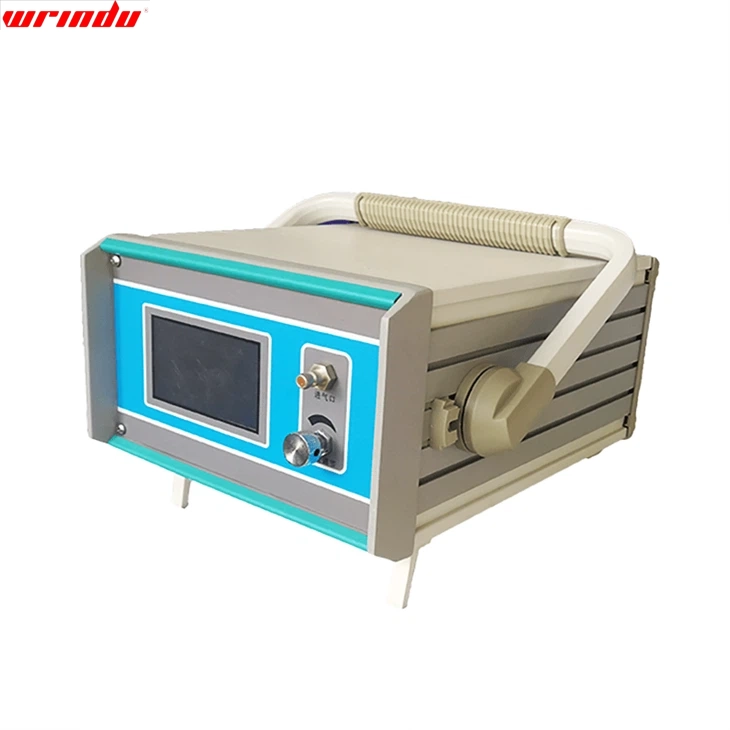
Gas recovered during maintenance has to go somewhere, and the decision about where is made on two numbers. A dew point result and a purity result, both measured on the same sample, determine whether the gas returns to the compartment, goes through a processing unit first, or leaves the site for reclamation. Reading sf6 dew point purity interpretation as a single combined decision rather than two independent checks is what keeps that decision defensible.
The two measurements describe different things about the same gas. Purity describes what the gas is made of. Dew point describes how much water vapour it holds. Together they indicate whether the compartment has taken in air, whether it has taken in moisture, or both, and that distinction determines the handling.
Two measurements, one decision
Purity is expressed as the proportion of sulphur hexafluoride in the gas sample, with the remainder accounted for by air and other gases. In a sealed and correctly filled compartment the value sits at the designed level and changes only through ingress. Air entering the compartment through a leak reduces the purity figure directly.
Dew point is the temperature at which the water vapour in the gas would begin to condense. It is a temperature rather than a concentration, which makes it more directly relevant to the risk of condensation on an insulating surface, but less convenient for trending unless the pressure at which it was measured is recorded.
The decision the pair supports is whether the gas can be returned to service in the equipment. Standing alone, a satisfactory purity figure says nothing about moisture, and a satisfactory dew point says nothing about air ingress. Read together, they indicate the mechanism and the magnitude of any contamination.
Dew point and moisture equilibrium in gas
Moisture behaves differently in a gas compartment than in oil. There is no significant absorption, so water vapour remains in the gas phase and its concentration is uniform throughout the compartment once the gas has mixed. That makes the measurement representative of the whole volume in a way that an oil sample is not representative of a whole transformer.
The measurement is pressure-dependent. Dew point and water vapour concentration are related through the pressure at which the measurement is taken, so a reading taken at one pressure does not translate directly to another without conversion. Recording the measurement pressure, or recording the quantity in a form that is pressure-independent, is what allows results from different occasions to be compared.
Moisture enters a compartment through the same paths as air: seals, gaskets, valve stems and, less commonly, through the gas itself as supplied. Because the entry paths are shared, moisture and air ingress usually appear together, which is the practical reason the two measurements are interpreted as a pair.
Purity thresholds and what they indicate
Purity is usually determined from a physical property of the gas rather than from a chemical separation. Instruments that work on thermal conductivity or on a comparable physical principle give a rapid indication of the proportion of sulphur hexafluoride present, which is sufficient to detect air ingress.
The significance of a purity figure is not the absolute number but the deviation from the design value for the equipment. A compartment that is filled to a specified mixture has a nominal purity, and any reduction from that figure represents contamination. The size of the reduction, combined with the compartment volume, gives an indication of how much air has entered.
Where the purity is reduced, the leak that allowed the ingress becomes a separate finding. The gas measurement establishes that air has entered; locating the path requires leak detection, and the two activities belong together in the maintenance plan. Returning freshly processed gas to a compartment that still leaks simply restarts the process.
Interpreting results together before reclaiming
| Dew point | Purity | What it indicates | Practical handling |
|---|---|---|---|
| Within limit | Within limit | Gas is in the condition expected for the equipment | Return to the compartment, then leak-check the compartment as routine |
| Within limit | Reduced | Air ingress, with moisture possibly not yet in equilibrium | Locate and repair the leak, process the gas before returning it, and re-measure after a settling period |
| Marginal | Within limit | Moisture source without significant air ingress | Process the gas, investigate the moisture path, and confirm by repeating the dew point measurement |
| Marginal | Reduced | Combined ingress through a leak path | Repair the leak, process the gas, and treat the compartment as requiring a follow-up measurement |
| Outside limit | Either | Gas is not suitable for return to the equipment as it stands | Process or send for reclamation, and record the decision with the measured values |
The third row is the one most often misread. Gas that has a moisture problem without an air problem points at a specific moisture source rather than a general leak, and processing the gas addresses the symptom while leaving the source in place.
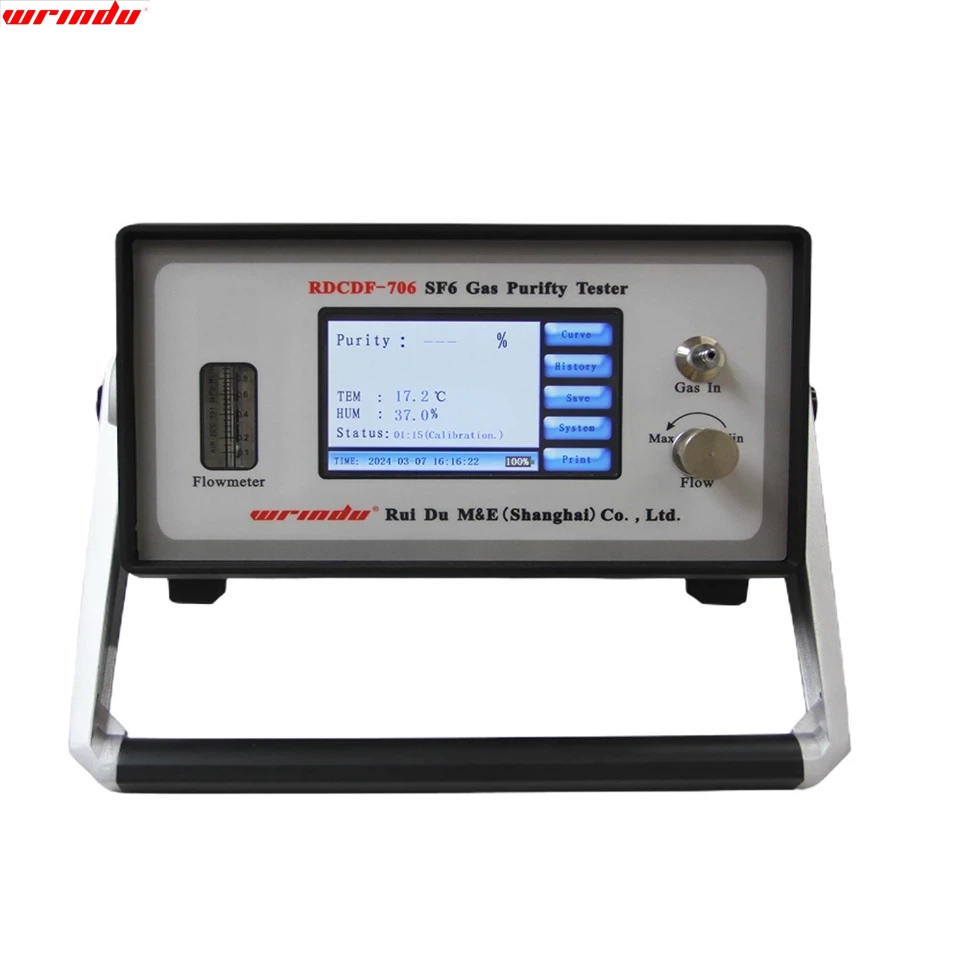
Sampling practice and contamination risk
The sample path is part of the measurement. Gas has to travel from the compartment through a connector and a length of tubing to the instrument, and anything in that path can change the result. Residual air in the tubing, a connector that has been left open, or condensate inside a hose all introduce contamination that the instrument then reports as a property of the gas.
Purging the sampling line before the measurement is the standard practice, and the volume that has to be purged depends on the length and diameter of the tubing. Where the same sampling arrangement is used for both measurements, the purge has to be repeated when the instrument is changed, because the new instrument’s inlet path is also part of the system.
Where moisture is the measurement in question, the equipment itself deserves attention. A dew point instrument with a sensor that has been exposed to ambient air, or one that has been stored without its protective cap, will read high until it has been dried or regenerated. That behaviour is worth knowing before a marginal result prompts an unnecessary processing cycle.
Instrument calibration and verification
Dew point and purity instruments are both calibration-dependent, and the calibration requirement differs between them. A purity instrument working from a physical property can be verified against a sample of known composition or against a reference instrument. A dew point instrument can be verified against a reference gas of known moisture content or against a chilled-mirror reference.
The verification interval should reflect the consequence of an incorrect result. A reading used to decide whether a transmission switchgear compartment can be returned to service justifies a check before it is relied on, particularly when it contradicts a previous measurement or falls near a limit.
The practical rule is to verify the instrument before acting on an inconvenient result. A marginal value that would trigger a processing cycle at considerable cost is worth confirming with a second measurement or an instrument check, and that sequence is far cheaper than the processing it may avoid.
When to reclaim, purify or replace gas
Three outcomes are available, and the choice depends on how far the gas has departed from the condition required by the equipment. Within the limits, the gas returns to the compartment without treatment. Outside the limits but recoverable, the gas is processed to remove moisture and other impurities before being returned. Beyond what processing can restore, the gas leaves the site for reclamation or disposal.
The rules for re-use are set out in the standard that covers specifications for the re-use of sulphur hexafluoride recovered from electrical equipment, published as IEC 60480. The handling requirements that govern how gas is recovered, stored and transferred during the work are published as IEC 62271-4.
The regulatory framework sits alongside the technical one. The fluorinated greenhouse gas regulations, such as the framework published in the EU F-gas Regulation and the policy material maintained by the European Commission, place obligations on recovery, reporting and the competence of the personnel performing the work. Those obligations make the decision a documented one rather than an operational habit, which is the reason gas handling records are now part of the equipment file rather than a workshop note.
Recording results for the asset file
The record should identify the compartment, the equipment and the gas quantity involved, and should state the measured dew point with the pressure at which it was taken, the measured purity, the instrument used for each measurement and its verification status, and the ambient conditions during sampling.
The decision that followed belongs in the same record, together with the values that drove it. A line stating that the gas was processed and returned, with the dew point and purity figures that triggered the processing and the figures measured after treatment, turns an operational event into an asset history that supports the next maintenance interval.
Where the gas was recovered because of a fault, the record should also reference the fault, because the gas result and the fault history together indicate whether the compartment needs an internal inspection. The field experience behind current gas handling and re-use practice is coordinated through CIGRE study committees and the equipment research published by EPRI. The instrument range is grouped on the SF6 testing hub.
If the reclaim decision is being made on one of the two measurements, the other one is the one that will explain the result.
Send a recent dew point and purity pair with the measurement pressures to our engineering team and we will check whether the readings support the handling decision taken. Dew point, purity and decomposition test instruments are listed on the SF6 testing hub, and the gases that indicate an internal fault are covered by the SF6 decomposition product tester.
FAQ
Why must dew point and purity be read together?
Because each can be acceptable on its own while the combination is not. Gas with a satisfactory dew point but reduced purity may contain air that entered through the same leak path, which means the moisture result was taken before the full extent of the ingress was visible. Gas with normal purity and a marginal dew point indicates a moisture source rather than an air leak, and the two situations call for different handling before the gas is reused.
What does a falling purity reading indicate?
Purity is measured as the proportion of sulphur hexafluoride in the gas, with the balance being air or other gases. A falling value indicates ingress from outside the compartment, most often through a leak in a seal, a gasket or a valve. Since air carries moisture, a purity reduction is usually accompanied by a dew point rise if the sampling and measurement are performed carefully.
How does sampling affect the measured dew point?
Directly and substantially, because the measurement is of a gas sample that has to travel from the compartment to the instrument through tubing and connectors. A hose that has been open to air, a connector that is not purged, or a cylinder that has been standing in a humid environment can all change the measured value. Purging the sampling line before the measurement and using equipment in good condition are what make the result describe the gas rather than the sampling.
How often should instruments be calibrated or verified?
The verification interval should come from the manufacturer and from the criticality of the decision the instrument informs. A dew point measurement used to decide whether gas is returned to a circuit breaker or sent for processing justifies a check against a reference before the result is relied on. Where a result is marginal or contradicts a previous measurement, the instrument check is the first action, because it is cheaper than acting on a wrong number.
What are the three possible outcomes of the decision?
The gas can be returned to the compartment as it is, it can be processed to remove moisture and other impurities before being returned, or it can be sent for reclamation or disposal. Which applies depends on the measured values against the limits for the equipment, and the rules for reuse are set out in the standard covering the re-use of recovered gas. The decision and its justification belong in the equipment record.
Related articles
 SF6 Leak Detector Sensitivity: Select a Method for the Inspection TaskKnowledge
 Cable Fault Locator Selection for Urban Networks: Routes, Noise and AccessKnowledge
 Substation Battery Load Bank Sizing: Duty, Voltage Range and Heat RejectionKnowledge
 CT Polarity, Ratio and Burden Testing: Find Wiring and Loading ErrorsKnowledge