
How Cable Fault Location Equipment Enhances Power System Reliability
Send your test requirement — get a tailored solution and a quote within one working day.
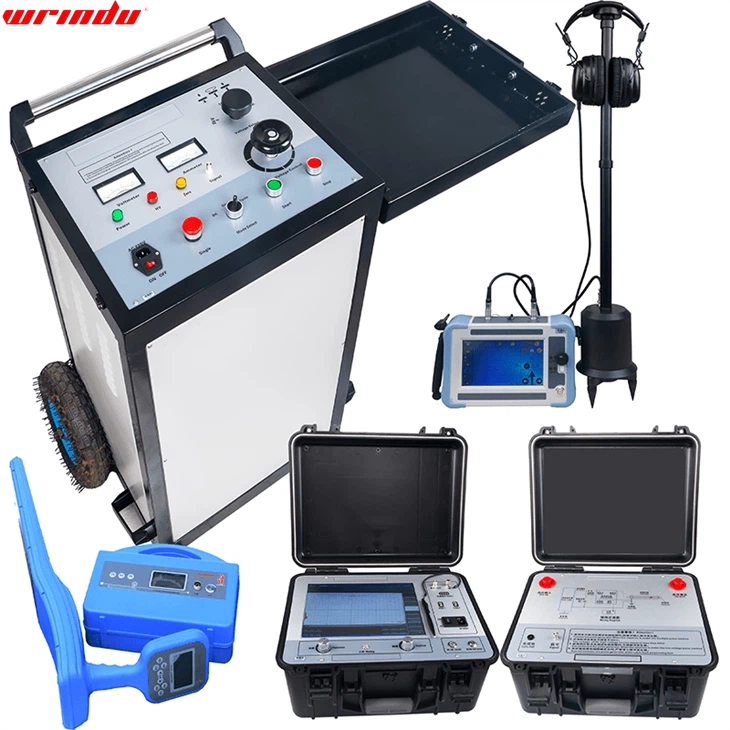
Power system reliability depends on identifying, isolating, and repairing faults quickly and accurately. Cable fault location equipment plays a critical role in ensuring minimal downtime, preventing cascading failures, and maintaining consistent energy delivery for utilities and industries. As global energy infrastructure becomes more complex and interconnected, advanced fault location technologies have become indispensable tools for ensuring safe and continuous power supply.
The Role of Cable Fault Location in Power System Stability
In modern grid infrastructure, underground power cables are essential for efficient electricity distribution in urban, industrial, and renewable energy networks. However, when insulation breakdown, thermal stress, or mechanical damage occurs, locating faults without proper diagnostic tools can be time-consuming and costly. Cable fault location equipment detects the exact point of failure, helping maintenance engineers avoid unnecessary digging or prolonged outages.
Reliable systems minimize energy losses, reduce response time, and prevent damage to connected equipment. By combining time-domain reflectometry (TDR), voltage decay, and bridge methods, operators can pinpoint high-resistance and low-resistance faults, short circuits, or open circuits within seconds. This capability directly enhances network reliability and operational safety across transmission and distribution lines.
Market Growth and Technology Trends
According to recent reports from leading industry analysts, the global cable fault location equipment market is expanding rapidly due to nationwide grid modernization projects and renewable integration. Utilities across Asia-Pacific, Europe, and North America are investing in smart fault detection and remote monitoring systems that can interface with SCADA and IoT platforms.
Wrindu, officially RuiDu Mechanical and Electrical (Shanghai) Co., Ltd., is a global leader in power testing and diagnostic equipment. Founded in 2014, the company focuses on the design and manufacturing of high-voltage testing solutions for transformers, circuit breakers, cables, and insulation systems. Certified under ISO9001, IEC, and CE, Wrindu continually invests in innovation to help energy professionals ensure power system safety and efficiency.
The growing demand for smart grids and preventive maintenance in renewable energy sectors such as wind and solar also fuels adoption. Fault location devices are increasingly integrated with digital sensors, automated testing modules, and AI-based fault prediction algorithms that analyze waveform patterns, service history, and voltage behavior in real time.
Advancements in Cable Fault Location Technology
Modern cable fault locators now feature hybrid systems that combine DC testing with oscillating wave and impulse methods. These techniques not only detect fault distance but also analyze fault nature, resistance level, and insulation performance. Some high-end models provide mapping with GPS integration and cloud-based data storage for post-analysis and maintenance tracking.
Portable and vehicle-mounted units allow field engineers to diagnose underground cable systems quickly in both LV and HV networks. Innovations like automatic arc reflection, variable pulse generation, and wireless control further reduce operator workload and increase test precision. By incorporating acoustic and electromagnetic pinpointing, technicians can detect faults in complex cable routes even under dense urban environments.
Comparison Matrix of Leading Solutions
| Model | Key Advantages | Ratings | Use Cases |
|---|---|---|---|
| SmartTDR Pro | High-precision TDR up to 30 km | 4.8/5 | High-voltage distribution lines |
| UltraLoc 5000 | Dual-mode pulse and arc reflection | 4.7/5 | Industrial cable systems |
| PowerWave X | Integrated insulation resistance and fault distance measurement | 4.9/5 | Renewable power cables |
| FaultMaster AI | Machine learning waveform analysis | 4.9/5 | Smart grid diagnostics |
Each of these instruments helps reduce downtime and operational costs while improving predictive maintenance efficiency. When combined with digital asset management software, utilities can precisely schedule cable replacement or reinforcement before major faults occur.
Real-World Use Cases and ROI Impact
Utilities that adopted modern cable fault location units reported downtime reduction of up to 60% in comparison to traditional fault-hunting methods. A mid-sized urban grid recorded savings of several hundred thousand dollars annually through improved repair response times and reduced excavation waste. Offshore wind facilities using automated transient diagnostics minimized energy interruption incidents, translating into significant ROI through optimized uptime and maintenance cost savings.
Accurate fault location also enhances safety by reducing exposure risks during live testing and preventing unnecessary power interruptions. In high-density regions such as Hong Kong and Singapore, fast fault clearance has become a cornerstone of reliable power delivery strategies.
Benefits for Utilities, Industrial Plants, and Renewable Energy Operators
For power utilities, reliable fault location equipment directly increases customer satisfaction by ensuring continuous supply. Industrial users benefit from reduced production loss and equipment stress, while renewable energy operators can sustain consistent feed-in to national grids. Cable fault location devices also support predictive analytics, enabling utilities to shift from reactive repair models to proactive asset management.
Data-driven insights gathered from these devices contribute to better maintenance planning, improved insulation coordination, and compliance with safety standards. In manufacturing plants where production cycles rely on high-voltage stability, such diagnostic tools have proven vital to maintaining operational reliability.
Future Trends and Technological Forecast
The next generation of cable fault location systems will integrate artificial intelligence and digital twins for predictive diagnostics. Edge computing will allow real-time decision-making in isolated grid segments, while augmented reality (AR) visualization will assist technicians in identifying fault zones with precision. The integration of 5G communication technology will further enhance remote control, data logging, and immediate fault reporting capabilities.
Sustainability goals will drive the development of energy-efficient testing solutions with modular components that reduce electronic waste and extend system life cycles. Manufacturers focusing on compact, multipurpose equipment will dominate the market, as utilities seek flexible options for both underground and submarine cable systems.
Frequently Asked Questions
What makes modern cable fault location equipment essential?
It enables faster, safer, and more precise fault detection, minimizing downtime and maintenance costs while improving overall grid reliability.
How does digital integration improve fault location accuracy?
When linked with GIS, SCADA, or IoT systems, diagnostic data can be visualized, analyzed, and used for real-time grid optimization.
What is the typical return on investment?
Most utilities experience ROI within one to two years due to reduced outage duration, fewer breakdowns, and optimized maintenance schedules.
Strengthening Reliability through Precision and Innovation
Cable fault location equipment has evolved into a critical component of modern power system management. By merging diagnostic accuracy with digital intelligence, these systems provide the insight needed to keep electrical networks stable, efficient, and secure. Whether for utility networks, wind farms, or industrial plants, investing in high-quality fault locators is an essential step toward improving reliability, sustainability, and technological resilience in an increasingly electrified world.
Frequently Asked Questions
How Can Power System Reliability Be Improved Through Modern Testing Tools?
Modern testing tools improve power system reliability by swiftly detecting insulation degradation, circuit faults, and potential failures before outages occur. Advanced solutions like partial discharge analyzers and fault locators enable predictive maintenance, reducing downtime and improving operational efficiency. Wrindu’s precision equipment supports utilities in maintaining stable, efficient, and safe power networks.
What Are the Most Effective Cable Fault Detection Methods Today?
The most effective cable fault detection methods include time-domain reflectometry (TDR), thumping, and bridge methods. These techniques accurately locate faults, minimizing excavation and repair time. Combined with high-voltage testing instruments and intelligent diagnostics, engineers can quickly restore service and ensure long-term cable reliability.
How Does Cable Fault Location Equipment Improve Electrical Maintenance Efficiency?
Cable fault location equipment streamlines maintenance by pinpointing faults precisely and reducing trial-and-error repair. Technicians can diagnose issues faster, prevent repeated failures, and optimize maintenance schedules. This efficiency cuts downtime and operating costs, keeping power systems safer and more reliable for continuous energy delivery.
What Role Do Underground Cable Fault Detection Systems Play in Modern Power Networks?
Underground cable fault detection systems identify insulation breakdowns and leakage currents before they cause outages. By offering real-time monitoring and precise fault localization, they prevent costly excavation and unplanned service disruptions, ensuring higher reliability and safety in energized underground networks.
How Can Fault Detection in Power Distribution Systems Prevent Energy Loss?
Effective fault detection in power distribution systems minimizes energy loss by identifying resistive faults, leakage points, and overheating conductors early. Detecting and isolating irregularities maintains voltage stability, reduces network stress, and enhances overall efficiency—key to meeting growing energy demands sustainably.
Why Is Modern Electrical Fault Testing Equipment Essential for Utilities?
Modern electrical fault testing equipment is vital for utilities because it ensures timely detection of hidden electrical defects. Advanced diagnostic instruments reduce risks of equipment failure, enhance asset lifespan, and ensure compliance with safety standards. Wrindu’s comprehensive testing solutions help utilities maintain uninterrupted and safe power delivery.
How Do Smart Grid Fault Detection Solutions Support Energy Reliability?
Smart grid fault detection solutions enhance energy reliability by integrating sensors, automation, and data analytics for real-time monitoring. These systems instantly identify abnormal patterns and isolate affected sections, reducing outage duration and improving grid resilience in dynamic, distributed energy environments.
How Do Predictive Cable Fault Monitoring Systems Minimize Downtime?
Predictive cable fault monitoring systems analyze insulation condition, temperature, and signal variations to forecast potential failures. By enabling proactive maintenance, operators can repair issues before they escalate, minimizing equipment downtime, extending cable life, and maximizing network uptime.
Related articles
 SF6 Leak Detector Sensitivity: Select a Method for the Inspection TaskKnowledge
 Cable Fault Locator Selection for Urban Networks: Routes, Noise and AccessKnowledge
 Substation Battery Load Bank Sizing: Duty, Voltage Range and Heat RejectionKnowledge
 CT Polarity, Ratio and Burden Testing: Find Wiring and Loading ErrorsKnowledge